post-title

Acupuncture for Pain Relief: Does It Work?

Written by - Editorial Team
Medically Reviewed by - Dr Arun Reddy Mallu

Pain is something we all experience at some point in our lives. Whether it’s due to an injury, chronic condition, or simply the wear and tear of everyday life, dealing with pain can be exhausting and debilitating. While there are many treatments available, acupuncture has gained popularity as an alternative method for pain relief. But does it work?

In this blog, we’ll explore what acupuncture is, how it works, and whether it can be an effective solution for pain relief. We’ll also highlight why choosing Continental Hospitals for your pain management needs ensures you receive the best care.

What Is Acupuncture?

Acupuncture is an ancient Chinese healing technique that has been practiced for thousands of years. It involves inserting very fine needles into specific points on the body, called acupuncture points, to stimulate energy flow. According to traditional Chinese medicine, this energy (called “Qi”) flows through pathways in the body, and disruptions in this flow can lead to pain and illness.

While the theory behind acupuncture may seem unusual to some, modern research has shown that acupuncture can have beneficial effects on the body, particularly in managing pain.

Visit the top orthopedic doctors in Hyderabad at Continental Hospitals for expert care and personalized treatment.
How Does Acupuncture Work for Pain Relief?

Acupuncture works by stimulating the body’s natural healing processes. When the needles are inserted into specific acupuncture points, they trigger the body’s nervous system to release endorphins—our natural painkillers. This helps to reduce pain and improve circulation.

Acupuncture also increases blood flow to the affected area, which aids in healing and reduces inflammation. The therapy may also help in balancing the body’s energy levels, which can be particularly beneficial for those suffering from chronic conditions.

While it’s not entirely clear how acupuncture works from a scientific standpoint, several studies have shown that it can effectively reduce pain and discomfort, especially for conditions like back pain, osteoarthritis, migraines, and fibromyalgia.

Second Opinion

What Pain Conditions Can Acupuncture Help With?

Acupuncture is beneficial for various types of pain, including:

Chronic Back Pain
Back pain is one of the most common reasons people seek acupuncture treatment. Research has shown that acupuncture can significantly reduce both acute and chronic back pain by improving blood circulation and reducing inflammation in the muscles and joints.

Migraines and Tension Headaches
Acupuncture may be effective in reducing the frequency and intensity of migraines and tension headaches. By targeting specific points on the head and neck, acupuncture can relieve tension, increase blood flow, and reduce the severity of headaches.

Arthritis and Joint Pain
Osteoarthritis and rheumatoid arthritis often cause chronic pain and stiffness in the joints. Acupuncture can help alleviate these symptoms by improving joint flexibility and reducing inflammation.

Neck Pain
Neck pain and stiffness can be caused by poor posture, injury, or muscle strain. Acupuncture can help relax the muscles in the neck and alleviate pain caused by tension.

Fibromyalgia
Fibromyalgia is a condition characterized by widespread muscle pain and fatigue. Acupuncture can be an effective treatment for fibromyalgia by reducing muscle pain and improving energy levels.

Sports Injuries
Athletes often turn to acupuncture to help recover from sports injuries, such as sprains, strains, and tendonitis. Acupuncture promotes healing by increasing blood circulation and reducing inflammation in the injured area.

Need an Appointment?

Struggling with pain? Contact Continental Hospitals for expert pain management. Visit the Best Orthopedic Doctors in Hyderabad today!

Is Acupuncture Safe?

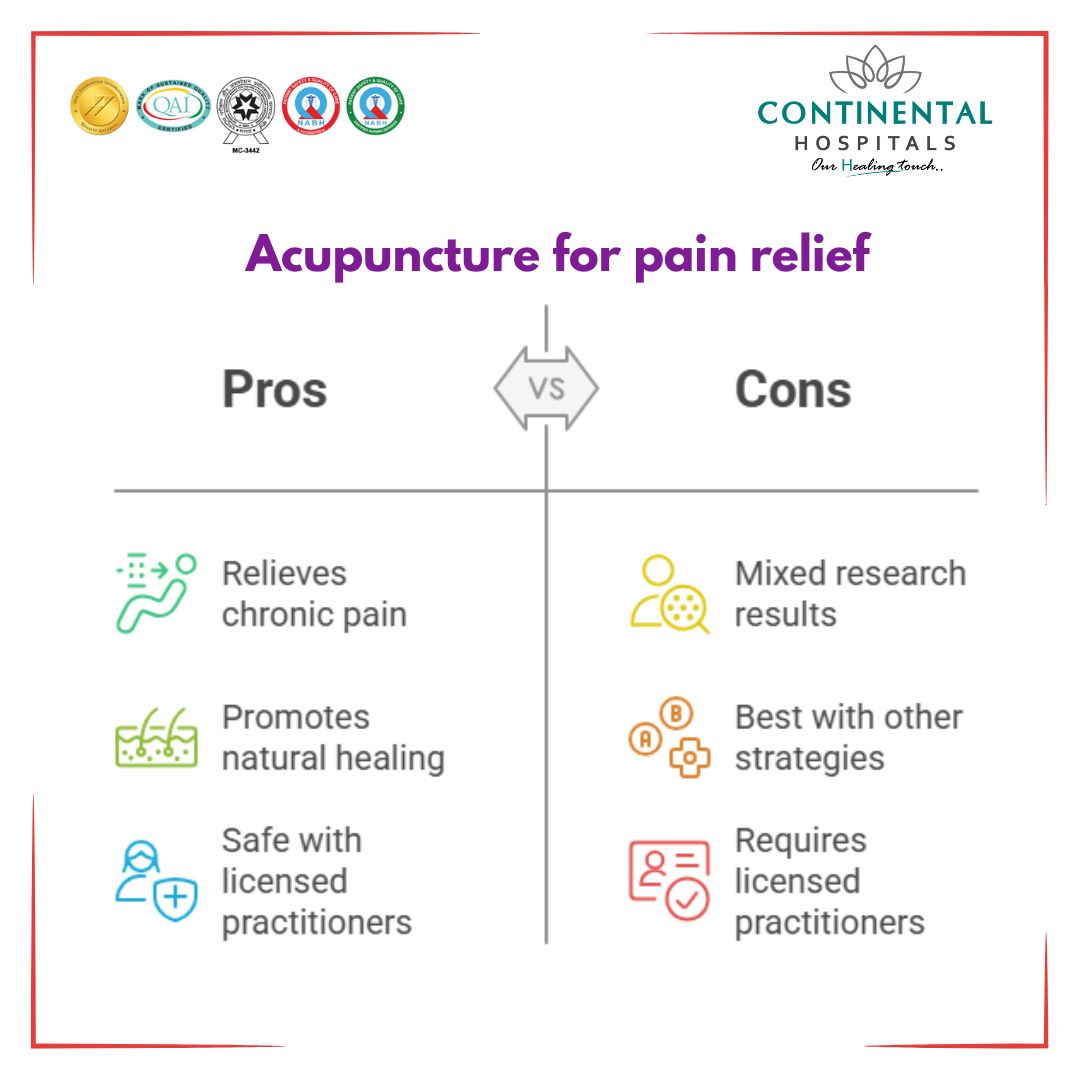
Acupuncture is generally considered safe when performed by a trained and licensed practitioner. The needles used in acupuncture are very fine, and the procedure is minimally invasive. In fact, most people report feeling relaxed and comfortable during the treatment.

However, as with any medical treatment, there are some risks, including infection, bruising, or soreness at the needle site. It’s important to ensure that your acupuncturist uses sterile needles and follows proper hygiene practices.

If you have a medical condition, such as a bleeding disorder or are pregnant, it’s important to consult with your doctor before starting acupuncture treatment.

What to Expect During an Acupuncture Session?

An acupuncture session typically lasts between 20 and 40 minutes. Here’s what you can expect:

Consultation
Before the acupuncture treatment begins, the acupuncturist will conduct a consultation to understand your medical history, current condition, and pain symptoms.

Needle Insertion
The acupuncturist will insert fine needles into specific acupuncture points on your body. The needles may be inserted to a depth of just a few millimeters or deeper, depending on the treatment area.

Relaxation
After the needles are inserted, you will be asked to lie still and relax. Most people feel very relaxed during this time, and some even fall asleep.

Needle Removal
Once the session is complete, the acupuncturist will remove the needles. You may feel some light pressure or a slight tingling sensation as the needles are withdrawn.

Post-Treatment
After the treatment, you may experience a sense of relaxation and relief from pain. It’s recommended to drink plenty of water and avoid heavy physical activity for the rest of the day.

Why Choose Continental Hospitals for Acupuncture and Pain Management?

At Continental Hospitals, we are committed to providing comprehensive care for pain management, including acupuncture. Our experienced and licensed practitioners work closely with you to develop a personalized treatment plan that addresses your unique pain needs.

Choosing Continental Hospitals means choosing a team of dedicated healthcare professionals who prioritize your health and well-being. Whether you are dealing with chronic pain or recovering from an injury, our goal is to provide effective and safe treatments to help you live a pain-free life.

We offer advanced diagnostic services, personalized treatment plans, and a range of pain management options, including acupuncture, to help you achieve long-term relief.

Conclusion: Does Acupuncture Work for Pain Relief?

Acupuncture is an effective treatment for many types of pain. Whether you’re dealing with chronic back pain, migraines, arthritis, or sports injuries, acupuncture may help reduce discomfort and promote healing by stimulating the body’s natural pain-relieving processes.


Struggling with pain? Contact Continental Hospitals for expert pain management. Visit the Best Orthopedic Specialists in Hyderabad today!

Frequently Asked Questions

Yes, acupuncture has been shown to help relieve certain types of pain, particularly chronic lower back pain, neck pain, osteoarthritis, migraines, and tension headaches. It works by stimulating specific points on the body using very thin needles, which may encourage the release of natural pain-relieving chemicals such as endorphins. Research suggests that acupuncture can reduce inflammation, improve blood circulation, and relax tight muscles. While not every patient experiences the same level of relief, many report reduced pain and improved mobility after several sessions. The effectiveness often depends on the condition being treated, the severity of symptoms, and the experience of the practitioner. Acupuncture is commonly used alongside physical therapy, medications, and lifestyle modifications rather than replacing conventional treatments. Consulting a qualified healthcare provider can help determine whether acupuncture is suitable for your condition.
Acupuncture is commonly used to manage several types of acute and chronic pain. It may be beneficial for back pain, neck pain, shoulder pain, knee pain caused by osteoarthritis, sciatica, tennis elbow, fibromyalgia, migraines, tension headaches, and muscle pain. Some people also seek acupuncture after surgery or injury to help manage discomfort during recovery. It may reduce pain intensity, improve flexibility, and enhance overall physical function. While it is not a cure for the underlying disease, it can be a valuable part of a comprehensive pain management plan. The response varies from person to person, and some conditions may require additional medical treatments. Your healthcare provider can recommend whether acupuncture is appropriate based on your diagnosis and overall health.
Acupuncture is believed to reduce pain by stimulating nerves, muscles, and connective tissues through the insertion of very fine needles into specific points on the body. This stimulation may trigger the release of endorphins, serotonin, and other natural chemicals that help reduce pain and promote relaxation. It can also improve blood circulation, decrease inflammation, and influence the nervous system's processing of pain signals. Some studies suggest acupuncture affects brain regions involved in pain perception, helping reduce sensitivity to chronic discomfort. Additionally, muscle tension may decrease, allowing better movement and function. Although the exact mechanisms are still being studied, scientific evidence supports its use for several chronic pain conditions. It is generally most effective when included as part of a personalized treatment plan.
When performed by a qualified and licensed practitioner using sterile, single-use needles, acupuncture is generally considered safe. Most people experience only mild side effects such as slight soreness, minor bruising, or temporary redness at the needle insertion sites. Serious complications are rare but may occur if the procedure is performed incorrectly or under non-sterile conditions. It is important to inform your practitioner if you have a bleeding disorder, use blood-thinning medications, have a pacemaker, or are pregnant, as certain acupuncture points may need to be avoided. Choosing a trained professional significantly reduces the risk of complications. Always discuss your medical history before starting treatment to ensure acupuncture is safe for your specific health condition.
The number of acupuncture sessions varies depending on the type, severity, and duration of your pain. Some people notice improvement after one or two sessions, while chronic conditions often require six to twelve treatments over several weeks. Your practitioner will develop a personalized treatment schedule based on your symptoms and treatment goals. As pain improves, maintenance sessions may be recommended to help sustain the benefits. Factors such as age, overall health, lifestyle, and underlying medical conditions can also influence the response to treatment. Following the complete treatment plan and combining acupuncture with exercise, physical therapy, or other medical treatments may provide better long-term results.
Acupuncture should not be considered a replacement for prescribed pain medications without medical guidance. Instead, it is often used as a complementary therapy alongside conventional treatments. Some patients experience enough pain relief to reduce their reliance on medications, but any medication changes should only be made under the supervision of a healthcare provider. Acupuncture may improve comfort, reduce stress, and enhance quality of life while supporting other treatments such as rehabilitation, exercise, or physical therapy. The goal is to create a comprehensive pain management strategy that addresses both symptoms and underlying causes. Your doctor can help determine the safest and most effective combination of therapies for your condition.
Most people experience little to no pain during acupuncture because the needles used are extremely thin, much finer than those used for injections or blood tests. You may feel a slight tingling, warmth, heaviness, or dull ache when the needle reaches the treatment point, which is generally considered normal. These sensations usually last only a few seconds. Many patients find the treatment relaxing and even fall asleep during the session. If you experience significant discomfort, you should immediately inform your practitioner so adjustments can be made. A qualified acupuncturist will ensure the procedure is performed as comfortably and safely as possible throughout the treatment.
People living with chronic pain that affects their daily activities may consider acupuncture after consulting their healthcare provider. It is commonly recommended for individuals with persistent back pain, neck pain, arthritis, migraines, muscle pain, or sports-related injuries that have not responded adequately to conventional treatments alone. Acupuncture may also benefit those seeking non-drug approaches to pain management or wishing to complement existing therapies. However, not everyone is a suitable candidate, particularly individuals with certain bleeding disorders or specific medical conditions. A thorough medical evaluation helps determine whether acupuncture is appropriate and ensures that serious underlying causes of pain are properly diagnosed and treated before beginning therapy.
Disclaimer: The information provided in this blog is intended for general knowledge and informational purposes only, and does not constitute medical advice. Always consult with a qualified healthcare professional for any medical concerns or before making any decisions about your health.

Get in Touch With Us

Whether you are from India or abroad, we are here to help you with your medical queries. Please fill out the form below and our team will connect with you shortly.

  • ✔ Quick response from our medical experts
  • ✔ Secure data handling & privacy
  • ✔ Easy upload for reports & documents
banner_image

Chat with our medical experts on WhatsApp for quick assistance and hassle-free appointment booking

Recent Posts