• Share this:
post-title

Colorectal Cancer Awareness Month

Written by - Editorial Team
Medically Reviewed by - Dr Banda Ravi Teja

Colorectal cancer is a serious condition that affects thousands of people every year, making it the second leading cause of cancer-related deaths in the United States, just behind lung cancer. According to the National Cancer Institute, in 2024 alone, more than 152,000 people are expected to be diagnosed with colon or rectal cancer, and approximately 53,000 people will succumb to it. This is a reality we cannot ignore, but there is hope—through awareness, early detection, and regular screening, colorectal cancer can be managed, and in many cases, prevented.

What Is Colorectal Cancer?

Colorectal cancer refers to cancer that starts in either the colon (large intestine) or the rectum (the lower part of the digestive system). It typically begins as non-cancerous polyps, which are abnormal growths on the lining of the colon or rectum. Over time, these polyps can develop into cancer. The good news is that these polyps can often be detected and removed before they have a chance to become cancerous.

Why Is Colorectal Cancer Awareness Important?

Many people don't realize that colorectal cancer can often be prevented or treated if caught early. The key is early detection, which is why awareness about the disease and screening is so important. In fact, screening tests such as colonoscopies can catch colorectal cancer in its earliest and most treatable stages. By detecting and removing precancerous polyps before they develop into cancer, colonoscopies can significantly reduce the risk of colorectal cancer.
How does colorectal cancer screening help prevent cancer?

Screening for colorectal cancer is essential in identifying polyps or early-stage cancer. The most common and effective screening method is a colonoscopy. During this procedure, a doctor uses a long, flexible tube with a camera to examine the colon and rectum for abnormalities. If any polyps are found, they can often be removed during the procedure, preventing them from turning cancerous.

The American Cancer Society recommends that individuals at average risk for colorectal cancer begin screening at age 45. However, those with a family history of colorectal cancer or certain other risk factors may need to begin screening earlier. Regular screening is essential for those aged 50 and older, as the risk of colorectal cancer increases significantly after this age.

Experiencing unusual symptoms or due for a cancer screening? Visit our Best Cancer Specialist in Hyderabad at Continental Cancer Centre for expert evaluation and personalized care.

What are the main risk factors for colorectal cancer?

While anyone can develop colorectal cancer, certain factors increase the risk. These include:

Age: The majority of colorectal cancer cases occur in people aged 50 and older.

Second Opinion

Family History: If you have close family members who have had colorectal cancer, your risk may be higher.

Lifestyle Factors: Diets high in red and processed meats, lack of physical activity, smoking, and excessive alcohol consumption can increase the risk of developing colorectal cancer.

Chronic Conditions: Conditions like inflammatory bowel disease (IBD), including Crohn’s disease and ulcerative colitis, can raise the risk.

Symptoms to Watch For

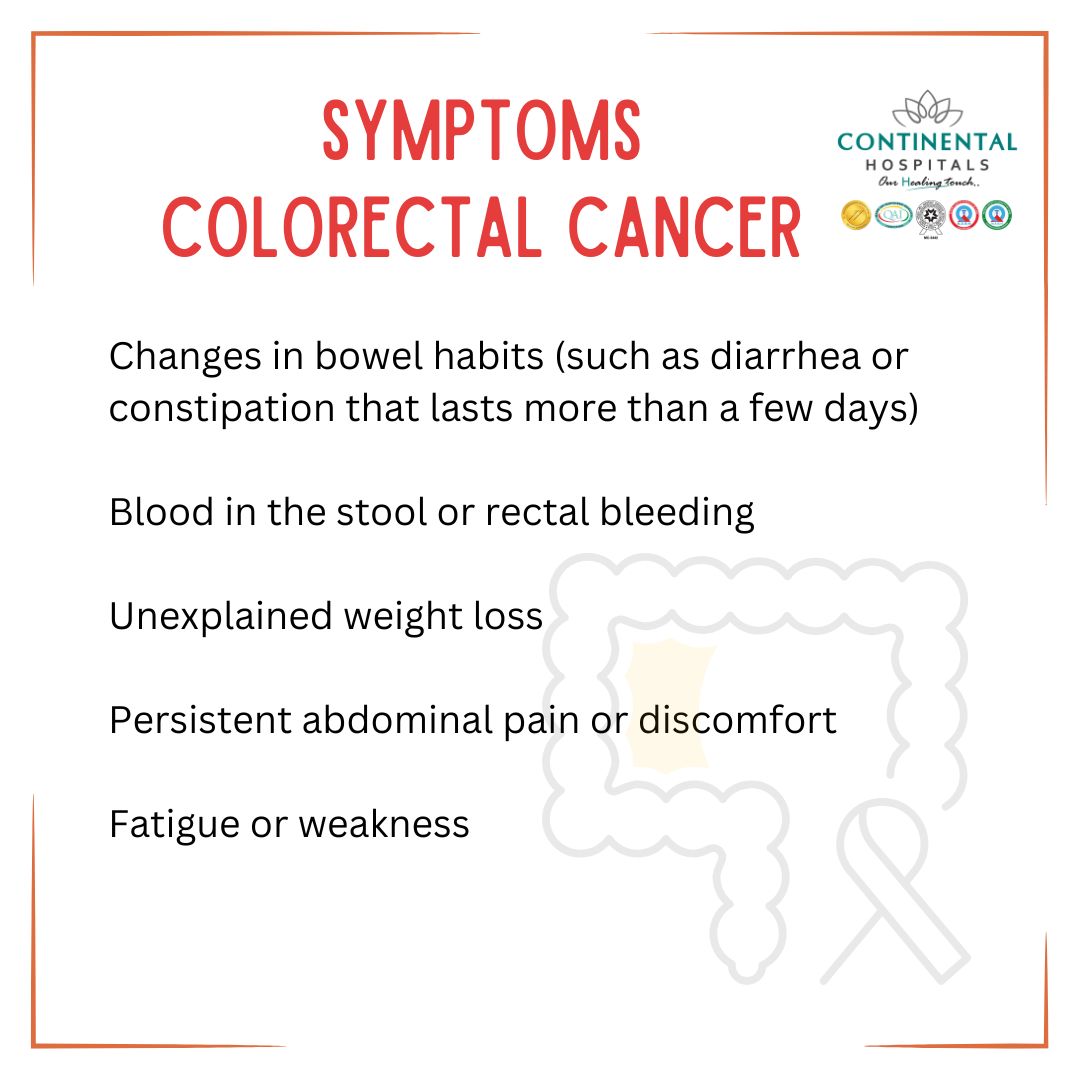
It’s important to be aware of the signs and symptoms of colorectal cancer. While early-stage colorectal cancer may not cause noticeable symptoms, the following could be red flags:

  • Changes in bowel habits (such as diarrhea or constipation that lasts more than a few days)
  • Blood in the stool or rectal bleeding
  • Unexplained weight loss
  • Persistent abdominal pain or discomfort
  • Fatigue or weakness

If you experience any of these symptoms, it’s crucial to consult with a healthcare provider to determine the cause.

Why is early detection important for colorectal cancer?

When detected in its early stages, colorectal cancer has a high survival rate. The five-year relative survival rate for localized colorectal cancer is 91.1%, according to the National Cancer Institute’s Surveillance, Epidemiology, and End Results (SEER) Program. This means that individuals whose cancer has not spread to other organs have a very good chance of survival.

However, once the cancer spreads beyond the colon or rectum, the survival rate drops significantly. This is why early detection is so vital. Catching colorectal cancer before it has a chance to spread gives patients a much better chance at successful treatment and recovery.

Need an Appointment?

Men vs. Women: Who Is at Greater Risk?

Colorectal cancer affects both men and women, but men are at a slightly higher risk than women. Additionally, certain racial and ethnic groups are more affected than others. American Indians and Alaska Natives, for example, have higher rates of colorectal cancer compared to other racial groups. Early screening and awareness are crucial to help those at higher risk stay on top of their health.

Can Lifestyle Changes Reduce the Risk of Colorectal Cancer?

Adopting a healthy lifestyle can help reduce the risk of colorectal cancer. This includes:

  • Eating a balanced diet rich in fruits, vegetables, whole grains, and fiber
  • Exercising regularly to maintain a healthy weight
  • Limiting alcohol consumption and avoiding smoking
  • Getting regular check-ups and screening tests

Taking control of your health can significantly reduce your risk of developing colorectal cancer and other chronic conditions.

Seeking Help: When Should You See a Doctor?

If you experience any of the symptoms we discussed earlier, or if you have risk factors that concern you, don’t wait for the problem to get worse. Schedule a consultation with a doctor who can evaluate your situation and recommend appropriate screenings or further tests.

Our team at Continental Hospitals is here to guide you through the process and help you stay on top of your health. Early detection saves lives, and we are committed to helping you lead a healthy, happy life.

Conclusion

Colorectal cancer is one of the most preventable cancers, thanks to early detection through regular screenings and healthy lifestyle choices. This Colorectal Cancer Awareness Month, take a moment to evaluate your risk factors, discuss your family history with your doctor, and consider scheduling a screening. The earlier colorectal cancer is caught, the easier it is to treat and manage.

Experiencing symptoms or due for screening? Contact Continental Cancer Centre, the Best Oncology Doctors in Hyderabad, for expert care today!


Frequently Asked Questions

Colorectal Cancer Awareness Month is observed every March to educate people about colorectal cancer, its risk factors, symptoms, prevention, and the importance of early detection. The campaign encourages regular screening because colorectal cancer often develops without noticeable symptoms in its early stages. Increasing awareness helps people recognize warning signs and seek timely medical care. It also highlights the importance of adopting healthy lifestyle habits that may reduce cancer risk. Public awareness initiatives encourage conversations about screening, especially among adults aged 45 years and older or those with a family history of colorectal cancer. Early diagnosis significantly improves treatment success and survival rates. Through education and preventive healthcare, Colorectal Cancer Awareness Month empowers individuals to take proactive steps toward protecting their digestive health.
Colorectal cancer may not cause symptoms during its early stages, making regular screening essential. As the disease progresses, common symptoms include persistent changes in bowel habits such as diarrhea, constipation, or narrowing of stools. Blood in the stool or rectal bleeding should never be ignored. Some individuals experience abdominal pain, bloating, cramping, or a feeling that the bowel does not empty completely. Unexplained weight loss, fatigue, weakness, and iron deficiency anemia may also occur. Symptoms can vary depending on the location and size of the tumor. These symptoms may also result from noncancerous conditions, but they should always be evaluated by a healthcare professional. Prompt medical attention can lead to earlier diagnosis and more effective treatment.
Several factors can increase the risk of colorectal cancer. Age is one of the most significant factors, with most cases occurring after the age of 45. Individuals with a personal or family history of colorectal cancer or colon polyps have a greater risk. Certain inherited conditions such as Lynch syndrome and familial adenomatous polyposis also increase susceptibility. Lifestyle factors including smoking, excessive alcohol consumption, obesity, physical inactivity, and diets high in processed or red meat contribute to risk. People with inflammatory bowel diseases such as Crohn's disease or ulcerative colitis may also have an increased likelihood of developing colorectal cancer. Understanding these risk factors allows individuals to take preventive measures and discuss appropriate screening schedules with their healthcare provider.
Although not all cases of colorectal cancer can be prevented, many can be reduced through healthy lifestyle choices and regular screening. Eating a balanced diet rich in fruits, vegetables, whole grains, and fiber supports colon health. Limiting processed and red meat intake may help lower risk. Maintaining a healthy weight, staying physically active, avoiding tobacco, and limiting alcohol consumption also contribute to prevention. Screening tests can detect precancerous polyps before they develop into cancer, making them one of the most effective preventive measures available. Individuals with a family history or other risk factors should speak with their doctor about earlier or more frequent screening. Consistent preventive care plays a key role in reducing colorectal cancer incidence.
Several screening methods are available for detecting colorectal cancer and precancerous growths. Colonoscopy is considered the gold standard because it allows doctors to examine the entire colon and remove polyps during the procedure. Stool based tests, including fecal immunochemical tests and stool DNA tests, can identify hidden blood or abnormal DNA changes associated with colorectal cancer. Flexible sigmoidoscopy examines the lower portion of the colon, while CT colonography uses imaging technology to evaluate the large intestine. The most appropriate screening method depends on an individual's age, health status, personal risk factors, and family history. Discussing options with a healthcare provider helps determine the best screening approach and schedule.
Most adults at average risk should begin colorectal cancer screening at the age of 45. Individuals with a family history of colorectal cancer, inherited genetic conditions, inflammatory bowel disease, or previous colon polyps may need to start screening earlier and undergo testing more frequently. The recommended screening interval varies depending on the type of test performed and individual risk factors. Regular screening remains important even if no symptoms are present because early colorectal cancer often develops silently. Timely screening can detect cancer at an earlier, more treatable stage or identify precancerous polyps before they become cancerous. Consulting a healthcare provider ensures a personalized screening plan based on individual health needs.
Yes. Colorectal cancer is highly treatable when diagnosed in its early stages. Early detection often allows treatment before the cancer spreads to other parts of the body. Treatment options may include surgery, chemotherapy, radiation therapy, targeted therapy, immunotherapy, or a combination of these approaches depending on the stage and characteristics of the cancer. Advances in medical technology and personalized cancer care have significantly improved patient outcomes and quality of life. Regular follow up and ongoing monitoring remain essential after treatment to detect any recurrence. Early diagnosis through routine screening continues to be one of the most effective ways to improve survival rates and achieve successful long term outcomes.
Continental Hospitals offers comprehensive colorectal cancer care through a multidisciplinary team of experienced specialists, including gastroenterologists, colorectal surgeons, medical oncologists, radiation oncologists, radiologists, and pathologists. Patients benefit from advanced diagnostic technology, high quality imaging, minimally invasive surgical techniques, precision oncology, and personalized treatment plans tailored to their individual needs. The hospital emphasizes early detection, accurate diagnosis, evidence based treatment, and compassionate patient support throughout every stage of care. Comprehensive rehabilitation and follow up services help patients achieve the best possible outcomes. With a strong focus on clinical excellence and patient centered care, Continental Hospitals is committed to delivering world class colorectal cancer treatment and long term support.
Disclaimer: The information provided in this blog is intended for general knowledge and informational purposes only, and does not constitute medical advice. Always consult with a qualified healthcare professional for any medical concerns or before making any decisions about your health.

Get in Touch With Us

Whether you are from India or abroad, we are here to help you with your medical queries. Please fill out the form below and our team will connect with you shortly.

  • ✔ Quick response from our medical experts
  • ✔ Secure data handling & privacy
  • ✔ Easy upload for reports & documents
0 / 100
Checkboxes Section


Chat with our medical experts on WhatsApp for quick assistance and hassle-free appointment booking

Recent Posts
Language Based Image
0 / 100