

Walking is a simple way to remain active and promote health. Most people adhere to the target of taking 10,000 steps daily to ensure fitness, maintain their weight, and keep their hearts healthy. However, is taking 10,000 steps a must for everybody? It all comes down to age, fitness, health condition, and the kind of physical activities you are engaged in.
The concept of taking 10,000 steps in a day has become a fitness target but not necessarily for everybody. Walking contributes significantly to good blood flow, muscle strength, good heart condition, and even improved moods. Rather than concentrating solely on the number of steps to take, one should develop a suitable exercise routine.
How Many Miles Is 10,000 Steps?
What is the number of miles in 10,000 steps? The actual number of miles in 10,000 steps depends on an individual's height, pace, and stride length. Generally speaking, 10,000 steps make between 4 and 5 miles, which equals 6.4 to 8 kilometers.
Here is a quick guide to miles in steps:
2,000 steps: 1 mile.
4,000 steps: 2 miles.
6,000 steps: 3 miles.
8,000 steps: 4 miles.
10,000 steps: 4 to 5 miles.

This way, 10,000 steps in miles varies from one individual to another. Tall people tend to make more miles since they have longer strides.
Visit the General Medicine Department at Continental Hospitals, Hyderabad, for expert medical consultation and personalized care.
How Many Minutes Will I Walk to Complete 10,000 Steps?
The time you will spend walking 10,000 steps is influenced by factors such as the pace that you walk, fitness level, and how often you take rest periods. Most adults would probably require 80 to 120 minutes to walk 10,000 steps.
It is not necessary that you walk the whole 10,000 steps at once. You can break your walking session into shorter periods during the day.
For instance,
- Walk in the morning before engaging in other activities.
- Take some minutes to walk after meals.
- Use stairs instead of lifts whenever possible.
- Take some walking breaks at work.
- Take an evening walk with your family or friends.
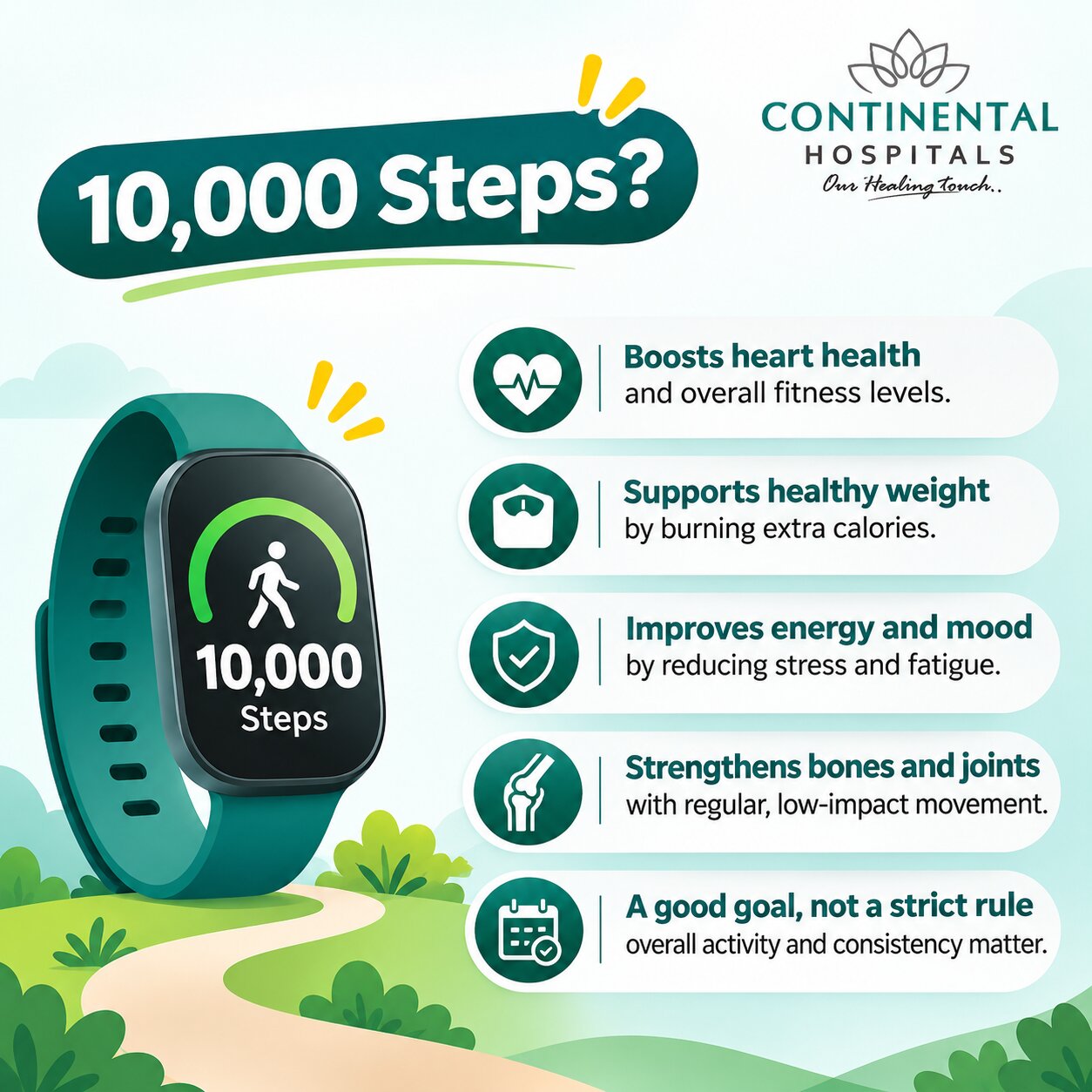
How Walking 10,000 Steps a Day Improves Your Well-being
Is it healthier to walk more often? The benefits of consistent walking include several physical and psychological benefits.
Promotes cardiovascular health: Walking promotes good circulation and maintains normal blood pressure levels.
- Assists in controlling weight: Physical exercises aid in burning calories and maintaining appropriate weight levels.
- Aids in controlling blood sugar levels: Walking assists in the consumption of glucose by muscles.
- Increases the strength of bones and muscles: Activities like walking promote strong bones and muscles.
- Promotes better mood and psychological state: It is said that walking reduces stress, improves mood, and enhances sleep.
- Improves digestion process: Walking after eating may promote better digestion.
- Boosts stamina: Consistent walking leads to improved endurance and physical fitness.
It all depends on the regularity, intensity of walking, and healthy habits of an individual.
Is It Possible for Too Much Walking to Be Harmful to Your Health?
Is there such a thing as walking too much? While walking is usually considered healthy, doing too many steps suddenly will result in additional strain on your body.
Walking too much without proper rest might result in:
- Pain and blisters in feet.
- Knee or ankle pain.
- Muscle soreness and fatigue.
- The higher likelihood of developing overuse injuries.
- Worsening existing joint problems.
People with heart issues, arthritis, poor balance, or other health conditions should consult their doctor about an appropriate level of physical activity.
Keep in mind that walking 10,000 steps a day is not obligatory. Even a small amount of additional activity can be beneficial for your health.
How Can You Develop a Healthy Walking Habit?
How can you walk consistently without overburdening yourself?
Here are some easy ways to do that:
- Walk according to your present level of activity.
- Walk farther bit by bit.
- Use comfy shoes with adequate support.
- Drink enough water.
- Select safe walking paths.
- Walk at an easy speed and gradually increase your speed.
- Give yourself time to heal and recover.
Do not exercise further and consult your doctor if you experience chest pains, difficulty breathing, and dizzy spells.
More important than reaching a certain number of steps each day is the consistency of your walks.
Why Select Continental Hospitals for Preventive Health Care?
Why is professional counseling necessary while initiating a fitness regimen? Your ideal activity will be determined based on your age, heart function, joint condition, and many other aspects of your health status. Through professional counseling, you can learn about your physical health and be advised accordingly regarding exercise habits.
Continental Hospitals, Hyderabad offers comprehensive health care through experienced doctors and state-of-the-art diagnosis and testing facilities, among others. The hospital boasts national and international accreditations in the field of health care, like NABH and JCI, among others.
In this way, patients are able to get counseling on how to stay active and healthy through preventive health check-ups and specialist counseling.
Conclusion
The daily routine of walking 10,000 steps can be considered an excellent fitness goal but not the only way to stay healthy. Being physically active, moving constantly, eating correctly, and having enough sleep play the same significant role.
Do not forget about these facts:
- 10,000 steps make up about 4 to 5 miles.
- The time spent while walking is dependent on your speed and step length.
- Even smaller goals of walking have positive effects on health.
- A gentle increase in activity can prevent injuries.
- Your perfect number of steps depends on you and your condition.
In case you have continuous joint pain, feel breathless while doing exercises, get unusually tired, or experience any other health problems, please consult our best general physician in Hyderabad at Continental Hospitals, Hyderabad.