.webp)


A blocked tear duct is a common condition in newborns and infants. While it may sound alarming to parents, most cases are mild and resolve naturally. Understanding the symptoms, causes, and proper care can help ensure your baby’s eyes stay healthy and prevent complications. Early recognition of infant blocked tear duct symptoms allows for timely intervention and provides comfort for your child.
If your baby shows signs of tear duct obstruction in infants or recurrent eye infections, visit our Pediatrics Speciality at Continental Hospitals, Hyderabad.
What Is a Blocked Tear Duct in Babies?
The tear ducts are small channels that drain tears from the eyes into the nose. In some infants, these ducts do not fully open at birth, causing tears to build up in the eye. This condition is known as a blocked tear duct in babies. While it is generally not serious, it can cause discomfort, eye discharge, and sometimes infections if left untreated.
Signs of Tear Duct Blockage in Newborns
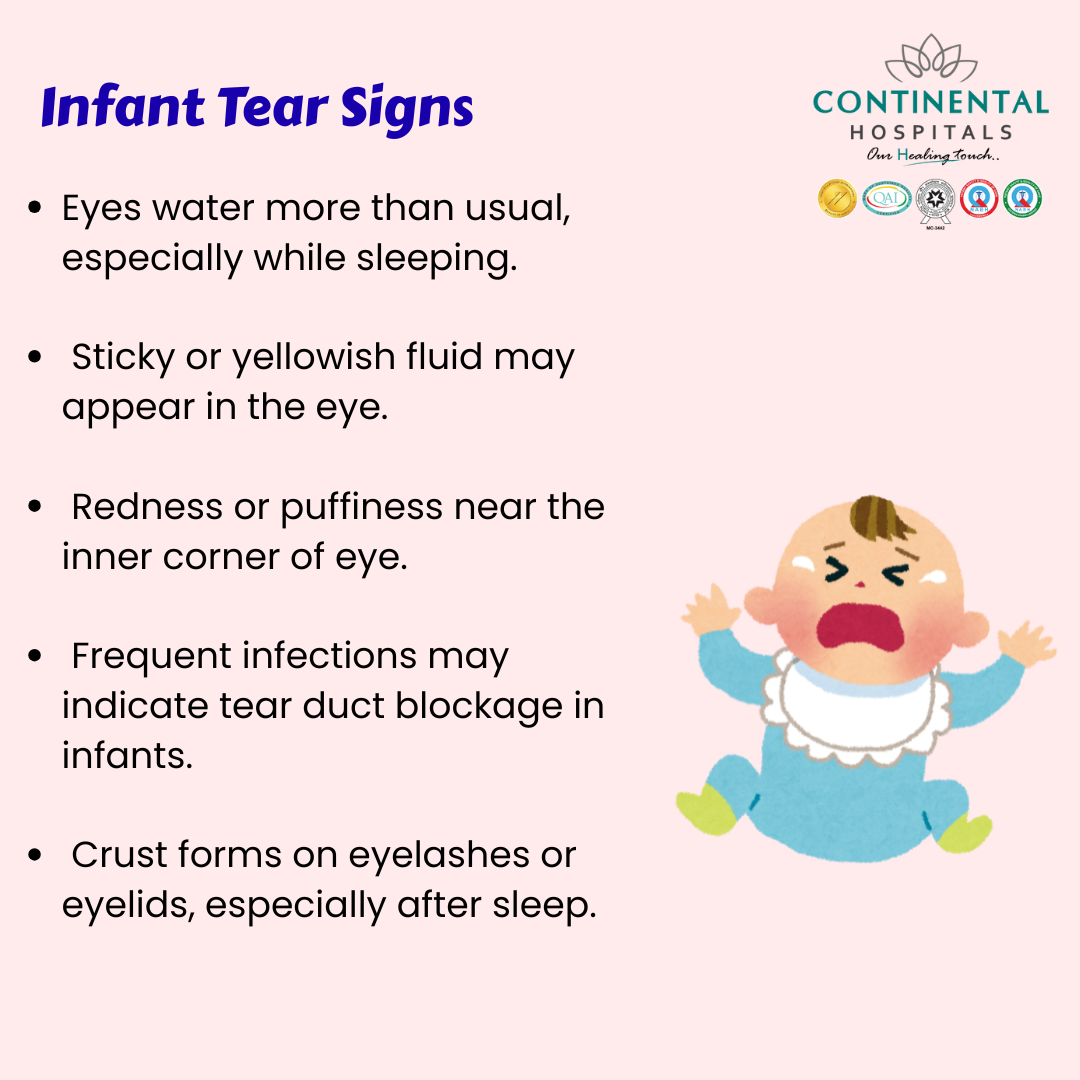
Parents should watch for specific signs that indicate a tear duct blockage. Recognizing these symptoms early is important to prevent infection and ensure proper care. Common signs of tear duct blockage in newborns include:
• Excessive tearing or watery eyes
• Sticky or yellowish eye discharge
• Crusting around baby’s eyes, especially after sleep
• Swelling or redness near the inner corner of the eye
• Recurrent eye infections
These infant blocked tear duct symptoms can appear in one or both eyes. If these signs persist for several weeks, it is important to consult a pediatric ophthalmologist.
Causes of Blocked Tear Duct in Infants
A blocked tear duct in babies typically occurs due to incomplete development of the nasolacrimal duct. Other contributing factors may include:

• Narrow tear ducts
• Debris or mucus accumulation
• Minor congenital defects in tear drainage
• Infections that temporarily block the duct
Understanding the cause helps guide appropriate tear duct blockage treatment for infants. Most cases resolve naturally as the duct matures over the first year of life.
Tear Duct Blockage Treatment for Infants
Many cases of blocked tear duct in babies improve without surgical intervention. Treatment focuses on relieving symptoms and preventing infection.
Eye Care for Newborn Blocked Duct
Regular cleaning of the eyes using sterile cotton or gauze can help remove discharge. Wipe gently from the inner corner outward to avoid spreading bacteria.
Blocked Tear Duct Massage for Babies
Massaging the area over the tear duct helps open the blocked channel. Use clean fingers to gently press and release in a downward motion several times a day. This technique is safe and effective for most infants.
Tear Duct Blockage Home Care
Simple home care can reduce discomfort and prevent complications. This includes:
• Keeping the eye area clean and dry
• Using warm compresses to loosen secretions
• Washing hands before touching the baby’s face
• Monitoring for signs of infection
Medical Intervention
If home care does not improve symptoms, a pediatric ophthalmologist may recommend further treatment. Options include:
• Prescription eye drops or antibiotics for infections
• Minor procedures to open the duct if blockage persists
When to See a Doctor for Baby Tear Duct Blockage
While many cases resolve naturally, certain signs indicate the need for professional evaluation:
• Persistent eye discharge or tearing beyond a few weeks
• Yellow or green discharge suggesting infection
• Swelling or redness that worsens
• Recurrent eye infections
• Signs of discomfort or pain in the baby
Early consultation ensures proper management and reduces the risk of complications.
Preventing Tear Duct Infections
Infants with blocked tear ducts are more prone to eye infections. Parents can minimize the risk by:
• Keeping hands clean before handling the eyes
• Cleaning the eyelids gently each day
• Using sterile cotton or gauze for discharge
• Avoiding rubbing the eyes frequently
These simple steps help maintain eye hygiene and prevent irritation.
Why Choose Continental Hospitals for Infant Eye Care?
Continental Hospitals is recognized as the Best hospital in Hyderabad, infants with tear duct issues receive expert evaluation and treatment. The hospital is nationally and internationally accredited, reflecting its commitment to clinical excellence, patient safety, and high-quality care.
Key reasons to choose Continental Hospitals include:
• Experienced pediatric ophthalmologists specializing in newborn eye care
• Advanced diagnostic and treatment facilities
• Personalized care plans tailored to each infant
• Multidisciplinary approach for comprehensive eye and pediatric health
• Comfortable and child-friendly environment for families
These features make Continental Hospitals the best hospital in Hyderabad for managing infant eye conditions, including blocked tear ducts.
Conclusion
A blocked tear duct in infants is a common and usually manageable condition. By recognizing infant blocked tear duct symptoms such as excessive tearing, eye discharge, crusting, and swelling, parents can provide effective care at home and seek timely medical advice if needed.
If your baby shows signs of tear duct obstruction in infants or recurrent eye infections, consult our best Pediatrician at Continental Hospitals, Hyderabad. Expert evaluation, advanced diagnostics, and personalized care can ensure your child’s eyes remain healthy and comfortable.
Related Blog: