.webp)


Obesity is increasingly becoming one of the most prevalent public health concerns all around the world, and it is affecting all age groups. While most people know that obesity might increase the risk of diabetes, high blood pressure and heart disease, fewer think that it might also affect the health of the brain. In recent times, studies have suggested a strong link between obesity and Alzheimer’s disease, increasing concerns that excess body weight might impact memory, thinking, and overall cognitive health.
Alzheimer’s disease is a brain disorder that gradually destroys memory and thinking abilities. It is the most common cause of dementia among older adults. Researchers now suspect that obesity and Alzheimer’s disease may, in fact, be closely linked, as obesity can cause inflammation, vascular damage, hormonal imbalances, and metabolic changes that can affect the brain.
By understanding the link between obesity and cognitive deterioration, people might be able to take the appropriate preventive steps, and safeguard their long-term brain health.
What Is Alzheimer’s Disease?
Alzheimer’s disease is a neurological disease that gradually destroys memory and thinking abilities. Over time, it can hinder an individual's ability to complete everyday tasks independently.
The condition usually takes years to develop and deteriorate. Early diagnosis and lifestyle changes may help slow its progression and improve quality of life.
Concerned about obesity and its impact on brain health, memory, or Alzheimer’s disease? Visit the Best Neurology Hospital in Hyderabad at Continental Hospitals for expert evaluation, advanced diagnosis, and personalized care from our experienced neurologists in Hyderabad.
What are the symptoms of Alzheimer’s disease?
Like most diseases, Alzheimer’s can affect patients quite differently. Below are some of the symptoms that you might notice in a loved one:
- Memory loss that affects day-to-day living
- Unable to remember names or recent events
- Difficulty keeping track of time or location
- Inability to solve problems or make decisions
- Difficulty with familiar tasks
- Feeling off or experiencing changes in personality
- Losing items often
- Lowered judgment and ability to stay focused
- Loss of interest in socializing
Once the patient’s condition progresses, they may have trouble speaking or swallowing, and they might have difficulty recognizing people they love.

How Does Being Obese Impact Your Brain?
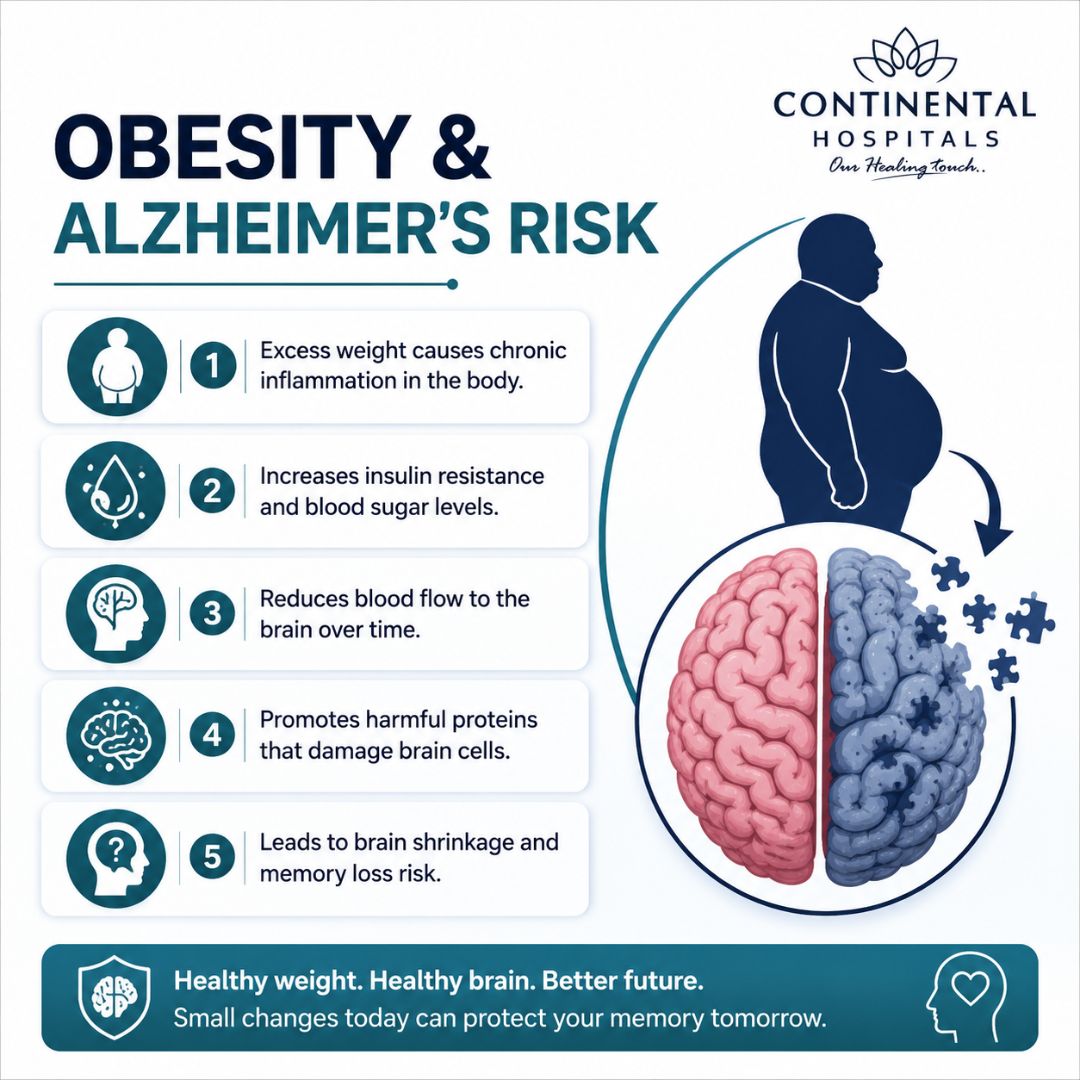
Too many people don’t realize the impact that being overweight may have on one’s brain. How much body fat you carry can affect your brain in a number of ways. Obesity can cause chronic inflammation, low blood circulation, insulin resistance, and hormonal changes, which can damage brain cells over time.
What Can Inflammation Do To Your Brain?
Inflammation throughout the body is heightened in obese people. The ongoing inflammatory response can damage neurons and impede communication between brain cells. Researchers believe this constant inflammation is a contributing factor in the progression of Alzheimer’s disease.
How Does Poor Blood Flow Impact the Brain?
Obesity induces high blood pressure and cholesterol buildup in the blood vessels. Poor blood flow to the brain may deprive brain cells of oxygen and other nutrients, raising the risk for reduced cognitive function.
Can Insulin Resistance Impact Memory?
Insulin resistance is common in obesity and may affect the brain’s use of glucose. Because the brain uses glucose for energy, impaired insulin signaling may play a role in memory loss and Alzheimer’s disease.
Why Is Obesity One of the Alzheimer’s Disease Risk Factors?
A number of studies suggest that obesity in midlife raises the risk of Alzheimer’s disease late in life. Researchers think that obesity and Alzheimer’s disease are linked by several mechanisms.
Among the major Alzheimer’s disease risk factors related to obesity are:
- Chronic inflammation
- Diabetes and insulin resistance
- High blood pressure
- High cholesterol levels
- Sleep apnea
- Sedentary life
- Unhealthy diet
- Little physical activity
Abdominal obesity may confer a higher risk, because excess belly fat can release chemicals that produce inflammation, which can negatively impact brain health.
How Does Obesity Flatline Our Brains?
Obesity and cognitive decline are herding into each other’s pasture. Your weight may influence your learning ability, attention, information processing speed, and memory.
What Happens Brainwise from Obesity?
Emerging research shows obesity may result in:
- Shrunken brain areas
- Lower gray matter volume
- Memory processing disturbances
- Elevated oxidative stress
- Higher concentrations of neurotoxic proteins linked to Alzheimer’s disease
The combination of these changes can result in diminished cognitive performance and a higher likelihood of developing dementia.
Can Childhood or Adult Obesity Increase Our Risk of Dementia in the Future?
Yes. Findings demonstrate that future brain health may be impacted by obesity in middle age. Staying healthy and maintaining a healthy weight in the past may reduce the risk of developing Alzheimer’s disease.
What Are the Ways to Diagnose Alzheimer’s Disease?
There are different techniques that doctors use to assess the level of Alzheimer’s disease and to establish cognitive function.
The methods include:
- Medical history assessment
- Physical examination
- Neuro exam
- Memory and cognitive tests
- Brain scan like MRI or CT scan
- Blood test to exclude other conditions
Early detection is vital in symptom management and to preserve the quality of life.
Treatment Options for Alzheimer’s Disease?
Recent advances in Alzheimer’s treatment have enabled patients and doctors to better live with the disease, though there is currently no definitive cure. However, there are ways to manage symptoms and slow the disease’s progression.
How is Alzheimer’s disease treated?
Doctors can prescribe medication to:
- Improve memory and thinking skills
- Help regulate mood changes
- Reduce anxiety or behaviors
Lifestyle Changes for Managing Alzheimer’s Disease and Obesity
In addition to medication, lifestyle changes can go a long way in preventing obesity and Alzheimer’s disease.
If you’re trying to prevent or manage Alzheimer’s disease, start with these healthy lifestyle habits:
- Keep a healthy body weight
- Exercise regularly
- Eat healthy foods
- Control blood pressure and diabetes
- Keep your brain moving
- Get enough sleep
- Stop smoking
- Limit alcohol consumption
Can You Prevent Alzheimer’s Disease and Obesity?
You can’t prevent every case of obesity or Alzheimer’s disease, but it may be possible to prevent or significantly reduce the chance of developing it, according to the National Institute of Health.
Foods Promoting a Healthy Brain
It may be possible to protect the brain from disease and inflammation with healthy eating. In particular, foods like:
- Fruits and vegetables
- Whole grains
- Nuts and seeds
- Fatty fish (high in omega-3 fats)
- Olive oil
- Lean proteins
Also limit processed foods, sugary drinks, and some types of fat to reduce obesity’s harmful impact on the brain.
Why is exercise important?
It helps promote proper blood circulation, lessen inflammation, and maintain cognitive functions.
Treatments that might help are:
- Walking
- Bicycling
- Swimming
- Yoga
- Strength training
Most doctors advise at least 30 minutes of moderate exercise most days of the week.
Can mental stimulation help?
Keeping your brain busy can possibly support your brain health.
Treatments that might help are:
- Reading
- Puzzles
- Learning something new
- Socializing
- Stress management, and meditation
When do you know to see a doctor?
If you or a family member experience any of these
- Memory loss
- Inability to focus
- Confusion
- Unusual changes in behaviour
- Difficulty with daily routines
- Decline in cognitive function
Patients with obesity, diabetes, or heart disease should be examined regularly to diagnose brain and metabolic health issues.
Why Should You Go to Continental Hospitals for Alzheimer’s Disease?
Continental Hospitals provides a full range of services for patients with Alzheimer’s disease as well as other neurological disorders. Our professional team is focused on the early detection, treatment, and care for these patients to achieve the best possible outcomes.
Reasons why Continental Hospitals are the best choice to go to:
- Qualified neurologists and psychiatrists
- Multidisciplinary doctors
- Modern diagnostic and imaging techniques
- Individualised and customised treatment
- Cognitive and neurological care
- JCI Accreditation
- NABH Accreditation
- Highly equipped facility
- Emergency and critical care
- Safety and caring
Continental Hospitals provides holistic care for patients being affected by obesity, cognitive decline, and neurological diseases with the help of qualified doctors and modern technology.
Conclusion
This has become increasingly relevant with our awareness about the link between obesity and Alzheimer’s disease. Obesity can lead to inflammation, poor blood flow, and metabolic changes that increase the risk of dementia and cognitive decline. By managing weight, exercising regularly, eating healthy foods, and visiting doctors for regular check-ups, we can perhaps reduce the chances of getting Alzheimer’s disease and safeguard brain health for years.
Any questions pertaining to obesity and Alzheimer’s disease? Consult our best neurologist in Hyderabad at Continental Hospitals. Visit Continental Hospitals for the best diagnosis, treatment, and management.
Related Blog Topics: