.webp)


When we discuss the health risks associated with extra weight, heart health and diabetes often take center stage. There is, however, one other pair of vital organs that has a massive overload from excessive body weight: your kidneys.
You may wonder what effect excess body weight has on kidney (renal) function. Knowing the impact of excess weight on kidney function is key to ensuring long-term health. The link between obesity and renal disease is very direct, serious, and often silent until the damage is done. By understanding the risks, you can do more to protect your health.
Your kidneys are the ultimate filter in your body, responsible for purging waste products, balancing fluids, and regulating blood pressure. As body mass increases, these small organs shoulder much more of the workload of extra tissue, and over the years, this increased strain can result in serious changes in the function of the kidney that can never be fully reversed.
How Does Obesity Directly Impact Your Kidneys?
To understand how obesity and renal disease are connected, it is helpful to understand the physical stress imposed on the renal system. Why does extra body weight put your kidneys at risk?
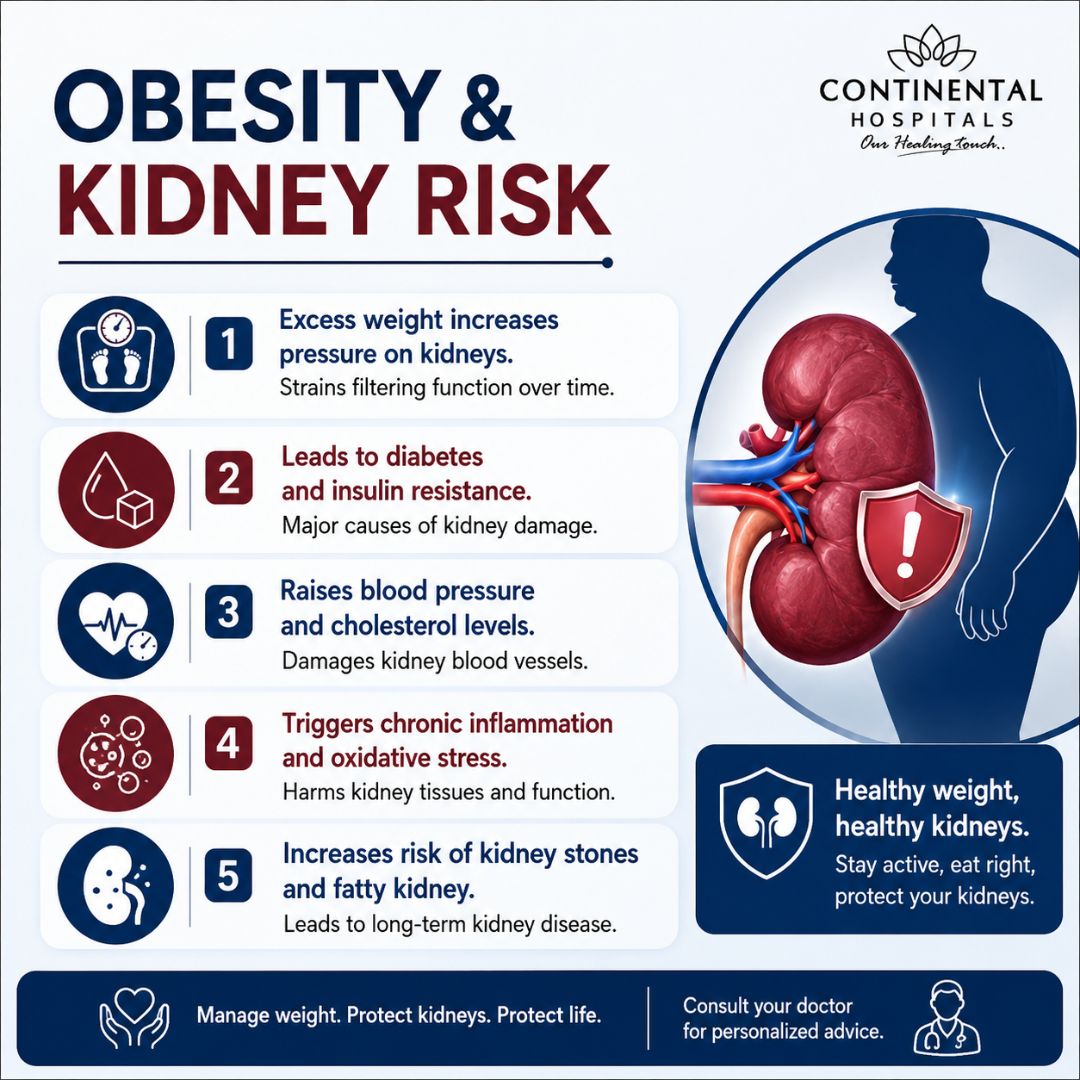
- Hyperfiltration Stress: As a person increases in body mass, the kidneys must filter more blood than is considered normal to sustain the metabolic needs of the body. This constant overwork is known as hyperfiltration. Over the years, this constant load has the potential to damage the individual filtering units of your kidneys.
- Direct tissue damage: The physical pressure and metabolic changes associated with excess weight can lead to a condition called focal segmental glomerulosclerosis. This is a specific type of kidney scarring that occurs directly because of the increased workload placed on the organs.
- Chronic inflammation: Excess fat tissue is not inactive. It produces inflammatory chemicals and hormones that circulate throughout the body. This continuous, low-grade inflammation damages blood vessels and healthy tissues, including the sensitive filters in your kidneys.
Visit the Nephrology Department at Continental Hospitals for expert kidney care, comprehensive screening, and personalized treatment from our experienced nephrologists.
What Are the Indirect Ways Obesity Causes Kidney Problems?
In addition to the direct strain on your kidneys, being overweight also tends to increase the risk of other major health conditions. And these other conditions are often the main reasons for long-term kidney damage.
Blood pressure
How obesity can harm your kidneys is intimately linked to blood pressure. Extra weight makes your heart work harder, which raises the pressure throughout all your blood vessels. The kidneys are full of tiny, fragile blood vessels. When high blood pressure repeatedly puts pressure on these vessels, they become hardened and scarred, cutting down their filtering power.
Type 2 Diabetes
Diabetes is another major pathway where the obesity risk for kidney disease becomes a reality. Excess weight can cause your cells to become resistant to insulin, which can lead to high blood sugar. Chronic high blood sugar is like a toxin to kidney filters, slowly killing them off over time and causing diabetic nephropathy.

What Are the Hidden Symptoms of Obesity-Related Kidney Damage?
Perhaps the most concerning aspect of kidney disease caused by obesity is that it is so silent it most of the time will occur without any remarkable symptoms in the early phases of the disease.
- Frequency of urination: You might feel an increased urge to urinate, especially during the night, or the urine may appear excessively foamy, a sign of leak of protein into the urine.
- Swelling of the extremities: If the kidneys are becoming less able to get rid of excess fluid and sodium, excess fluid will stay in the tissues of your body. The fluid often accumulates in the ankles, feet, and legs.
- Sensation of tiredness: as kidney function declines, toxins accumulate in the blood, and you might feel excessively tired, weak or simply not able to focus.
- High blood pressure that is difficult to normalize: if your blood pressure has become very difficult to bring down with only safe lifestyle changes, it could be a sign of kidney disease.
Why Is Preventing Obesity and Chronic Kidney Disease Critical?
If this disease is left untreated, it can lead to chronic kidney disease, a condition where the kidneys gradually become less and less able to function. When it has reached the end stage the kidneys stop working entirely, and treatment with life-saving dialysis or a kidney transplant is required.
This is good news for you because reducing body weight can effectively stop or even reverse the early stress imposed on your kidneys. Lowering your weight reduces internal inflammation, blood sugar, and blood pressure.
Why Choose Continental Hospitals for Kidney Care?
When it comes to metabolic and renal health, it is important to choose the best partner for your healthcare needs. Continental Hospitals has always been at the top of the list.
International Recognition of Continental Hospitals: Continental Hospitals is globally known for maintaining the best standards in healthcare safety and clinical practices. It holds the elite accreditation from the US Joint Commission International, which is the gold standard of quality in global healthcare. It is also accredited by the National Accreditation Board for Hospitals and Healthcare Providers.
Integrated Care System: We have a comprehensive approach to your health. Our state-of-the-art department of bariatric and metabolic sciences works seamlessly with our world-class nephrology team to address your kidney health along with weight management.
Advanced Diagnostic and Infrastructure: Our hospital has the best dialysis units and state-of-the-art technology. We also have advanced surgical suites and precise diagnostic imaging to monitor your kidney health and identify early signs of stress before it leads to drastic damage.
Patient-Centered Approach: We have a one-stop solution to your weight and kidney health issues. We personalize every treatment plan to cater to your needs in terms of lifestyle management, medical therapies, and long-term preventative measures.
Conclusion
The connection between obesity and kidney disease is apparent, but it’s a problem you can work to avoid. Managing your weight isn’t just about looking good, but about protecting the organs inside you from damage that feels little, happens slowly, and can amount to a lifetime. A balanced lifestyle and timely medical advice keep your kidneys in good standing for years to come.
If you struggle with your weight, high blood pressure, or urinary habits, don’t wait for the worst symptoms to appear. Early screening checks for signs of kidney stress while it’s still preventable. Consult our best nephrologist in Hyderabad at Continental Hospitals today for a complete assessment of your renal health and a personalized wellness plan.
Related Blog Topics: