.webp)

Choosing between regular soft drinks and diet sodas is a daily decision for millions of people looking for a quick refreshment. The appeal of zero calories and zero sugar makes diet options seem like a perfect shortcut for weight management. However, understanding the actual impact of these beverages requires looking beyond the nutrition label to see how they truly affect your body.
The shift toward sugar-free alternatives is driven by a global effort to reduce sugar intake and combat conditions like obesity and diabetes. While eliminating standard sugar removes immediate empty calories, the artificial sweeteners used in place of sugar introduce a different set of biological responses. Medical science reveals that these chemically engineered alternatives carry distinct health considerations.
Evaluating the true value of diet sodas involves looking closely at metabolic changes, dental health, and long-term wellness indicators. Continental Hospitals provides this comprehensive clinical analysis to help you separate marketing claims from medical facts. Deciding which beverage fits your health goals requires evaluating how your specific system processes these complex ingredients.
What Makes Diet Sodas Different From Regular Soft Drinks?
The foundational difference lies entirely in how these two categories of beverages are sweetened. Regular soft drinks rely heavily on high-fructose corn syrup or sucrose, which delivers standard carbohydrates that your body breaks down immediately for energy. Diet sodas substitute these natural sugars with synthetic chemicals to mimic the sweet flavor without the corresponding caloric load.
- Artificial Sweetener Formulations: Production lines use intense chemical combinations, including aspartame, sucralose, saccharin, and acesulfame potassium, to match the flavor profile of standard corn syrup.
- The Caloric Paradox: Because the synthetic chemicals are hundreds of times sweeter than regular sugar, manufacturers only need minute amounts, resulting in a nutritional panel that reads zero calories.
- Chemical Preservatives and Acids: Both beverage types share high levels of phosphoric acid, citric acid, and sodium benzoates to maintain shelf stability and create the familiar sharp taste.
Chronic fatigue, unexplained weight gain, or blood sugar fluctuations? Visit our Endocrinology Department at Continental Hospitals today.
Is Diet Soda Bad for You in Terms of Weight Management?
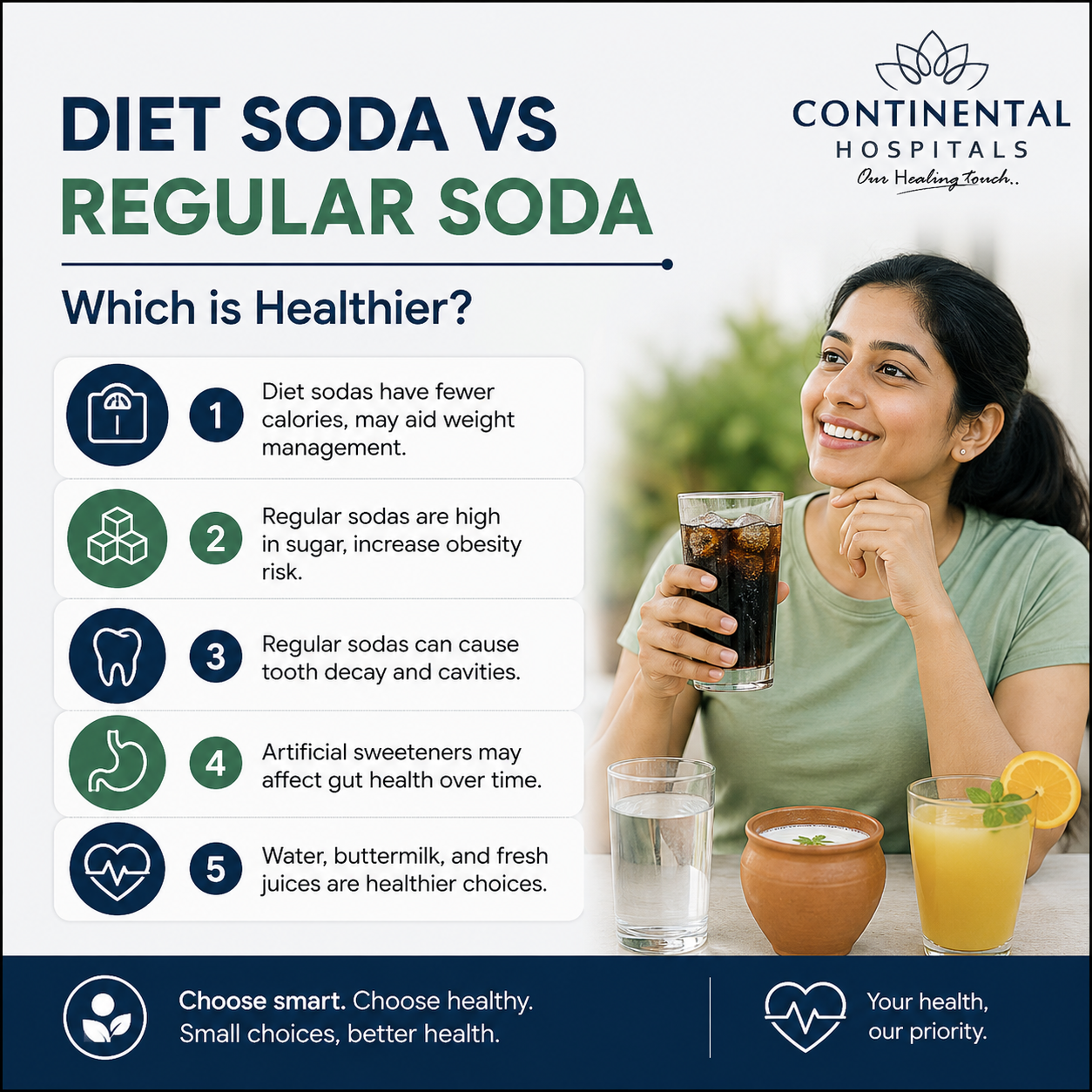
The relationship between diet sodas and weight loss is far more complex than a simple subtraction of daily calories. While switching from a sugary drink to a sugar-free alternative cuts down immediate energy input, clinical observation shows that synthetic sweeteners frequently alter standard biological signaling paths.
- Disruption of Metabolic Signals: The intense sweetness of diet sodas activates the sweet taste receptors on your tongue, signaling your stomach to prepare for incoming sugar. When no actual sugar arrives, your metabolic system experiences confusion, which can lead to increased insulin production without any glucose to process.
- Appetite and Sugar Cravings: Because the brain receives the sensation of sweetness without the physical satisfaction of energy calories, it frequently compensates by triggering intense cravings for high-calorie carbohydrates later in the day.
- Altered Gut Microbiome Dynamics: Recent medical studies suggest that artificial sweeteners can negatively alter the composition of beneficial bacteria in your digestive tract, potentially leading to glucose intolerance and sluggish metabolic performance.
How Do Sugar-Free Alternatives Impact Dental and Bone Structure?
A common misconception is that eliminating sugar removes all risks of dental damage and structural breakdown. While it is true that oral bacteria require sugar to produce the acids that cause standard cavities, the inherent chemical nature of both standard and diet beverages remains highly destructive to your physical anatomy.
- Enamel Erosion via Acid Activity: Diet sodas maintain an incredibly low, acidic pH level due to the presence of heavy phosphoric and citric acids. This direct acidity softens and dissolves the protective outer layer of dental enamel independently of sugar content.
- Calcium Depletion Risk Factors: High intake of phosphoric acid can interfere with your body's natural balance of calcium and phosphorus. When blood phosphorus levels rise excessively, your system may draw calcium out of your bone structures to restore balance, which can affect overall bone density over time.
- Dry Mouth Complications: The chemical mixtures and carbonation can decrease natural saliva production, removing the primary defense mechanism your mouth uses to neutralize everyday acids and wash away food particles.
Summary Table: Diet Soda vs Regular Soda Metabolic Profiles
| Medical Evaluation Criteria | Regular Soft Drinks | Diet Sodas |
| Immediate Glycemic Impact | Causes a rapid spike in blood glucose levels | Does not immediately raise blood glucose levels |
| Insulin Response Trigger | High insulin release to process heavy sugar loads | Cephalic phase insulin release from sweet taste receptors |
| Caloric Energy Yield | Provides high amounts of non-nutritional empty calories | Provides zero usable caloric energy to the body |
| Dental Enamel Vulnerability | High risk from bacterial acids and chemical acidity | High risk from direct chemical acidity erosion |
| Impact on Appetite Signaling | Temporarily satisfies energy needs but causes crashes | Triggers subsequent cravings due to unmet energy signals |
Why Choose Continental Hospitals for Your Metabolic and Nutritional Health?
Managing your metabolic health requires guidance from a trusted medical institution that prioritizes clinical precision, accurate diagnostics, and comprehensive patient care. Continental Hospitals stands as a premier destination for individuals seeking to optimize their dietary health and address systemic wellness concerns.
- Prestigious Global and National Accreditations: Continental Hospitals maintains the highest tiers of clinical quality assurance, proudly holding Joint Commission International (JCI) accreditation alongside National Accreditation Board for Hospitals and Health Care Providers (NABH) certification, ensuring that your treatment aligns with rigorous international safety protocols.
- Advanced Diagnostic Infrastructure: Our facility features state-of-the-art laboratory services and specialized metabolic assessment clinics that allow our medical teams to evaluate exactly how dietary habits are affecting your internal biochemistry.
- Multidisciplinary Expert Teams: Patients benefit from a seamless, collaborative approach where experienced endocrinologists, therapeutic nutritionists, and gastroenterologists work together to build custom wellness programs tailored to your precise physical profile.
Conclusion
When examining whether diet sodas are truly healthier than regular soft drinks, the medical consensus indicates that while diet options avoid immediate blood sugar spikes, they do not qualify as a health food. They simply trade the well-documented risks of high sugar intake for a separate set of metabolic and chemical disruptions. True dietary optimization relies on replacing processed beverages with natural choices like water, herbal infusions, or unsweetened drinks.

If you suffer from chronic fatigue, unexplained weight gain, or fluctuations in blood sugar levels, do not ignore these signs. Seek expert medical advice today. Consult our best endocrinologist in Hyderabad at Continental Hospitals.
Related Blog Topics: