.webp)


Smartphones have become an essential part of daily life. From checking emails and attending virtual meetings to scrolling through social media and watching videos, many people spend several hours looking down at their screens. While this habit may seem harmless, it can gradually affect your posture and lead to a condition known as tech hump. Many people ignore the early warning signs until neck pain, stiffness, and shoulder discomfort begin interfering with everyday activities.
A tech hump develops when poor posture is maintained for long periods, especially while using a smartphone, tablet, or laptop. Looking down repeatedly places excessive stress on the neck and upper back, causing the muscles to weaken and the spine to lose its natural alignment. Understanding the signs of tech hump and taking timely action can help prevent long term complications and improve overall spinal health.
What is a Tech Hump?
A tech hump is a visible rounding or swelling that develops at the base of the neck due to prolonged poor posture. It is commonly associated with excessive smartphone use, making it one of the growing health concerns among teenagers, office workers, and professionals.
Unlike age-related spinal changes, a tech hump often develops because of repeated forward head posture. Over time, the muscles, ligaments, and joints become strained, leading to discomfort and noticeable changes in posture.
Visit our best neuro doctor hyderabad at Continental Hospitals for a comprehensive evaluation, accurate diagnosis, and advanced treatment for conditions affecting the brain, spine, and nervous system.
Why Does Smartphone Posture Cause a Tech Hump?
When you hold your smartphone below eye level, your head naturally bends forward. The human head weighs several kilograms, but as it tilts forward, the pressure on the cervical spine increases significantly. This continuous stress can gradually lead to tech hump, tech neck, and chronic neck pain.
Poor phone posture also weakens the muscles that support the neck and shoulders while tightening the muscles in the chest and upper back. Without correction, this imbalance may eventually lead to a visible neck hump.
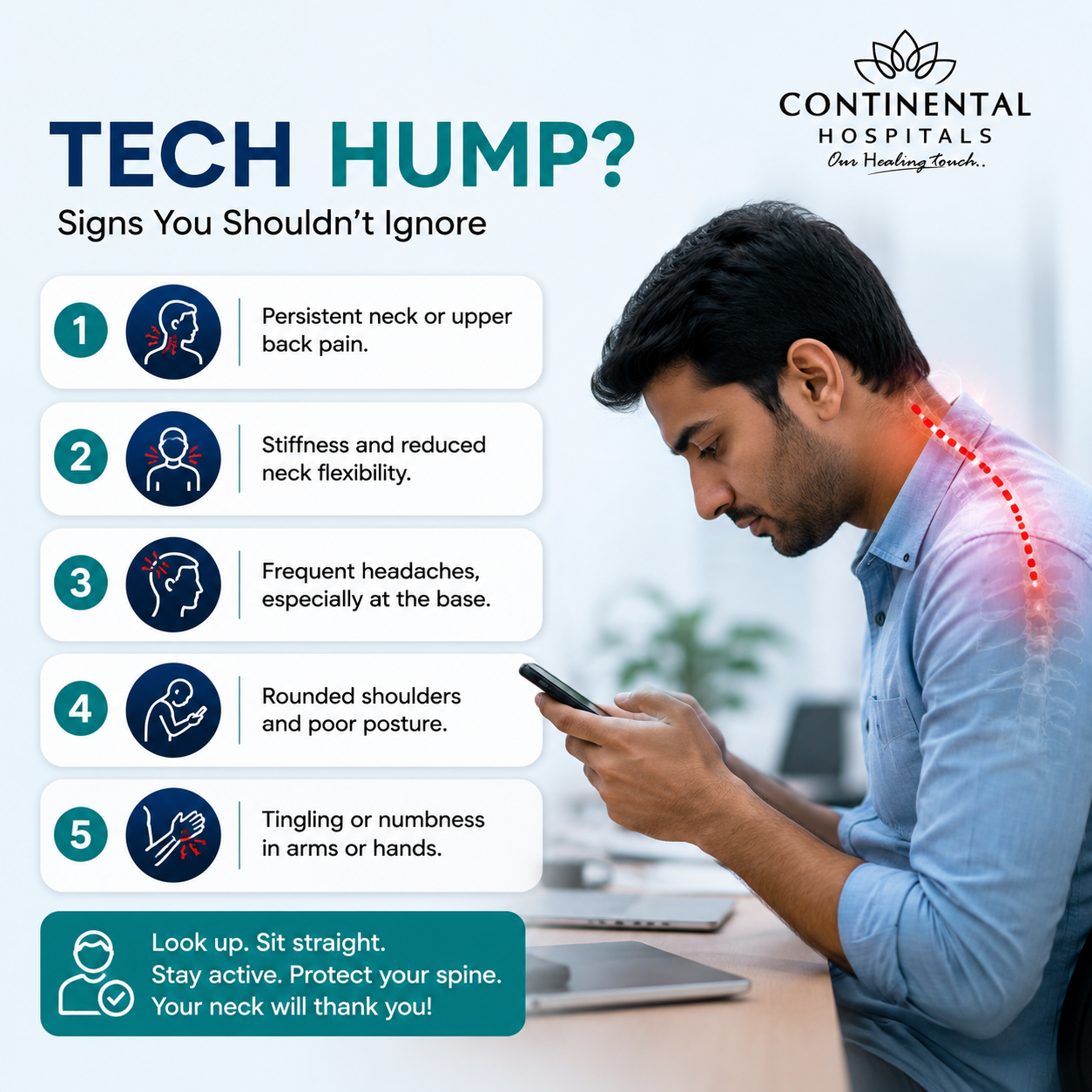
What Are the Early Signs of Tech Hump?
Recognizing the signs of a tech hump early can prevent further damage.

Some common symptoms include:
- Frequent neck pain after using a smartphone
- Stiffness in the shoulders
- Upper back discomfort
- Rounded shoulders
- Forward head posture
- Visible neck hump at the base of the neck
- Difficulty maintaining an upright posture
- Headaches caused by muscle tension
- Reduced flexibility in the neck
- Fatigue while sitting for long periods
Ignoring these symptoms may allow the tech hump to worsen over time.
Who Is Most at Risk of Developing Tech Hump?
Although anyone can develop a tech hump, certain groups are more likely to experience it.
People at higher risk include:
- Office employees working on computers all day
- Students attending online classes
- Individuals who spend several hours on smartphones
- Gamers
- Remote workers
- People with poor posture habits
- Individuals who rarely exercise
- Professionals who frequently use tablets and laptops
The longer you maintain poor smartphone posture, the greater your risk of developing a tech hump.
How Does Tech Neck Differ from a Tech Hump?
Many people confuse tech neck with a tech hump, but they are not exactly the same.
- Tech neck refers to neck pain, stiffness, muscle strain, and reduced movement caused by looking down for extended periods.
- A tech hump is a structural change where a visible hump forms at the base of the neck because of long-term poor posture.
- Many people first develop tech neck, and if corrective measures are ignored, it can gradually progress into a tech hump.
Can a Tech Hump Affect Overall Health?
Yes. A tech hump affects much more than appearance.
Possible health problems include:
- Chronic neck pain
- Shoulder pain
- Upper back pain
- Reduced neck mobility
- Frequent headaches
- Muscle fatigue
- Poor spinal alignment
- Difficulty breathing due to poor posture
- Reduced confidence because of visible posture changes
- Increased risk of spinal degeneration over time
Early treatment can help prevent these complications.
How Can You Prevent a Tech Hump?
Simple lifestyle changes can significantly reduce the risk of developing tech neck.
Follow these healthy habits:
- Hold your smartphone at eye level.
- Avoid bending your neck for long periods.
- Take short posture breaks every thirty to sixty minutes.
- Stretch your neck and shoulder muscles regularly.
- Strengthen your upper back muscles.
- Sit with your back fully supported.
- Keep your shoulders relaxed.
- Maintain proper workplace ergonomics.
- Limit unnecessary screen time.
- Stay physically active every day.
Consistency is the key to preventing tech hump.
Can Exercises Help Improve a Tech Hump?
Yes. In the early stages, targeted exercises can improve posture and reduce symptoms.
Common exercises recommended by specialists include:
- Chin tuck exercises
- Shoulder blade squeezes
- Chest stretches
- Neck mobility exercises
- Upper back strengthening exercises
- Wall posture exercises
- Core strengthening exercises
These exercises help restore proper spinal alignment and reduce muscle imbalance. However, they should be performed under professional guidance if symptoms are severe.
When Should You See a Doctor for a Tech Hump?
Medical evaluation is important if you notice:
- Persistent neck pain
- A visible neck hump
- Tingling or numbness in the arms
- Weakness in the hands
- Difficulty moving the neck
- Severe headaches
- Pain that does not improve with rest
- Progressive worsening of posture
Early diagnosis allows specialists to recommend the most effective treatment before permanent spinal changes occur.
How Is a Tech Hump Diagnosed?
Doctors evaluate your posture through a detailed physical examination. Depending on your symptoms, additional investigations such as X rays, MRI scans, or other imaging studies may be advised to assess spinal alignment and rule out other conditions.
The treatment plan depends on the severity of the tech hump, your posture, and any underlying spinal issues.
What Treatments Are Available for Tech Hump?
Treatment focuses on correcting posture, relieving pain, and improving spinal function.
Your treatment may include:
- Posture correction techniques
- Physiotherapy
- Pain management
- Stretching and strengthening exercises
- Ergonomic advice
- Lifestyle modifications
- Advanced rehabilitation programs
- Specialist evaluation for severe spinal deformities
Early intervention often produces the best results.
Why Choose Continental Hospitals for Tech Hump Treatment?
Continental Hospitals is recognized as one of the best hospitals in Hyderabad, offering comprehensive care for spine, bone, joint, and posture-related conditions. Our multidisciplinary team includes experienced orthopedic specialists, spine surgeons, neurologists, physiotherapists, and rehabilitation experts who work together to provide personalized treatment plans.
Continental Hospitals is accredited by JCI, NABH, and QAI, reflecting our commitment to international standards of patient safety, clinical excellence, and quality healthcare. With advanced diagnostic technology, modern rehabilitation facilities, and evidence-based treatment approaches, we help patients recover safely while improving posture, mobility, and quality of life.
Conclusion
A tech hump may seem like a minor posture problem in the beginning, but it can gradually lead to chronic neck pain, spinal misalignment, reduced mobility, and long term discomfort if left untreated. Paying attention to your smartphone posture, correcting poor phone posture, exercising regularly, and seeking timely medical advice can help prevent serious complications. Recognizing the early signs of a tech hump is the first step toward protecting your spine and maintaining better posture for life.
If you are experiencing persistent neck pain, tech neck, or a visible neck hump, or suspect you have developed a tech hump, do not ignore the symptoms. Consult our best spine surgery specialists in Hyderabad at Continental Hospitals for a comprehensive evaluation, accurate diagnosis, advanced treatment, and personalized rehabilitation to restore healthy posture and spinal function. Early care can make a significant difference in preventing long-term complications.