post-title

Pregnancy Discharge vs Period Discharge: Key Differences and Signs

Written by - Editorial Team
Medically Reviewed by - Dr Malathi J

Many women have experienced an alteration in the nature of their vaginal discharge as the time for their period approaches. Vaginal discharge is a natural phenomenon that maintains the primordial health of the vagina. It changes its color consistency and volume with hormonal levels changing throughout the cycle. Early pregnancy could result in the changes in discharge as well.

An understanding of Pregnancy Discharge vs Period Discharge can enable you to distinguish between the nature of normal changes in your body. Vaginal discharge at the beginning of pregnancy tends to be clear or white and may increase in amount, while right before the period it tends to get thicker and creamier. Nevertheless, the changes in discharge are not sufficient for confirming pregnancy.

What Is the Appearance of Discharge During Pregnancy?

Pregnancy discharge, also referred to as leukorrhea, is often due to hormonal fluctuations and increased flow of blood to the area around the vagina. In most cases, the odor is mild and the discharge does not usually cause irritation or itchiness.

Some important aspects of pregnancy discharge include:

Color: Clear or milky white.

Texture: Thin, soft, or slightly thick.

Volume: Usually increases during early pregnancy.

Odor: Mild or without an unpleasant smell in most cases.

Consistency: In most cases, no abnormal lumps.

Second Opinion

Visit the Gynaecology Department at Continental Hospitals, Hyderabad, for expert women’s healthcare, pregnancy evaluation, and reproductive health support.

How Does Vaginal Discharge Change Anywhere Near the Period?

The changes on discharge that reflect hormone fluctuations in the body change the vaginal discharge before the commencement of periods. The discharge will increase or become thicker, sticky, and creamier after ovulation, but some women will report less discharge before the actual start of menstruation.

The usual characteristics of the discharge associated with menstruation are:

Color: White or creamy since some women could have a light brown discharge before bleeding.

Texture: Thicker or stickier

Volume: Predominantly less or varying in amount before menstruation starts.

Odor: Very mild odor.

Need an Appointment?

Timing: Usually changes just before menstruation.
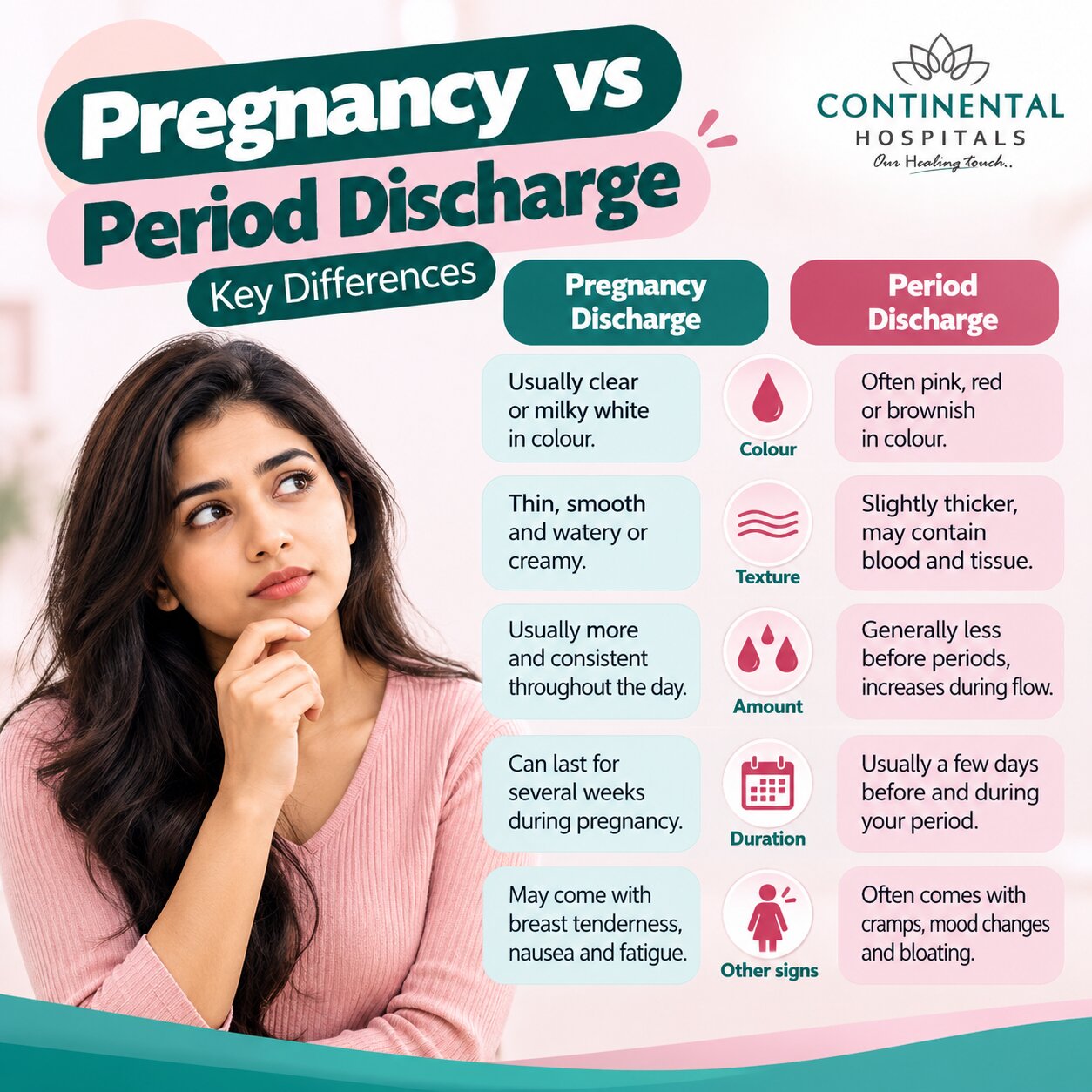
What Are the Key Differences Between Pregnancy Discharge and Period Discharge?

How can you understand the difference between pregnancy discharge and period discharge? Although both are influenced by hormones, there are some general patterns to consider.

Feature Pregnancy Discharge Period Discharge
Color Clear or milky white White or creamy before bleeding
Texture Thin or slightly creamy Often thicker or stickier
Amount May increase May vary or decrease
Timing Can continue after a missed period Often changes before menstruation
Bleeding Light spotting may occur Menstrual bleeding usually follows
Confirmation A pregnancy test is needed Discharge alone cannot rule out pregnancy

Could an Increase in Vaginal Discharge Be an Early Indicator of Pregnancy?

In fact, more vaginal discharge may indeed become one of the indications of being pregnant. Nonetheless, this is not a dependable way to diagnose the coming pregnancy. Some ladies may experience this phenomenon before the actual missed period, but others do not notice any significant changes.

Among the other possible early pregnancy symptoms are:

  • A missed or delayed period.
  • Breast tenderness.
  • Nausea.
  • Extreme fatigue.
  • Frequent urination.
  • Mild stomach pain.

However, these signs can also be related to other factors and premenstrual syndrome. The best way to determine whether you are pregnant or not is to take the pregnancy test from the first day of the delayed period. If you are not sure whether your periods are due, the best option is to do a test at least 21 days after the date of unprotected intercourse.

When to See a Gynaecologist?

At what point should vaginal discharge become a concern? An alteration in discharge may be cause for concern if other unusual symptoms appear.

To seek assistance from a gynecologist, you should observe the following:

  • Intensive or strange vaginal smell.
  • Yellow, green, or grey color in discharge.
  • Thick, lumping discharge with itchiness.
  • Burning sensations during urination.
  • Persistent pelvic pain along with a peculiar bleeding condition.

Seek emergency medical help if the patient suspects pregnancy and has heavy bleeding, abdominal pains, dizziness, or fainting.

Why Should You Pick Continental Hospitals for Women's Health?

Why is it important to seek specialist medical care when you observe unusual vaginal discharge or symptoms of pregnancy? The role of a gynecologist comes into play here, as he/she would be able to evaluate your symptoms, carry out the necessary pregnancy tests, and find out if there are hormonal changes, an infection, or something else that has caused your symptoms.

Continental Hospitals in Hyderabad provides complete and inclusive women’s health care with the help of skilled professionals, modern diagnostic equipment, and multi-dimensional medical knowledge. The hospital has been accredited as well as certified by different healthcare organizations, both in India and abroad, such as NABH and JCI, which shows its commitment to providing high-quality healthcare services.

Continental Hospitals is among the top hospitals in Hyderabad that offer patient-oriented care to diagnose and treat any disorder related to women’s health.

Conclusion

Understanding pregnancy discharge vs. period discharge can help you recognize changes in your body, but discharge alone cannot confirm pregnancy. Pregnancy discharge may be clear or milky white and increase in amount, while discharge before a period may become thicker or creamier. However, these patterns vary between individuals.

If you experience unusual vaginal discharge, a missed period, or other possible pregnancy symptoms, consult our best gynaecologist in Hyderabad at Continental Hospitals, Hyderabad, for appropriate evaluation and guidance. If you suffer from persistent vaginal discomfort, unusual discharge, or concerns about early pregnancy, timely medical consultation can help you receive the right care.


Frequently Asked Questions

Pregnancy discharge is vaginal discharge that may increase during pregnancy. It is commonly called leukorrhea. Healthy discharge is usually thin, milky white, or clear. It generally has a mild smell or no noticeable smell. Hormonal changes can increase vaginal discharge during pregnancy. This discharge helps maintain a healthy vaginal environment. Some women notice it before their missed period. However, discharge alone cannot confirm pregnancy. Similar discharge can occur during the menstrual cycle. A pregnancy test is a more reliable way to check for pregnancy. Seek medical advice if discharge has a strong smell or unusual colour. Itching, burning, or pain should also be evaluated by a healthcare professional.
Period discharge refers to vaginal fluid and menstrual blood around menstruation. Before a period, discharge may become thicker or stickier. It can appear white, creamy, or clear. As menstruation begins, blood mixes with vaginal discharge. Menstrual bleeding may initially appear pink or brown. It often becomes red as the flow increases. The amount of bleeding varies from person to person. Some women experience light spotting before their period. Hormonal changes influence discharge throughout the menstrual cycle. Period discharge may occur with cramps, bloating, or breast tenderness. These symptoms can overlap with early pregnancy symptoms. A pregnancy test can help distinguish pregnancy from an approaching period.
Pregnancy discharge and period-related discharge can look very similar. Pregnancy discharge is often thin, milky white, or clear. It may increase because of hormonal changes. Before a period, discharge may become thicker or creamier. Menstrual bleeding usually develops into a recognisable blood flow. Pregnancy may sometimes involve light spotting. Spotting alone does not confirm pregnancy. Colour and consistency can vary between individuals. Both pregnancy and menstrual cycles can cause breast tenderness. Mild cramps may also occur in either situation. The timing of your period can provide useful clues. A home pregnancy test is more reliable than discharge appearance. Consult a healthcare professional if you notice unusual discharge or bleeding.
White vaginal discharge can occur during early pregnancy. It is often thin, milky, and mild-smelling. Increased discharge may result from pregnancy-related hormonal changes. However, white discharge is also common before a period. It can occur at different stages of the menstrual cycle. Discharge alone cannot establish whether conception has occurred. A missed period may be an early sign of pregnancy. Other symptoms can include nausea, fatigue, or breast tenderness. These symptoms are not experienced by everyone. A home pregnancy test can help confirm a suspected pregnancy. Follow the test instructions carefully for an accurate result. If the result is negative but your period remains absent, repeat the test after a few days. Seek medical advice if discharge causes itching, irritation, or a strong smell.
Light spotting can occur during early pregnancy. It may appear pink, red, or brown. Some people experience light bleeding around the time their period is expected. However, spotting does not confirm pregnancy. It can also occur before menstruation or due to hormonal changes. Other causes include cervical irritation or certain infections. Some early pregnancies involve no spotting at all. Implantation bleeding is often discussed, but spotting cannot reliably identify implantation. Take a pregnancy test if pregnancy is possible. Contact a healthcare professional if bleeding occurs during pregnancy. Seek urgent medical care for heavy bleeding, severe abdominal pain, dizziness, or fainting. These symptoms may indicate a condition requiring prompt evaluation. A medical assessment can help identify the cause of the bleeding.
Vaginal discharge can increase during early pregnancy. Some women notice changes before their expected period. Others notice increased discharge only after their period is missed. Pregnancy hormones can influence vaginal secretions. Healthy discharge is generally clear or milky white. It is usually thin and has little or no noticeable smell. The amount varies between individuals. Some women may not notice any obvious change. Similar discharge can occur before menstruation. Therefore, discharge timing alone cannot confirm conception. A pregnancy test is the best initial way to check for pregnancy. Follow the test instructions and consider testing after a missed period. Consult a healthcare professional if you have concerns about discharge or possible pregnancy.
Vaginal discharge can change as your period approaches. Some women notice thicker or creamier discharge before menstruation. Others experience less discharge or a sticky texture. These changes are influenced by hormonal fluctuations. Clear discharge may also occur at different points in the cycle. Discharge patterns differ between individuals. Tracking your menstrual cycle may help you recognise personal patterns. However, discharge cannot predict the exact day your period will start. Stress, illness, and hormonal changes can affect your cycle. Early pregnancy can also cause changes in vaginal discharge. If your period is late and pregnancy is possible, take a pregnancy test. Seek medical advice if irregular periods happen frequently or discharge becomes unusual.
Normal vaginal discharge is usually clear or milky white. It generally has a mild smell or no noticeable smell. A sudden change in colour or consistency may need evaluation. Yellow, green, or grey discharge can indicate a possible infection. A strong or unpleasant smell is another warning sign. Itching, burning, or vaginal irritation should not be ignored. Pain during urination may also require medical assessment. Pelvic pain accompanied by unusual discharge needs prompt attention. If you are pregnant, report unexpected bleeding to your healthcare professional. Seek urgent care for heavy bleeding, severe pain, fainting, or dizziness. Avoid self-medicating without knowing the cause. A gynaecologist can assess your symptoms and recommend appropriate treatment.
A pregnancy test detects the hormone human chorionic gonadotropin, or hCG. Most home pregnancy tests are suitable from the first day of a missed period. Testing too early may produce a false-negative result. Follow the instructions provided with your test kit. Using first-morning urine may improve detection when testing early. If the result is negative but your period does not arrive, repeat the test after a few days. A blood test may detect pregnancy earlier in some situations. Vaginal discharge cannot replace a pregnancy test. Symptoms such as nausea or breast tenderness are not conclusive either. Consult a healthcare professional if your results are unclear. Seek urgent care if possible pregnancy is accompanied by severe abdominal pain, heavy bleeding, or fainting. A healthcare professional can guide you on the next steps.
Disclaimer: The information provided in this blog is intended for general knowledge and informational purposes only, and does not constitute medical advice. Always consult with a qualified healthcare professional for any medical concerns or before making any decisions about your health.

Get in Touch With Us

Whether you are from India or abroad, we are here to help you with your medical queries. Please fill out the form below and our team will connect with you shortly.

  • ✔ Quick response from our medical experts
  • ✔ Secure data handling & privacy
  • ✔ Easy upload for reports & documents
banner_image

Chat with our medical experts on WhatsApp for quick assistance and hassle-free appointment booking

Recent Posts