.webp)

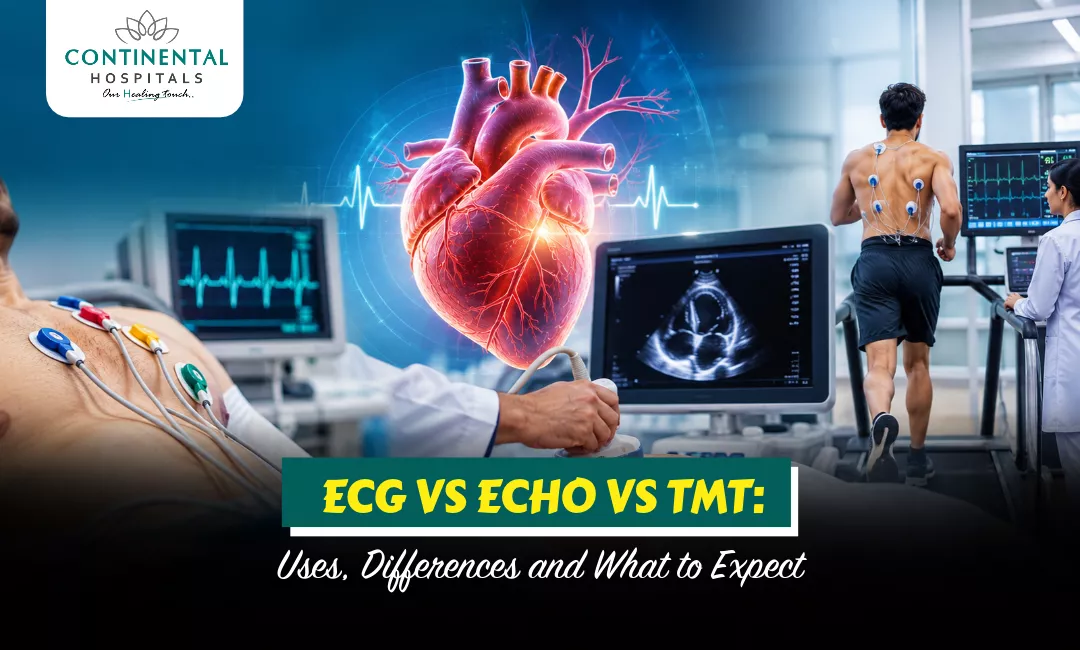
When a physician suggests that you undergo a heart test, you might find yourself asking, “Should I get an ECG, an Echo, or a TMT?” The distinctions among these tests can be perplexing since all three are designed to assess heart health; however, each one examines the heart differently. An ECG focuses on recording the electrical activity of the heart. In contrast, an echocardiogram generates images of the heart's structure and function, while a treadmill test (TMT) assesses how well your heart performs during physical exertion.
What can you anticipate from these examinations? Recognizing the differences between ECGs, Echos, and TMTs will clarify why your healthcare provider may suggest one or more of these options. The appropriate choice depends on your symptoms, medical background, risk factors, and what specific aspects your doctor wishes to explore further.
What is an ECG test and its implications?
An ECG or electrocardiogram enables us to discover what the heart’s electric signals are doing. Doctors use this test to check the heart’s rate, rhythm, and some changes in electrical activity in the heart.
Doctors normally recommend an ECG test when a patient has signs like chest pain, heart beating fast, light-headedness, or lack of breath.
The ECG test can show the following:
- Symptoms of changes in normal heartbeat
- Problems regarding heart rate
- Evidence of a lack of blood supply to the heart
- Signs of a former or present heart condition
- Evidence of electrical activity in the heart
One important question often asked is, does ECG hurt? No, it is an easy and painless method.
Visit the Best Cardiology Doctors in Hyderabad at Continental Hospitals, Hyderabad, for expert heart care and comprehensive cardiac services.
What is an echocardiogram test, and why is it important?
In contrast to the ECG, which records the electrical activity, the echocardiogram utilizes ultrasound waves to produce live images of the heart.
An echocardiogram allows the physician to analyze the structure and functionality of the heart because it provides the necessary information on the heart chambers, valves, heart muscles, and blood circulation.

An echocardiogram test may help physicians to determine:
- Size and structure of the heart’s chambers
- Function of the heart muscles
- Movement of heart valves and presence of abnormalities
- How well the heart pumps blood
- How the blood flows through the heart
- Some congenital heart conditions
Is an echocardiogram painful? It is said that a regular echocardiogram does not hurt at all.
What Is a TMT Test, and When Should It Be Done?
The TMT test is a heart test used when the patient undergoes an exercise test on a treadmill.
Currently, a treadmill walking time is measured along with patient parameters relating to heart rate, ECG, blood pressure, and complaints experienced.
During TMT exercise, features vary in their intensity, and during the process, monitoring and assessment of changes take place.
What Are the Main ECG Echo TMT Differences?
How can you understand the ECG vs Echo vs TMT comparison quickly?
| Test | What It Evaluates | Common Use |
|---|---|---|
| ECG | Electrical activity of the heart | Heart rhythm and electrical changes |
| Echo | Structure and function of the heart | Heart valves, chambers and pumping function |
| TMT | Heart response during exercise | Exercise-related symptoms and ECG changes |
The result of TMT can help determine the following parameters:
- Heart reaction to exercise
- Changes in ECG caused by exercise
- Complaints arising during exercise
- Capacity for exercise
- Possible signs of insufficient blood supply due to physical exertion
Why might the complaints be evident while exercising and not while at rest? Because during physical activity the heart needs more oxygen.
ECG vs Echo vs TMT: Which is Superior?
When we talk about whether one test is better than other tests, the answer is no; different tests tell different stories.
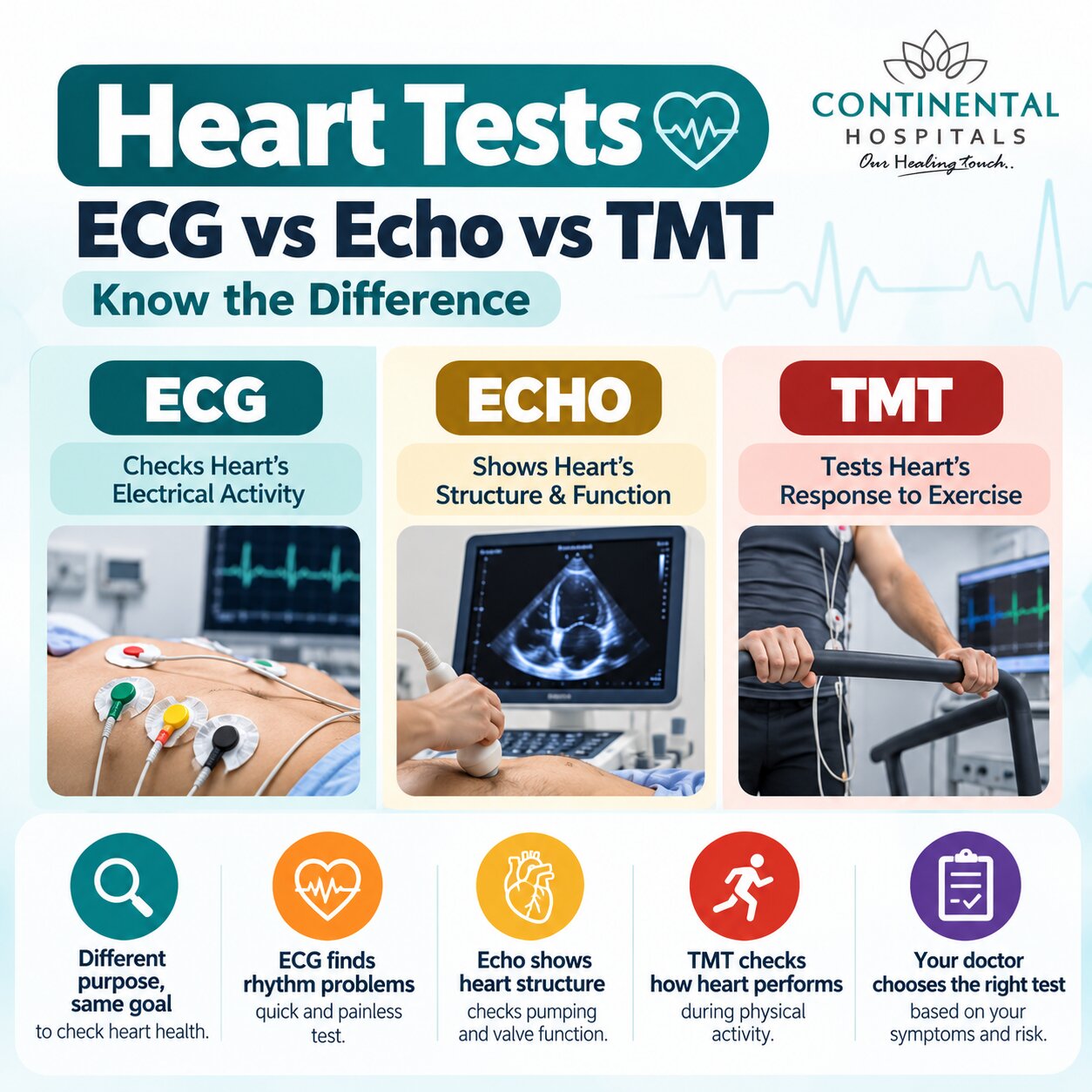
ECG gives the information regarding how the heart works electrically, and echo shows the heart's structure and motion, while TMT shows how the heart works during exercise.
In fact, in some circumstances, doctors might recommend more than one test to have a more precise idea about the heart condition.
How to Prepare for Electrocardiogram, Echocardiogram, and Treadmill Test?
Preparation for the ECG is usually very simple.
The preparation for the standard echocardiogram does not seem to be complicated either.
For TMT, the doctor or the team performing the test may provide you with detailed instructions about meals, medications, wearing clothes and shoes, and whether any physical activities are allowed.
When is the Right Time to Consult a Cardiologist?
When is it appropriate to consult a cardiologist to check for heart-related problems? One must seek to understand symptoms such as chest discomfort, difficulty breathing, heart racing, feeling dizzy, or fainting along with doing less physical activity.
In case one is suffering from any known heart-related disorder or risk factors owing to which he or she may require heart screening, it is wise to consult a physician regarding heart screening.
One should never make a choice between an ECG, Echo, or TMT on the basis of symptoms alone. The doctor will be the right person to identify what checks need to be done upon reviewing the patient’s history and symptoms.
Why Select Continental Hospitals for Cardiology?
What is the significance of a suitable hospital for heart assessment? Precise diagnostic findings rely on expert professionals, appropriate diagnostic tools, modern technology, and collaborative healthcare.
Continental Hospitals in Hyderabad possesses extensive cardiac care facilities with experienced cardiologists, advanced diagnostic centers, medical expertise, and state-of-the-art hospital infrastructure. The establishment observes the required patient safety and quality standards and has received JCI and NABH certifications as testimony of its adherence to globally accepted healthcare standards and commitment to quality care for patients.
The patients will receive appropriate cardiac assessments and further treatment options according to their particular health specifications.
What Should You Remember About ECG vs Echo vs TMT?
- ECG Test: Records the heart's electrical activity and rhythm.
- Echocardiogram Test: Uses ultrasound to assess heart structure and function.
- TMT Test: Evaluates how the heart responds to physical activity.
- The three tests provide different types of information.
- Your doctor may recommend one test or a combination of tests.
- Test selection depends on symptoms, medical history, examination findings, and cardiovascular risk factors.
Conclusion
So, what is the simplest way to understand ECG vs Echo vs TMT? An ECG looks at the heart's electrical activity, an echo examines its structure and function, while a TMT assesses how the heart responds to exercise. Each test has a specific purpose and can provide valuable information about cardiovascular health.
If you suffer from chest discomfort, breathlessness, palpitations, dizziness, unusual tiredness, or other symptoms that may be related to your heart, consult our best cardiologist in Hyderabad at Continental Hospitals, Hyderabad, for appropriate evaluation and personalized cardiac care.
Related Blogs: