.webp)


When someone experiences chest pain, the first test doctors usually recommend is an ECG. Many people believe that if the ECG result is normal, their heart is completely safe. But is that always true? Can you have a heart attack with a normal ECG?
The answer may surprise you. In some cases, a person can have a heart attack even if the initial ECG looks normal. Understanding how this happens can help you seek timely medical care and protect your heart health.
What Is an ECG?
An ECG, also called an electrocardiogram, is a simple test that records the electrical activity of your heart. Small electrodes are placed on your chest, arms, and legs to measure heart signals.
Doctors use an ECG test to:
- Detect heart rhythm problems
- Identify reduced blood flow to the heart
- Confirm a heart attack
- Monitor heart health over time
It is fast, painless, and often the first step in diagnosing heart attack symptoms.
What Is a Heart Attack?
A heart attack happens when blood flow to a part of the heart muscle gets blocked. This usually occurs due to a clot in a coronary artery. Without oxygen-rich blood, heart muscle cells begin to die.
Common heart attack symptoms include:
- Chest pain or pressure
- Pain in the left arm, jaw, or back
- Shortness of breath
- Sweating
- Nausea
- Sudden fatigue
However, not everyone experiences classic symptoms. Some people have silent heart attack symptoms that are mild or mistaken for indigestion or fatigue.

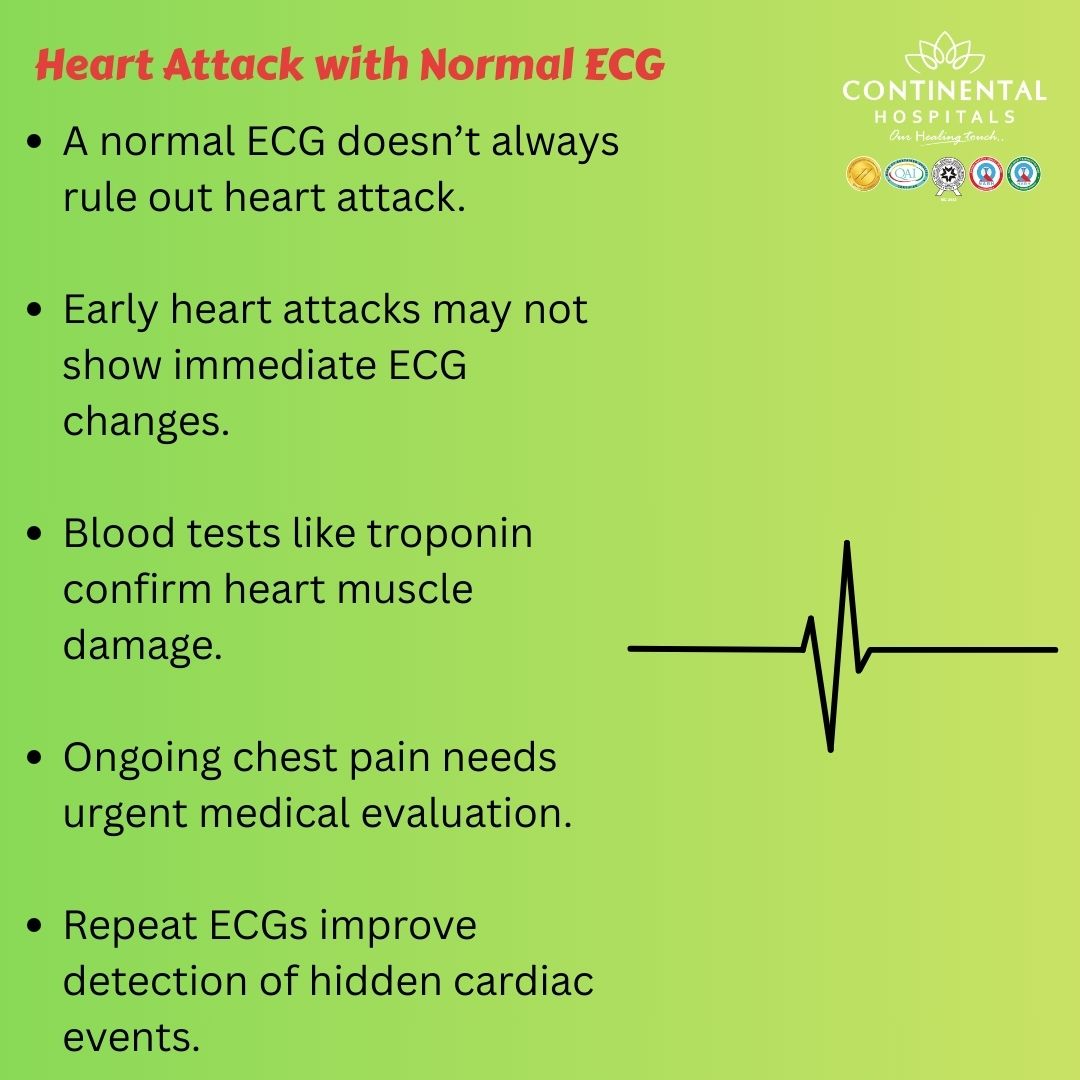
Can You Have a Heart Attack with a Normal ECG?
Yes, it is possible to have a heart attack with normal ECG findings, especially in the early stages.
An ECG shows electrical changes in the heart. But in certain situations:
- The blockage may be partial
- The heart damage may be minimal at first
- Changes may not appear immediately
This means the first ECG test may look normal, even if a heart attack is developing.
Doctors often repeat the ECG several times over a few hours if symptoms continue.
Why Can ECG Miss a Heart Attack?
Many people ask, can ECG miss a heart attack? The answer is yes, sometimes.
Here are the main reasons:
Early stage heart attack
Electrical changes may not appear immediately after symptoms start.
Small or partial blockage
If the artery is not fully blocked, ECG changes can be subtle.
Silent heart attack
Some heart attacks do not produce strong ECG abnormalities.
Technical factors
Incorrect electrode placement or movement during the test may affect results.
Individual heart variations
Some people have natural ECG patterns that make diagnosis harder.
This is why doctors do not rely only on an ECG to confirm or rule out a heart attack.
Normal ECG But Chest Pain? What It Means
If you have normal ECG but chest pain, do not ignore it.
Chest pain can be caused by many conditions such as:
- Heart attack
- Angina
- Acid reflux
- Muscle strain
- Lung conditions
If pain feels like pressure, squeezing, or heaviness in the chest, especially with sweating or breathlessness, seek medical help immediately.
Doctors will combine:
- Repeated ECG monitoring
- Blood tests like troponin
- Echocardiography
- Imaging scans
Blood tests are especially important. Troponin levels rise when heart muscle is damaged, even if the ECG appears normal.
What are the different types of heart attacks?
There are different types of heart attacks, and ECG findings vary.
STEMI
This type shows clear changes on ECG. It is a complete blockage and requires urgent treatment.
NSTEMI
This may not show dramatic ECG changes. Blood tests help confirm the diagnosis.
Unstable angina
Symptoms resemble a heart attack, but no permanent damage has occurred yet.
In cases like NSTEMI, the ECG may appear normal at first. That is why continuous monitoring is essential.
What are the symptoms of a silent heart attack?
Some people experience silent heart attack symptoms. These are mild and may include:
- Unusual tiredness
- Mild chest discomfort
- Indigestion-like feeling
- Shortness of breath
- Dizziness
Women, older adults, and people with diabetes are more likely to experience silent symptoms.
Even if the ECG looks normal, these symptoms should never be ignored.
Why is early diagnosis important for heart attack?
Early diagnosis saves lives. A normal ECG does not always mean your heart is safe.
If symptoms persist, doctors may:
- Repeat the ECG test
- Admit you for observation
- Perform advanced cardiac imaging
- Start preventive treatment
Quick action reduces heart muscle damage and improves recovery.
How can you protect your heart health?
Prevention is always better than emergency treatment. Protecting your heart health requires simple daily steps:
- Maintain healthy blood pressure
- Control diabetes and cholesterol
- Exercise regularly
- Eat a balanced diet
- Avoid smoking
- Manage stress
Regular heart checkups, including ECG screening when advised, help detect problems early.
Why Choose Continental Hospitals for Heart Care?
Continental Hospitals is recognized as one of the best hospitals in Hyderabad for advanced cardiac care. The hospital provides comprehensive heart health services under one roof.
Here is why patients trust Continental Hospitals:
- Expert cardiologists and cardiac surgeons
- Advanced ECG and cardiac monitoring technology
- Rapid emergency response for heart attack cases
- Dedicated cardiac intensive care units
- NABH accredited hospital ensuring high standards of patient safety
- International quality protocols and evidence-based treatment
The hospital’s state-of-the-art infrastructure and experienced heart specialists ensure accurate diagnosis, even in complex cases like heart attack with normal ECG findings.
At Continental Hospitals, patients receive:
- Immediate ECG evaluation
- Continuous cardiac monitoring
- Advanced blood testing
- 24 hour emergency cardiac care
- Personalized treatment plans
Accreditations reflect the hospital’s commitment to quality and patient safety. Every patient receives care that meets national and global healthcare standards.
When Should You See a Doctor?
Seek immediate medical attention if you experience:
- Sudden chest pain
- Shortness of breath
- Sweating with chest discomfort
- Pain spreading to arm or jaw
- Unexplained fatigue
Do not wait for symptoms to worsen. Even if your first ECG report is normal, further evaluation may be necessary.
Conclusion
Can you have a heart attack with a normal ECG? Yes, it is possible, especially in the early stages or in certain types of heart attacks. An ECG is a powerful and essential tool, but it is not perfect. Doctors use it along with blood tests, imaging, and clinical evaluation to confirm a diagnosis.
Never ignore persistent chest pain or heart attack symptoms just because the ECG appears normal. Early medical attention can save your life and prevent permanent heart damage.
If you are experiencing chest discomfort, silent heart attack symptoms, or have concerns about your heart health, consult our top cardiologists in Hyderabad team at Continental Hospitals, the best hospital in Hyderabad. Our experienced cardiologists specialize in diagnosing and treating complex heart conditions with precision and care.
Related Blog Topics:

.webp)