.webp)


Chest pain can be frightening. Many people immediately think of a heart attack. But is chest pain always heart related? The answer is no. While heart disease is a serious and important cause, there are many chest pain causes other than heart conditions. Understanding the difference can help you stay calm, act wisely, and seek care at the right time.
Chest pain may be acidity or heart disease. Know warning signs and visit our top cardiologists in Hyderabad for cardiac care.
What is chest pain and what does it mean?
Chest pain can feel different for each person. It may feel like pressure, tightness, burning, stabbing pain, heaviness, or discomfort. It can last a few seconds or continue for several minutes. Sometimes it spreads to the arm, neck, jaw, or back.
Many people ask about chest pain left side meaning. Left sided chest pain can be related to the heart, but it can also be due to muscle strain, acidity, or lung problems. The location alone does not confirm the cause.
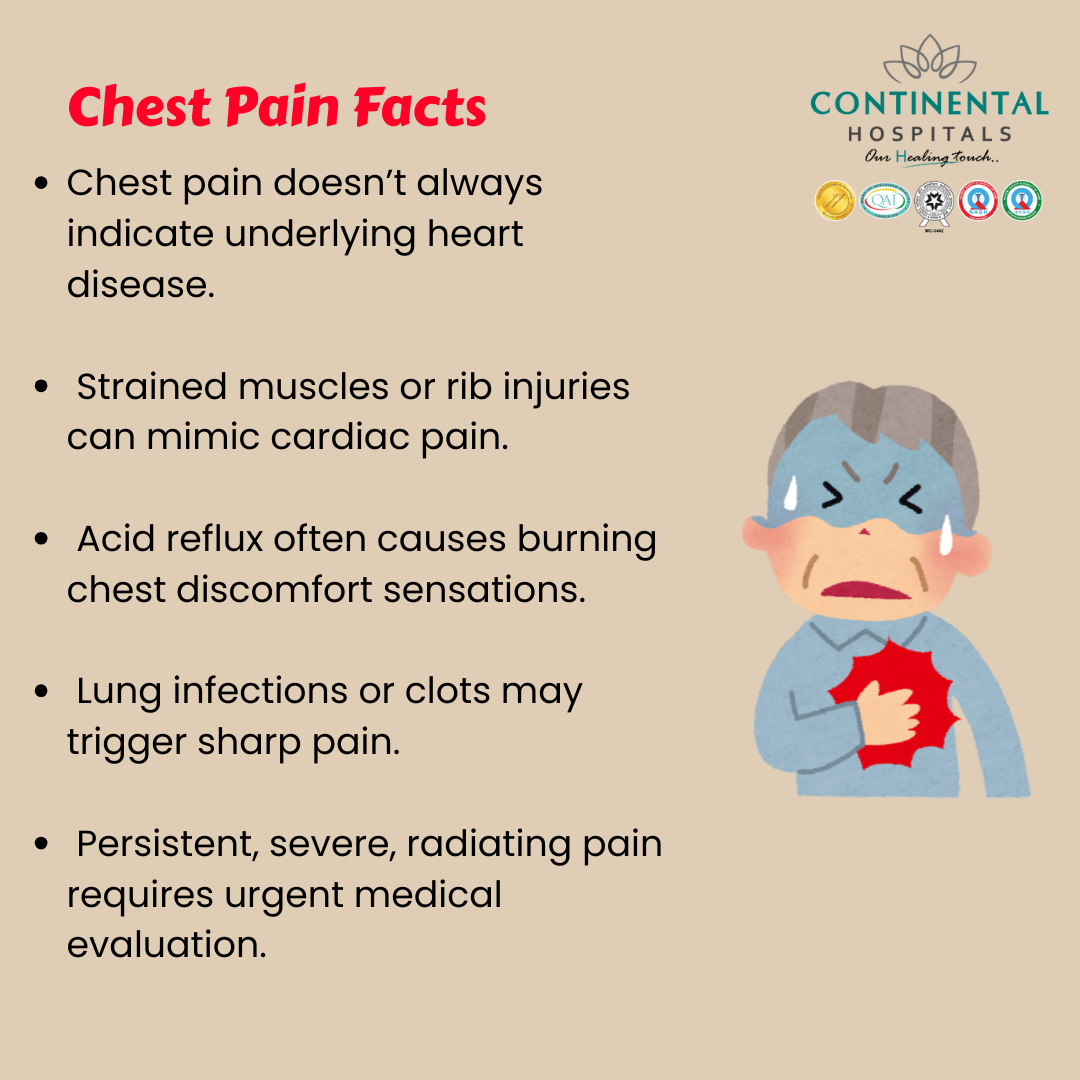
Is Chest Pain Always Heart Related?
No, chest pain is not always caused by heart disease. There are several chest pain causes other than heart problems, including:
• Acid reflux or gastritis
• Muscle strain or rib injury
• Lung infections
• Anxiety or panic attacks
• Inflammation of the chest wall
However, it is important not to ignore symptoms. Some heart conditions can present in subtle ways. That is why proper medical evaluation is essential.
Can chest pain be related to heart problems?
Heart related chest pain is often described as pressure, heaviness, or squeezing in the chest. It may be associated with sweating, nausea, breathlessness, or dizziness. These are common heart attack warning signs.

You may also notice symptoms of blocked heart arteries such as:
• Chest tightness during exertion
• Pain spreading to left arm or jaw
• Shortness of breath on mild activity
• Unusual fatigue
• Sweating without clear reason
Understanding the difference between heart attack and chest pain due to other causes can save lives. A heart attack usually involves persistent pressure or heaviness, often lasting more than a few minutes. It may worsen with activity and not improve with rest.
What are the symptoms of non-cardiac chest pain?
Non cardiac chest pain symptoms are common and usually less dangerous, but they still need attention.
Burning chest pain causes often include acid reflux. This type of pain may worsen after eating spicy or heavy meals. It can also feel worse when lying down. Many people search for chest pain and acidity difference. Heart pain feels like pressure, while acidity usually causes a burning sensation behind the breastbone.
Sharp chest pain while breathing may point toward lung or rib related problems. Conditions like pleurisy or muscle inflammation can cause stabbing pain that worsens with deep breaths.
Chest tightness causes may include anxiety. Anxiety chest pain symptoms often come with fast heartbeat, sweating, and a feeling of fear. The pain may come and go quickly and improve once the person relaxes.
What are the reasons for sudden chest pain?
Sudden chest pain reasons vary from mild to severe. They include:
• Heart attack
• Acid reflux
• Muscle spasm
• Panic attack
• Lung infection
• Pulmonary embolism
Because some of these conditions are serious, it is important to understand how to know if chest pain is serious?
How to Know if Chest Pain Is Serious?
Seek emergency care if you experience:
• Severe pressure or squeezing in the chest
• Pain spreading to arm, neck, or jaw
• Breathlessness
• Sweating and nausea
• Fainting or dizziness
• Chest pain lasting more than a few minutes
If you are unsure, it is always better to get checked. Early diagnosis prevents complications.
Chest Pain When to See a Doctor?
You should see a doctor if:
• Chest pain keeps returning
• Pain occurs during physical activity
• You have diabetes, high blood pressure, or high cholesterol
• There is a family history of heart disease
• You experience new or unexplained chest discomfort
Even if symptoms seem mild, evaluation by a cardiologist can provide clarity and peace of mind.
Why Choose Continental Hospitals?
At Continental Hospitals, we follow a systematic approach to evaluate chest pain:
• Detailed medical history
• Physical examination
• Electrocardiogram
• Blood tests
• Echocardiography
• Advanced cardiac imaging if required
Our hospital is accredited by NABH and JCI, reflecting global standards in patient safety and quality care. These accreditations ensure that every patient receives evidence based and ethical medical treatment.
Why Choose Continental Hospitals for Chest Pain Evaluation?
Choosing the right hospital matters when dealing with chest pain. Continental Hospitals is known as one of the best hospital in Hyderabad for comprehensive cardiac care.
Here is why patients trust us:
• Experienced cardiologists and emergency physicians
• Advanced cardiac catheterization labs
• Round the clock emergency services
• Multidisciplinary team support
• International accreditations including NABH and JCI
• Focus on patient safety and clinical excellence
Our cardiology department offers complete care from diagnosis to advanced interventions such as angioplasty and bypass surgery. We focus on early detection of symptoms of blocked heart arteries and preventive cardiology to reduce future risk.
What are the simple ways to reduce heart risk?
While not all chest pain is heart related, prevention is always wise. You can reduce your heart risk by:
• Maintaining healthy weight
• Controlling blood pressure and sugar
• Avoiding smoking
• Exercising regularly
• Eating balanced diet
• Managing stress
Regular health checkups help detect hidden heart conditions before symptoms appear.
Key Takeaways
• Is chest pain always heart related? No, but it must be evaluated.
• Chest pain causes other than heart problems are common.
• Know the heart attack warning signs and act quickly.
• Understand the chest pain and acidity difference.
• If in doubt, seek medical care without delay.
Chest pain is a symptom, not a diagnosis. The real cause can only be confirmed after proper medical evaluation.
Conclusion
Chest pain can arise from many conditions, ranging from mild acidity to serious heart disease. Understanding non cardiac chest pain symptoms, sudden chest pain reasons, and chest tightness causes helps you respond wisely. The difference between heart attack and chest pain due to other causes is not always obvious. That is why timely medical consultation is important.consult Best Cardiology Doctors in Hyderabad for cardiac care at the right time.
Related Blog Topics