
Soluble vs. insoluble fiber is an important topic when understanding how food supports digestive health. Dietary fiber is a type of carbohydrate found in plant based foods that the body cannot fully digest. It helps support regular bowel movements, maintain gut health, and improve overall digestive function. Eating enough fiber from fruits, vegetables, whole grains, legumes, nuts, and seeds can help keep your digestive system healthy.
But which type of fiber is better for your body? Both soluble and insoluble fiber offer different benefits. Soluble fiber dissolves in water and forms a gel like substance, while insoluble fiber adds bulk to stool and helps food move through the digestive system. Understanding soluble vs. insoluble fiber can help you choose the right foods for better digestion and overall health.
What Is Soluble Fiber and What Are Its Benefits?
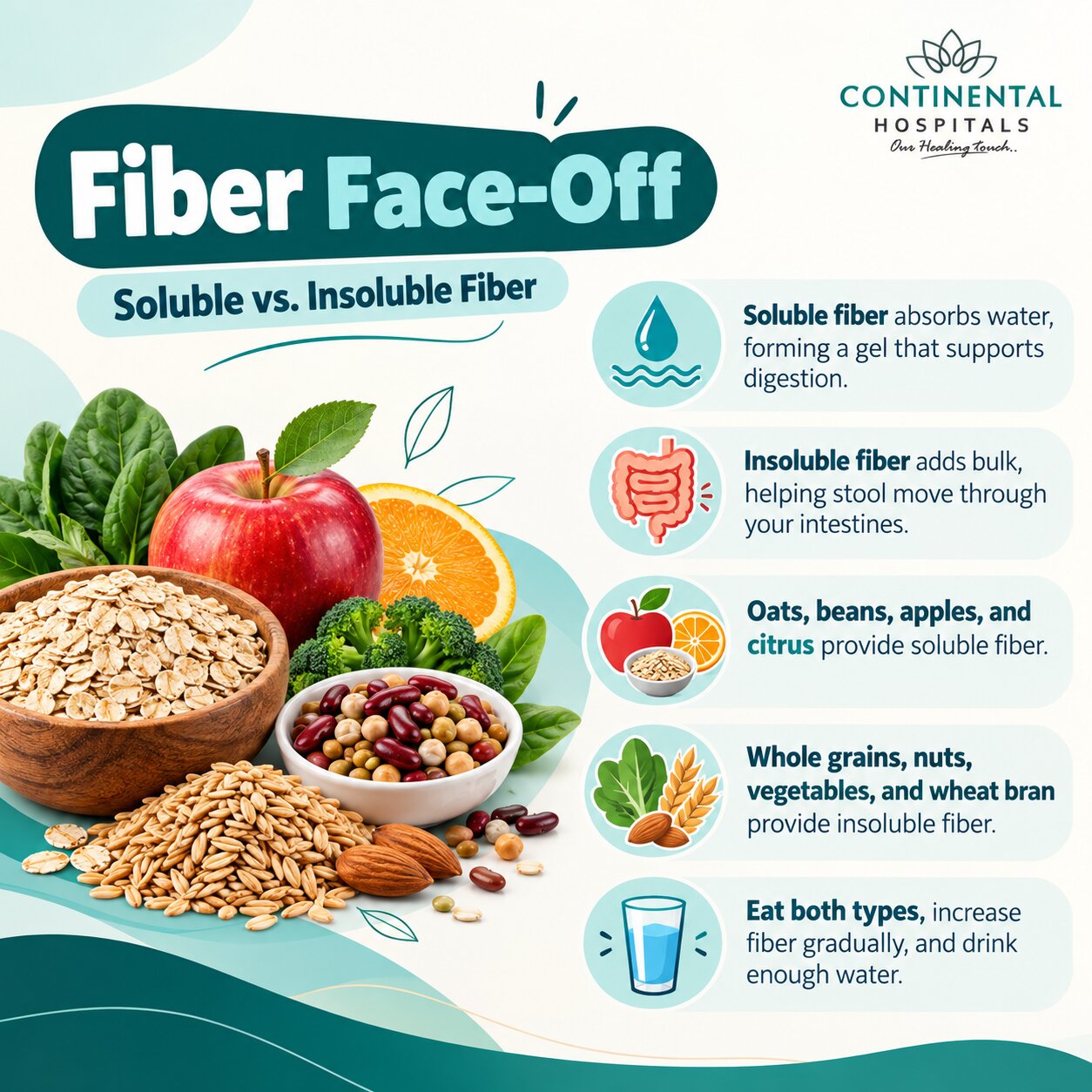
Soluble fiber dissolves in water and forms a soft, gel-like substance in the digestive tract. This process can slow digestion, support blood sugar control, and help manage cholesterol levels. Some types of soluble fiber are also fermented by beneficial gut bacteria, supporting a healthy gut environment.
The main soluble fiber benefits include:
- Supports bowel health: Helps soften stool and may ease constipation.
- Helps manage cholesterol: Certain soluble fibers can help lower LDL, or bad cholesterol.
- Supports blood sugar control: Slows the absorption of carbohydrates, helping reduce sudden blood sugar spikes.
- Promotes fullness: May help you feel satisfied for longer after meals.
- Supports gut bacteria: Some soluble fibers act as prebiotics that nourish beneficial bacteria.
Which Foods Contain Soluble Fiber?
Include these soluble fiber foods in your daily diet:
- Oats and barley
- Apples, oranges, and pears
- Beans, peas, and lentils
- Chia seeds
- Carrots
- Psyllium husk
Eating a variety of these foods can help you obtain soluble fiber naturally.
Visit the gastroenterology specialists in Hyderabad at Continental Hospitals, Hyderabad, for expert care and advanced diagnostic services.
What Is Insoluble Fiber and Why Is It Important?
Insoluble fiber does not dissolve in water. Instead, it adds bulk to stool and helps it move through the intestines. This makes it particularly useful for supporting regular bowel movements and preventing constipation.
The main insoluble fiber benefits include:

- Promotes regular bowel movements: Helps stool move through the digestive tract.
- Helps prevent constipation: Adds bulk to stool and supports regularity.
- Supports digestive function: Helps maintain normal movement through the intestines.
- Supports overall gut health: Contributes to a balanced, fiber-rich diet.
Which Foods Contain Insoluble Fiber?
Some common insoluble fiber foods include:
- Whole wheat bread and whole grains
- Brown rice
- Nuts and seeds
- Green leafy vegetables
- Cauliflower and green beans
- Fruit skins, such as apple skin
Eating whole fruits and vegetables rather than removing their skins when appropriate can help increase your fiber intake.
How Much Fiber Should You Eat Daily?
How can you get enough fiber for digestive health? Most adults should aim for approximately 25 to 30 grams of dietary fiber daily, although individual needs vary with age, sex, energy requirements, and medical conditions.
You can increase your intake by following these simple steps:
- Choose whole grains instead of refined grains.
- Eat fruits and vegetables regularly.
- Include beans, lentils, and peas in meals.
- Add nuts and seeds to suitable dishes.
- Drink enough water throughout the day.
Increase fiber gradually to reduce gas, bloating, and abdominal discomfort.
If you have persistent digestive symptoms or a condition that affects your intestines, ask a healthcare professional about the most appropriate fiber intake for you.
Why Choose Continental Hospitals for Digestive Health?
Why is expert guidance important when improving your digestive health? Persistent constipation, bloating, abdominal discomfort, or changes in bowel habits may require medical evaluation rather than dietary changes alone.
Continental Hospitals, Hyderabad, offers comprehensive digestive healthcare supported by experienced specialists, modern diagnostic facilities, and multidisciplinary medical expertise. The hospital holds national and international healthcare accreditations, including National Accreditation Board for Hospitals and Healthcare Providers (NABH) and Joint Commission International (JCI), reflecting its commitment to quality standards and patient safety.
The hospital's digestive health specialists can help assess ongoing gastrointestinal symptoms and provide individualized advice on nutrition, dietary fiber, and appropriate treatment.
Conclusion
Understanding soluble vs. insoluble fiber can help you make better food choices for digestive health. Soluble fiber supports cholesterol management, blood sugar control, and stool consistency, while insoluble fiber helps promote regular bowel movements. Both types are essential parts of a balanced diet.
If you suffer from persistent constipation, bloating, abdominal discomfort, or other digestive problems, consult our best gastroenterologist in Hyderabad at Continental Hospitals, Hyderabad. Expert guidance can help identify the cause of your symptoms and develop a suitable plan to support your digestive health.