.webp)

Have you ever thought about the reason why proper nutrition relies on various things other than carbs, fats, proteins, and vitamins? Actually, minerals are vital nutrients that perform a number of important processes, such as maintaining strong bones and helping muscles make movement, producing energy, maintaining fluid balance in the body, and working of the nervous system. Minerals are needed in different amounts depending on specific conditions, and even small amounts are crucial for health.
Essential minerals required for the body on a daily basis are obtained from a diverse diet with many vegetables, fruits, whole grains, legumes, nuts, seeds, and dairy products.
What Are the Important Minerals for the Body?
The body requires a number of minerals for its normal functioning and development. These are basically divided into major and minor minerals on the basis of the quantity in which they are required by the body.
Major minerals are needed in larger quantities. Some important ones are:
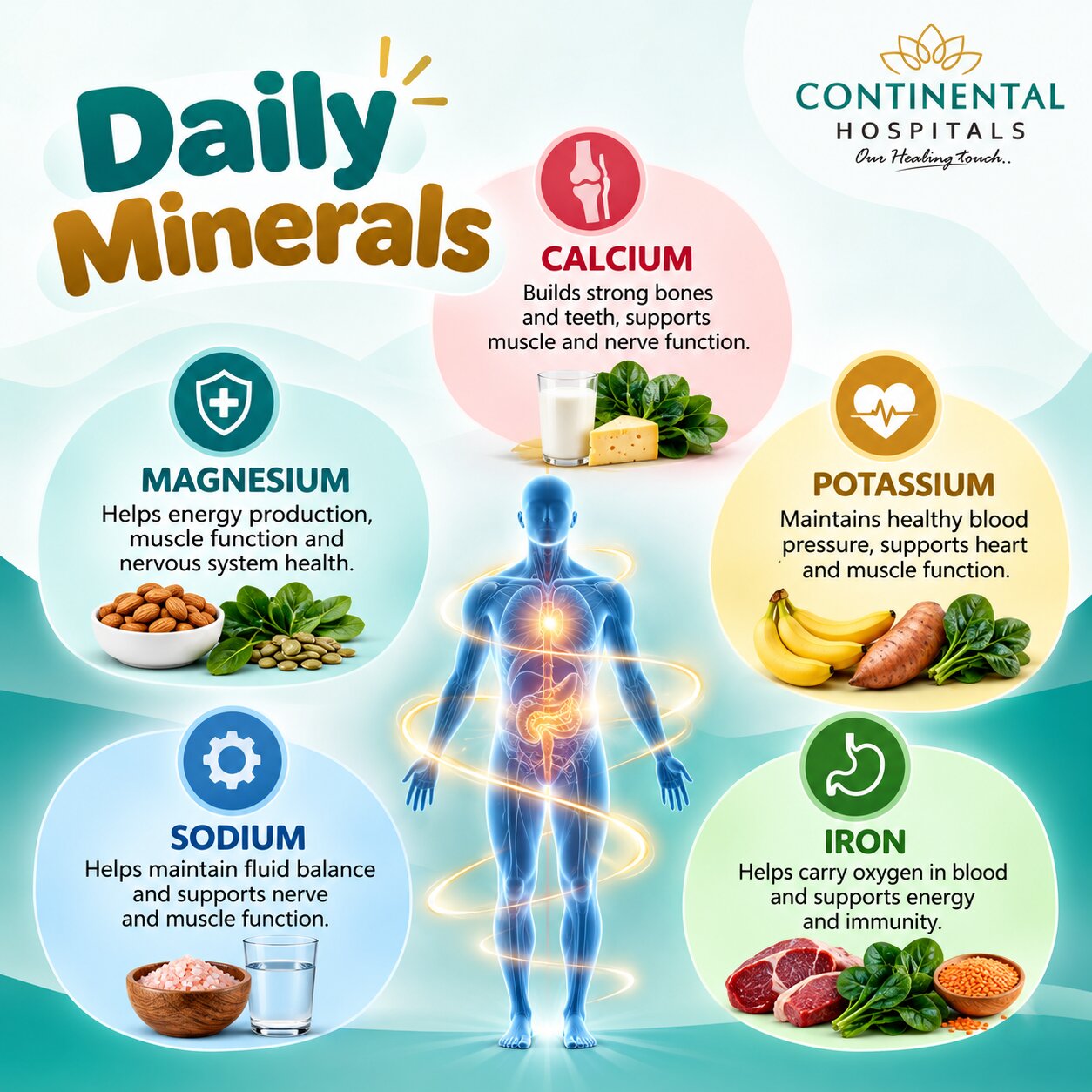
- Calcium: Helps in maintaining strong teeth and bones. Also participates in nerve function and muscular movements.
- Magnesium: Takes part in energy production, muscles working, and many biochemical reactions.
- Potassium: Has an important role involved in fluid balance regulation, muscle contraction, and normal functioning of nerves.
- Sodium: Helps in maintaining normal fluid balance, nerve functioning, and muscle activities.
- Phosphorus: Works with calcium in creating strong teeth and bones and takes part in energy metabolism.
- Chloride: Aids in preservation of fluid balance and functioning of the digestive system.
- Sulfur: Provides certain proteins with special characteristics and fulfills several essential processes in the human body.
Which trace minerals are required for the functioning of the human body?
Trace minerals are needed in small amounts, but they play a significant role in normal functioning. The following is a list of important trace minerals required by the human body:
- Iron: Helps to synthesize hemoglobin, aiding in the transportation of oxygen in the body.
- Zinc: Assists in providing immune support, wound healing, growth, and normal cell functioning.
- Iodine: Required for synthesizing hormones produced by the thyroid gland, which aid in metabolism.
- Selenium: Helps in reducing oxidative stress and maintaining normal functioning of the thyroid gland.
- Copper: Helps in iron utilization, formation of connective tissue, and functioning of the nervous system.
- Manganese: Is involved in metabolic processes, development of bones, and in antioxidant activity.
- Chromium: Assists in important processes related to insulin and metabolism.
- Molybdenum: Helps in the functioning of certain enzymes in the body.
How Many Minerals Do Adults Need Each Day?
Are daily mineral requirements the same for everyone? Not at all. Mineral needs depend on many things such as age, gender, pregnancy, lactation, health issues, etc.
For example, calcium intake is crucial during childhood and later on in life to keep bones strong. Iron needs also differ among people. Hence, there is no universal mineral requirement for adults in a day.
A healthy diet is usually the best way for adults to get their minerals. Individuals who need some specific nutrients should change their diets or take dietary supplements after consulting their doctors.

Are the Major Minerals Obtained from Food?
Is it possible to obtain most of the necessary minerals from food? Yes. Through consuming a proper and diverse diet, one can get many minerals that the human body requires.
Some good sources of minerals include:
- Calcium: Milk, yogurt, cheese, ragi, tofu, and some green leafy vegetables
- Iron: Lentils, beans, green leafy vegetables, meat, and fortified food
- Magnesium: Nuts, seeds, whole grain products, beans, and green leafy vegetables
- Potassium: Bananas, potatoes, beans, green vegetables, fruits, and yogurt
- Zinc: Legumes, dairy products, nuts, and meats
- Iodine: Iodized salt, milk, and seafood
- Selenium: Eggs, fish, meat, dairy products, and nuts
It is also important to eat a variety of foods because no single food alone can supply all essential minerals in sufficient amounts.
What Happens When Mineral Intake Is it insufficient?
Does insufficient mineral consumption have any effect on one’s health? Certainly. The health repercussions associated with insufficient minerals depend on which specific mineral or minerals:
- Fatigue and weakness
- Reduced bone density
- Muscle cramps or weakness
- Change in immune function
- Difficulty concentrating or with neurological processes
- Changes in thyroid function
- Anemia in the case of iron deficiency
Nevertheless, other situations can lead to these effects. For one, it’s not a good idea to conclude that any specific symptom is a result of insufficient mineral intake without seeing a health professional.
Can You Get Too Many Minerals?
Are minerals an exception to the rule of 'the more, the merrier'? Absolutely not — both not having enough minerals and having too many minerals are dangerous. Some minerals may build up in the body or interfere with the way other nutrients work when consumed in excess.
As a result, supplements should not be generally taken unless one knows if one actually needs them. A physician or trained nutritionist can actually help with tests and modifications in one's diet if someone suspects he or she might have a deficiency.
What is the Reason for Opting for Continental Hospitals Regarding Nutrition and Health Counseling?
The value of consulting specialists becomes apparent, particularly when an individual encounters problems such as those related to vitamins and minerals in nutrition. It is important to understand that nutritional needs can easily vary among individuals; there is no single recipe applicable in all cases.
Continental Hospitals, located in Hyderabad, is a multidisciplinary institution that offers its services backed by the capability of qualified physicians, nutrition specialists, modern medical techniques, and advanced medical facilities. Both JCI and NABH accreditations are the proofs that Continental Hospitals follow the principles of quality of care and patient safety.
What are the Vital Minerals We Should Keep In Mind?
Here is a brief summary of minerals and nutrition:
- Calcium supports bones, teeth, muscles, and nerves.
- Iron assists in the transportation of oxygen in the blood.
- Magnesium is helpful for muscles, nerves, and energy production.
- Potassium regulates the balance of fluids and muscles.
- Zinc assists in immunity, healing, and normal growth.
- Iodine supports the production of the thyroid hormones.
- Selenium provides antioxidant protection and thyroid health.
- Phosphorus helps bones and energy metabolism.
- Copper contributes to iron metabolism and supports connective tissues.
- Manganese helps in metabolism and bone health.
Conclusion
Why should you pay attention to the minerals in your daily diet? Essential minerals support many basic functions that keep the body working properly. From strong bones and healthy muscles to normal nerve function, oxygen transport, immunity, and thyroid activity, minerals have an important role in overall health.
A varied, balanced diet is usually the best way to obtain the minerals the body needs every day. If you experience persistent weakness, unusual fatigue, muscle problems, or other symptoms that may be related to a nutritional deficiency, avoid self-diagnosing or taking supplements without professional advice.
If you are concerned about mineral deficiency, nutritional requirements, or your overall diet, consult our best nutrition and dietetics in Hyderabad at Continental Hospitals, Hyderabad for appropriate evaluation and personalized dietary guidance.
Related Blogs: