post-title

Can people with diabetes drink diet soda?

Written by - Editorial Team
Medically Reviewed by - Dr Y Haarika

Can people with diabetes drink diet soda without causing a sudden rise in blood sugar? In many cases, diet soda can be consumed occasionally because it usually contains little or no added sugar and fewer carbohydrates than regular soft drinks. However, this does not automatically make it a healthy everyday beverage. People with diabetes should consider the ingredients, portion size, overall diet, and their individual health needs before making diet soda a regular choice.

Diet soda for diabetes is often marketed as a sugar-free alternative to traditional soft drinks. Many products use low- or zero-calorie sweeteners instead of regular sugar. While these drinks may have less immediate impact on blood glucose, diet soda and diabetes are more complex topics than simply choosing a drink labelled "zero sugar." Water, unsweetened beverages, and other low-calorie options are generally better choices for regular hydration.

Does Diet Soda Raise Blood Sugar?

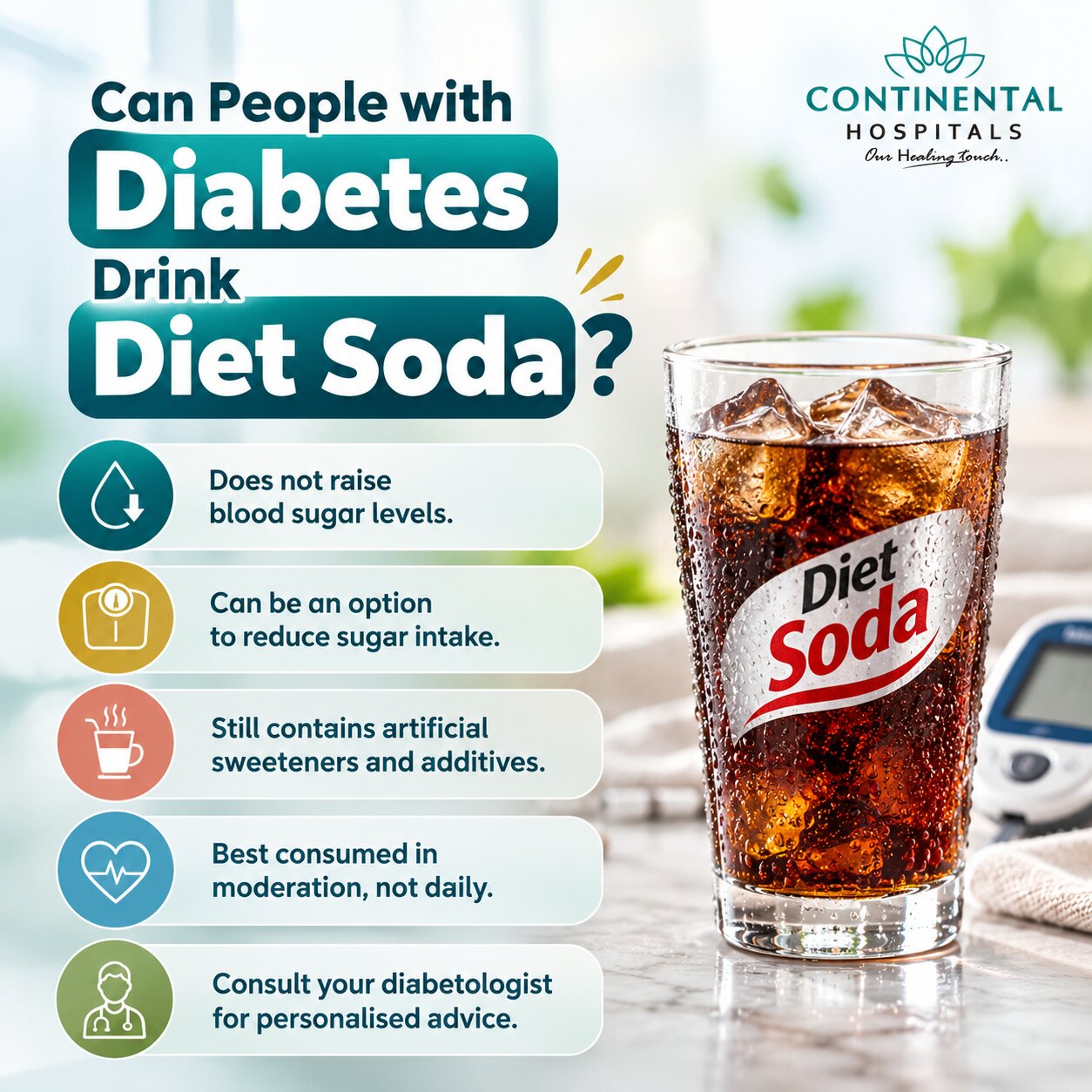
Does diet soda blood sugar increase after drinking a zero-sugar soft drink? Usually, diet soda does not cause the same immediate blood sugar rise as a regular sugary soft drink because it generally contains little or no sugar.

However, the response can vary depending on the product and its ingredients. Some beverages may contain carbohydrates or other ingredients that can affect blood glucose.
People with diabetes should therefore check the nutrition label instead of relying only on terms such as "diet," "light," or "zero sugar."
Is Diet Soda Better Than Regular Soda for Diabetes?

Is Diet Soda for Diabetes a better choice than regular soda? From a blood sugar perspective, it can be a better option because regular soft drinks often contain substantial amounts of added sugar and carbohydrates.

Regular soda can cause a rapid increase in blood glucose. Replacing it with a zero-sugar or diet version may reduce sugar and carbohydrate intake.
However, "better than regular soda" does not necessarily mean "healthy." Diet soda should ideally be an occasional choice rather than the main source of daily fluids.

Visit the Diabetology and Endocrinology Department at Continental Hospitals, Hyderabad, for expert guidance on blood sugar management, nutrition, and diabetes care.

Can People With Diabetes Drink Zero-Sugar Soda?

Can Zero Sugar Soda for Diabetes be included in a meal plan? It may be possible for many people with diabetes to have it occasionally, especially when it helps them avoid sugary beverages.

Second Opinion

Important points to remember include:

  • Check the nutrition label for total carbohydrates and added sugars.
  • Choose smaller portions rather than drinking large quantities.
  • Avoid using diet soda as a replacement for water throughout the day.
  • Pay attention to how your body responds to different products.
  • Discuss frequent consumption with your doctor or dietitian if you have concerns.

Do Artificial Sweeteners Affect Diabetes?

Do artificial sweeteners affect blood glucose in the same way as sugar? Not necessarily. Many artificial or low-calorie sweeteners have little direct effect on blood glucose compared with ordinary sugar.

However, the effects of different sweeteners can vary. Research continues to examine how frequent consumption of artificially sweetened beverages may relate to appetite, dietary habits, metabolic health, and long-term diabetes outcomes.

This means diet soda and diabetes should be considered as part of the person's overall eating pattern rather than focusing only on the sugar content of one drink.

Can Diet Drinks for Diabetics Help Reduce Sugar Intake?

Can Diet Drinks for Diabetics help someone reduce their intake of sugary drinks? For some people, yes. Switching from a sugar-sweetened soft drink to a zero-sugar alternative can reduce the amount of added sugar and carbohydrates consumed from beverages.

This may be particularly useful for someone who enjoys fizzy drinks and finds it difficult to stop drinking them immediately.

A gradual approach can be helpful. Over time, people can try replacing some diet beverages with healthier choices such as:

Need an Appointment?

  • Plain water
  • Sparkling water without added sugar
  • Unsweetened tea
  • Unsweetened coffee
  • Water infused naturally with fruits or herbs

Is Diet Soda Healthy for Everyone With Diabetes?

Is Diet Soda for Diabetes suitable for everyone? No single beverage is ideal for every person. People with diabetes may also have other health considerations, such as kidney disease, heart disease, high blood pressure, or digestive concerns.

Some diet soft drinks can also contain caffeine, which may affect certain individuals. Others may find that carbonated beverages cause bloating or digestive discomfort.
If you regularly consume diet soda or have questions about your diet, a diabetologist, endocrinologist, or qualified dietitian can help you choose beverages that fit your individual health goals.

How Much Diet Soda Can People With Diabetes Drink?

How much diet soda for diabetes is appropriate? There is no universal amount that is suitable for everyone. The important point is moderation.
Instead of making diet soda a routine drink with every meal, consider it an occasional beverage. Water should generally remain the primary choice for hydration.

A useful approach is to ask:

  • Am I drinking enough water?
  • Am I relying on diet soda every day?
  • Does the beverage contain caffeine?
  • Does it increase my desire for sweet foods?
  • Am I choosing diet soda instead of sugary drinks or simply adding it to my existing diet?

What Should People With Diabetes Remember About Diet Soda?

  • Diet soda generally contains little or no added sugar.
  • It usually has less carbohydrate than regular sugary soda.
  • It may have less immediate impact on blood glucose than regular soda.
  • Zero sugar does not automatically mean healthy.
  • Water and unsweetened drinks are generally better choices for everyday hydration.
  • Check nutrition labels because formulations differ between products.
  • Moderation is important.
  • Individual health conditions and dietary needs should be considered.

Why Choose Continental Hospitals for Diabetes Care?

Why is professional diabetes care important when managing food and beverage choices? Diabetes management involves more than monitoring blood sugar. Nutrition, medication, physical activity, weight, blood pressure, cholesterol, and other health factors can all influence long-term outcomes.

Continental Hospitals, Hyderabad, provides comprehensive diabetes and metabolic care through experienced specialists and a multidisciplinary healthcare approach. The hospital has modern medical infrastructure and diagnostic facilities and follows established quality and patient safety practices.

Continental Hospitals is accredited by JCI and NABH, reflecting its commitment to internationally recognized and nationally established standards of healthcare quality, patient safety, and clinical practices. The hospital also emphasizes coordinated care to help patients understand their condition and make practical lifestyle choices.

Conclusion

So, can people with diabetes drink diet soda? For many people, an occasional diet or zero-sugar soft drink can fit into a balanced diabetes management plan, particularly when it replaces a sugary soft drink. However, it should not be considered a substitute for healthy everyday beverages.

Diet soda for diabetes should be viewed as an occasional choice rather than a health drink. Reading labels, practicing portion control, staying hydrated with water, and maintaining a balanced diet are more important for long-term diabetes management.

If you have diabetes and are unsure about diet soda and diabetes, sugar-free soda for diabetes, or the best beverages for your condition, consult our best diabetologist or endocrinologist in Hyderabad at Continental Hospitals, Hyderabad, for personalized dietary and diabetes management guidance.

Related Blog Topics:

  1. Why Smoking Is More Dangerous When You Have Diabetes
  2. Are Diet Sodas Really Healthier Than Regular Soft Drinks?
  3. 10 Potential Side Effects of Consuming Diet Soda

Frequently Asked Questions

People with diabetes can generally drink diet soda in moderation. Most diet sodas contain little or no added sugar. They are usually sweetened with low-calorie or non-nutritive sweeteners. These sweeteners generally have less effect on blood glucose than regular sugar. However, diet soda should not become the main beverage in a daily diet. Water is usually the better choice for regular hydration. Unsweetened tea and coffee can also be suitable options. Individual responses to sweeteners can vary. Some people may notice changes in appetite or food preferences after drinking diet beverages. Checking the nutrition label can help identify added carbohydrates and sugars. People with diabetes should consider their overall eating pattern. Speak with a healthcare professional if you have concerns about diet soda and blood sugar.
Diet soda usually contains little or no sugar. Therefore, it generally causes less of a direct blood glucose rise than regular soda. The effect can depend on the ingredients used in the drink. Some products may contain small amounts of carbohydrates. Checking the nutrition label can help you understand the product. Diet soda may still influence eating habits for some people. Sweet tastes may increase cravings for sweet foods in certain individuals. Research on long-term health effects of artificial sweeteners is still evolving. A single diet soda is unlikely to determine overall diabetes control. Blood glucose is influenced by food, activity, medication, stress, and sleep. People with diabetes should focus on their overall lifestyle pattern. If you notice unusual glucose changes, discuss them with your healthcare provider.
Diet soda generally contains less sugar than regular soda. This means it usually has less impact on blood glucose. Regular soda can contain a substantial amount of added sugar. Frequent intake of sugary drinks can make blood sugar management more difficult. Replacing regular soda with diet soda may reduce sugar and calorie intake. However, diet soda is not the same as a nutrient-rich beverage. Water remains a healthier everyday choice for hydration. Unsweetened beverages can also be included in a diabetes-friendly diet. The overall quality of the diet is more important than one beverage. Portion size and frequency also matter. People with diabetes should check product labels before choosing drinks. A healthcare professional can provide personalized dietary guidance.
Diet soda is not considered a direct cause of diabetes. Most diet sodas contain little or no added sugar. However, research has explored associations between artificially sweetened drinks and diabetes risk. Some studies have found an association with higher consumption of diet beverages. These findings do not prove that diet soda directly causes diabetes. People who are already at higher diabetes risk may also choose diet beverages more often. Other lifestyle factors can influence diabetes risk. Body weight, physical activity, diet, sleep, and genetics all play important roles. The type and amount of beverage consumed also matter. Drinking diet soda occasionally is different from consuming it frequently throughout the day. Choosing water and unsweetened drinks more often is generally a good approach. Discuss your beverage choices with a healthcare professional if you have diabetes or prediabetes.
There is no single amount of diet soda that is ideal for everyone with diabetes. Individual dietary needs and health conditions can vary. Occasional consumption may fit into an overall balanced eating pattern. It is generally better to avoid relying on diet soda as the main source of fluids. Water should usually be the primary beverage for hydration. Unsweetened tea or coffee may also be suitable choices for many people. Check the nutrition label before drinking a diet soda. Some products may contain carbohydrates or other added ingredients. Consider how frequently you are drinking diet beverages. If diet soda replaces sugary drinks, it may reduce added sugar intake. However, drinking large amounts every day may not be the best habit. Your doctor or dietitian can help you choose an appropriate beverage pattern.
Many artificial and non-nutritive sweeteners have little direct effect on blood glucose. They are commonly used to provide sweetness with fewer calories and carbohydrates. Their effects can vary depending on the specific sweetener and product. Some sweeteners may affect people differently. Individual responses can also depend on the overall meal or drink being consumed. Artificial sweeteners do not provide the same nutritional benefits as whole foods. Some people may experience digestive symptoms with certain sweeteners. Regularly consuming very sweet foods and drinks may also influence taste preferences. People with diabetes should look at the complete nutrition label. It is useful to consider total carbohydrate intake throughout the day. Water and unsweetened beverages are usually simple everyday choices. If you have concerns about a particular sweetener, ask your healthcare provider or dietitian.
Diet soda can generally be included occasionally in a diabetes-friendly diet. Most products contain little or no added sugar. This can make them different from sugar-sweetened soft drinks. However, individual health needs should always be considered. Some people may prefer to avoid artificial or non-nutritive sweeteners. Others may use diet drinks to reduce their intake of sugary beverages. Drinking too many sweetened beverages may also reinforce a preference for sweet tastes. Diet soda should not replace nutritious foods or adequate hydration. Water is generally the best everyday drink for most people. Check labels for carbohydrates, calories, and other ingredients. People with kidney, heart, or other health conditions may have additional dietary considerations. Your diabetes care team can help you decide what fits your diet. Moderation and an overall healthy eating pattern are important.
Diet soda usually has less direct effect on blood glucose than regular soda. However, diabetes control depends on many factors beyond one beverage. Food choices, physical activity, medications, stress, and sleep can all affect glucose levels. Frequent diet soda consumption may also influence beverage and food preferences for some people. Some individuals may experience increased cravings for sweet foods. Research on the long-term effects of non-nutritive sweeteners continues to develop. It is therefore useful to consider diet soda as an occasional beverage rather than a health drink. Water should generally remain the main source of hydration. If you monitor blood glucose, you can observe how different foods and drinks affect you. Discuss repeated or unexpected glucose changes with your healthcare team. A balanced diet and regular physical activity remain important for diabetes management. Personalized advice is especially important when medications or other health conditions are involved.
Water is generally one of the best beverage choices for people with diabetes. It provides hydration without added sugar or carbohydrates. Plain or sparkling water can be included according to personal preference. Unsweetened tea can also be a suitable option for many people. Unsweetened coffee may be another choice when tolerated. Milk can provide nutrients but also contains naturally occurring carbohydrates. Fruit juice can contain significant amounts of natural sugar and should be consumed carefully. Regular soft drinks are high in added sugar and are best limited. Diet soda may be used occasionally by some people with diabetes. Reading nutrition labels helps identify sugar and carbohydrate content. The best beverage pattern depends on individual health needs and preferences. A dietitian or diabetes specialist can provide personalized nutrition advice.
Disclaimer: The information provided in this blog is intended for general knowledge and informational purposes only, and does not constitute medical advice. Always consult with a qualified healthcare professional for any medical concerns or before making any decisions about your health.

Get in Touch With Us

Whether you are from India or abroad, we are here to help you with your medical queries. Please fill out the form below and our team will connect with you shortly.

  • ✔ Quick response from our medical experts
  • ✔ Secure data handling & privacy
  • ✔ Easy upload for reports & documents
banner_image

Chat with our medical experts on WhatsApp for quick assistance and hassle-free appointment booking

Recent Posts