.webp)

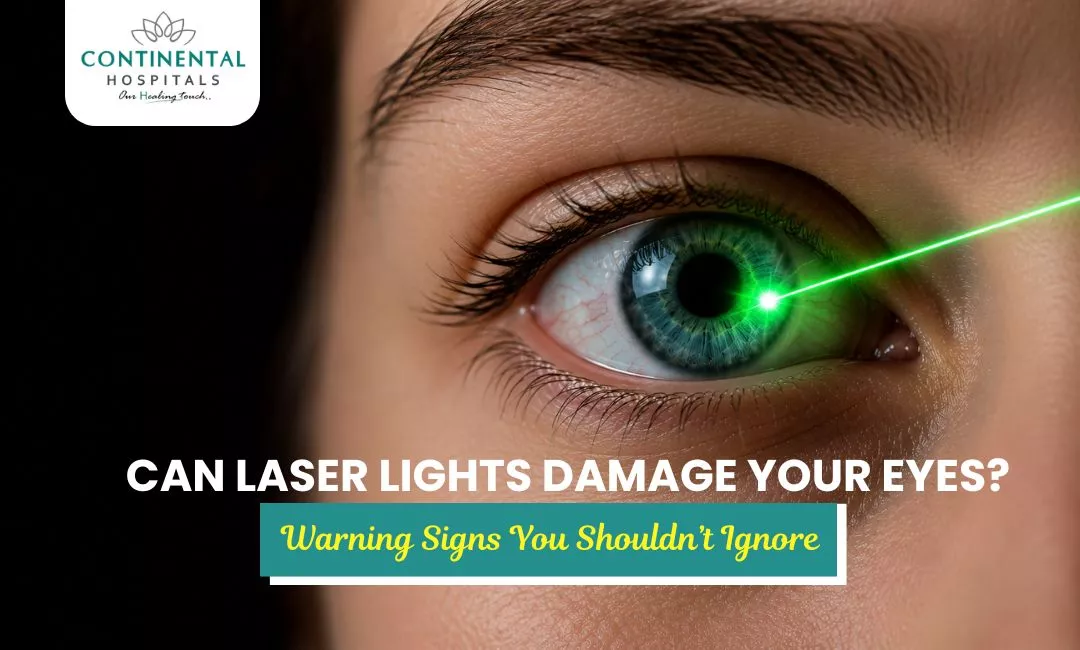
Laser lights are increasingly common in public spaces, entertainment venues, and everyday household items. Many people enjoy the vibrant beams of light at concerts or use portable pointers for business presentations. However, the potential hazard of these devices remains a significant concern for visual health. Can exposure to a laser lights eye beam cause permanent injury? Understanding how these concentrated light paths interact with human vision is essential to protecting yourself from accidental harm.
The human eye is highly sensitive to concentrated light radiation. When a powerful beam enters the pupil, the lens focuses that energy directly onto a microscopic spot on the retina. This process can quickly elevate tissue temperatures, causing thermal or photochemical reactions. Knowing the clear signs of light radiation exposure allows individuals to take immediate action. Seeking expert medical intervention can prevent minor issues from turning into lifelong visual impairment.
Can lasers damage eyes?
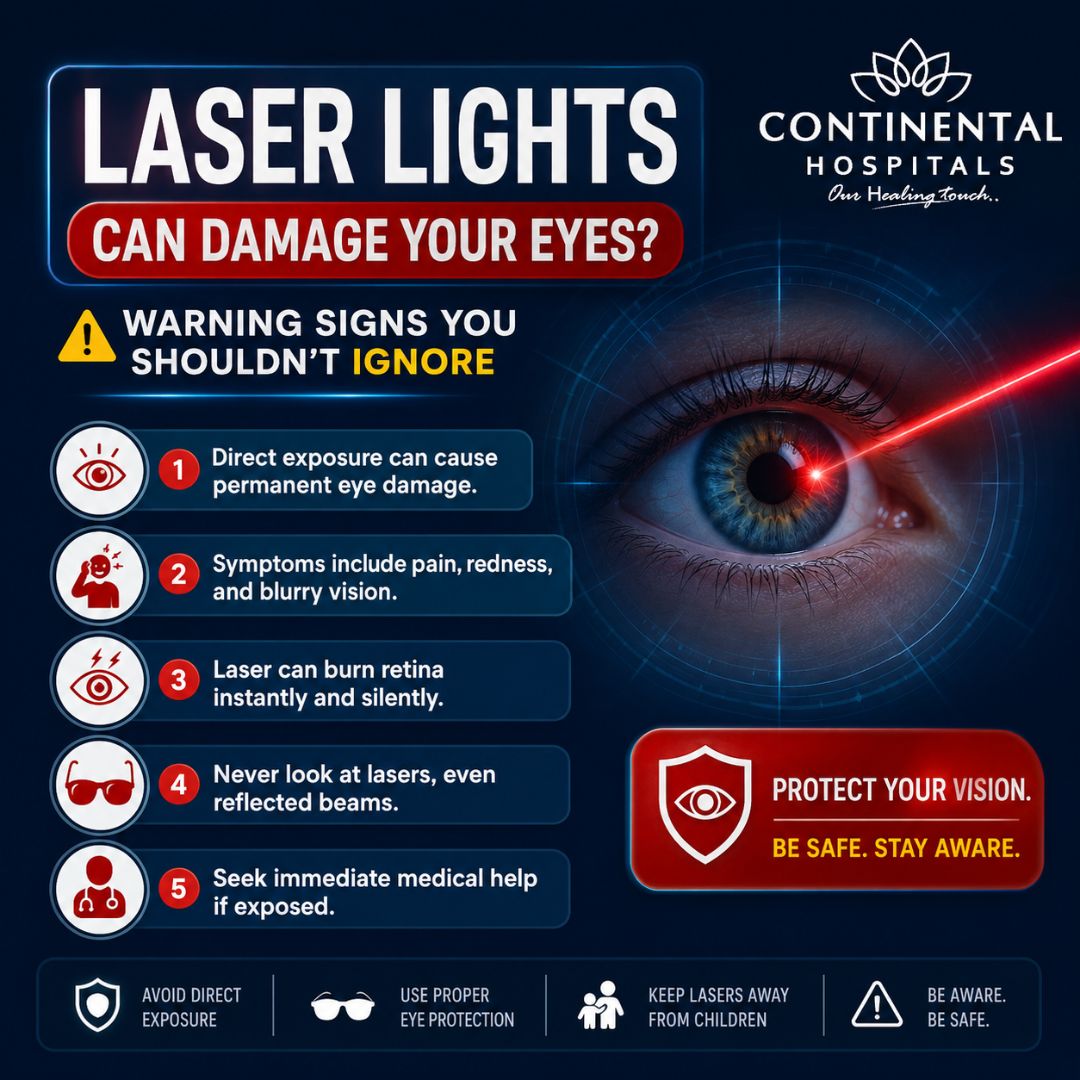
Yes, concentrated light beams can cause instant and severe injury to the human optical structure. Unlike standard light sources that spread out over a distance, a laser remains tightly focused. When this intense beam enters the pupil, the natural lens of the eye amplifies the light energy. This amplified energy concentrates directly onto the retina, which is the light-sensitive tissue at the back of the eye.
The degree of damage depends on the power output of the device and the duration of exposure. Even a split second view of a high-powered beam can cause physical harm. Lower-powered devices can also present risks if a person stares directly into the light source or if the light reflects off a shiny surface like a mirror.
Visual discomfort or suspected eye injury? Visit our ophthalmology department at Continental Hospitals for expert eye care today.
What are the primary laser eye injury symptoms?
An injury to the visual tissue from a laser light eye encounter may present several distinct symptoms. The severity of these signs depends on which part of the eye absorbed the energy.
- Sudden blind spots: You may notice a blank or dark spot in the direct center of your vision field.
- Intense visual glare: A lingering flash of bright light, similar to the afterimage left by a camera flash, might persist for several minutes or hours.
- Physical pain or burning: High-powered beams can cause immediate discomfort, aching, or a burning sensation inside the eyeball.
- Watery eyes and redness: The surface of the eye may become irritated, leading to excessive tearing and bloodshot appearance.
- Blurred or distorted vision: Objects may look hazy, straight lines might appear wavy, or text could become difficult to read.
How do different laser lights affect eye safety?
Different devices present varying levels of risk to your vision based on their intended use and power regulations.
What is the standard for laser pointer eye safety?
Commercial pointers used for lectures and business meetings are generally designed to have low power outputs. Safe retail pointers should operate below a specific milliwatt threshold, which allows the natural human blink reflex to protect the retina from brief, accidental exposure. However, unregulated or illegally imported pointers often exceed safe power limits. Staring into any pointer, regardless of its classification, can bypass the body's natural defenses and lead to tissue damage.
How do entertainment laser lights cause eye injuries?
Light shows at music festivals, clubs, and public celebrations utilize high-intensity beams capable of traveling long distances. When these light tracking systems are improperly calibrated, they may accidentally sweep across the audience at eye level. Direct contact with these powerful display beams can result in rapid, painless thermal burns on the retina before a person has time to close their eyelids.

What is the mechanism behind eye damage from lasers?
The biological process behind an injury involves the precise way the ocular structure handles light. The main function of the cornea and lens is to focus incoming light onto the retina to form a clear image. When a coherent laser light beam enters this pathway, the internal focusing system concentrates the beam power by up to 100,000 times.
This extreme concentration of energy strikes the macula, which is the central area of the retina responsible for sharp, detailed vision. The light energy quickly transforms into heat energy, causing a localized thermal burn. This burn can destroy the photoreceptor cells, which are the specialized rods and cones that convert light into signals for the brain. Once these cells are destroyed by thermal energy, they cannot regenerate, often leading to permanent central vision loss.
What immediate steps should you take if you suspect an injury?
If your vision is exposed to a direct beam and you begin experiencing unusual visual changes, taking swift action is crucial for a positive outcome.
- Look away immediately: Turn your head and eyes away from the light source to prevent further exposure.
- Do not rub your eyes: Rubbing can worsen surface irritation or aggravate an injured cornea.
- Cover the affected eye: Rest the eye by keeping it gently closed or covered with a clean, soft cloth patch.
- Avoid self-medicating: Do not apply over-the-counter eye drops or medications without a professional prescription.
- Seek professional medical evaluation: Visit an advanced eye care facility as soon as possible for a comprehensive internal examination.
Why choose Continental Hospitals for your eye care needs?
Continental Hospitals is recognized as the best hospital in Hyderabad for comprehensive medical treatments and specialized surgical care. Our facility is designed to meet international benchmarks of healthcare delivery, offering patients access to advanced diagnostic infrastructure and globally trained medical experts.
The institution stands out due to its adherence to strict quality protocols and its commitment to patient safety. Here is why patients trust Continental Hospitals for their critical health concerns:
- Prestigious JCI accreditation: Continental Hospitals has secured its fourth consecutive Joint Commission International Gold Seal of Approval, which is a global benchmark for healthcare quality and patient safety.
- National NABH accreditation: The hospital holds full accreditation from the National Accreditation Board for Hospitals & Healthcare Providers, ensuring high-quality clinical operations.
- Advanced diagnostic technology: Our dedicated ophthalmology suites are equipped with high-definition imaging systems to detect microscopic retinal damage early.
- Comprehensive specialty care: We house dedicated departments that collaborate seamlessly to handle complex trauma, systemic health complications, and specialized surgeries under one roof.
Conclusion
Ocular health is vital to your daily quality of life, and protection from intense light sources should always be a priority. While everyday encounters with properly manufactured devices are generally low risk, unregulated pointers and commercial entertainment lights present a real threat of permanent retinal injury. Recognizing the warning signs of exposure and understanding the underlying risks can help you protect your vision effectively.
If you suffer from sudden blind spots, persistent blurriness, or eye pain after exposure to a laser light's eye beam, do not delay seeking professional care. Early intervention by an experienced specialist is critical to mitigating long-term visual impairment and ensuring proper healing.
If you are experiencing any changes in your vision or suspect a recent eye injury, please consult our best ophthalmologist in Hyderabad at Continental Hospitals.
Related Blog Topics: