.webp)

Have you ever considered how much of your life depends on your voice? From giving a big presentation at the office to belting out your favorite song or laughing with your family, we all rely a lot on our voice. Unfortunately, when an unfortunate voice disorder occurs, even a quiet whisper may become a tedious task. For many people with chronic vocal problems, the answer may lie not only in therapy but also in specialized medical intervention.
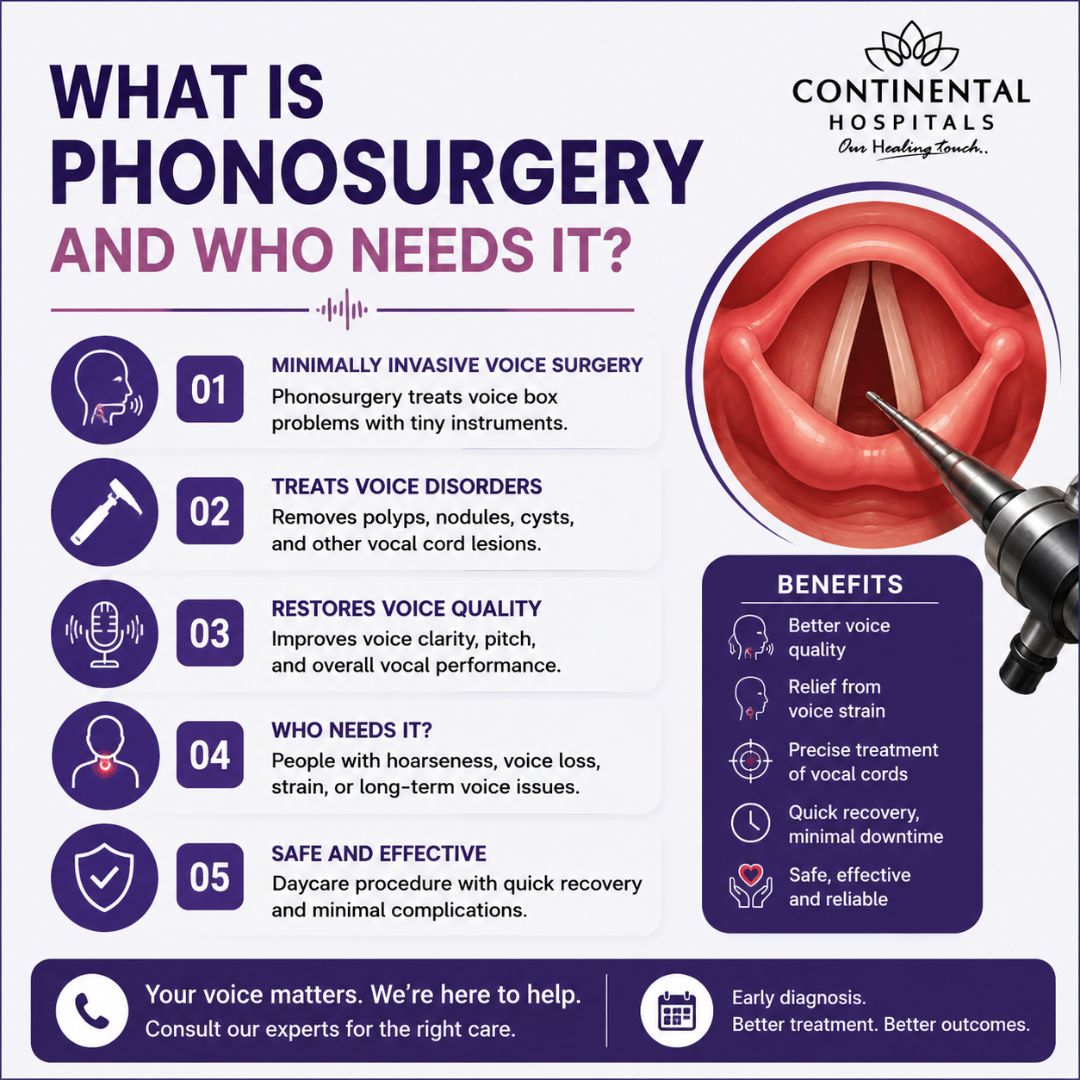
Voice surgery, or phonosurgery, encompasses a variety of highly specialized surgical techniques aimed at improving, preserving, or restoring the human voice. While it may be easy to describe it broadly as an operation to fix your throat, this part of the field is more highly specialized, being concerned primarily with the critical structures of the vocal cords (vocal folds). The goal of voice surgeries is to shape or repair the tissues of the vocal folds so they can vibrate properly, thereby restoring the patient to their natural pitch, volume, and vocal endurance.
What Is The Sign Of A Voice Disorder?
People have a habit of thinking that the slightest shift in their voice is just due to a cold or a lot of tiredness. But if the quality of your voice changes permanently, that is a strong indicator that your vocal cords are damaged or strained.
You should keep an eye on the following problems if they persist for more than two to three weeks:
- Chronic hoarseness or a raspy sound to your voice.
- A sudden change in voice pitch or inability to sing high.
- A weak, breathy, or totally lost voice (aphonia).
- A poor sensation of having to strain your voice or of having some kind of physical pain while talking.
- A feeling of needing to clear your throat suddenly, or the feeling of a lump in your airway.
What Are the Causes of Vocal Fold Damage?
Vocal damage can occur slowly due to defective habits or as an acute symptom of some other underlying medical condition. The voice depends on a smooth, rhythmic wave pattern across the vocal cords. Any shift in that wave can interfere with this delicate rhythm and result in a voice disorder.
The following are the most common causes that collapse patients into seeking phonosurgery treatment:
- Benign Growths: Vocal nodules, polyps, or cysts developing as a result of constant friction.
- Paralysis of vocal folds: Resulting from damage to the nerves, which can arise from neck or cranial surgery, impact, or viral infection.
- Acute Vocal Trauma: A severe episode of crying or screaming or impact trauma.
- Aged Structural Changes: Thinning or bowing of the tissues over time results in the failure of the cords to close completely.
Who Is Most Likely to Develop Voice Problems?
Everyone can develop a voice problem - but certain people are way more at risk because of what they do day-to-day.
The biggest painkillers are:
Vocal professionals, such as singers, teachers, lawyers, actors, and call center reps, use their voices for hours on end.

- Harsh Chemicals and Smoke: You'll feel the burn on the inside of your throat as the irritants from tobacco and chemicals pass through the delicate mucosal lining.
- Acid reflux: Laryngopharyngeal reflux (LPR) is when acid from your stomach is backing up into your throat - causing nasty burns and scars to your vocal tissue.
- Dryness: Dehydration and dry environments leave your vocal folds exposed, with less protective mucus, and more friction damage.
What Causes a Voice Disorder?
Before making recommendations to correct your voice through vocal cord surgery, I have to know the underlying problem inside your larynx (voice box).
This information is collected in the following way:
- Laryngoscopy: a thin, lighted scope is inserted through your nose or mouth to look at your throat structures.
- Videostroboscopy: a special camera mounted to a flashing light source. It allows me to see your vibrating vocal cords in slow motion.
- Acoustic and aerodynamic analysis: computerized tools to measure your voice pitch, volume, and the air pressure needed to produce sounds.
What Does Phonosurgery Treatment Involve?
The definitive treatment for voice disorders, when other methods like resting your voice or speech therapy don’t solve the problem, requires surgical treatment. This highly specialized voice disorder procedure uses instruments that are incredibly precise to preserve healthy portions of your voice box.
Based on your specific diagnosis, the type of procedure can differ.
- Microlaryngoscopy: With the aid of a high-powered microscope and micro-instruments, the surgeon removes small cysts, polyps or nodules without harming the surrounding tissue.
- Laser Phonosurgery: A sophisticated laser is used to target, coagulate, or vaporize abnormal blood vessels or lesions on your vocal folds.
- Laryngoplasty (Thyroplasty): A structural surgery in which the location of the vocal cord is changed with the help of a tiny implant – typically to aid a severely weakened or paralyzed vocal cord to close firmly against the healthy one.
- Infiltration / Injection Laryngoplasty: Bulk-producing materials (collagen or fillers) are injected directly into the softened or paralyzed portion of the vocal cord to bulk it up and allow it to close.
How To Reduce The Risk Of Vocal Cord Straining
Keeping your voice safe and protected is really possible with some small lifestyle adjustments that reduce the daily wear and tear on your throat.
Try following these healthy lifestyle habits:
- Stay hydrated by drinking water all day long.
- Avoid excessive consumption of caffeine and alcohol, as they both cause a lot of throat dehydration.
- Use a humidifier in dry indoor climates, especially in the winter.
- Do not shout, hiss or speak loudly (which further worsens the strain on your vocal cords) or talk over loud background noise.
- Take brief full vocal rests if your workday gets busy.
Why opt for Continental Hospitals for phonosurgery treatment?
Continental Hospitals is one of the first choices for top-of-the-line airway and voice care, combining clinical excellence with medical compassion at heart. Your voice is unique, and ours is a dedicated structure to ensure top-notch surgical results.
Our Department provides
- Best technology: We are proudly equipped with best-in-class, high-definition videostroboscopy and ultra-precise laser technology, which help to limit tissue trauma as much as possible.
- Multidisciplinary care: Our collaboration with speech-language pathologists, neurologist and gastroenterologists help us to treat the underlying cause of your disorder effectively.
- World standards of quality: We are proud to be among the few hospitals in India with both JCI Accreditation (International Standards) and NABH Accreditation (National Standards).
- Modern infrastructure: Our state-of-the-art operation theaters and voice labs are specifically designed for microscopic procedures.
- 24x7 emergency and critical care: Operation theaters are open 24 hours a day for emergencies, and our on-call medical team is always available to provide immediate medical assistance for post-operative patients.
- Best standards of patient care: Our clinical outlets provide a comfortable, comforting, and empathetic environment to heal in.
Conclusion
Your voice is one of your most intimate tools of being with others, and living with a debilitating voice disorder is very isolating. Phonosurgery is a most reliable, precise, and proven scientific means to regain your sound and speak comfortably again. By focusing on early diagnosis and receiving specialized care, you can preserve your voice, prevent long-term damage, and safely return to your personal and professional activities with confidence and complete vocal liberty.
Consult our best ENT specialist in Hyderabad at Continental Hospitals for your phonosurgery questions. Visit Continental Hospitals for diagnosis, treatment and care.
Related Blog Topics: