.webp)


You visit a doctor’s clinic because of a mild sickness, hoping to receive medication as quickly as possible, but leave with a list of diagnostic tests. This experience often leaves many people in a state of curiosity about the need for medical tests. Can't the doctor simply diagnose from the symptoms and prescribe medicines?
The reality is that the process taking place in the human body is extremely complicated. Medical research is not simply administrative tasks. They are the most reliable way for doctors to assess the health condition of their patients correctly.
Why Are Medical Investigations Necessary?
It is easier to grasp why such studies are crucial when considering our bodies as highly sophisticated machines. If a car starts producing some unusual sounds, a mechanic doesn't make assumptions about its condition. He or she connects the vehicle to the diagnostic equipment to identify precisely where the problem originates. The same applies to the human body, but even more so.
The significance of medical research is reflected in its objective nature. Specialists use various methods to get a detailed insight into the condition of each patient's body. Otherwise, it would be impossible to develop an effective treatment plan.
Persistent symptoms or unexplained health concerns shouldn’t be ignored. Visit the Internal Medicine Department at Continental Hospitals for expert diagnosis, comprehensive evaluation, and personalized treatment care.
Key Reasons for Medical Tests
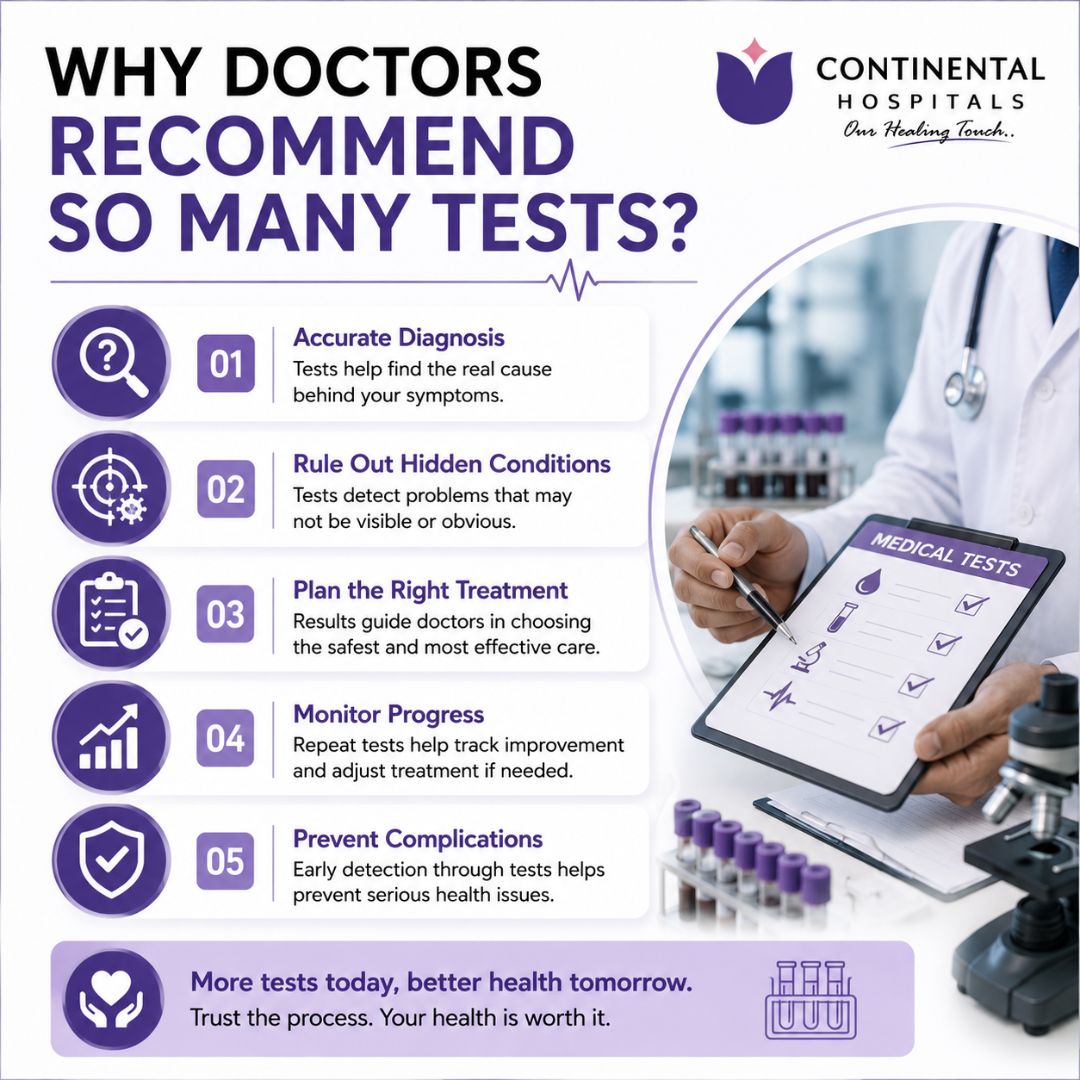
Doctors recommend diagnostic tests for several distinct reasons, each serving a vital role in your healthcare journey.
1. Confirming a Specific Diagnosis
Many illnesses share identical baseline symptoms. A simple fever, for instance, could indicate a common cold, a urinary tract infection, malaria, or typhoid. Doctors require specific tests to isolate the exact cause of your symptoms so they can prescribe the right medication.
2. Screening for Hidden Conditions
Some of the most serious health conditions develop silently without causing any pain or obvious symptoms in their early stages. Conditions like high blood pressure, early-stage diabetes, high cholesterol, and certain cancers can lurk undetected for years. Routine screening tests catch these issues early, when they are the easiest to manage and treat.
3. Monitoring Ongoing Treatments
If you are already undergoing treatment or taking long-term medications, doctors need to know if the therapy is actually working. Regular blood tests or imaging studies help determine if a dosage needs adjustment or if a treatment plan needs to be modified completely.

4. Assessing Risk Factors Before Procedures
Before you undergo any surgical procedure or start a strong medication regimen, doctors must ensure your organs can handle the stress. Preoperative tests evaluate kidney function, liver health, and blood clotting capabilities to ensure patient safety.
Understanding Medical Tests: The Different Categories
When doctors order investigations, they draw from a diverse toolkit of diagnostic methodologies. Understanding medical tests and how they differ can make your trip to the laboratory much less intimidating.
Laboratory Tests: These analyze samples of blood, urine, or other bodily fluids. They measure chemical balances, blood cell counts, and organ function.
Imaging Studies: Techniques like X-rays, ultrasounds, CT scans, and MRI scans provide visual maps of your bones, tissues, and internal organs.
Endoscopic Procedures: Using thin, lighted tubes with cameras, doctors can view the linings of your digestive tract or respiratory system directly.
Electrical Activity Tests: Procedures like an electrocardiogram (ECG) or electroencephalogram (EEG) measure the electrical impulses of your heart or brain.
Why Choosing the Right Diagnostic Center Matters
The accuracy of your test results is just as crucial as the decision to get tested. A wrong or delayed report can completely alter your treatment trajectory. This is why choosing a highly accredited, reliable healthcare institution is paramount.
When you undergo diagnostic testing, the quality of the laboratory infrastructure directly impacts your health outcomes. Advanced machinery, automated processes, and expert pathologists ensure that your reports are precise and free from manual errors. Choosing an institution that prioritizes quality control gives you and your doctor total confidence in the subsequent treatment plan.
Why Choose Continental Hospitals?
Continental Hospitals stands out as a premier healthcare destination, widely recognized as the best hospital in Hyderabad. Our commitment to clinical excellence and patient safety makes us the trusted choice for thousands of families seeking accurate medical investigations.
World-Class Accreditations
Continental Hospitals is built upon a foundation of strict quality standards. We hold prestigious national and international accreditations, including Joint Commission International (JCI) and the National Accreditation Board for Hospitals & Healthcare Providers (NABH). Our laboratories are National Accreditation Board for Testing and Calibration Laboratories (NABL) certified. These accreditations mean that our diagnostic processes, hygiene protocols, and clinical outcomes meet the highest global benchmarks for patient safety and accuracy.
Advanced Diagnostic Infrastructure
We house cutting-edge diagnostic technologies that allow for rapid and precise testing. From high-resolution imaging modalities to fully automated biochemistry labs, our infrastructure minimizes the margin for error and delivers fast turnaround times for reports.
Comprehensive Care Under One Roof
At Continental Hospitals, you do not have to travel to different locations for consultations, lab tests, and imaging. Everything is integrated seamlessly. Our highly experienced pathologists, radiologists, and technicians work in close coordination with our clinical specialists to provide a holistic view of your health.
Uncompromising Patient Safety
Our adherence to global healthcare protocols ensures that every test is conducted in a safe, sterile, and comfortable environment. We prioritize patient dignity, clear communication, and error-free reporting at every stage of your diagnostic journey.
Conclusion
The importance of medical tests cannot be overstated. They are the foundation of safe, effective, and personalized modern medicine. When a doctor recommends a panel of investigations, it is a proactive step toward ensuring your long-term health and well-being. Rather than viewing tests as an inconvenience, recognizing them as an essential roadmap to recovery helps you take charge of your health with confidence.
If you are experiencing persistent fatigue or unexplained discomfort or simply want to schedule your routine preventive health screening, do not delay seeking professional advice.
Are you suffering from chronic symptoms or undiagnosed health issues? Consult our best internal medicine specialists in Hyderabad at Continental Hospitals today for an accurate diagnosis and a personalized care plan.
Related Blog Topics: