.webp)

Could your DNA show if you are genetically predisposed to certain heart diseases? Genetic testing for heart disease identifies specific gene changes that may be related to hereditary heart conditions. These kinds of tests will inform physicians if a person has a genetic predisposition to heart disease and whether other family members may find it useful to be tested as well.
Genetic testing for heart disease is particularly useful when someone has a heart problem at a young age, has a significant family history of a certain heart condition, or has unexplained heart disorders. However, having a genetic change does not mean that someone will have heart disease without exceptions. The positive results should be interpreted in the context of family history, previous health records, and other treatments.
What Is the Importance of Genetic Testing for Heart Disease?
Why do physicians recommend genetic testing for heart ailments? Some diseases of the heart may be hereditary due to changes that occur in genes. This is significant because it can help physicians identify individuals who may be at risk of inheriting heart diseases.
Genetic testing may be recommended in case of a history of:
• Heart ailments occurring at a very young age
• Sudden cardiac deaths in relatives
• Hereditary cardiomyopathies
• Certain hereditary rhythm disorders
• Unexplained fainting or arrhythmias
• Several family members having similar heart diseases
Identifying a hereditary pattern helps physicians determine an effective treatment process.
Visit the Best Cardiology Doctors in Hyderabad at Continental Hospitals, Hyderabad, for expert heart care, advanced diagnostics, and personalised treatment.
Which Heart Disorders Can Genetic Tests Detect?
Will my genetic test reveal every heart condition there is? It will not. Genetic testing is mainly effective for some inherited heart disorders, but not all kinds of heart disease.
Depending on the genetic test performed, genetic testing for heart disease can also detect certain genetic mutations that lead to:

• Hypertrophic cardiomyopathy
• Dilated cardiomyopathy
• Certain genetic disturbances of heart rhythm
• Familial hypercholesterolemia
• Various genetic aortic diseases
• Various genetic diseases of the cardiovascular system
The correct test depends on the individual’s medical background and family history.
What is involved in genetic testing for heart disease?
The procedure for testing for DNA in heart disease is simple and easy. First, a doctor takes medical and family history from a person. A sample is taken after the decision to test genes is made through blood or any other means.
After the sample is taken, it is taken to a lab, where the laboratory performs tests and assesses the sample looking for specific genes which may cause heart disease.
The procedure generally comprises:
- Clinical Evaluation: A doctor would assess the health condition of the subject.
- Genetic Counseling: The doctor discloses the benefits and limitations of tests.
- Sample Takeaway: A blood sample and other necessary supplies must be taken.
- Laboratory Analysis: The tests will provide the necessary results in the lab.
- Results Interpretation: After the test, the clinical staff will provide the necessary information and interpretation for the person and their family.
What Information Can Genetic Test Results Provide?
Is it possible for genetic testing to give us insight into the future when it comes to the risk of heart disease? The answer is no; results from genetic tests do need to be interpreted with caution.
Indeed, the results may indicate the presence of a particular genetic defect that has been documented to exist in patients suffering from certain genetic heart diseases. However, the test may not find any abnormalities at all, or it may detect a change that has not been fully substantiated yet.
While a positive result can help guide the assessment of the heart and the testing of other family members for inherited heart disease, it may still be inconclusive since a negative result does not always rule out the presence of such disease if the family history indicates that it is likely.
Who Should Think About Genetic Testing for Heart Disease?
Who should get tested for genetic heart disease? Genetic testing is not needed for everyone and is instead chosen based on personal situation.
In general, people with the following characteristics would be good candidates for genetic heart disease testing:
• An inherited heart disease has been diagnosed.
• The individual has a strong family history of cardiac diseases.
• A family member has died suddenly from an unidentified heart condition.
• A person has had a serious cardiac condition diagnosed at a young age.
• Cardiomyopathy or unusual heart problems have occurred without any explanation.
• A close family member has received a positive diagnosis of a hereditary illness.
What Are the Advantages of Genetic Testing in Relation to Heart Disease?
Some possible advantages may include:
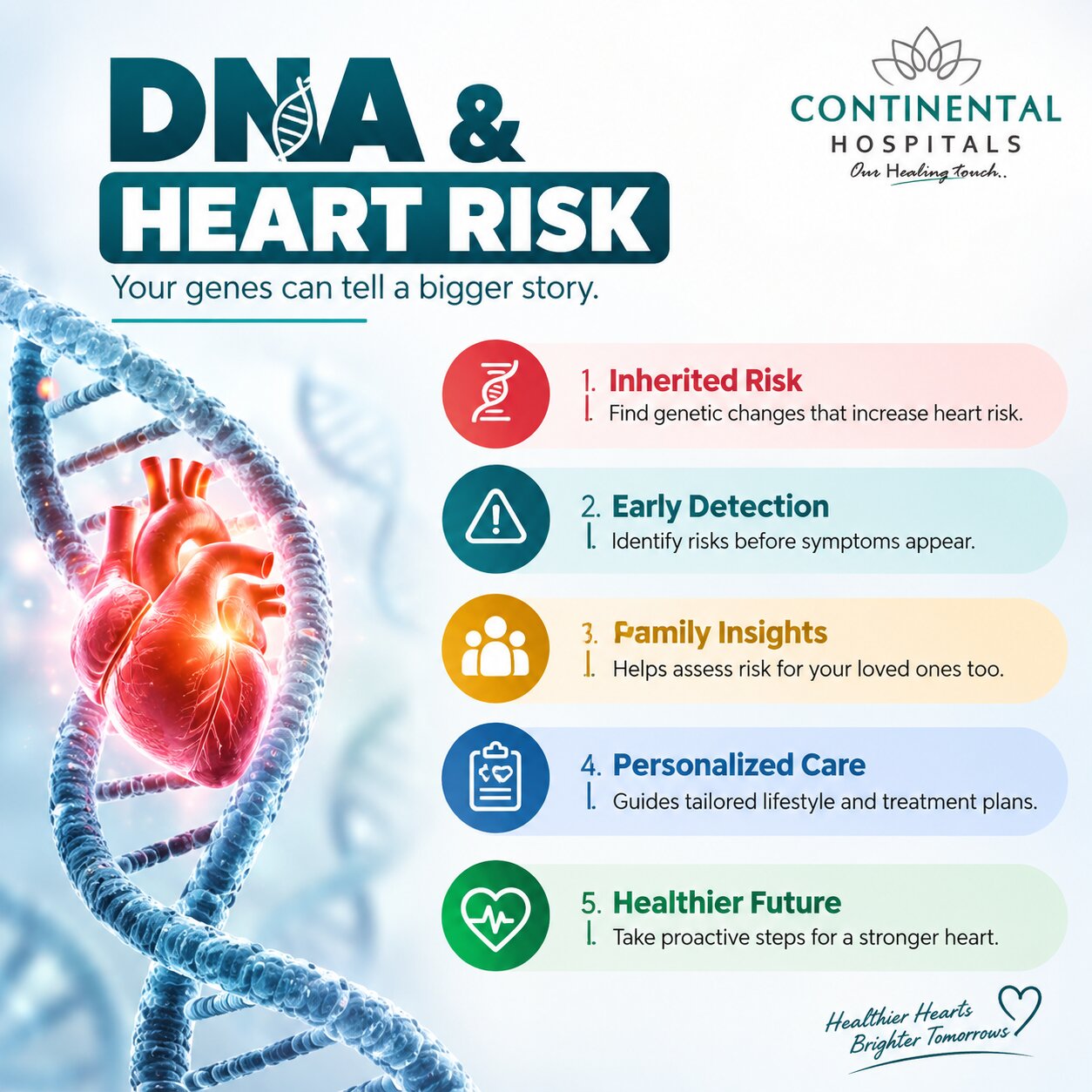
• Determining the inherited source of some heart conditions
• Helping the doctors evaluate the genetic predisposition to heart disease
• Allowing for custom cardiac surveillance
• Identifying family members who may need to be tested
• Helping families plan for the future when relevant
• Making detection of some inherited heart conditions earlier than it would normally happen
Genetic testing should be regarded as a part of a larger process of cardiac care, but not a separate predictor of health in the future.
Why choose Continental Hospitals for cardiac treatment?
Why is expert consultation crucial while opting for genetic testing for heart-related illness? Genetic results may be complicated, and their significance may become clearer only when considering the person’s medical history, heart assessment, and family history. Expert interpretation makes it possible for the patient to understand the meaning of the results and subsequent steps to take.
Continental Hospitals in Hyderabad is a leader in cardiac care, owing to experienced cardiologists, state-of-the-art diagnostic capabilities, multidisciplinary proficiency, and modern healthcare infrastructure. The hospital adheres to best practices in quality and patient safety and has several national and international healthcare accreditations indicating its commitment to applying high-standing operating procedures and achieving continuous improvements.
What needs to be taken into account regarding genetic testing for heart disorders?
Consider the following important factors:
• Genetic mutation tests can identify specific mutations associated with certain heart disorders.
• The test does not predict the risk of any type of heart disease.
• Whether or not the family members might be at risk for the disease represents one of the most important indications for testing.
• A positive test does not mean the patient will for sure develop a heart disorder.
• A negative result does not ensure that the risk associated with genetics does not exist.
• Genetic counseling services and interpretation by a specialist are especially important in this case.
• If a variant responsible for the hereditary disorder is found, the doctor might recommend testing of relatives.
• Genetic findings should be interpreted together with clinical and cardiac investigations.
Conclusion
Does your DNA have the power to reveal unexpected risks linked to heart disorders? Yes, in some instances, it certainly can. Genetic diagnosis of heart diseases offers important insights into inherited cardiovascular diseases, making it easier for the physician to detect patients and families who may benefit from appropriate monitoring and prevention.
If you have a robust hereditary history of heart diseases, unclear cardiac symptoms, cardiac disease at a younger age, or a close relative with a known inherited heart condition, it is recommended that you see a consult our best cardiologist in Hyderabad at Continental Hospitals, Hyderabad.
Related Blogs: