post-title

Fake Cancer Medicines: Risks, Warning Signs and How Patients Can Stay Safe

Written by - Editorial Team
Medically Reviewed by - Dr Pradeep K Reddy

Fake cancer medicines are products falsely presented as genuine cancer treatments. They may contain the wrong ingredients, incorrect amounts of active ingredients, no active ingredients at all, or harmful substances. Some counterfeit cancer drugs may also be genuine medicines that have been deliberately mislabelled, repackaged, or sold without proper quality assurance.

Cancer treatment often depends on carefully selected medicines, including chemotherapy, targeted therapy, immunotherapy, and supportive treatments. When patients receive counterfeit cancer drugs instead of their prescribed medicines, treatment may not work as intended. This can delay appropriate care, cause unexpected side effects, and put patients at serious risk. Understanding the dangers of fake cancer medicines is an important part of cancer medicine safety.

Why Are Fake Cancer Medicines a Serious Concern?

Why can counterfeit cancer drugs be particularly harmful to patients? Cancer medicines are selected according to the type of cancer, its stage, the patient's health, and the treatment plan. Even a small change in the medicine or its strength may affect treatment.

Fake cancer drugs can create several risks:

  • Delayed treatment: Ineffective medicines may allow cancer treatment to be interrupted or delayed.
  • Unexpected side effects: Harmful ingredients or incorrect doses can cause serious reactions.
  • Treatment failure: Medicines without the required active ingredients may not provide the intended benefit.
  • Drug interactions: Unknown ingredients may interact with prescribed medicines.
  • Financial and emotional distress: Patients and families may face additional difficulties when they discover that a medicine is counterfeit.

Counterfeit medicines in India and other countries are a concern because patients may encounter unsafe products through unauthorized sellers or unreliable online sources.

Visit the Medical Oncology Department at Continental Hospitals, Hyderabad, for expert cancer care and comprehensive treatment support.

What Are the Warning Signs of Fake Cancer Medicines?

How can patients identify a medicine that may not be genuine? Fake cancer medicines can sometimes look similar to authentic products, so appearance alone cannot confirm whether a medicine is safe. However, certain warning signs deserve attention.

Look out for:

  • Spelling mistakes, unusual fonts, or poor-quality printing on the packaging.
  • Missing batch numbers, manufacturing details, expiry dates, or other required information.
  • Packaging that appears damaged, opened, tampered with, or different from previous supplies.
  • Differences in tablet color, shape, texture, or packaging compared with the medicine previously prescribed.
  • Unusual smell, discolouration, or unexpected changes in an injectable medicine.
  • A product supplied by an unauthorized seller or through an unreliable online source.
  • A medicine that produces unexpected side effects or does not appear to have the intended effect.

These signs do not automatically prove that a medicine is counterfeit. Patients should ask a qualified healthcare professional or pharmacist to verify any concerns. The World Health Organization recommends obtaining medicines from authorized suppliers and reporting suspected falsified products.

Second Opinion

How Can Patients Stay Safe From Fake Cancer Drugs?

What steps can patients and caregivers take to protect themselves from counterfeit cancer drugs? Careful purchasing, proper storage, and communication with the treating oncology team can help reduce the risk of unsafe medicines.

What should patients do before purchasing cancer medicines?

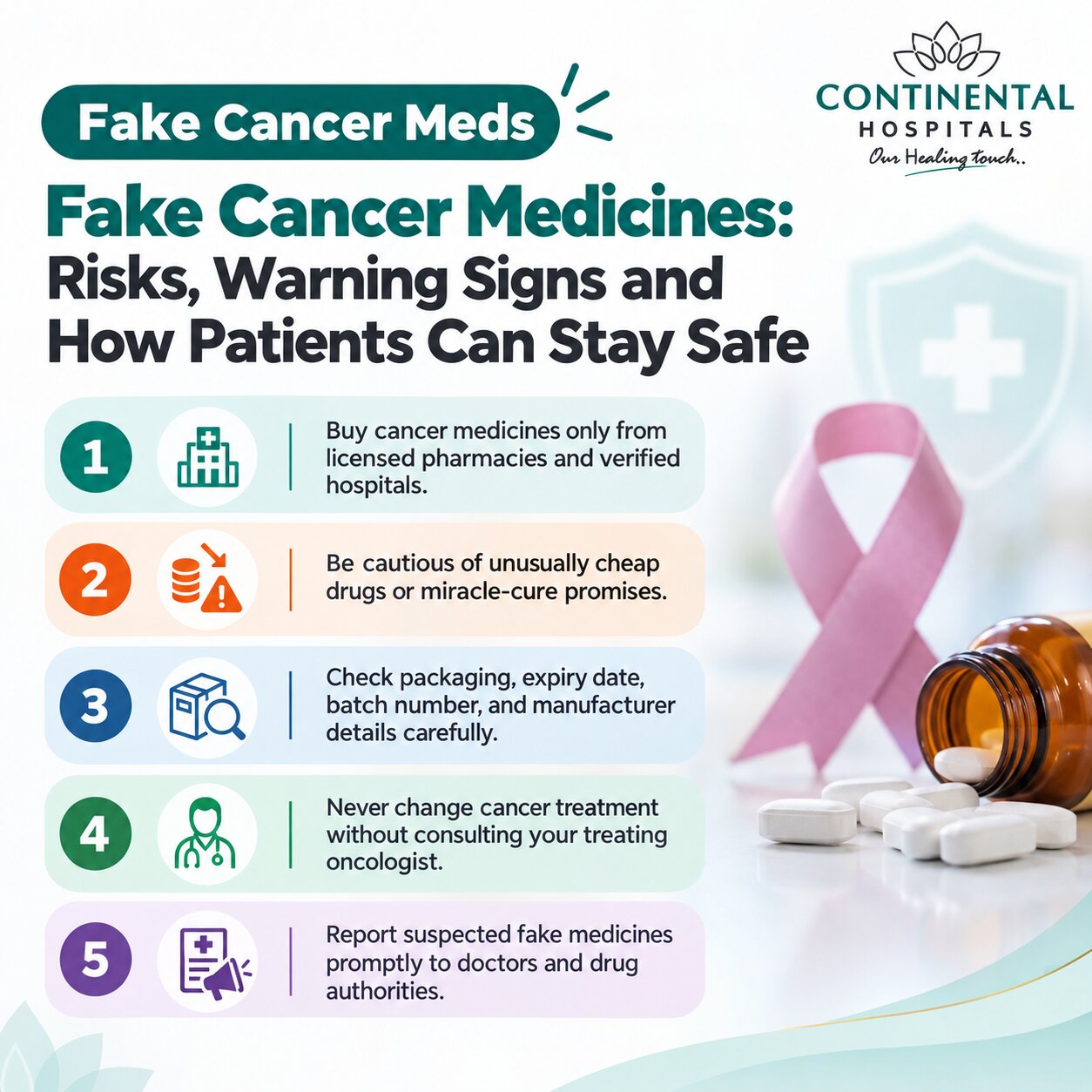
  • Purchase medicines only through authorized hospitals, pharmacies, or licensed suppliers.
  • Use a prescription from a qualified oncologist.
  • Check the medicine name, strength, batch number, expiry date, and packaging.
  • Ask the pharmacist to clarify any unexpected changes in the medicine or its packaging.
  • Avoid purchasing cancer medicines from unknown websites or informal sellers.
  • Keep the purchase receipt and packaging for future verification.

What should patients do if they suspect a medicine is fake?

Should a patient continue taking a medicine if its authenticity is uncertain? Do not use a suspected counterfeit medicine until a qualified healthcare professional has assessed it. Contact the treating oncologist or hospital pharmacy promptly for guidance.

If the medicine has already been taken or administered, inform the treating team immediately. Do not independently change, stop, or restart cancer treatment without medical advice. If severe symptoms develop after taking a medicine, seek urgent medical attention.

The suspected product, packaging, batch details, and purchase information may help healthcare professionals and regulatory authorities investigate the concern.

How Can Hospitals Help Improve Cancer Medicine Safety?

Why is a reliable hospital important for patients receiving cancer treatment? Safe cancer care involves more than selecting the right medicine. It also requires proper prescribing, procurement, storage, preparation, administration, and monitoring.

Need an Appointment?

A hospital-based oncology team can help patients by:

  • Reviewing prescriptions and treatment plans.
  • Supporting the use of medicines obtained through authorized supply channels.
  • Checking medicines and their documentation as part of pharmacy and clinical procedures.
  • Monitoring patients for unexpected reactions or treatment-related concerns.
  • Coordinating with pharmacists, oncologists, nurses, and other specialists.
  • Providing guidance when patients have concerns about medicine authenticity or safety.
  • These practices support cancer medicine safety and help reduce avoidable risks associated with counterfeit medicines.

Why Choose Continental Hospitals for Cancer Care?

Why should patients consider a hospital with established quality and safety practices for cancer treatment? Cancer care often involves complex treatment plans, multiple specialists, and medicines that require careful handling. A coordinated healthcare environment can support continuity of care and appropriate clinical monitoring.

Continental Hospitals, Hyderabad, provides comprehensive cancer care through experienced oncology specialists, advanced medical facilities, and multidisciplinary expertise. The hospital has JCI, NABH, and QAI accreditations, reflecting its commitment to healthcare quality, patient safety, and established clinical standards.

Patients can receive support across different stages of cancer care, including specialist consultation, treatment planning, medicine-related guidance, and follow-up care. Discussing concerns about counterfeit cancer drugs with the treating oncology team can help patients make informed decisions about their treatment and medicine safety.

What Should Patients Remember About Fake Cancer Medicines?

  • Fake cancer medicines may contain incorrect, missing, or harmful ingredients.
  • Counterfeit cancer drugs can lead to treatment failure, unexpected side effects, or delayed care.
  • Packaging and labeling irregularities may be warning signs, but they do not confirm that a medicine is fake.
  • Medicines should be obtained from authorized and reliable suppliers.
  • Patients should verify concerns with their oncologist or a qualified pharmacist.
  • Suspected counterfeit medicines should not be used until a healthcare professional provides guidance.
  • Any unexpected reaction or lack of treatment effect should be reported promptly to the treating team.

Conclusion

How can patients protect themselves from the risks of fake cancer medicines? Staying informed, obtaining medicines from authorized sources, checking product details, and maintaining communication with the treating oncology team are important steps toward safer cancer care.

If you suffer from cancer or have concerns about the authenticity of your prescribed cancer medicines, consult our best medical oncologist in Hyderabad at Continental Hospitals, Hyderabad, for professional guidance, appropriate evaluation, and personalized cancer care.

Related Blogs:

  1. 7-Minute Cancer Injection Now in India: Cost, Eligibility & Availability
  2. Understanding Cancer Treatment Options for Patients

Frequently Asked Questions

Fake cancer medicines are counterfeit or falsified medical products. They may contain the wrong ingredients or incorrect amounts of medicine. Some may contain no active cancer-fighting ingredient at all. Others may include harmful or unknown substances. Fake medicines can look similar to genuine products. They may have copied packaging, labels, or brand names. Some counterfeit medicines are sold through unauthorized sellers. They may also be promoted through unverified online pharmacies. These products can delay appropriate cancer treatment. They may allow cancer to progress without effective treatment. Patients may experience unexpected side effects or poisoning. Fake medicines can also cause financial loss and emotional distress. Always obtain cancer medicines from a licensed and trusted pharmacy.
Fake cancer medicines may fail to treat the cancer effectively. Some products may contain too little or no active medicine. Others may contain incorrect ingredients or dangerous contaminants. Taking these products can delay necessary medical treatment. Delayed treatment may allow the disease to worsen. Patients may also experience unexpected allergic reactions or toxic effects. Incorrect medicine strengths can cause serious dosing problems. Contaminated products may lead to infections or other complications. Fake medicines can interfere with a carefully planned cancer treatment schedule. They may also create confusion about the patient's treatment response. Financial losses can add stress during an already difficult time. Patients should never replace prescribed cancer medicines without medical advice. Suspected counterfeit medicines should be reported to a healthcare professional promptly.
Check the medicine packaging for spelling mistakes or unusual printing. Look for damaged seals, altered labels, or inconsistent packaging. Compare the medicine name and strength with your prescription. Check the batch number and expiry date carefully. Unusually low prices may be a warning sign. Be cautious when sellers promise guaranteed cancer cures. Avoid medicines sold without proper labeling or documentation. Do not rely only on the appearance of tablets or packaging. Counterfeit medicines can sometimes look identical to genuine products. Purchase cancer medicines through licensed pharmacies and authorized suppliers. Ask your pharmacist to verify any suspicious product. Do not take a medicine if you suspect it may be counterfeit. Contact your oncologist or pharmacist for guidance before using it.
Fake cancer medicines are not a recognized direct cause of cancer in every case. However, some counterfeit products may contain harmful or contaminated ingredients. Exposure to certain harmful substances can cause serious health problems. The exact risk depends on what the fake medicine contains. Some products may contain incorrect doses of active medicines. Others may contain substances that have not been tested for safety. Fake cancer medicines may also fail to control an existing cancer. Lack of effective treatment can allow the disease to progress. Delayed diagnosis or treatment can further complicate cancer care. Patients should not assume that a product is safe because it is labeled natural. Unverified cancer cures may also interfere with proven treatments. Always discuss alternative products with your treating oncologist. Use only medicines that have been appropriately prescribed and sourced.
Contact your oncologist or treating healthcare professional as soon as possible. Explain the name and details of the medicine you took. Share the packaging, prescription, and purchase information if available. Do not take additional doses until you receive appropriate medical advice. Do not stop or change your cancer treatment without consulting your doctor. Your healthcare team may assess possible side effects or treatment interruptions. They may recommend tests depending on the suspected medicine. Seek urgent medical attention for severe or unusual symptoms. Warning signs may include breathing difficulty, fainting, or severe vomiting. Keep the suspected medicine safely stored away from other medicines. Do not give the product to another person. Report suspected counterfeit medicines to the appropriate drug regulatory authorities. Follow your oncologist's advice about restarting or continuing treatment.
Online cancer medicines may be safe when purchased through legitimate, licensed pharmacies. However, some websites sell counterfeit or unapproved medical products. Be cautious of websites that do not require a valid prescription. Avoid sellers offering secret cancer cures or guaranteed results. Check whether the pharmacy is authorized to sell medicines in your region. Verify the medicine name, strength, packaging, and expiry date. Do not purchase medicines from unknown social media sellers. Avoid products with unclear ingredients or missing manufacturer information. Cancer medicines often require careful storage and handling. Improper storage can affect medicine quality and safety. Ask your oncologist or pharmacist to verify an online medicine source. Do not use a product simply because it has positive online reviews. A reliable pharmacy and medical supervision are important for safe cancer treatment.
Always purchase cancer medicines from licensed pharmacies or authorized suppliers. Follow the prescription and instructions provided by your oncologist. Check the medicine name, strength, batch number, and expiry date. Keep medicines in their original packaging whenever possible. Do not buy medicines from unknown individuals or unverified websites. Be careful with products promising guaranteed cancer cures. Ask your pharmacist to verify unfamiliar medicines before taking them. Never share prescribed cancer medicines with other people. Keep a record of your medicines and treatment schedule. Inform your doctor about supplements or alternative treatments you are considering. Report unusual side effects or suspicious medicine packaging promptly. Store medicines according to the manufacturer's instructions. Regular communication with your cancer care team supports safer treatment.
Suspected fake cancer medicines should be reported to the appropriate drug regulatory authority. In India, patients can contact the Central Drugs Standard Control Organisation. The State Drug Control Department may also investigate suspected counterfeit medicines. A pharmacist or oncologist can help identify the appropriate reporting channel. Keep the medicine packaging and purchase receipt if available. Record the seller's name, contact details, and purchase date. Note the medicine name, batch number, and expiry date. Photographs of the packaging may support an investigation. Do not discard the suspected product before receiving reporting advice. If you experienced a reaction, seek medical attention promptly. Report suspected counterfeit products even if no symptoms occurred. Avoid sharing the medicine with anyone else. Prompt reporting can help protect other patients from unsafe medicines.
Disclaimer: The information provided in this blog is intended for general knowledge and informational purposes only, and does not constitute medical advice. Always consult with a qualified healthcare professional for any medical concerns or before making any decisions about your health.

Get in Touch With Us

Whether you are from India or abroad, we are here to help you with your medical queries. Please fill out the form below and our team will connect with you shortly.

  • ✔ Quick response from our medical experts
  • ✔ Secure data handling & privacy
  • ✔ Easy upload for reports & documents
banner_image

Chat with our medical experts on WhatsApp for quick assistance and hassle-free appointment booking

Recent Posts