post-title

10,000 Steps a Day: Does Walking More Always Mean Better Health?

Written by - Editorial Team
Medically Reviewed by - Dr Ashish Chauhan

Walking is a simple way to remain active and promote health. Most people adhere to the target of taking 10,000 steps daily to ensure fitness, maintain their weight, and keep their hearts healthy. However, is taking 10,000 steps a must for everybody? It all comes down to age, fitness, health condition, and the kind of physical activities you are engaged in.

The concept of taking 10,000 steps in a day has become a fitness target but not necessarily for everybody. Walking contributes significantly to good blood flow, muscle strength, good heart condition, and even improved moods. Rather than concentrating solely on the number of steps to take, one should develop a suitable exercise routine.

How Many Miles Is 10,000 Steps?

What is the number of miles in 10,000 steps? The actual number of miles in 10,000 steps depends on an individual's height, pace, and stride length. Generally speaking, 10,000 steps make between 4 and 5 miles, which equals 6.4 to 8 kilometers.

Here is a quick guide to miles in steps:

2,000 steps: 1 mile.

4,000 steps: 2 miles.

6,000 steps: 3 miles.

8,000 steps: 4 miles.

10,000 steps: 4 to 5 miles.

Second Opinion

This way, 10,000 steps in miles varies from one individual to another. Tall people tend to make more miles since they have longer strides.

Visit the General Medicine Department at Continental Hospitals, Hyderabad, for expert medical consultation and personalized care.

How Many Minutes Will I Walk to Complete 10,000 Steps?

The time you will spend walking 10,000 steps is influenced by factors such as the pace that you walk, fitness level, and how often you take rest periods. Most adults would probably require 80 to 120 minutes to walk 10,000 steps.

It is not necessary that you walk the whole 10,000 steps at once. You can break your walking session into shorter periods during the day.

For instance,

  • Walk in the morning before engaging in other activities.
  • Take some minutes to walk after meals.
  • Use stairs instead of lifts whenever possible.
  • Take some walking breaks at work.
  • Take an evening walk with your family or friends.
How Walking 10,000 Steps a Day Improves Your Well-being

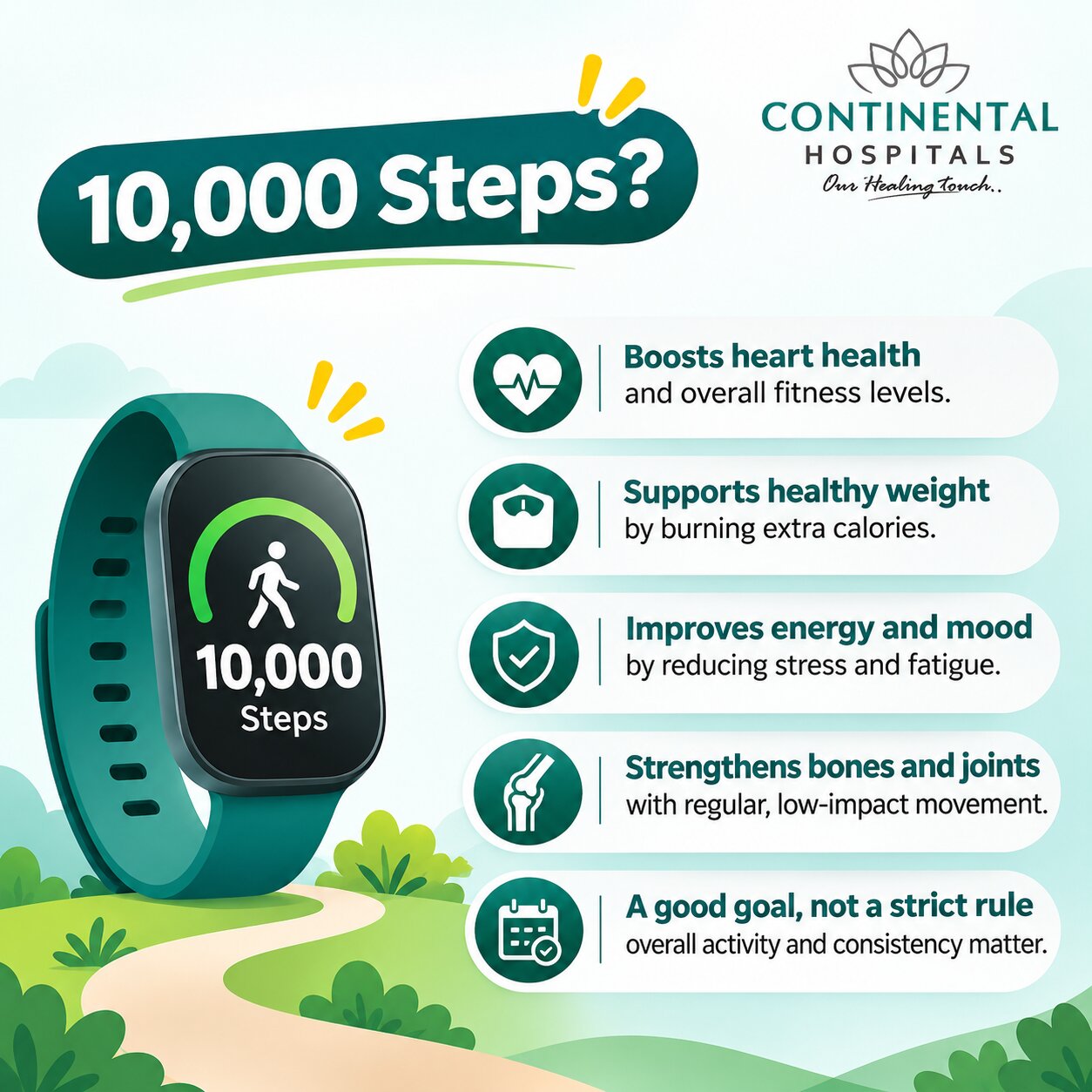
Is it healthier to walk more often? The benefits of consistent walking include several physical and psychological benefits.

Promotes cardiovascular health: Walking promotes good circulation and maintains normal blood pressure levels.

Need an Appointment?

  • Assists in controlling weight: Physical exercises aid in burning calories and maintaining appropriate weight levels.
  • Aids in controlling blood sugar levels: Walking assists in the consumption of glucose by muscles.
  • Increases the strength of bones and muscles: Activities like walking promote strong bones and muscles.
  • Promotes better mood and psychological state: It is said that walking reduces stress, improves mood, and enhances sleep.
  • Improves digestion process: Walking after eating may promote better digestion.
  • Boosts stamina: Consistent walking leads to improved endurance and physical fitness.

It all depends on the regularity, intensity of walking, and healthy habits of an individual.

Is It Possible for Too Much Walking to Be Harmful to Your Health?

Is there such a thing as walking too much? While walking is usually considered healthy, doing too many steps suddenly will result in additional strain on your body.

Walking too much without proper rest might result in:

  • Pain and blisters in feet.
  • Knee or ankle pain.
  • Muscle soreness and fatigue.
  • The higher likelihood of developing overuse injuries.
  • Worsening existing joint problems.

People with heart issues, arthritis, poor balance, or other health conditions should consult their doctor about an appropriate level of physical activity.

Keep in mind that walking 10,000 steps a day is not obligatory. Even a small amount of additional activity can be beneficial for your health.

How Can You Develop a Healthy Walking Habit?

How can you walk consistently without overburdening yourself?

Here are some easy ways to do that:

  • Walk according to your present level of activity.
  • Walk farther bit by bit.
  • Use comfy shoes with adequate support.
  • Drink enough water.
  • Select safe walking paths.
  • Walk at an easy speed and gradually increase your speed.
  • Give yourself time to heal and recover.

Do not exercise further and consult your doctor if you experience chest pains, difficulty breathing, and dizzy spells.

More important than reaching a certain number of steps each day is the consistency of your walks.

Why Select Continental Hospitals for Preventive Health Care?

Why is professional counseling necessary while initiating a fitness regimen? Your ideal activity will be determined based on your age, heart function, joint condition, and many other aspects of your health status. Through professional counseling, you can learn about your physical health and be advised accordingly regarding exercise habits.

Continental Hospitals, Hyderabad offers comprehensive health care through experienced doctors and state-of-the-art diagnosis and testing facilities, among others. The hospital boasts national and international accreditations in the field of health care, like NABH and JCI, among others.

In this way, patients are able to get counseling on how to stay active and healthy through preventive health check-ups and specialist counseling.

Conclusion

The daily routine of walking 10,000 steps can be considered an excellent fitness goal but not the only way to stay healthy. Being physically active, moving constantly, eating correctly, and having enough sleep play the same significant role.

Do not forget about these facts:

  • 10,000 steps make up about 4 to 5 miles.
  • The time spent while walking is dependent on your speed and step length.
  • Even smaller goals of walking have positive effects on health.
  • A gentle increase in activity can prevent injuries.
  • Your perfect number of steps depends on you and your condition.

In case you have continuous joint pain, feel breathless while doing exercises, get unusually tired, or experience any other health problems, please consult our best general physician in Hyderabad at Continental Hospitals, Hyderabad.


Frequently Asked Questions

Walking 10,000 steps every day is not necessary for everyone. The ideal daily step count depends on age, fitness level and overall health. Research suggests that even fewer than 10,000 steps can provide meaningful health benefits. Regular walking supports heart health and improves blood circulation. It can also help maintain a healthy body weight. Walking may improve blood sugar regulation and metabolic health. Older adults can benefit from moderate daily walking as well. People who are currently inactive should start with manageable step targets. Gradually increasing daily activity can help improve endurance. Consistency is more important than reaching a specific number. Your doctor can recommend an appropriate activity level based on your health. Focus on building a sustainable walking routine rather than chasing a fixed step count.
Walking daily offers several benefits for physical and mental health. It supports cardiovascular fitness and improves blood circulation. Regular walking can help lower the risk of heart disease. It may also support healthy blood pressure levels. Walking helps the body use blood glucose more effectively. It can contribute to weight management by increasing daily energy expenditure. Regular movement supports stronger muscles and better joint mobility. Walking outdoors may improve mood and reduce stress. It can also support better sleep quality. Daily walking helps improve stamina and physical endurance. Even short walking sessions throughout the day can be beneficial. People of different fitness levels can adapt walking to their abilities. Maintaining a consistent routine is important for long-term health benefits.
Walking is generally a safe physical activity for most people. However, suddenly increasing your daily step count can cause problems. Excessive walking without adequate recovery may lead to muscle fatigue. Some people may experience foot pain, blisters or joint discomfort. Repetitive strain can also affect the knees, ankles and hips. Wearing unsuitable footwear may increase the risk of injuries. Walking long distances without proper hydration can contribute to dehydration. Ignoring persistent pain may worsen an existing injury. People with certain medical conditions may need individual exercise guidance. Increase your walking distance gradually rather than making sudden changes. Allow your body enough time to recover. Choose comfortable footwear and maintain proper walking posture. Stop exercising and seek medical advice if you experience chest pain, severe breathlessness or persistent discomfort.
The ideal number of daily steps varies from person to person. Age, fitness level and existing medical conditions influence activity requirements. Beginners can start by tracking their usual daily steps. Gradually adding a few hundred or thousand steps can help build consistency. Many adults can aim for approximately 7,000 to 10,000 steps depending on their abilities. Research suggests that health benefits can begin at lower step counts. Older adults may benefit from personalised walking targets. People with diabetes or heart conditions should follow medical advice about exercise. Walking at a comfortable pace is a good starting point. You can divide your daily walking into shorter sessions. Taking walking breaks during work can increase daily movement. Avoid comparing your step count with others. Focus on improving your activity level safely and consistently.
Walking can support weight loss by increasing daily calorie expenditure. The number of calories burned depends on walking speed, distance and body weight. Brisk walking generally uses more energy than slow walking. Combining regular walking with balanced nutrition can support healthy weight management. Walking also helps improve insulin sensitivity and metabolic health. It may help reduce abdominal fat when combined with an appropriate lifestyle plan. Walking after meals can support blood sugar control. However, walking alone may not produce significant weight loss for everyone. Food choices and portion sizes also influence body weight. Strength training can help preserve muscle during weight loss. Consistency is more important than occasional long walks. Start with a manageable routine and increase activity gradually. Consult a healthcare professional for a personalised weight management plan.
Walking and running are both beneficial forms of physical activity. The better option depends on your fitness level and health goals. Running generally burns more calories per minute than walking. However, brisk walking can provide significant cardiovascular benefits. Walking is usually lower impact and may be easier on the joints. It is a suitable starting activity for people who are new to exercise. Running may improve cardiovascular endurance more quickly for some individuals. Both activities can support heart health and weight management. Walking may be more comfortable for older adults or people with certain joint problems. Running requires appropriate footwear and gradual training progression. You do not need to run to maintain good physical health. Combining walking with other suitable exercises can improve overall fitness. Choose an activity that you can perform safely and consistently.
Yes, regular walking can support better cardiovascular health. It helps improve blood circulation throughout the body. Brisk walking strengthens the heart over time. It may help reduce blood pressure in some individuals. Regular physical activity can also improve cholesterol levels. Walking supports better blood sugar regulation. It can help maintain a healthy body weight. These benefits may reduce the risk of developing cardiovascular diseases. Adults are generally advised to aim for at least 150 minutes of moderate-intensity physical activity each week. Brisk walking is one way to meet this recommendation. People with existing heart conditions should discuss exercise intensity with their doctor. Start slowly if you have been physically inactive. Stop walking and seek urgent medical attention if you develop chest pain, fainting or unusual severe breathlessness. Consistent activity can contribute to long-term heart health.
Walking after meals can be beneficial for overall health. A short walk after eating may help improve blood sugar regulation. It encourages muscles to use glucose from the bloodstream. Gentle movement can also support digestion and reduce prolonged sitting. A 10 to 15-minute walk after meals may be a useful starting point. You do not need to walk at a fast pace to experience benefits. Avoid vigorous exercise immediately after a heavy meal if it causes discomfort. People with digestive conditions should follow individual medical advice. Regular post-meal walking may support better metabolic health. It can also help increase your daily step count. Choose a comfortable pace that allows you to breathe easily. Consistency is more important than walking for a long duration occasionally. If you experience dizziness or unusual discomfort, stop and seek medical advice.
Increasing your daily steps can be simple with a few lifestyle changes. Start by tracking your current activity level. Set a realistic daily walking target. Take short walking breaks during office hours. Use stairs instead of lifts when appropriate. Walk for a few minutes after meals. Choose walking for short-distance errands whenever practical. Park slightly farther away from your destination. Take phone calls while walking safely. Invite friends or family members to join you for regular walks. Wear comfortable footwear to prevent foot discomfort. Increase your step count gradually to avoid overexertion. Track your weekly progress instead of focusing only on daily numbers. Build a routine that fits your schedule and physical abilities. Consult your doctor if you have medical conditions that affect exercise.
Disclaimer: The information provided in this blog is intended for general knowledge and informational purposes only, and does not constitute medical advice. Always consult with a qualified healthcare professional for any medical concerns or before making any decisions about your health.

Get in Touch With Us

Whether you are from India or abroad, we are here to help you with your medical queries. Please fill out the form below and our team will connect with you shortly.

  • ✔ Quick response from our medical experts
  • ✔ Secure data handling & privacy
  • ✔ Easy upload for reports & documents
banner_image

Chat with our medical experts on WhatsApp for quick assistance and hassle-free appointment booking

Recent Posts