post-title

Rectal Bleeding: When Should You Suspect Something More Than Piles?

Written by - Editorial Team
Medically Reviewed by - Dr. Raghavendra Yarlagadda

Rectal bleeding is defined as the presence of blood coming out through the anus during defecation, either seen while having motions, in toilet paper, or in the toilet bowl. It is a fairly common symptom that might occur because of piles, anal fissure, infection, or some other condition in the digestive system. Although rectal bleeding is usually a minor concern, it is never to be taken lightly, especially when it occurs persistently.

Do you see bright red blood during defecation or even in your stool? When piles are the common cause of rectal bleeding, there are times when the condition becomes serious and the causes are other than piles, such as colorectal cancer, inflammatory bowel syndrome, and intestinal polyps.

What Are the Common Causes of Rectal Bleeding?

Why is there blood in stool? There are many causes of rectal bleeding associated with anal, rectal, or large intestine disorders.

Some of them include:

  • Piles (Haemorrhoids): Enlarged blood vessels around the anus and inside the rectum can cause bright red bleeding, especially when having a bowel movement.
  • Anal Fissures: Tiny tears on the anal lining can cause pain, burning sensation, and bright red bleeding when passing hard stools.
  • Colorectal Polyps: Small tissue growths in the colon and rectum can cause bleeding. Some polyps have the potential to become cancerous.
  • Inflammatory Bowel Disease: This group of disorders includes ulcerative colitis and Crohn's disease that cause inflammation, abdominal pain, diarrhea, and bleeding from the rectum.
  • Colorectal Cancer: This form of cancer involving the colon or rectum can cause bloody stools, abnormal bowel movements, unexpected weight loss, and abdominal pain.

Visit the gastroenterology specialists in Hyderabad at Continental Hospitals, Hyderabad, for expert digestive and liver care.

How Do You Distinguish Piles from Colorectal Cancer?

Is rectal bleeding always due to piles? No. There may be times when bleeding in the rectum is a symptom of an underlying condition such as colorectal cancer.

Symptoms Piles Colorectal Cancer
Bleeding Usually bright red May be bright red or dark
Pain May cause anal discomfort May cause abdominal or rectal discomfort
Bowel habits Usually unchanged Changes may occur
Weight loss Not usually associated Unexplained weight loss may occur
Stool changes Usually normal May become narrower or change in consistency
Fatigue Not usually present unless bleeding is significant May occur due to anaemia

These symptoms can overlap, and colorectal cancer may not cause pain or noticeable symptoms in its early stages. Therefore, bleeding should not automatically be assumed to be piles.
What Are the Symptoms That Rectal Bleeding Warrants Medical Help?

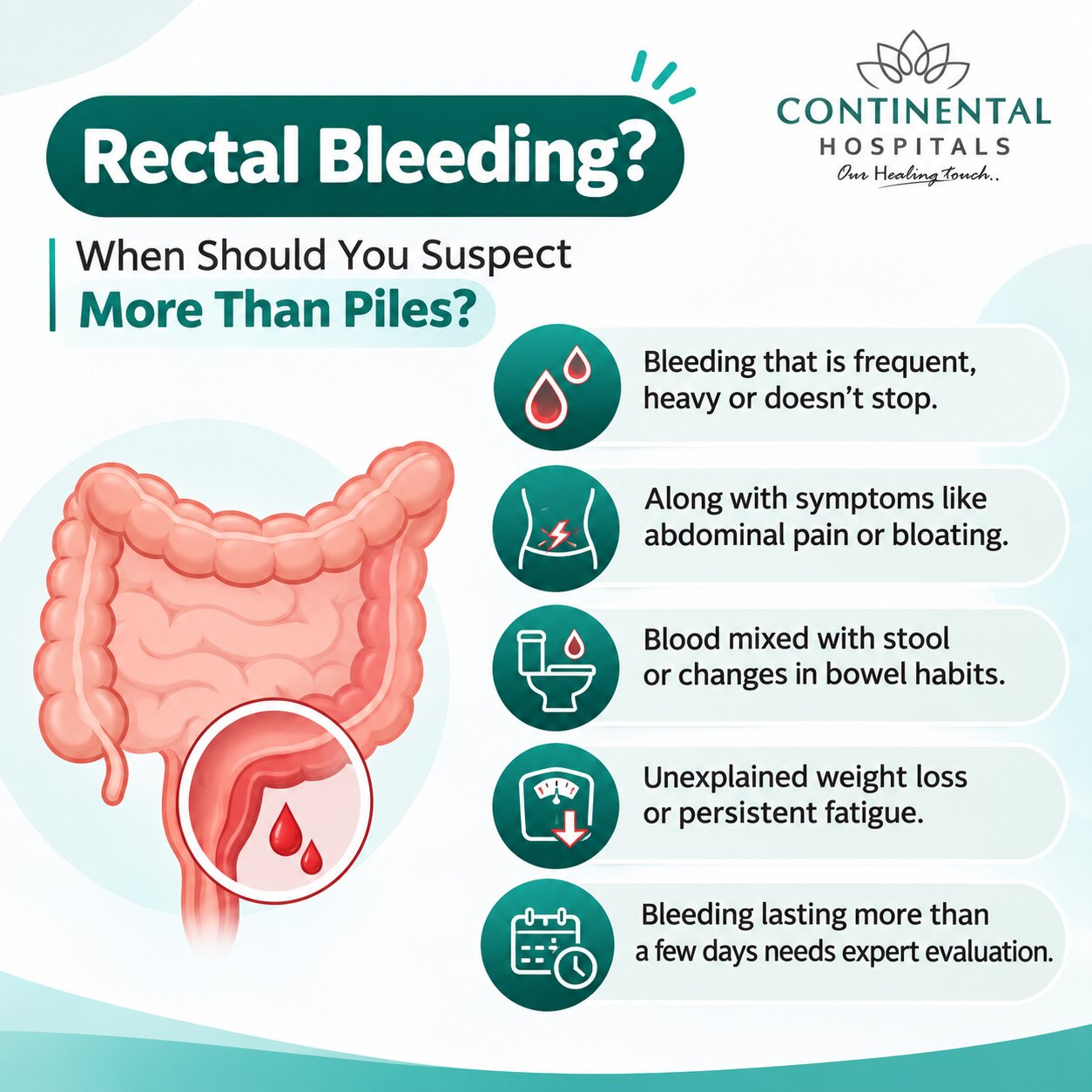
When does rectal bleeding necessitate consultation with a doctor? It could be due to an underlying digestive or colorectal problem.

Second Opinion

Here are the symptoms to watch out for:

  • Rectal bleeding that occurs repeatedly.
  • Presence of blood in the stool along with stool and not just blood spots on the toilet paper.
  • Stools that appear dark red or black like tar.
  • Weight loss without reason.
  • Persistent alteration in bowel habits.
  • Long-standing constipation or diarrhea.
  • Stomach pain.
  • Unexplained fatigue or weakness.
  • Feeling that the rectum has not emptied after defecation.
  • Severe rectal bleeding or fainting requires immediate medical help.

What Are the Diagnostic Methods of the Cause of Rectal Bleeding?

How does one determine the cause of rectal bleeding? It depends on symptoms, medical background, age, and physical examination results.

In some cases, a specialist like a gastroenterologist or colorectal surgeon might conduct the following tests:

  • Physical Examination: To detect piles, anal fissures, and any other problems.
  • Blood Tests: To diagnose anaemia and blood loss.
  • Stool Tests: To diagnose any infection or another problem in digestion.
  • Colonoscopy: For visual examination of the colon and rectum for polyps, inflammation, or any other suspicious spots.
  • Biopsy: In case of discovering any suspicious spots, take a tiny tissue piece for further analysis.

Depending on the cause, proper tests have to be conducted.

Can Rectal Bleeding Be Avoided?

Are there lifestyle changes that can minimize the risks associated with some of the causes of rectal bleeding? The answer is yes. Healthy bowel routines will assist in preventing constipation and hence straining, as well as prevent piles and anal fissures.

The following are some of the routines to be considered:

  • Eating foods that are high in fiber, such as fruits and vegetables.
  • Drinking enough water daily.
  • Regular exercising to aid in digestion.
  • Avoiding straining during defecation.
  • Not ignoring the call for defecation.
  • Having a consistent bowel routine.

Consulting a doctor in case there are frequent instances of rectal bleeding.

Need an Appointment?

Why Opt For Continental Hospitals in Rectal Bleeding?

What makes it essential to choose the correct hospital in case of rectal bleeding? It is necessary to diagnose the actual cause behind the same through the right diagnosis.

Continental Hospitals of Hyderabad offers all-round digestive and colorectal healthcare backed by experienced gastroenterologists, an excellent diagnostic facility, and well-experienced healthcare professionals. The hospital has been accredited by various organizations across the globe like JCI and NABH, highlighting the excellence of the hospital in terms of providing quality healthcare.

It has made sure that patients are able to get their problems diagnosed and treated with utmost efficiency and precision.

Conclusion

The reason for your rectal bleeding might not be due to piles in all cases. While hemorrhoids and anal fissures are the usual culprits for causing this problem, recurrent bleeding, changes in your bowel movements, sudden weight loss, or bleeding with the presence of stools might signify a more severe digestive disorder.

Diagnosis at an early stage is essential for the identification of your symptoms and their treatment. In case you have the above-mentioned symptoms of rectal bleeding or blood in your stools or abdominal pain and altered bowel habits, visit our best gastroenterologist in Hyderabad at Continental Hospitals, Hyderabad.

Frequently Asked Questions

Yes, rectal bleeding can occur without causing pain or discomfort. Painless bleeding is commonly associated with internal haemorrhoids. It may appear as bright red blood on toilet paper or in the toilet bowl. However, haemorrhoids are not the only possible cause. Anal fissures, rectal polyps and other bowel conditions may also cause bleeding. In some cases, inflammatory bowel disease can lead to rectal bleeding. Colorectal cancer may also cause painless bleeding, particularly in its early stages. The amount of blood can range from a few drops to more noticeable bleeding. Repeated episodes should never be ignored. Your age, medical history and associated symptoms are important when identifying the cause. A doctor may recommend a physical examination or colonoscopy. Avoid assuming that painless bleeding is harmless. Seek medical evaluation even if you feel otherwise healthy.
Bright red blood in the toilet bowl can indicate bleeding from the lower digestive tract. Common causes include internal haemorrhoids and anal fissures. Sometimes, inflammation, polyps or infections can also cause bright red bleeding. The amount of blood does not always indicate how serious the condition is. A large amount of bright red blood should be taken seriously. Heavy or continuous bleeding requires immediate medical attention. Dizziness, fainting, weakness or a rapid heartbeat may indicate significant blood loss. Blood mixed with stool may suggest a different source than blood seen only on toilet paper. Repeated bleeding needs proper medical investigation. Your doctor may recommend blood tests, an examination or colonoscopy. Do not assume that the bleeding is caused by piles without confirmation. Early diagnosis helps identify the underlying condition. Seek emergency care if bleeding is heavy or accompanied by signs of blood loss.
Blood in stool should always be evaluated, especially when it occurs repeatedly. A small amount of bright red blood may be associated with haemorrhoids or anal fissures. However, persistent bleeding can indicate an underlying bowel condition. Dark red or maroon stool may suggest bleeding from higher parts of the digestive tract. Black, tarry stool can indicate bleeding from the upper digestive tract. Seek medical advice if bleeding continues or returns frequently. Unexplained weight loss, changes in bowel habits and persistent abdominal discomfort are additional warning signs. Iron deficiency anaemia or unusual tiredness also requires investigation. A family history of colorectal cancer can increase the need for timely screening. Heavy bleeding, dizziness or fainting requires emergency medical attention. Your doctor may recommend a stool test, blood test or colonoscopy. Do not delay evaluation because the bleeding is painless. Early diagnosis can help identify and treat serious conditions.
Painless anal bleeding in women can occur for several medical reasons. Internal haemorrhoids are one of the common causes. They may cause bright red blood during or after bowel movements. Constipation and straining can increase the risk of haemorrhoids. Rectal polyps and inflammatory bowel conditions may also cause bleeding. Diverticular disease can sometimes result in sudden painless bleeding. In some cases, colorectal cancer may cause blood in the stool without pain. Women should also ensure that the blood is coming from the anus rather than the vagina or urinary tract. This distinction is important for identifying the correct cause. Repeated bleeding should be evaluated by a qualified doctor. Your doctor may recommend a rectal examination or colonoscopy. Mention any changes in bowel habits or unexplained weight loss. Avoid self-diagnosing the condition as piles. Timely medical assessment helps determine the appropriate treatment.
Treatment for anal bleeding depends on the underlying cause. Internal haemorrhoids may improve with dietary changes and appropriate medical treatment. Increasing fibre intake can help soften stools and reduce straining. Drinking sufficient water supports healthy bowel movements. Warm sitz baths may provide relief from discomfort associated with anal conditions. Anal fissures may require prescribed ointments and stool-softening measures. Persistent or severe haemorrhoids may need minimally invasive procedures. Inflammatory bowel conditions require specific medical management. Polyps may need removal during colonoscopy. Other causes require treatment based on the diagnosis. Your doctor may recommend blood tests or further investigations. Avoid using over-the-counter creams without understanding the cause of bleeding. Heavy bleeding requires urgent medical assessment. A gastroenterologist or colorectal specialist can recommend an appropriate treatment plan.
Yes, bleeding from the anus can sometimes occur without passing stool. Internal haemorrhoids may bleed spontaneously, even without a bowel movement. Inflamed or irritated rectal tissues can also cause bleeding. Rectal ulcers and polyps are other possible causes. Inflammatory bowel conditions may sometimes produce bleeding along with mucus. Diverticular disease can cause sudden episodes of painless bleeding. Certain infections may also affect the rectal lining. Blood noticed on underwear or while wiping should not be ignored. It is important to confirm that the blood is coming from the anus rather than the urinary or reproductive tract. Repeated or unexplained bleeding requires medical evaluation. Your doctor may perform a rectal examination or recommend a colonoscopy. Heavy bleeding or symptoms of blood loss require emergency care. Avoid delaying consultation even if there is no pain. Identifying the cause is essential for appropriate treatment.
Blood appearing from the anus without a bowel movement can have several causes. Internal haemorrhoids may occasionally bleed without passing stool. Rectal inflammation can make the lining more sensitive and prone to bleeding. Rectal ulcers may also cause spontaneous bleeding. Polyps and other abnormalities in the lower digestive tract need to be considered. Diverticular disease can sometimes cause sudden painless bleeding. Inflammatory bowel disease may cause bleeding even between bowel movements. Blood-thinning medicines can increase the risk or severity of bleeding. It is important to identify whether the blood is coming from the anus, vagina or urinary tract. Do not assume that the bleeding is caused by haemorrhoids. A doctor may recommend an examination, blood tests or colonoscopy. Seek urgent medical care for heavy or continuous bleeding. Dizziness, weakness and fainting are important warning signs. Timely diagnosis helps prevent complications and guides treatment.
Yes, anal bleeding can occur with pain during or after bowel movements. Anal fissures are a common cause of painful bleeding. They are small tears in the lining of the anal canal. Patients may experience sharp pain while passing hard stools. External haemorrhoids can cause pain, swelling and bleeding, especially when a blood clot develops. Anal infections or abscesses may also cause pain and discharge. Inflammatory conditions can sometimes cause rectal discomfort and bleeding. The blood may appear bright red on toilet paper or around the stool. Persistent pain or repeated bleeding requires medical assessment. Your doctor will examine the affected area and identify the underlying cause. Treatment may include stool softeners, dietary changes or prescribed medication. Some conditions may require a minor procedure or surgery. Avoid excessive straining during bowel movements. Seek prompt medical advice if pain is severe, swelling develops or fever occurs.
Disclaimer: The information provided in this blog is intended for general knowledge and informational purposes only, and does not constitute medical advice. Always consult with a qualified healthcare professional for any medical concerns or before making any decisions about your health.

Get in Touch With Us

Whether you are from India or abroad, we are here to help you with your medical queries. Please fill out the form below and our team will connect with you shortly.

  • ✔ Quick response from our medical experts
  • ✔ Secure data handling & privacy
  • ✔ Easy upload for reports & documents
banner_image

Chat with our medical experts on WhatsApp for quick assistance and hassle-free appointment booking

Recent Posts