
post-title

Does Cold Weather Make Arthritis Worse? Types, Triggers and Joint Care Tips

Written by - Editorial Team
Medically Reviewed by - Dr S Kiran Reddy

Arthritis during winters is a common problem faced by those individuals who suffer from joint pains, stiffness, and difficulties in moving joints in winter months. Many individuals find that their joint pain worsens when the weather becomes cold. Joint pain along with cold weather often goes hand-in-hand, making daily activities like walking, going up and down stairs, and getting out of bed troublesome.

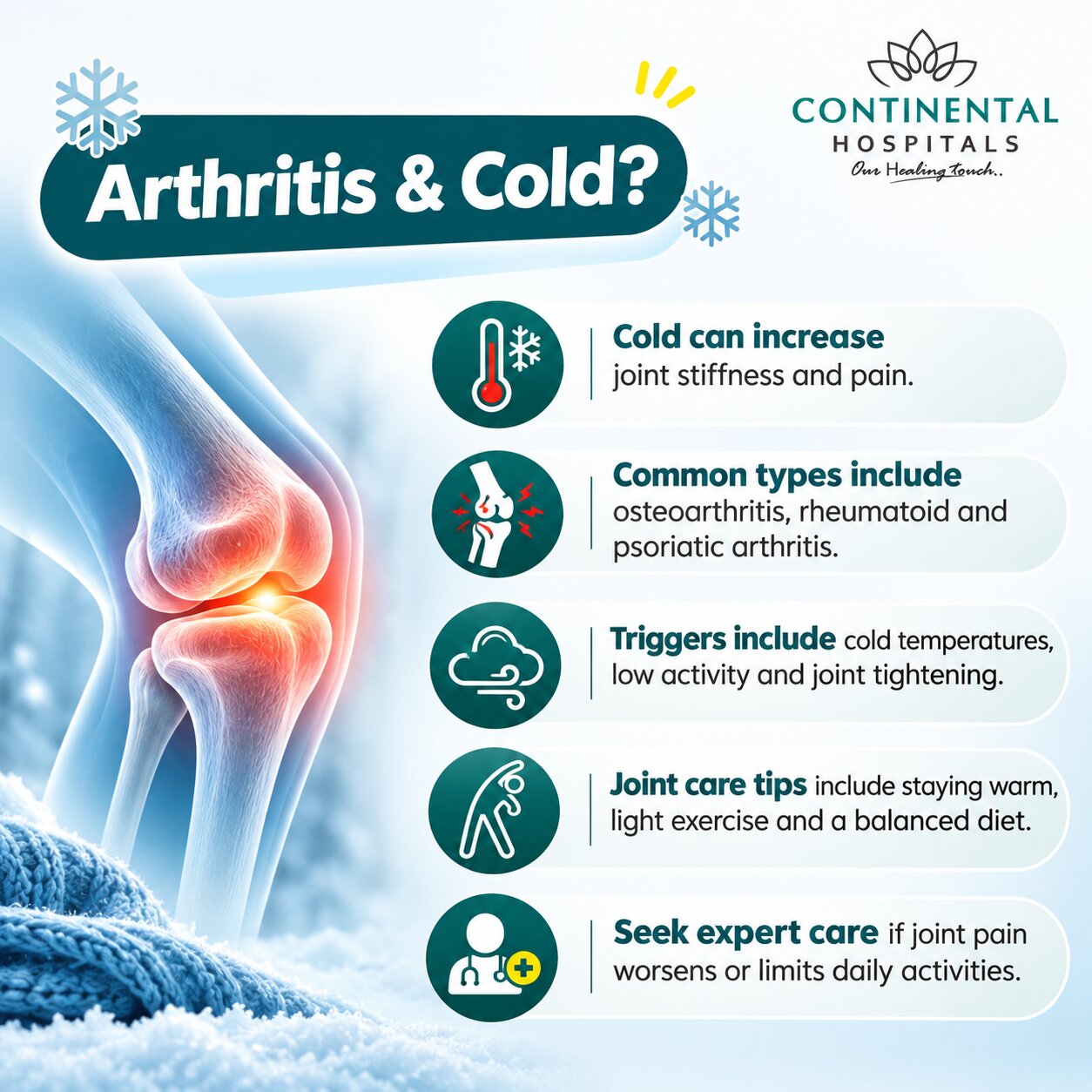
Does cold weather really exacerbate joint pains? While cold weather does not cause arthritis, it may aggravate joint pain in those individuals who have arthritis. It is due to changes in the air pressure, decreased physical activity, and muscle tightness that cause winter joint pain. Knowing about different types of arthritis, triggers, and how you can protect your joints in winter will enable you to remain physically active in winter.

Why Does Arthritis Hurt More in the Winter Season?

Why do the joints become stiff during the cold season? The reasons are not known, but there are various factors that might influence arthritis in the cold season.

Reasons include:

1. Pressure on the atmosphere: The variation in atmospheric pressure could have an impact on the sensitive joints and tissue around them.
2. Joint stiffness: The body joints tend to feel stiffer due to the cold weather.
3. Lower exercise level: The person tends to be physically inactive during the cold season, which might lead to joint stiffness and weakness in the supporting muscles.
4. Lessened blood flow: The blood vessels get narrowed due to cold temperature that might lead to pain in the hands and feet.
5. Variation in the fluid movement in the joints: There are some people who experience joint stiffness and discomfort due to the colder climate.

These factors might answer why arthritis in winter seems to be harder to handle for some people.

Visit the Best Orthopedic Specialists in Hyderabad at Continental Hospitals, Hyderabad, for expert bone, joint, and musculoskeletal care.

Arthritis - What Are the Various Kinds of Arthritis?

What kind of arthritis causes joint pain in the winter? Arthritis is a group of conditions affecting the joints. Several types of arthritis may cause pain, inflammation, and stiffness.

Some common kinds of arthritis are:

Second Opinion

1. Osteoarthritis

Osteoarthritis results from the wearing away of the cartilage that provides a cushion for the end of bones. The disease usually affects knees, hips, hands, and spine. Patients suffering from osteoarthritis feel more stiffness and discomfort during cold months.

2. Rheumatoid Arthritis

Rheumatoid arthritis is an autoimmune disorder, where the body's immune system targets the lining around the joints. Inflamed and painful joints along with warmth and stiffness in the morning could be symptoms of rheumatoid arthritis. They tend to vary in winters.

3. Psoriatic Arthritis

Psoriatic arthritis is related to a condition called psoriasis. This disease causes joint inflammation, stiffness, pain and changes to fingers and toes.

4. Gout

Need an Appointment?

Gout occurs when uric acid crystals build up within the joints. Usually gout affects the big toe but may also attack ankles, knees and other joints.
What Are the Common Symptoms of Arthritis During Winter?

How will you know whether you have winter joint pain due to arthritis? The symptoms may differ according to the type and level of the disorder.

Some common arthritis symptoms are as follows:

  • Joint pain when moving or at rest.
  • Stiffness that may last for some time in the morning.
  • Swelling in the joints.
  • Difficulty bending or straightening the joints.
  • Limited flexibility and movement.
  • Knee, hip, finger, and shoulder pain.
  • Problems with carrying out your daily tasks.

How Can You Manage Arthritis Discomfort in Winter?

Are there ways to minimize arthritis discomfort in winter through certain simple lifestyle adjustments? The answer is yes. Adhering to proper joint maintenance practices will help increase mobility and flexibility and relieve stiffness.

Some effective tips for joint maintenance during winter include:

1. Keep Your Joints Warm

Wear enough warm clothes and footwear. Warming up your hands, knees, and feet may help reduce discomfort.

2. Be Active

Try physical exercises like walking, stretching, yoga, or swimming at a comfortable temperature. Physical activity is good for keeping joints flexible.

3. Adopt a Balanced Diet

Eat more fruits, vegetables, whole grains, nuts, and proteins. A balanced diet will help stay healthy and at an optimal body weight.

4. Stay at an Optimal Body Weight

Extra weight increases stress on load-bearing joints (for example, on knees and hips). It is essential to keep your body at an optimal weight.

5. Apply Warm Compresses

Warm compresses may help relax muscles and temporarily alleviate joint pain. Be careful not to use too much heat if the joint is swollen.

6. Follow Your Treatment Plan

Continue prescribed medicines and exercises. Do not stop arthritis medication or change your treatment without consulting your doctor.

When Is It Necessary to Contact an Orthopedic Specialist?

At what point do your joints' complaints during winter become worthy of seeking a doctor's advice? Some occasional stiffness can resolve with exercise and warming up, but not all symptoms can be overlooked.

You should consult an orthopedic specialist if you suffer from:

  • Recurrent joint pain and swelling.
  • Intense morning stiffness.
  • Trouble walking or ascending staircases.
  • Limited joint mobility.
  • Recurring episodes of joint inflammation.
  • Joint pain impacting sleep and daily functioning.

Why Continental Hospitals for Arthritis Treatment?

Why does expert consultation play an important role for arthritis management during the winter season? Arthritis affects various joints and needs various treatments according to their type, severity, and cause of occurrence.

Continental Hospitals of Hyderabad provides extensive services in the field of orthopedics, backed by expert professionals, diagnostic centers, and medical experts. The hospital also possesses accreditation from the Joint Commission International (JCI) and National Accreditation Board for Hospitals and Healthcare Providers (NABH).

With a patient-oriented treatment methodology, Continental Hospitals pays attention to the diagnosis of various joint problems in order to provide improvement in mobility and quality of life.

Conclusion

Arthritis in winters can increase stiffness, pain, and problems while doing routine activities. While cold weather does not lead to arthritis, the change in temperatures, lack of physical activity, and stiff muscles can exacerbate the condition’s symptoms.

Staying warm and physically active, being healthy in terms of weight, and adhering to your arthritis treatment plan can aid in managing the joint pain in the winter season.

In case you are facing joint pain, swelling, stiffness, or movement problems due to winters, consult our best orthopedic specialist in Hyderabad at Continental Hospitals, Hyderabad.

Related Blogs:

Treatment Options for Arthritis: Medications and Therapies

Frequently Asked Questions

Cold weather can make arthritis symptoms feel worse in some people. Many individuals experience increased joint stiffness and discomfort during winter. Changes in temperature and atmospheric pressure may influence joint sensitivity. Cold conditions can also make muscles and surrounding tissues feel tighter. Reduced physical activity during winter may contribute to stiffness. People with osteoarthritis and rheumatoid arthritis may notice seasonal changes in their symptoms. However, cold weather does not directly cause arthritis. It also does not necessarily increase joint damage. Individual responses to cold temperatures can vary. Keeping joints warm may help reduce discomfort. Gentle exercises can improve flexibility and mobility. Maintaining a healthy weight can also reduce pressure on weight-bearing joints. If joint pain becomes persistent or severe, consult an orthopaedic specialist.
Joint pain may become more noticeable during winter because of several factors. Cold temperatures can cause muscles and surrounding tissues to tighten. This may increase stiffness around affected joints. Changes in barometric pressure may also influence joint discomfort in some individuals. People with arthritis may become more sensitive to these changes. Reduced outdoor activity during winter can further contribute to joint stiffness. Sitting for long periods may reduce flexibility and movement. Cold weather may also make existing pain feel more uncomfortable. Staying physically active helps maintain joint mobility. Gentle stretching can improve flexibility and circulation. Wearing warm clothing can help protect joints from cold temperatures. A balanced diet and adequate hydration also support overall joint health. Persistent pain should be evaluated by a healthcare professional.
Arthritis refers to a group of conditions that cause joint inflammation, pain, or stiffness. Osteoarthritis is one of the most common types and develops due to the gradual breakdown of joint cartilage. Rheumatoid arthritis is an autoimmune condition in which the immune system attacks joint tissues. Gout develops when uric acid crystals accumulate inside joints. Psoriatic arthritis can affect people with psoriasis. Ankylosing spondylitis mainly affects the spine and pelvic joints. Juvenile arthritis occurs in children and teenagers. Different types of arthritis can produce similar symptoms. Common signs include joint pain, swelling, stiffness, and reduced movement. Some conditions may also cause fatigue and other symptoms. Early diagnosis helps identify the specific type of arthritis. Treatment depends on the underlying condition and its severity. A specialist can recommend an appropriate treatment and joint care plan.
Arthritis pain can be triggered by several lifestyle and environmental factors. Cold weather may increase stiffness and discomfort in some individuals. Excessive physical activity can place additional stress on affected joints. Poor posture may also contribute to joint strain. Carrying excess body weight increases pressure on the knees and hips. Long periods of inactivity can make joints feel stiff. Previous joint injuries may increase the risk of osteoarthritis. Certain autoimmune conditions can cause episodes of increased inflammation. In gout, foods high in purines and alcohol may trigger painful flare-ups. Infections can sometimes cause reactive joint inflammation. Stress and inadequate sleep may also affect pain perception. Identifying individual triggers can help manage symptoms. Maintaining a healthy lifestyle and following medical advice can support better joint health.
There are several ways to manage joint pain during cold weather. Wear warm clothing to protect your joints from low temperatures. Use warm compresses to ease muscle tightness and stiffness. Gentle stretching can help maintain joint flexibility. Walking and low-impact exercises can improve mobility. Swimming or stationary cycling may also support joint movement. Avoid sitting in one position for extended periods. Maintain a healthy body weight to reduce pressure on your joints. Include nutritious foods that provide protein, vitamins, and minerals. Drink enough water throughout the day. Get adequate sleep to support recovery and overall health. Follow prescribed medications and treatment recommendations. Consult an orthopaedic specialist if pain or swelling persists.
Low-impact exercises can help people with arthritis maintain joint movement and flexibility. Walking is a simple activity that supports overall joint health. Swimming allows movement without placing excessive pressure on weight-bearing joints. Stationary cycling can help improve knee mobility and leg strength. Gentle yoga may improve flexibility and balance. Stretching exercises can reduce stiffness around affected joints. Strength training helps support the muscles surrounding the joints. Range-of-motion exercises can help maintain normal joint movement. Exercise intensity should match the individual's physical condition. Avoid activities that cause sharp pain or excessive joint discomfort. Begin with shorter sessions and gradually increase activity. A physiotherapist can recommend suitable exercises. Regular physical activity may improve mobility and quality of life.
Most types of arthritis do not currently have a permanent cure. However, appropriate treatment can help control symptoms and improve joint function. Osteoarthritis management focuses on reducing pain and maintaining mobility. Rheumatoid arthritis treatment aims to control inflammation and prevent joint damage. Medications may help manage pain and disease activity. Physiotherapy can improve flexibility, strength, and movement. Maintaining a healthy weight can reduce stress on affected joints. Regular low-impact exercise may also improve physical function. Some patients may benefit from injections or surgical procedures. Treatment depends on the type and severity of arthritis. Early diagnosis can help prevent complications in certain conditions. Regular medical follow-ups are important for monitoring progress. Following an individualised treatment plan can help people maintain an active lifestyle.
You should consult a doctor if joint pain continues or affects your daily activities. Persistent stiffness may indicate an underlying joint condition. Swelling, tenderness, and reduced movement should also be evaluated. Seek medical attention if joint pain keeps returning. Sudden severe joint pain requires prompt medical assessment. A joint that becomes hot, red, and swollen needs urgent evaluation, especially when accompanied by fever. Difficulty walking or using an affected joint should not be ignored. Early diagnosis can help identify the cause of joint symptoms. Your doctor may recommend blood tests or imaging investigations. Treatment may include medications, physiotherapy, and lifestyle changes. An orthopaedic specialist can assess joint health and recommend suitable care. Do not ignore symptoms simply because they become more noticeable during winter. Timely medical attention can help prevent complications and improve mobility.
Disclaimer: The information provided in this blog is intended for general knowledge and informational purposes only, and does not constitute medical advice. Always consult with a qualified healthcare professional for any medical concerns or before making any decisions about your health.

Get in Touch With Us

Whether you are from India or abroad, we are here to help you with your medical queries. Please fill out the form below and our team will connect with you shortly.

  • ✔ Quick response from our medical experts
  • ✔ Secure data handling & privacy
  • ✔ Easy upload for reports & documents
banner_image

Chat with our medical experts on WhatsApp for quick assistance and hassle-free appointment booking

Recent Posts