post-title

When Should You Worry About Your Child's Winter Cough?

Written by - Editorial Team
Medically Reviewed by - Dr Sudheer Kumar K

Winter coughs in children are one of the issues parents struggle with, especially during winter when infections occur frequently. Kids may experience a cough as a result of viral infection, cold air, allergy, or even irritations in the airway. Although most coughs resolve on their own, sometimes they might show that there is some respiratory disease that needs to be treated by a doctor.

Knowing what your child's winter cough means will enable you to understand if it is a normal reaction to a seasonal infection or if there is something else going on. Coughing is a natural reflex that helps to remove mucus, dust, and irritants from the respiratory tract. But sometimes, coughs in children accompanied by fever, trouble breathing, or extreme fatigue cannot be ignored.

What Are Some Possible Causes of Winter Cough in Children?

Why is it that children cough more in winters? There are a number of triggers that may lead to coughing in winter.

Some of the possible causes of coughs in kids are:

  • Common Cold: Viral infections leading to coughing, sneezing, runny noses, and sore throats.
  • Seasonal Allergies: Dust, pollen, and other allergens found indoors may be causing children to cough and irritate their noses.
  • Asthma: Cold weather and infections in the respiratory tract may make asthma worse, resulting in coughing and wheezing.
  • Bronchitis: Inflammation of air passages might cause a cough with or without mucus.
  • Pneumonia: Lung infections might cause coughing, fever, fast breathing, and weakness.
  • Postnasal Drip: Mucus dripping down the nose into the throat causes coughing, particularly at night.

Knowing the root cause will help in treatment options.

Visit the Paediatrics Department at Continental Hospitals, Hyderabad, for expert child healthcare and respiratory care.

Difference Between Dry Cough and Wet Cough in Children

How can parents identify cough symptoms in children? The identification of cough type can help to determine the cause of coughing.

Dry Cough in Children

The child with a dry cough does not expectorate mucus. The cause of the cough may be the presence of viruses, allergies, asthma, or irritation due to cold air.

Second Opinion

Wet Cough in Children

The child with a wet cough has a congested voice. The cough occurs in case mucus accumulates in the airways. This type of cough occurs due to the infection of the respiratory system.

Nocturnal Cough in Children

The symptoms of the cough during the nighttime can be caused by postnasal drip, asthma, and respiratory infection.

Even though the coughing pattern gives important information, the voice of a cough cannot make the diagnosis.
When Does a Winter Cough in a Child Need Medical Attention?

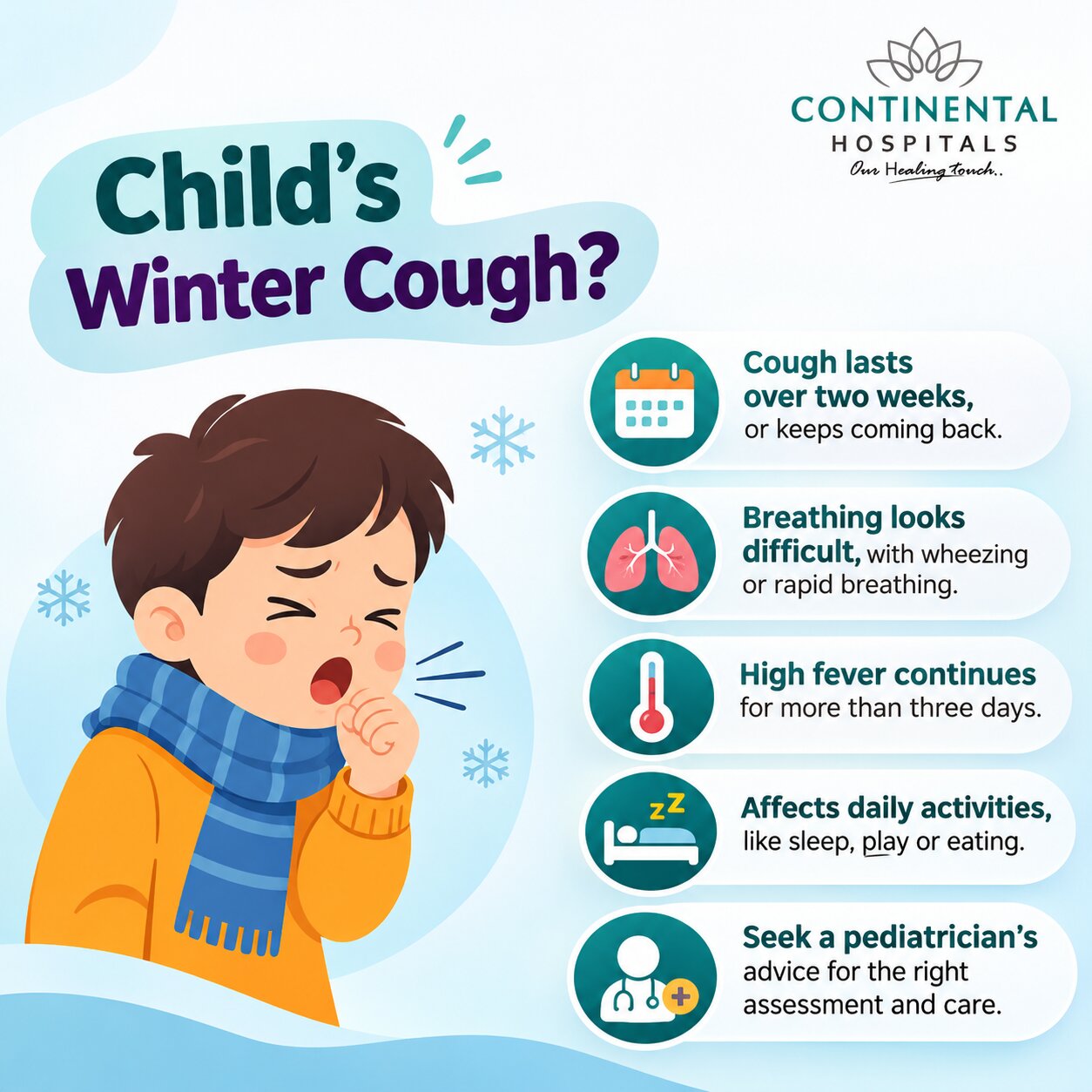
What are the instances when the cough of a child during winter becomes a cause for concern? Most times, a mild cough will clear as the infection clears up. There are specific signs and symptoms that can show there is something more serious going on.

Need an Appointment?

Be aware of the following symptoms:

  • Persistent Cough: Any cough that lasts longer than three to four weeks needs to be assessed.
  • Fever: This includes fever coupled with worsening cough.
  • Difficulty Breathing: Rapid breathing, wheezing, and even difficulty breathing must be looked at.
  • Chest Pain: Chest pain that accompanies the cough needs to be assessed.
  • Poor Feeding: Poor feeding, dehydration, and lethargy are a sign of more serious illnesses.
  • Frequent Coughing: This involves frequent coughing episodes, especially if it happens when sleeping or doing activities.

Visit the emergency room if there is breathing difficulty, bluish or greyish lips, pauses in breathing, and difficulty waking up. Also, seek medical attention urgently if there is a baby less than three months old that has a fever above 38°C.

How Can You Take Care of Your Child’s Winter Cough?

Is mild winter cough in children curable at home? Well, supportive therapy will provide comfort to children during treatment.

Parents can consider these ways:

  • Drink Lots of Fluids: Give water, warm liquids, or proper food depending on the age of your child.
  • Give Proper Rest: Sleep will promote recovery.
  • Use Saline Nasal Drops: These drops may ease nasal congestion.
  • Prevent Irritation: Avoid exposing kids to smoke, dust, and strong perfumes.
  • Give Honey: Give honey to children older than one year of age. Never give honey to infants less than one year of age.
  • Provide Clean Air Indoors: Prevent dust and other allergens.

Avoid taking over the counter cough syrups and antibiotics without medical guidance, especially for children.

How to Avoid Getting Winter Cough in Kids?

Which are the things that one must follow to avoid any kind of respiratory infections in winters?

  • Make sure that your child washes his/her hands on a regular basis.
  • Ensure that all vaccinations for kids are done properly.
  • Stay away from people suffering from any kind of respiratory infection.
  • Ensure good indoor ventilation.
  • Ensure that your kid eats right and sleeps well.
  • Avoid smoky and polluted areas.

Why should you choose Continental Hospitals for your child's care?

Why is special care essential when your child suffers from chronic cough?

Continental Hospitals of Hyderabad offer complete pediatric care backed by well-trained pediatricians, diagnostic services, and multi-specialist medical professionals.

Continental Hospitals are accredited by the Joint Commission International and NABH, proving their dedication to providing quality medical care.

Known for being one of the best multispeciality hospitals in Hyderabad, Continental Hospitals take pride in their ability to diagnose and treat children suffering from breathing issues.

Conclusion

The winter cough in a child can be because of a mild respiratory infection and can be managed with proper treatment. But in case of prolonged coughing, breathing problems, fever, or extreme fatigue, there could be another condition that needs medical intervention.

Parents should pay attention to the signs and symptoms that their children display and not ignore any of them. Timely diagnosis and proper management of respiratory ailments will help prevent further complications.

In case you have a child with winter cough, frequent nighttime coughing or wheezing, and other breathing problems, consult our best pediatrician in Hyderabad at Continental Hospitals, Hyderabad.

Related Blogs:

  1. 7 Best Foods to Eat When You Have a Cough and Cold
  2. When a Severe Cough Could Be Serious

Frequently Asked Questions

Children may cough more frequently during winter because of cold weather and seasonal infections. Viruses such as influenza and respiratory syncytial virus can cause respiratory illnesses. Cold and dry air may irritate sensitive airways. Spending more time indoors can increase exposure to respiratory infections. Children may also develop coughs due to common colds. Allergies and dust exposure can contribute to coughing. Some children experience increased wheezing during winter. A cough may also occur due to throat irritation or mucus drainage. Most coughs associated with common viral infections improve gradually. However, persistent or worsening symptoms need medical attention. Parents should observe their child's breathing and activity levels. Keeping children hydrated can help soothe throat irritation. Consult a paediatrician if the cough causes concern.
A child's cough may be serious when it is accompanied by warning signs. Difficulty breathing is one of the most important symptoms to watch for. Rapid breathing or unusual chest movements may indicate respiratory distress. Wheezing or noisy breathing also requires medical evaluation. A persistent high fever should not be ignored. A cough that causes repeated vomiting needs attention. Bluish lips or a bluish face can indicate low oxygen levels. Seek emergency medical care if your child struggles to breathe. A child who becomes unusually sleepy or unresponsive also needs urgent attention. Coughing up blood requires immediate medical assessment. Parents should also watch for dehydration and poor feeding. A cough that worsens instead of improving needs evaluation. Early medical attention can help identify the underlying cause.
A winter cough in children commonly develops due to viral respiratory infections. Most coughs associated with a common cold improve within two to three weeks. Some children may continue coughing after other cold symptoms disappear. This can happen because the airways remain sensitive after an infection. The duration depends on the underlying cause. Allergies and asthma may cause longer-lasting coughs. A cough that continues beyond three weeks should be evaluated by a paediatrician. Night-time coughing may also need further assessment. Parents should monitor whether symptoms are improving or worsening. Fever, breathing difficulty and reduced activity are important warning signs. Avoid giving cough medicines without medical advice. Encourage adequate fluids and sufficient rest. A paediatrician can recommend appropriate treatment based on the diagnosis.
Yes, a recurring winter cough can sometimes be associated with childhood asthma. Asthma causes inflammation and narrowing of the airways. Children with asthma may experience frequent coughing during cold weather. The cough may become more noticeable at night. Physical activity can also trigger coughing in some children. Wheezing and breathlessness may occur alongside the cough. Some children experience coughing without obvious wheezing. Cold air and respiratory infections can trigger asthma symptoms. A cough that repeatedly returns during winter needs medical evaluation. Family history of asthma or allergies may provide useful information. A paediatrician may recommend lung function testing depending on the child's age. Proper diagnosis helps guide long-term asthma management. Early treatment can help children maintain normal daily activities.
Night-time coughing in children can occur for several reasons. Mucus from the nose may drain into the throat while lying down. This can trigger repeated coughing during sleep. Common cold infections can also cause nighttime throat irritation. Allergies may contribute to coughing when children are exposed to dust mites. Asthma can cause coughing that becomes worse at night. Dry indoor air may further irritate the respiratory passages. Acid reflux can sometimes trigger nighttime coughing. Parents should observe whether the cough occurs every night. Watch for wheezing, breathlessness or disturbed sleep. Keeping the child's room free from dust may help reduce irritants. Adequate fluid intake can soothe throat discomfort. Consult a paediatrician if night-time coughing continues or affects sleep regularly.
Cold weather can trigger breathing difficulties in some children. Cold and dry air may irritate sensitive airways. Children with asthma may experience increased coughing or wheezing. Respiratory infections are also more common during certain winter months. These infections can sometimes affect the lower respiratory tract. Conditions such as bronchiolitis and pneumonia may cause breathing problems. Rapid breathing and chest retractions are important warning signs. Some children may experience difficulty feeding because of breathlessness. Parents should seek medical attention if breathing becomes uncomfortable. Severe breathing difficulty requires emergency medical care. Keeping children away from smoke and strong irritants is helpful. Appropriate clothing can provide comfort in cold weather. A paediatrician can identify the cause and recommend suitable treatment.
Simple home care measures may help relieve a mild winter cough. Encourage your child to drink enough water throughout the day. Warm fluids may soothe throat irritation. Honey may help reduce coughing in children older than one year. Never give honey to babies below one year. Saline nasal drops can help relieve nasal congestion. Maintaining comfortable indoor humidity may reduce dryness. Keep your child's surroundings free from dust and smoke. Encourage adequate sleep and rest during recovery. Avoid exposing children to cigarette smoke and strong fragrances. Do not give over-the-counter cough medicines without consulting a doctor. Antibiotics are not required for most viral coughs. Seek medical advice if symptoms persist or become worse.
You should consult a paediatrician when your child's cough does not improve. A cough lasting longer than three weeks needs medical evaluation. Persistent fever alongside coughing should also be assessed. Wheezing or noisy breathing requires medical attention. Consult a doctor if your child refuses food or fluids. Reduced urination may indicate dehydration. Repeated vomiting caused by coughing also needs assessment. Night-time coughing that regularly disturbs sleep should not be ignored. Children with existing respiratory conditions may need earlier evaluation. Seek urgent care for rapid breathing or chest retractions. Bluish lips or severe breathing difficulty require emergency attention. A paediatrician can examine your child and identify the underlying cause. Timely diagnosis helps ensure appropriate treatment and recovery.
Good hygiene habits can help reduce the risk of winter respiratory infections. Encourage children to wash their hands regularly with soap and water. Teach them to cover their mouth and nose while coughing or sneezing. Avoid close contact with people who have respiratory infections. Keep indoor spaces clean and adequately ventilated. Avoid exposing children to cigarette smoke and air pollution. Ensure they receive a balanced diet with essential nutrients. Encourage adequate sleep and regular physical activity. Keep children comfortably dressed during cold weather. Follow recommended childhood vaccination schedules. Annual influenza vaccination can help protect eligible children against seasonal flu. Avoid unnecessary exposure to crowded places during outbreaks. Consult a paediatrician for age-appropriate preventive healthcare advice.
Disclaimer: The information provided in this blog is intended for general knowledge and informational purposes only, and does not constitute medical advice. Always consult with a qualified healthcare professional for any medical concerns or before making any decisions about your health.

Get in Touch With Us

Whether you are from India or abroad, we are here to help you with your medical queries. Please fill out the form below and our team will connect with you shortly.

  • ✔ Quick response from our medical experts
  • ✔ Secure data handling & privacy
  • ✔ Easy upload for reports & documents
banner_image

Chat with our medical experts on WhatsApp for quick assistance and hassle-free appointment booking

Recent Posts