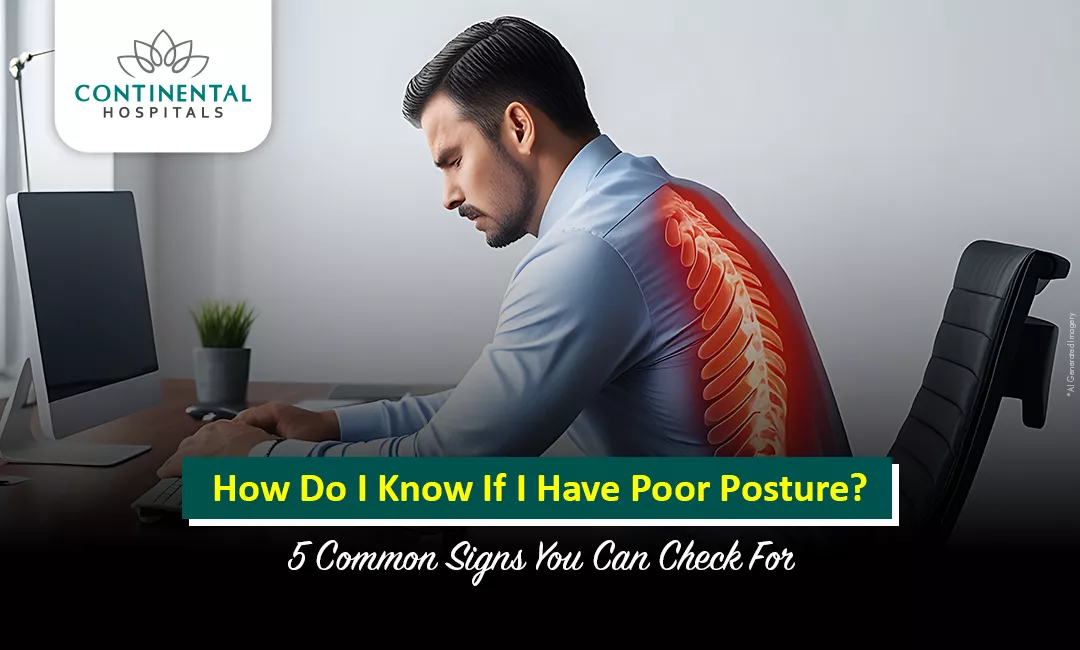
Do you often lean towards your computer screen, notice your shoulders rounding forward or feel stiff after sitting for a long time? These patterns may be a reason to review your posture and daily movement habits.
Posture describes how you hold your body while sitting, standing and moving. It changes throughout the day depending on your activity, comfort, energy levels and surroundings.
There is no single perfect posture that everyone must maintain. Slouching occasionally does not mean you have damaged your spine, and pain cannot be explained by posture alone. A more useful approach is to notice positions that feel uncomfortable, vary them regularly and seek advice when symptoms persist.
What Does Poor Posture Mean?
The term poor posture is often used to describe positions such as leaning the head forward, rounding the shoulders or sitting in a slumped position.
However, appearance alone does not tell you whether a position is harmful. People have different body shapes and natural spinal curves. Spending a long time in one position may be more relevant to discomfort than whether you look perfectly upright.
The following five signs are practical observations, not a diagnostic checklist.
What Are 5 Common Signs Worth Checking?
1. Your Head Stays Far Forward During Screen Use
You may notice that you bring your face closer to a laptop or phone while your shoulders remain behind you. This can happen when the screen is difficult to read, positioned too far away or placed too low.
Check whether you stay in this position for long periods and whether it becomes uncomfortable.
Try increasing the text size or adjusting the screen so you can view it without repeatedly leaning towards it. Avoid forcing your head backwards into a rigid position.

2. Your Shoulders Stay Rounded or Raised
Your shoulders may remain rounded forward while typing, driving or using your phone. Alternatively, you may hold them raised towards your ears without noticing.
This can be associated with your working position, desk height or the effort needed to reach your keyboard.
Pause and let your shoulders relax. Check whether your arms can rest comfortably and whether frequently used items are within easy reach. You do not need to squeeze your shoulder blades together all day.
3. You Remain Slumped in Your Chair for Long Periods
You may slide forward in your seat or spend much of the day sitting without using the backrest.
An occasional slumped position is not automatically a problem. It becomes worth reviewing when you stay there for long periods, feel uncomfortable or find it difficult to change positions.
Try sitting further back in the chair, supporting your feet and adjusting the backrest for comfort. A small back support may help some people, but it should not force an uncomfortable spinal curve.
4. You Repeatedly Lean to One Side During Tasks
You may consistently lean on one armrest, twist towards a second screen or reach sideways for your mouse.
These habits can reflect how your workspace is arranged. Look at whether the main screen, keyboard and frequently used items are positioned conveniently.
Some differences between the two sides of the body are normal. A mirror or photograph cannot diagnose a spinal condition. A new, persistent change in body shape, particularly with pain, should be assessed.
5. You Feel Stiff or Achy After Staying Still
Neck, shoulder or back discomfort after prolonged sitting may be a signal to change position or take a movement break.
Notice whether a short walk, a different chair position or an adjustment to your workstation improves comfort.
This does not prove that posture caused the pain. Sleep, stress, physical activity, injuries and other health conditions can also affect symptoms.
How Can You Check Your Posture at Home?
Observe Your Everyday Habits
Rather than posing in front of a mirror, notice how you sit during ordinary activities such as working, reading or watching television.
Ask yourself:
- Am I comfortable in this position?
- Can my shoulders and arms relax?
- Are my feet supported?
- Do I repeatedly lean or twist to see the screen?
- How long have I stayed in the same position?
The aim is to identify practical adjustments, not judge your appearance.
Notice What Changes Your Symptoms
If you experience discomfort, make a brief note of the activity, how long you were doing it and what helped.
For example, you might notice that your neck feels uncomfortable after a long laptop session but improves when you take a break or raise the screen.
These observations can help a clinician understand the pattern if symptoms continue.
Avoid Treating Online Tests as a Diagnosis
Wall tests, posture photographs and online checklists cannot confirm the cause of pain or determine whether your spine is healthy.
A professional assessment considers your symptoms, movement, strength, medical history and daily activities together.
Can Poor Posture Cause Neck or Back Pain?
The relationship between posture and pain is more complicated than it may appear. There is no clear evidence that one particular sitting or standing posture causes pain in everyone.
However, some positions may aggravate existing symptoms, especially when maintained for a long time. Changing position, adjusting your workspace and remaining active may improve comfort.
Pain should not automatically be blamed on posture, particularly when it is persistent, worsening or accompanied by other symptoms.
What Can You Do to Improve Comfort and Movement?
Adjust Your Workstation
Position your screen so you can see it comfortably without repeatedly bending or twisting. Keep the keyboard and mouse within easy reach.
Support your feet on the floor or a footrest and use the chair’s backrest if it feels comfortable. Allow your shoulders to relax.
For longer laptop sessions, an external keyboard and mouse can make it easier to adjust the screen independently.
Change Position Regularly
Avoid trying to hold one upright position throughout the day. Alternate between comfortable positions and take brief opportunities to stand or walk.
Standing still for long periods is not necessarily more comfortable than sitting. Movement and variation matter.
Build Activity Gradually
Walking and other suitable physical activities can help maintain movement and general fitness.
Strengthening and mobility exercises may also be useful, but the choice should reflect your abilities and symptoms. A physiotherapist can help if you are unsure where to begin.
Avoid Forcing Stretches
Exercises should feel manageable. Do not push through increasing pain, tingling or numbness to achieve a particular position.
Stop an exercise that worsens symptoms and seek advice when needed. Improvements in comfort and function are more useful goals than trying to achieve a specific appearance.
When Should You Seek Medical Advice?
Arrange an assessment if neck, shoulder or back discomfort:
- Persists despite simple changes over a few weeks.
- Interferes with sleep, work or daily activities.
- Keeps returning or is becoming worse.
- Occurs with persistent tingling, numbness or weakness.
- Is accompanied by a new change in the shape of your back.
Which Symptoms Need Urgent Attention?
Seek emergency care for back pain accompanied by new bladder or bowel problems, loss of sensation around the genitals or anus, or symptoms affecting both legs such as weakness or numbness.
Back pain after a serious accident also needs emergency assessment. Severe pain that starts suddenly, worsens quickly or occurs with fever or feeling unwell requires urgent medical advice.
Why Choose Continental Hospitals for Posture and Movement Assessment?
The Physical Medicine & Rehabilitation Department at Continental Hospitals provides care for musculoskeletal problems, chronic pain and difficulties with physical function.
Its services include medical evaluation, physiotherapy and occupational therapy. An assessment can help explore your symptoms, movement and daily activity demands.
Where appropriate, the team can recommend an individual rehabilitation plan focused on comfort, strength, mobility and everyday function.
Consult a Rehabilitation Specialist
If discomfort or movement difficulties keep returning, consider an assessment with a Physical Medicine & Rehabilitation specialist.
For appointments at Continental Hospitals, call 040 67000 020.