post-title

Just a Cold or a Sinus Infection? How to Tell the Difference

Written by - Editorial Team
Medically Reviewed by - Dr Chetan Bavini

Do You Have a Cold or a Sinus Infection? A blocked nose, headache, sneezing, and pain in the face are some of the common symptoms one experiences whenever there is a respiratory infection. While these symptoms may be similar, it is important to note that there are differences between a cold and a sinus infection. Having the ability to identify the differences between cold and sinus infection symptoms will enable one to decide whether to treat the symptoms at home or seek medical assistance.

The common cold is basically an infection of the nose and throat, which is usually brought about by a virus. The sinus infection, known as sinusitis, is caused by inflammation of the sinus tissues, which can be brought about by a virus or bacteria. It should be noted that a common cold can lead to a sinus infection, as the mucus in the body blocks the sinuses from draining.

What Are the Typical Symptoms of a Cold?

What do you expect to happen when you contract a common cold? It usually takes time to develop, and it occurs in the upper respiratory system. They are mild in nature and usually take seven to ten days.

Typical symptoms of the common cold include:

1. Runny or stuffy nose: This involves clear or thick nasal discharge.
2. Sneezing: This can be very frequent, especially at the onset.
3. Sore throat: This involves irritation and pain during swallowing.
4. Mild cough: The cough is developed due to irritation.
5. Mild fever: This can be experienced by some individuals.
6. Aches in the body: Mild fatigue and general body aches are experienced.

What Are the Typical Sinus Infection Symptoms?

How can one tell that he/she has sinus infection symptoms? Sinusitis occurs because of inflammation in the lining of the sinuses, which causes problems with drainage of mucus.

The typical sinus infection symptoms are the following:

1. Pain and pressure in the face: The pain can be experienced in the cheeks, forehead, nose, or eyes.
2. Discharge from the nose: The mucus can be thick and can be yellow or green in color (but not all cases of sinus infections are related to bacteria).
3. Stuffy nose: Due to the inflammation, breathing through the nose may become difficult.
4. Headaches: The pressure in the forehead and eyes can lead to the headache.
5. Loss of sense of smell: Because of the inflammation, the ability to smell can be decreased.
6. Postnasal drip: The mucus can go down the throat, causing cough.
7. Pain in the upper teeth area.

The sinus infection symptoms usually last longer than the symptoms of common cold, especially when the inflammation does not subside.

Second Opinion

How Can You Tell the Difference Between a Cold and Sinusitis?

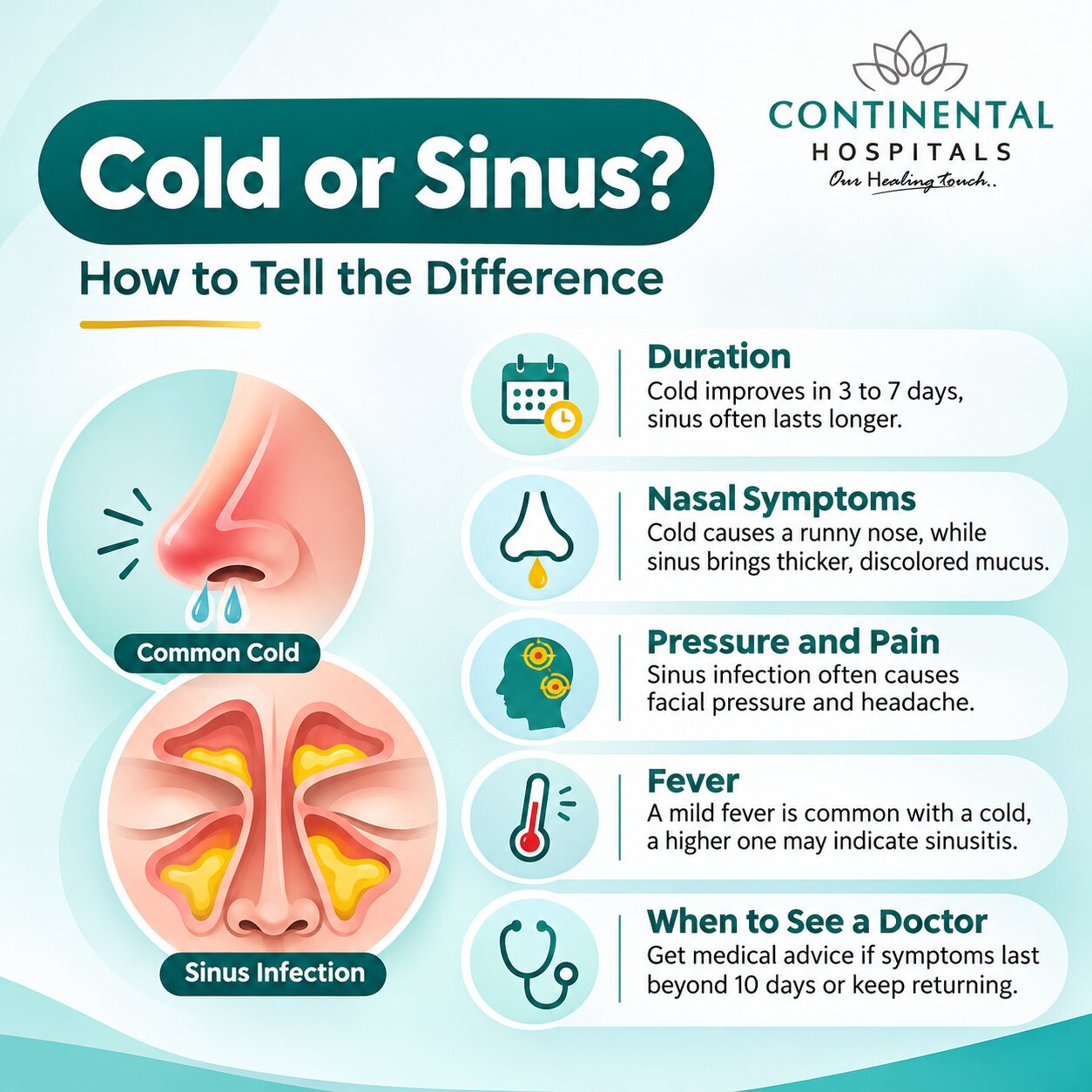
Is it a common cold or sinusitis? The duration, location of discomfort, and severity of symptoms can help distinguish between them.

Symptoms Common Cold Sinus Infection
Duration Usually 7 to 10 days May last longer
Nasal discharge Often watery initially May become thick
Facial pressure Usually mild or absent Common
Headache Mild May be more noticeable
Sense of smell Usually less affected May be reduced
Fever Sometimes mild Sometimes present
Tooth pain Uncommon May occur

What Causes Sinus Infection?

What are the factors that contribute to the development of sinusitis? Sinusitis happens if there is inflammation of the lining of the sinuses and if the drainage of mucus is obstructed.

The typical causes of sinusitis are the following:

  • Viral infection, such as the common cold.
  • Sometimes bacterial infection.
  • Seasonal allergies or allergic rhinitis.
  • Nasal polyps, which cause blockage of sinus drainage.
  • Deviated nasal septum.
  • Exposure to dust, smoke, and pollution.

All sinus infections do not need to be treated using antibiotics.

How Can a Cold and a Sinus Infection Be Cured?

Is it possible to cure a common cold or sinus infection at home? It is sometimes possible to alleviate mild symptoms through home care, but severe or prolonged symptoms require a consultation with a doctor.

The common cold can be cured with:

Need an Appointment?

  • Adequate sleep.
  • Sufficient fluid intake.
  • Saline nasal spray.
  • Doctor-recommended medications for treating fever or pain.
  • Absence of smoke, dust, and irritants.

A sinus infection can be cured with:

  • Rinsing of the nose with saline.
  • Using the nasal spray as prescribed by the doctor.
  • Pain medication.
  • Treatment of allergies when the infection is caused by them.
  • Antibiotics only if there is an indication of a bacterial infection.

When to Visit a Doctor?

When do you need to see a doctor about a cold and sinusitis? Don't ignore symptoms that are too severe, too persistent, or worsening.

See your doctor when you have:

  • Symptoms that persist for over ten days without any improvement.
  • Severe pain in your face or head.
  • Very high or persistent fever.
  • Symptoms that get better at first but then worsen again.
  • Recurrent sinus infections.
  • Nasal obstruction or loss of smell sensation.

Seek immediate medical help when you develop swelling or redness in the areas around your eyes, change in vision, very bad headaches, or confusion.

Why Opt for ENT Treatment at Continental Hospitals?

What is the significance of the right consultation for ENT disorders and sinusitis problems? Repeated nasal obstruction, pain in the face, and chronic sinus infections need proper diagnosis of their underlying causes and selection of appropriate treatment options.

Continental Hospitals, Hyderabad, offers complete Ear, Nose, and Throat (ENT) services through a combination of experts in this field, state-of-the-art diagnostic equipment, and qualified medical experts. This hospital is accredited nationally and internationally as a center of quality health services through Joint Commission International (JCI) and National Accreditation Board for Hospitals and Healthcare Providers (NABH).

Through patient-oriented services, advanced medical facilities, and proper diagnosis, Continental Hospitals aims at diagnosing ENT diseases and offering individualized treatment.

Conclusion

Knowing how a common cold is different from a sinus infection will enable you to be aware of the symptoms and go for medical consultation. The difference between the two is that whereas the common cold goes away after a few days, sinus infection causes facial pressure, blockage in the nose, headaches, and thick discharge from the nose.

When you experience any of these symptoms like nasal congestion, facial pain, headaches, etc., consult our best ENT specialist in Hyderabad at Continental Hospitals, Hyderabad.

Related Blogs:

  1. Can Yoga Help With Sinus Problems? Benefits, Poses and Tips
  2. Sinus Infection? It Was Rare Cancer in a 33-Year-Old

Frequently Asked Questions

A common cold and a sinus infection can cause similar symptoms. Both conditions may cause a blocked nose, runny nose and facial discomfort. A cold is usually caused by a virus. It commonly causes sneezing, sore throat, coughing and mild congestion. A sinus infection occurs when the tissues lining the sinuses become inflamed. It may develop after a common cold. Sinus infections can cause facial pressure and pain around the cheeks, forehead or eyes. Thick nasal discharge may also occur. Cold symptoms generally improve within seven to ten days. Sinus symptoms may last longer or worsen after initially improving. However, mucus colour alone cannot confirm a bacterial infection. Pay attention to how long symptoms last and how they change. Consult a doctor if symptoms are severe, persistent or worsening.
A common cold is a viral infection affecting the upper respiratory tract. It usually develops gradually after exposure to a cold-causing virus. A runny or blocked nose is one of its most common symptoms. Sneezing and frequent throat irritation may also occur. Some people experience a mild sore throat. Coughing can develop as the infection progresses. Watery eyes and mild headaches are also possible. Adults may experience a low-grade fever occasionally. Tiredness and general discomfort can accompany the infection. Most cold symptoms improve within seven to ten days. Rest and adequate fluid intake can support recovery. Simple symptom-relief medicines may help when recommended by a doctor. Seek medical advice if symptoms become severe or do not improve.
A sinus infection, also called sinusitis, involves inflammation of the sinus lining. It commonly develops after a cold or another respiratory infection. Nasal congestion is a frequent symptom. You may experience pressure or pain around your forehead, cheeks or eyes. A blocked nose can make breathing uncomfortable. Thick nasal discharge may occur during the infection. Some people experience a reduced sense of smell or taste. Headaches and facial tenderness are also possible. Postnasal drip may cause throat irritation and coughing. Fever can occur, particularly in some acute infections. Symptoms may last longer than those of a typical cold. Persistent or worsening symptoms need medical evaluation. A doctor can determine whether the condition is viral, bacterial or related to another cause.
The duration of sinusitis depends on its underlying cause and severity. Acute sinusitis usually lasts less than four weeks. Many cases develop following a common cold. Viral sinusitis often improves without antibiotic treatment. Symptoms may gradually reduce as the inflammation settles. Some people experience nasal congestion and facial pressure for several days. If symptoms last between four and twelve weeks, the condition is considered subacute sinusitis. Chronic sinusitis lasts for at least twelve weeks. It may cause persistent congestion and reduced smell. Allergies and nasal polyps can contribute to ongoing sinus inflammation. Treatment depends on the cause and duration of symptoms. Saline nasal rinses and appropriate medicines may provide relief. Consult an ENT specialist if symptoms persist or repeatedly return.
Yes, a common cold can sometimes lead to sinusitis. A cold causes inflammation in the nasal passages and surrounding tissues. This inflammation can block the small openings that drain the sinuses. When mucus cannot drain properly, it may accumulate inside the sinus cavities. This can create conditions that allow sinus inflammation to develop. Most sinus infections following a cold are caused by viruses. Some cases may develop into bacterial infections. Symptoms can include facial pressure, nasal congestion and headaches. Thick nasal discharge may also occur. However, not every cold develops into sinusitis. Many people recover from a cold without complications. Staying hydrated and managing nasal congestion may help ease discomfort. Seek medical advice if symptoms worsen after initially improving or persist beyond ten days.
Not every sinus infection requires antibiotics. Many cases of acute sinusitis are caused by viruses. Antibiotics do not work against viral infections. Mild viral sinusitis often improves with supportive care. Drinking enough fluids can help maintain hydration. Saline nasal sprays or rinses may help clear nasal passages. Doctors may recommend suitable pain relievers for facial discomfort. Antibiotics may be considered when bacterial sinusitis is suspected. Symptoms lasting more than ten days without improvement may require evaluation. Severe symptoms or worsening symptoms after initial improvement can also suggest a bacterial infection. The choice of medicine depends on the patient's condition and medical history. Taking antibiotics unnecessarily can contribute to antibiotic resistance. Never use leftover antibiotics without medical advice. Consult a doctor for an appropriate diagnosis and treatment plan.
Good daily habits can help reduce the risk of sinus infections. Wash your hands regularly to reduce exposure to respiratory viruses. Avoid close contact with people who have contagious infections when possible. Drink enough water to maintain proper hydration. Avoid smoking and exposure to secondhand smoke. Keep indoor air comfortable and avoid excessive exposure to dust. Manage allergies with appropriate medical guidance. Use clean humidifiers when indoor air is particularly dry. Clean humidifiers regularly to prevent microbial growth. Treat nasal allergies early to reduce ongoing inflammation. Avoid using decongestant nasal sprays for longer than recommended. Get adequate sleep and maintain a balanced diet. Seek medical advice if you experience frequent sinus infections. Early management of underlying nasal problems may help prevent recurrence.
You should consult an ENT specialist if cold-like symptoms do not improve after ten days. Persistent nasal congestion may indicate an underlying sinus problem. Facial pain or pressure that becomes severe needs medical attention. Repeated sinus infections should also be evaluated. A reduced sense of smell that does not improve may require investigation. Thick nasal discharge accompanied by worsening symptoms should not be ignored. Fever that persists or returns may need medical assessment. Your doctor may examine your nose and sinuses. Additional investigations may be recommended when clinically necessary. Seek urgent medical attention if you develop swelling or redness around the eyes. Vision changes, severe headache or confusion are also warning signs. Early diagnosis can help identify the correct treatment. An ENT specialist can recommend appropriate medical or procedural management.
Yes, sinusitis can cause headaches and facial discomfort. Inflammation inside the sinuses can create pressure around the forehead, cheeks and eyes. The discomfort may become more noticeable when bending forward. Nasal congestion can occur alongside the headache. Some people experience tenderness around the affected sinus areas. A reduced sense of smell may also accompany sinusitis. However, not every headache with nasal congestion is caused by a sinus infection. Migraine and other headache conditions can produce similar symptoms. Migraine may also cause nasal congestion and facial pressure. The location and nature of pain alone cannot confirm sinusitis. A doctor can assess your symptoms and medical history. Persistent or severe headaches should be medically evaluated. Sudden severe headaches or headaches with vision changes, confusion or neurological symptoms require urgent medical attention. Appropriate treatment depends on the actual cause of the headache.
Disclaimer: The information provided in this blog is intended for general knowledge and informational purposes only, and does not constitute medical advice. Always consult with a qualified healthcare professional for any medical concerns or before making any decisions about your health.

Get in Touch With Us

Whether you are from India or abroad, we are here to help you with your medical queries. Please fill out the form below and our team will connect with you shortly.

  • ✔ Quick response from our medical experts
  • ✔ Secure data handling & privacy
  • ✔ Easy upload for reports & documents
banner_image

Chat with our medical experts on WhatsApp for quick assistance and hassle-free appointment booking

Recent Posts