

post-title

Osteoarthritis Explained: Causes, Symptoms and Ways to Protect Your Joints

Written by - Editorial Team
Medically Reviewed by - Dr Arun Reddy Mallu

Osteoarthritis is a joint problem that is very prevalent among older people. It happens because of the wearing away of the cartilage, which protects the bone endings and enables their smooth movement. Once this cartilage gets damaged and starts wearing off, joint problems such as pain, stiffness, and difficulties with movement can occur.

Osteoarthritis can happen in various joints, such as knees, hips, hands, and even the spine. Among those types, osteoarthritis of the knee is especially common and can make the performance of daily activities such as walking, going up the stairs, standing, and sitting uneasy. While osteoarthritis is mostly associated with old age, younger people can be affected by it as well because of injuries of the joint, extra weight of the body, and some other diseases.

Causes of Osteoarthritis

What are the causes of osteoarthritis development? The condition develops as a result of the aging of the joint tissues. There are some factors that make one prone to suffering from this disease.

Some common causes of osteoarthritis are:

  • Aging: The aging process changes the joint cartilage and reduces its protective function of the bone.
  • Extra weight: Extra pounds make an additional load on the joints that bear weight—hips and knees.
  • Joint injury: Injuries caused by playing sports or falling may be a cause of osteoarthritis.
  • Genetic predisposition: Having an osteoarthritis in a family history may be a cause of this disease.
  • Stressful use of joints: Joint stress caused by repetitive actions can lead to joint deterioration.
  • Weak muscles: Weak muscles surrounding the joints reduce their protection and put stress on the joint.

Visit the top orthopedic doctors in Hyderabad at Continental Hospitals, Hyderabad, for expert bone, joint, and musculoskeletal care.

What Are the Signs of Osteoarthritis?

How will you be able to identify signs of osteoarthritis in the early stages? Symptoms tend to appear slowly and may worsen gradually in the long run. There may be slight pains or problems doing tasks on a day-to-day basis.

The symptoms are as follows:

  • Joint pain: Pain may occur when moving or after exercise.
  • Joint stiffness: There is joint stiffness after waking up from sleep or sitting for a long period of time.
  • Swelling: Joint swelling occurs.
  • Difficulty moving: It is difficult to bend, stretch, and move your joint.
  • Grinding noise: Grinding noises are heard when you move your joints.
  • Joint instability: Your joints seem unstable.
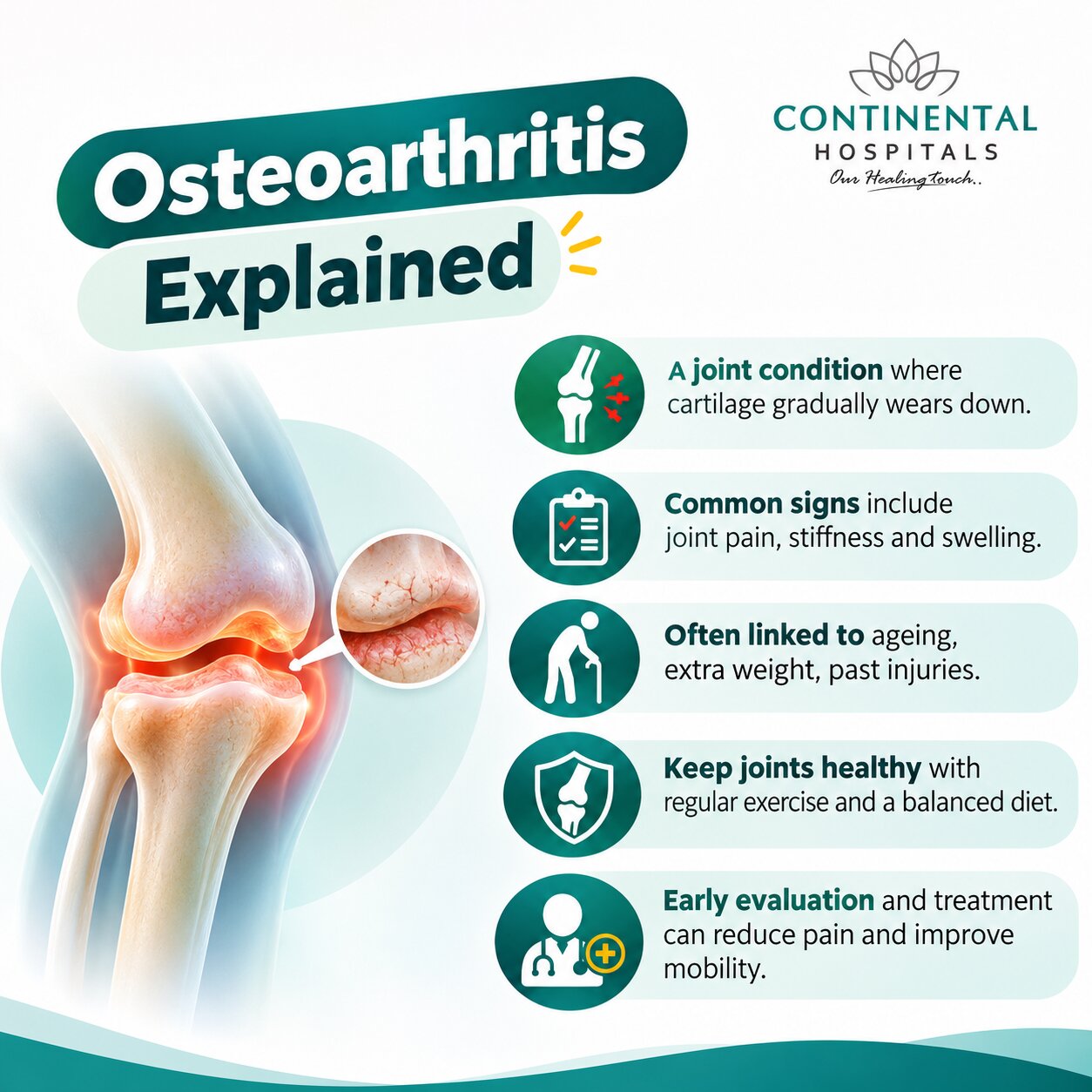
What Is Knee Osteoarthritis?

Knee osteoarthritis is a disease characterized by progressive degeneration of cartilage in the knee joint. It may lead to pain, stiffness, swelling, and inability to move the knee freely.

The symptoms of knee osteoarthritis include:

Second Opinion

  • Pain when walking or going up stairs.
  • Pain from prolonged standing.
  • Stiffness after sitting or lying down.
  • Swelling of the knee joint area.
  • Trouble flexing or extending the knee.

As the disease progresses, even simple actions such as rising from a chair or walking a few steps become difficult. Early treatment can help to alleviate symptoms and preserve mobility.

How Does a Doctor Recognize Osteoarthritis?

What does a doctor use to diagnose osteoarthritis? The diagnosis process starts with consultation, where your symptoms and medical history are discussed.

Your doctor can suggest the following:

  • Physical examination: For assessing joint movement, pain, swelling, and mobility.
  • X-ray: To determine any changes in joint spacing and bone spurs.
  • MRI: When extra details about cartilage, ligaments, or other structures within the joint are required.
  • Blood test: In order to make sure that no other diseases that can cause joint pain exist.

Properly made diagnoses allow doctors to prescribe the best treatment for your osteoarthritis depending on the joint that is affected.

How Can Your Joints Be Protected Against Osteoarthritis?

Is it possible that just by adopting some lifestyle measures, you can keep your joints healthy and prevent osteoarthritis? Yes, you definitely can.

Here are some steps that should be considered for joint protection:

  • Keeping your weight under control: Excess body weight will put less pressure on the knees and hips.
  • Exercising regularly: You can exercise in the form of walking, swimming, and cycling to keep your joints mobile.
  • Doing strength training: It is recommended that you strengthen your supporting muscles by performing gentle exercises.
  • Limiting your joint strain: Avoid doing activities that repeatedly lead to pain or discomfort.
  • Wearing comfortable shoes: It will help you prevent unnecessary pressure on your knees and feet.
  • Following a healthy diet: Have a balanced diet containing plenty of vegetables, fruits, whole grains, and proteins.
  • Consulting doctors: Always follow your doctors' advice, and consult an orthopedic surgeon.

What Are the Treatment Approaches for Osteoarthritis?

Can there be any treatment for osteoarthritis without going for surgery? There is no need for any surgery for osteoarthritis in many cases where the disease is not serious.

Need an Appointment?

Based on the condition, the treatments may include:

  • Medications for pain relief recommended by the doctor.
  • Physiotherapy and exercise under supervision.
  • Weight loss and modification in lifestyle.
  • Devices like knee supports or assistive devices if needed.
  • Injections into the joints for some patients.
  • Surgery for joint replacement in serious cases.

Osteoarthritis needs an individualized approach since different people have different needs based on their symptoms.

Why Opt for Continental Hospitals for Osteoarthritis Treatment?

What makes selecting an appropriate hospital essential in treating joint problems? Osteoarthritis demands the right diagnosis, right guidance, and proper planning depending on your mobility, joint, and day-to-day activities.

Continental Hospitals at Hyderabad provides complete orthopedic services backed up with competent specialists, efficient diagnostic procedures, advanced treatment plans, and multidisciplinary experts. This hospital has been accredited with the Joint Commission International (JCI), the National Accreditation Board for Hospitals and Healthcare Providers (NABH), and the Quality and Accreditation Institute (QAI).

The hospital has received various awards and has earned the reputation of being one of the best hospitals in Hyderabad.

Conclusion

Although osteoarthritis may slowly develop and hinder joint movement, leading to difficulties with your activities of daily living, diagnosing the condition early, knowing what causes it, maintaining a healthy weight and physical activity levels will ensure that your joints remain healthy. With early diagnosis and treatment of osteoarthritis, many patients will be able to cope with their symptoms well.

In case you have experienced knee pain, joint stiffness, swelling, or difficulty walking, consult our best orthopedic specialist in Hyderabad at Continental Hospitals, Hyderabad, for more information and a customized treatment plan.

Related Blogs:

Osteoarthritis vs Rheumatoid Arthritis Explained

Frequently Asked Questions

Osteoarthritis is a common condition that affects the joints. It develops when the protective cartilage within a joint gradually changes and breaks down. Cartilage helps bones move smoothly against each other. As the condition progresses, the underlying bone and surrounding joint tissues may also change. Osteoarthritis commonly affects the knees, hips, hands and spine. It can cause joint pain, stiffness and reduced movement. Symptoms may develop gradually over several years. Some people experience mild discomfort, while others have difficulty performing daily activities. The condition becomes more common with increasing age. However, younger adults can also develop osteoarthritis. Previous joint injuries, excess body weight and genetics may increase the risk. Although osteoarthritis cannot always be reversed, its symptoms can be managed. Early diagnosis and appropriate treatment can help protect joint function.
Osteoarthritis develops due to changes in the structure and function of a joint over time. Ageing is one of the most common risk factors. Previous joint injuries can increase the chances of developing the condition. Repeated stress on joints from certain activities may also contribute. Excess body weight places additional pressure on weight-bearing joints. Genetic factors can influence a person's risk. Joint abnormalities present from birth may also contribute. Muscle weakness around a joint can affect its stability. Certain occupations involving repetitive joint movements may increase the risk. Previous sports injuries can also affect long-term joint health. Osteoarthritis is not simply caused by ageing or everyday movement. Multiple factors can contribute to its development. Identifying these risk factors can help doctors recommend suitable preventive measures.
Joint pain is one of the most common symptoms of osteoarthritis. The discomfort may increase during walking, climbing stairs or physical activity. Some people experience stiffness after waking up in the morning. Joint stiffness may also occur after sitting for long periods. Swelling around the affected joint can sometimes develop. You may notice a grinding or clicking sensation when moving the joint. The affected area may feel tender when touched. Reduced flexibility can make everyday movements difficult. Some people experience joint weakness or instability. Symptoms usually develop gradually and may become more noticeable over time. The severity of symptoms varies from person to person. Osteoarthritis commonly affects the knees, hips, hands and spine. Consult an orthopaedic specialist if joint pain or stiffness interferes with your daily activities.
Osteoarthritis can affect people of different age groups. However, the risk generally increases as people get older. Individuals with a family history of osteoarthritis may have a higher risk. People who are overweight may experience additional pressure on their joints. Previous injuries involving the knees, hips or other joints can increase susceptibility. Athletes involved in high-impact sports may develop joint problems after repeated injuries. Certain jobs involving repetitive movements can also contribute. People with joint deformities or structural abnormalities may have an increased risk. Weak muscles surrounding the joints can affect joint support. Some metabolic and inflammatory conditions may also influence joint health. Having one or more risk factors does not mean that osteoarthritis is inevitable. Maintaining a healthy weight and staying physically active can support joint health. Regular medical evaluation can help identify and manage joint problems early.
Osteoarthritis is usually diagnosed through a medical evaluation. Your doctor will first ask about your symptoms and medical history. You may be asked when the pain started and which activities make it worse. The specialist will examine the affected joint for tenderness and swelling. Joint movement and flexibility may also be assessed. X-rays can help identify changes such as joint space narrowing and bone spurs. In some cases, an MRI may be recommended to examine soft tissues and other joint structures. Blood tests are not routinely needed to diagnose osteoarthritis. However, they may help rule out other conditions. Your doctor will consider your symptoms along with examination findings. The severity of osteoarthritis can vary between individuals. Early diagnosis helps doctors recommend appropriate treatment. Consult an orthopaedic specialist if persistent joint pain affects your mobility.
There is currently no permanent cure for osteoarthritis. However, several treatments can help manage its symptoms. The main goal is to reduce pain and maintain joint movement. Regular low-impact exercise can strengthen the muscles supporting the joints. Weight management can reduce pressure on weight-bearing joints. Physiotherapy may improve flexibility and physical function. Doctors may recommend appropriate pain-relieving medicines when necessary. Some patients may benefit from supportive devices or activity modifications. Advanced osteoarthritis may require surgical treatment. Joint replacement surgery can be considered when severe pain and disability do not improve with other treatments. Treatment choices depend on the affected joint and severity of the condition. Early management may help maintain independence and daily activities. Regular follow-up with an orthopaedic specialist supports long-term joint care.
Osteoarthritis cannot always be prevented, but certain habits may reduce the risk. Maintaining a healthy body weight helps reduce pressure on the joints. Regular physical activity strengthens muscles and supports joint stability. Walking, swimming and cycling are useful low-impact exercise options. Avoid suddenly increasing exercise intensity. Use proper techniques while exercising or lifting heavy objects. Allow your body enough time to recover after physical activity. Treat joint injuries promptly to reduce the risk of long-term damage. A balanced diet supports overall bone and joint health. Include adequate protein, calcium and vitamin D as recommended. Avoid prolonged inactivity and take movement breaks during long sitting periods. Wear suitable footwear to support comfortable movement. Consult a healthcare professional if you experience persistent joint pain. Consistent healthy habits can help protect your joints over time.
The best exercise for osteoarthritis depends on the affected joint and your physical condition. Low-impact activities are generally recommended for people with joint pain. Walking can help maintain mobility and overall fitness. Swimming and water-based exercises reduce pressure on the joints. Cycling can improve joint movement and strengthen leg muscles. Gentle stretching exercises may help reduce stiffness. Strength training can support the muscles surrounding affected joints. Physiotherapy exercises may improve balance and flexibility. Avoid activities that cause significant or persistent joint pain. Start slowly and increase exercise intensity gradually. Rest when necessary and follow your doctor's recommendations. A physiotherapist can create an exercise plan based on your needs. Regular movement can help manage symptoms and improve daily function. Consistency is more important than performing strenuous exercises.
You should consult an orthopaedic doctor if joint pain persists or keeps returning. Pain that interferes with walking or daily activities needs medical attention. Consult a specialist if you experience frequent joint stiffness. Swelling or tenderness around a joint should also be evaluated. Difficulty bending or straightening a joint may indicate an underlying problem. Seek medical advice if joint movement becomes increasingly restricted. Pain that does not improve with rest or basic treatment requires assessment. Sudden severe joint pain, redness or warmth with fever needs urgent medical evaluation. These symptoms may indicate an infection or another serious condition rather than osteoarthritis. Your doctor may recommend an examination and appropriate imaging tests. Early diagnosis can help prevent further functional difficulties. Treatment may include medicines, physiotherapy or other interventions. Advanced cases may require surgical evaluation. Timely orthopaedic care can help improve mobility and quality of life.
Disclaimer: The information provided in this blog is intended for general knowledge and informational purposes only, and does not constitute medical advice. Always consult with a qualified healthcare professional for any medical concerns or before making any decisions about your health.

Get in Touch With Us

Whether you are from India or abroad, we are here to help you with your medical queries. Please fill out the form below and our team will connect with you shortly.

  • ✔ Quick response from our medical experts
  • ✔ Secure data handling & privacy
  • ✔ Easy upload for reports & documents
banner_image

Chat with our medical experts on WhatsApp for quick assistance and hassle-free appointment booking

Recent Posts