
post-title

Soluble vs. Insoluble Fiber: Which Is Better for Digestive Health?

Written by - Editorial Team
Medically Reviewed by - Dr Guru N Reddy

Soluble vs. insoluble fiber is an important topic when understanding how food supports digestive health. Dietary fiber is a type of carbohydrate found in plant based foods that the body cannot fully digest. It helps support regular bowel movements, maintain gut health, and improve overall digestive function. Eating enough fiber from fruits, vegetables, whole grains, legumes, nuts, and seeds can help keep your digestive system healthy.

But which type of fiber is better for your body? Both soluble and insoluble fiber offer different benefits. Soluble fiber dissolves in water and forms a gel like substance, while insoluble fiber adds bulk to stool and helps food move through the digestive system. Understanding soluble vs. insoluble fiber can help you choose the right foods for better digestion and overall health.

What Is Soluble Fiber and What Are Its Benefits?

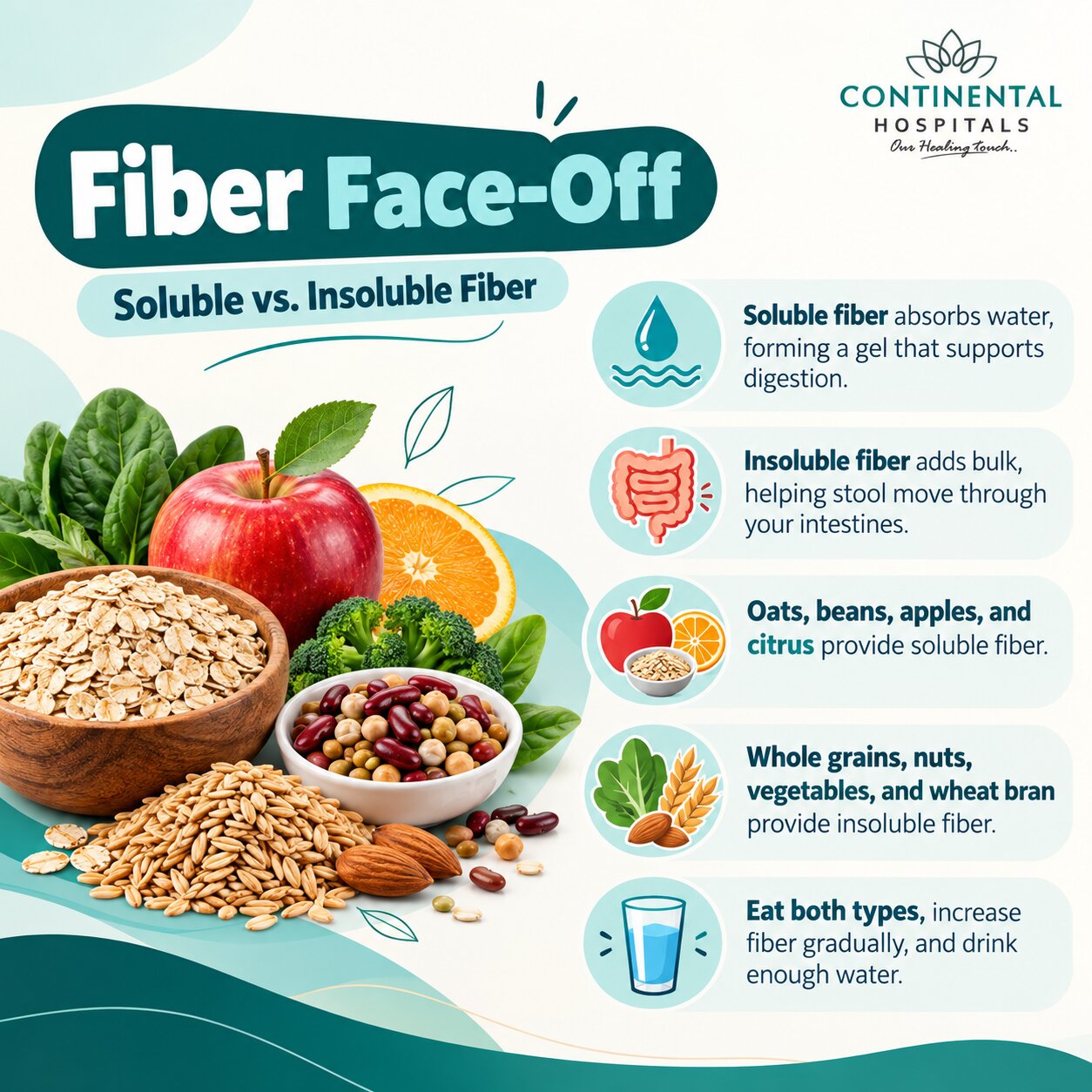
Soluble fiber dissolves in water and forms a soft, gel-like substance in the digestive tract. This process can slow digestion, support blood sugar control, and help manage cholesterol levels. Some types of soluble fiber are also fermented by beneficial gut bacteria, supporting a healthy gut environment.

The main soluble fiber benefits include:

  • Supports bowel health: Helps soften stool and may ease constipation.
  • Helps manage cholesterol: Certain soluble fibers can help lower LDL, or bad cholesterol.
  • Supports blood sugar control: Slows the absorption of carbohydrates, helping reduce sudden blood sugar spikes.
  • Promotes fullness: May help you feel satisfied for longer after meals.
  • Supports gut bacteria: Some soluble fibers act as prebiotics that nourish beneficial bacteria.

Which Foods Contain Soluble Fiber?

Include these soluble fiber foods in your daily diet:

  • Oats and barley
  • Apples, oranges, and pears
  • Beans, peas, and lentils
  • Chia seeds
  • Carrots
  • Psyllium husk

Eating a variety of these foods can help you obtain soluble fiber naturally.

Visit the gastroenterology specialists in Hyderabad at Continental Hospitals, Hyderabad, for expert care and advanced diagnostic services.

What Is Insoluble Fiber and Why Is It Important?

Insoluble fiber does not dissolve in water. Instead, it adds bulk to stool and helps it move through the intestines. This makes it particularly useful for supporting regular bowel movements and preventing constipation.

The main insoluble fiber benefits include:

Second Opinion

  • Promotes regular bowel movements: Helps stool move through the digestive tract.
  • Helps prevent constipation: Adds bulk to stool and supports regularity.
  • Supports digestive function: Helps maintain normal movement through the intestines.
  • Supports overall gut health: Contributes to a balanced, fiber-rich diet.
Which Foods Contain Insoluble Fiber?

Some common insoluble fiber foods include:

  • Whole wheat bread and whole grains
  • Brown rice
  • Nuts and seeds
  • Green leafy vegetables
  • Cauliflower and green beans
  • Fruit skins, such as apple skin

Eating whole fruits and vegetables rather than removing their skins when appropriate can help increase your fiber intake.

How Much Fiber Should You Eat Daily?

How can you get enough fiber for digestive health? Most adults should aim for approximately 25 to 30 grams of dietary fiber daily, although individual needs vary with age, sex, energy requirements, and medical conditions.

You can increase your intake by following these simple steps:

  • Choose whole grains instead of refined grains.
  • Eat fruits and vegetables regularly.
  • Include beans, lentils, and peas in meals.
  • Add nuts and seeds to suitable dishes.
  • Drink enough water throughout the day.

Increase fiber gradually to reduce gas, bloating, and abdominal discomfort.

If you have persistent digestive symptoms or a condition that affects your intestines, ask a healthcare professional about the most appropriate fiber intake for you.

Why Choose Continental Hospitals for Digestive Health?

Why is expert guidance important when improving your digestive health? Persistent constipation, bloating, abdominal discomfort, or changes in bowel habits may require medical evaluation rather than dietary changes alone.

Need an Appointment?

Continental Hospitals, Hyderabad, offers comprehensive digestive healthcare supported by experienced specialists, modern diagnostic facilities, and multidisciplinary medical expertise. The hospital holds national and international healthcare accreditations, including National Accreditation Board for Hospitals and Healthcare Providers (NABH) and Joint Commission International (JCI), reflecting its commitment to quality standards and patient safety.

The hospital's digestive health specialists can help assess ongoing gastrointestinal symptoms and provide individualized advice on nutrition, dietary fiber, and appropriate treatment.

Conclusion

Understanding soluble vs. insoluble fiber can help you make better food choices for digestive health. Soluble fiber supports cholesterol management, blood sugar control, and stool consistency, while insoluble fiber helps promote regular bowel movements. Both types are essential parts of a balanced diet.

If you suffer from persistent constipation, bloating, abdominal discomfort, or other digestive problems, consult our best gastroenterologist in Hyderabad at Continental Hospitals, Hyderabad. Expert guidance can help identify the cause of your symptoms and develop a suitable plan to support your digestive health.


Frequently Asked Questions

Soluble fiber is a type of dietary fiber that dissolves in water. It forms a gel-like substance during digestion. This process can help slow the movement of food through the digestive system. Soluble fiber may help regulate blood sugar levels. It can also help lower LDL, or bad, cholesterol. Some types of soluble fiber support beneficial gut bacteria. Oats, apples, oranges, beans, and lentils are good sources. Barley and psyllium also contain soluble fiber. Including these foods in your daily diet can support digestive health. Soluble fiber may help make bowel movements more regular. It can also help you feel full for longer after meals. Increase your intake gradually to reduce gas and bloating. Drink enough water when increasing your fiber intake. Consult a healthcare professional if digestive symptoms persist.
Insoluble fiber does not dissolve in water during digestion. It helps add bulk to stool and supports regular bowel movements. This type of fiber can help food and waste move through the digestive tract. It may help prevent constipation when consumed with adequate fluids. Whole wheat, brown rice, nuts, and seeds provide insoluble fiber. Vegetables such as cauliflower, green beans, and potatoes also contain it. The outer skins of many fruits provide additional insoluble fiber. Eating a variety of plant foods can help you obtain enough fiber. Increase your intake gradually to allow your digestive system to adjust. Drinking adequate water is important when consuming more fiber. Some people may experience gas or discomfort when increasing fiber too quickly. Certain digestive conditions may require adjustments to fiber intake. Seek medical advice if constipation or abdominal discomfort continues. A balanced diet usually includes both soluble and insoluble fiber.
Both soluble and insoluble fiber are important for digestive health. Neither type is universally better than the other. Soluble fiber helps form a gel during digestion. It may support cholesterol management and blood sugar control. Insoluble fiber adds bulk to stool and helps promote regular bowel movements. Both types can support healthy bowel function in different ways. The best choice depends on your digestive needs and overall health. Oats, beans, fruits, vegetables, and whole grains provide different types of fiber. Eating a variety of these foods helps you obtain both forms. People with constipation may benefit from carefully increasing fiber intake. Those with certain bowel conditions may need personalized dietary guidance. Increase fiber gradually to minimize bloating and gas. Drink enough fluids to support normal bowel movements. A balanced, fiber-rich diet is generally the best approach.
Fiber can help relieve constipation in many people. Insoluble fiber adds bulk to stool and supports bowel regularity. Soluble fiber can help retain water and soften stool. Psyllium is a soluble fiber that may improve stool consistency. Foods such as oats, fruits, vegetables, beans, and whole grains provide dietary fiber. Increase your fiber intake gradually rather than making sudden changes. Drink sufficient water throughout the day. Regular physical activity can also help support bowel movements. Responding to the urge to pass stool may prevent constipation from worsening. However, fiber does not resolve every cause of constipation. Some people experience more bloating or discomfort when increasing fiber. People with intestinal narrowing or certain bowel disorders may need medical advice before increasing fiber. Seek medical attention for severe abdominal pain, vomiting, blood in the stool, or persistent constipation. A doctor can recommend suitable dietary changes and treatment.
Fiber can support digestive health, but its effect on bloating varies. Some types of fiber help regulate bowel movements and relieve constipation-related bloating. Soluble fiber can be fermented by gut bacteria, producing gas in some people. Foods such as beans, lentils, onions, and certain whole grains may increase gas. Insoluble fiber can also cause discomfort if intake increases too quickly. Introduce fiber-rich foods gradually over several days or weeks. Drink enough water to support normal digestion. Eat slowly and chew food thoroughly to reduce swallowed air. Keeping a food diary may help identify foods that trigger symptoms. Avoid eliminating entire food groups without appropriate guidance. People with irritable bowel syndrome may respond differently to specific fibers. A healthcare professional can help identify suitable dietary changes. Persistent bloating, unexplained weight loss, or severe pain needs medical assessment. A personalized diet may help improve comfort and bowel regularity.
Adults need adequate dietary fiber to support digestive and overall health. General recommendations vary according to age, sex, and energy needs. Many adults benefit from approximately 25 to 38 grams of fiber daily. Individual requirements may differ depending on health conditions and dietary patterns. Both soluble and insoluble fiber contribute to total fiber intake. Fruits, vegetables, legumes, nuts, seeds, and whole grains are useful sources. Choose whole fruits more often than fruit juice. Replace refined grains with whole-grain options when suitable. Include beans or lentils in meals regularly. Increase fiber intake gradually to reduce gas and bloating. Drink enough fluids throughout the day. Reading food labels can help you compare fiber content. People with certain digestive conditions may require individualized recommendations. Consult a dietitian or doctor if you are unsure about your daily fiber needs.
Many plant foods contain both soluble and insoluble fiber. Oats provide soluble fiber and other beneficial nutrients. Apples contain soluble fiber, especially in their flesh, and insoluble fiber in their skin. Beans and lentils offer a mixture of fiber types. Carrots provide both forms of dietary fiber. Broccoli contains fiber that supports healthy bowel function. Whole grains provide varying amounts of soluble and insoluble fiber. Nuts and seeds also contribute to daily fiber intake. Eating a variety of plant foods helps improve dietary diversity. Try adding fruit to breakfast and vegetables to lunch and dinner. Choose whole grains instead of refined grains when possible. Include beans or lentils in soups, salads, or main meals. Increase portions gradually if you are not used to high-fiber foods. Drinking adequate water helps support normal bowel movements.
Consuming too much fiber too quickly can cause digestive discomfort. Common symptoms include gas, bloating, and abdominal cramps. Some people may experience changes in bowel movements. A sudden increase in fiber can be particularly uncomfortable for those with sensitive digestion. Eating excessive fiber without enough fluids may worsen constipation in some cases. Certain digestive conditions may require adjustments to fiber intake. People with intestinal narrowing should seek medical advice before increasing fiber significantly. Increase your intake gradually over time. Drink enough water throughout the day. Obtain fiber from a variety of foods rather than relying only on supplements. If you use a fiber supplement, follow the product instructions and professional advice. Persistent discomfort should not be ignored. Seek medical assessment for severe pain, vomiting, or blood in the stool. A doctor or dietitian can help determine the appropriate amount of fiber for your needs.
Disclaimer: The information provided in this blog is intended for general knowledge and informational purposes only, and does not constitute medical advice. Always consult with a qualified healthcare professional for any medical concerns or before making any decisions about your health.

Get in Touch With Us

Whether you are from India or abroad, we are here to help you with your medical queries. Please fill out the form below and our team will connect with you shortly.

  • ✔ Quick response from our medical experts
  • ✔ Secure data handling & privacy
  • ✔ Easy upload for reports & documents
banner_image

Chat with our medical experts on WhatsApp for quick assistance and hassle-free appointment booking

Recent Posts