.webp)


Hot weather increases the risk of dehydration and fatigue. When temperatures rise, the body sweats more to stay cool. Sweat contains essential minerals called electrolytes, and losing too many of them can affect your body’s balance and performance. Understanding the importance of electrolytes in hot weather can help you stay healthy, energized, and properly hydrated during the summer months.
This guide explains what electrolytes are, how they support hydration, and the key electrolyte benefits that protect your body when temperatures soar.
What Are Electrolytes?
Electrolytes are minerals in the body that carry an electric charge. They are present in blood, sweat, urine, and other body fluids. These minerals play a major role in maintaining fluid balance, nerve function, and muscle activity.
Common electrolytes include sodium, potassium, calcium, magnesium, chloride, and phosphate. These minerals help regulate important body functions and keep cells working properly.
When you sweat heavily in hot weather, your body loses electrolytes along with water. If these minerals are not replaced, it can lead to an electrolyte imbalance.
Visit our internal medicine department at Continental Hospitals, Hyderabad, for expert guidance on hydration and electrolyte balance. Visit the Internal Medicine department.
Why Are Electrolytes Important in Hot Weather?
During hot weather, the body sweats to maintain a stable internal temperature. Sweat contains both water and electrolytes. Losing large amounts of sweat without replacing electrolytes can affect your body’s ability to function normally.
Electrolytes in hot weather help maintain hydration levels, regulate body temperature, and support muscle and nerve function. They also help prevent fatigue, cramps, and dizziness caused by dehydration.
People who spend time outdoors, exercise frequently, or work in hot conditions need to pay special attention to their electrolyte intake.

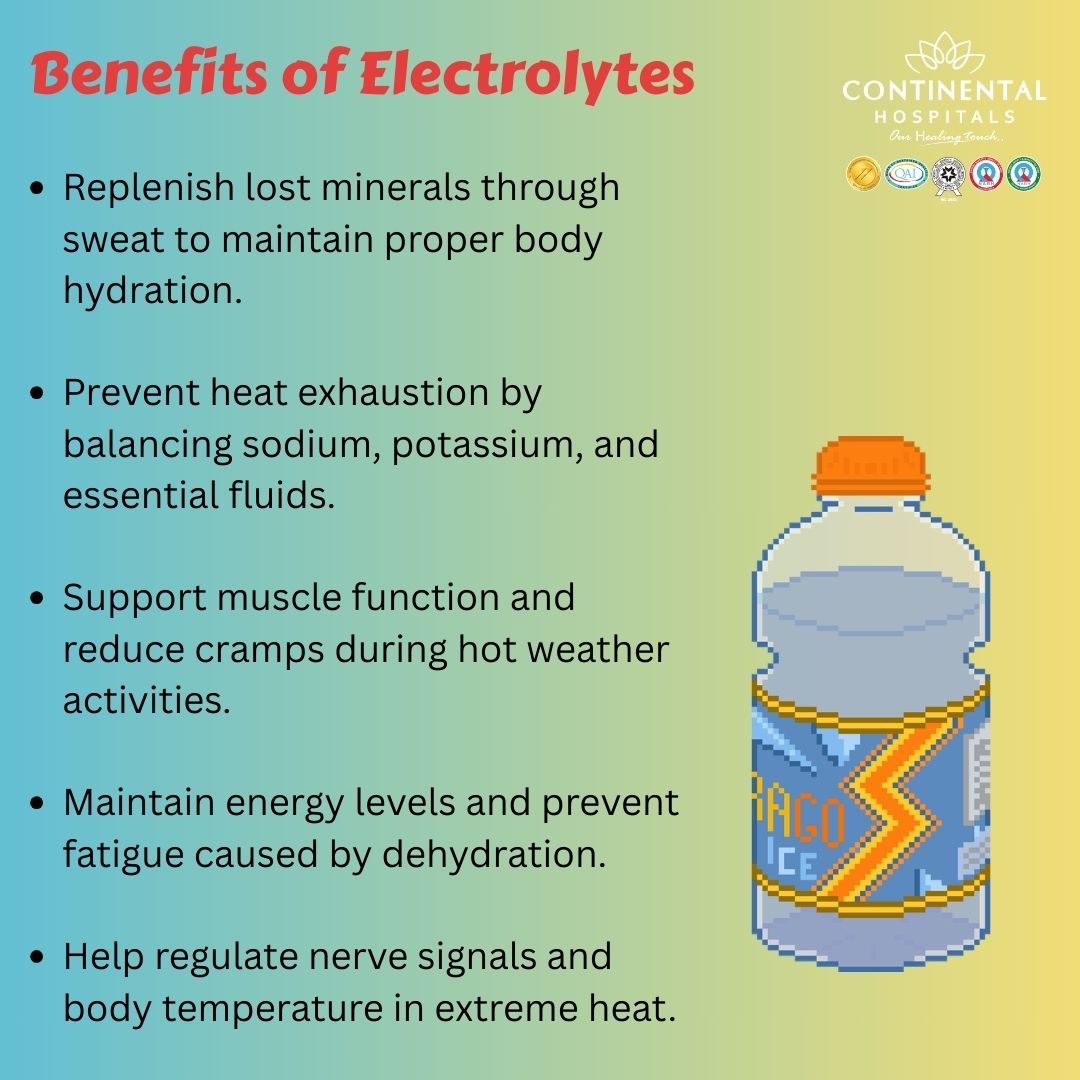
Key Electrolyte Benefits for the Body
Electrolytes support several essential functions that keep the body balanced and energized. Below are some of the major electrolyte benefits.
Maintain Proper Hydration
Electrolytes help the body absorb and retain water. Sodium and potassium play an important role in fluid balance within cells and tissues. Without adequate electrolytes, water alone may not effectively restore hydration.
Support Muscle Function
Muscles rely on electrolytes to contract and relax properly. When electrolyte levels drop, muscle cramps and weakness can occur. Adequate electrolytes in hot weather help prevent these uncomfortable symptoms.
Regulate Nerve Signals
Nerves use electrical signals to communicate with muscles and organs. Electrolytes support this communication system and help maintain proper nerve function.
Balance Body Fluids
Electrolytes help control the movement of fluids inside and outside cells. This balance is critical for maintaining blood pressure and healthy circulation.
Prevent Heat Related Illness
One of the major benefits of electrolytes is protection against heat exhaustion and heat cramps. Proper electrolyte balance helps the body cope with high temperatures more effectively.
Signs of Electrolyte Imbalance
An electrolyte imbalance occurs when the levels of minerals in the body become too high or too low. This often happens during hot weather when people sweat excessively but fail to replace lost electrolytes.
Common symptoms of electrolyte imbalance include:
• Fatigue and weakness
• Muscle cramps or spasms
• Headaches
• Dizziness or lightheadedness
• Irregular heartbeat
• Nausea or vomiting
• Confusion in severe cases
Recognizing these symptoms early can help prevent more serious health complications.
Who Is at Higher Risk in Hot Weather?
Some individuals are more vulnerable to dehydration and electrolyte imbalance during hot weather.
High risk groups include:
• People who exercise outdoors frequently
• Construction workers and outdoor laborers
• Athletes training in high temperatures
• Older adults who may not feel thirst as strongly
• Children who lose fluids quickly
• Individuals with certain medical conditions affecting hydration
These groups should pay close attention to their electrolyte intake and hydration habits.
Natural Sources of Electrolytes
Electrolytes can be replenished through various foods and drinks. Consuming nutrient rich foods helps restore the minerals lost through sweat.
Common electrolyte rich foods include:
• Coconut water
• Bananas
• Oranges and citrus fruits
• Spinach and leafy greens
• Yogurt
• Milk
• Avocados
• Nuts and seeds
Electrolyte drinks can also be useful during prolonged exercise or intense heat exposure. However, natural food sources remain an effective and healthy way to maintain electrolyte balance.
Tips to Maintain Electrolytes in Hot Weather
Maintaining proper hydration and electrolyte balance is essential during hot weather. Here are some simple steps that can help protect your health.
• Drink fluids regularly throughout the day
• Include fruits and vegetables rich in electrolytes
• Avoid excessive caffeine and sugary drinks
• Increase fluid intake when exercising outdoors
• Take breaks in shaded or cool environments
• Monitor urine color as a sign of hydration
• Consider electrolyte drinks during intense physical activity
Following these habits can reduce the risk of dehydration and electrolyte imbalance during summer.
Electrolytes and Hydration for Athletes
Athletes and physically active individuals lose significant amounts of electrolytes through sweat. During intense exercise, the body requires additional electrolytes to maintain performance and endurance.
Electrolytes in hot weather support muscle coordination, prevent cramps, and help athletes recover faster. Proper hydration combined with electrolyte intake improves stamina and reduces fatigue during training sessions.
Ignoring electrolyte needs during prolonged activity may lead to reduced energy levels and impaired performance.
When Should You See a Doctor?
Mild dehydration can often be managed with fluids and rest. However, severe electrolyte imbalance can become a medical emergency.
Seek medical attention if symptoms include:
• Severe dizziness or fainting
• Persistent vomiting
• Confusion or disorientation
• Rapid or irregular heartbeat
• Severe muscle cramps that do not improve
Early medical evaluation helps prevent serious complications related to dehydration and electrolyte imbalance.
Why Choose Continental Hospitals in Hyderabad?
Continental Hospitals is widely recognized as one of the best hospitals in Hyderabad for comprehensive and advanced medical care. The hospital follows global healthcare standards and provides high-quality treatment across multiple specialties.
Key reasons to choose Continental Hospitals include
• International standard healthcare infrastructure
• Highly experienced specialists and medical experts
• Advanced diagnostic and treatment technologies
• Patient-focused care and personalized treatment plans
• Multispecialty services under one roof
Continental Hospitals is accredited by the Joint Commission International and the National Accreditation Board for Hospitals and Healthcare Providers. These accreditations reflect the hospital’s commitment to quality, safety, and world-class medical care.
The hospital also focuses on preventive health and patient education, helping individuals maintain long-term wellness and avoid lifestyle-related health problems.
Conclusion
Electrolytes play a critical role in maintaining hydration, muscle function, and nerve communication in the body. During hot weather, sweating leads to the loss of both fluids and electrolytes, increasing the risk of dehydration and electrolyte imbalance.
By understanding what electrolytes are and their benefits, you can take simple steps to stay healthy during summer. Drinking enough fluids, consuming electrolyte rich foods, and recognizing early symptoms of imbalance can protect your body from heat-related complications.
Maintaining proper electrolyte levels ensures better energy, improved hydration, and overall well-being even in extreme temperatures.
If you frequently experience dehydration, muscle cramps, dizziness, or symptoms of electrolyte imbalance, it is important to seek medical advice.
Consult our best internal medicine specialists at Continental Hospitals, the best hospital in Hyderabad, for expert guidance on hydration, electrolyte balance, and overall health. The team provides personalized care, accurate diagnosis, and effective treatment to help you stay healthy during hot weather conditions.
Related Blog Topics: