.webp)


Feeling the world spin around you or experiencing a sudden loss of balance can be an alarming experience. While occasional lightheadedness might happen if you stand up too quickly or skip a meal, frequent or severe episodes of dizziness should never be ignored. Understanding when a balance issue is a minor inconvenience and when it indicates a neurological concern is essential for your long-term health.
What is Dizziness?
Dizziness is a broad term used to describe various sensations, such as feeling faint, woozy, weak, or unsteady. It often creates the false sense that you or your surroundings are spinning or moving. This condition is one of the most common reasons adults visit their doctors. While it affects people of all ages, it is more prevalent among older adults.
What are the common symptoms of dizziness?
When you experience dizziness symptoms, they may manifest in several ways:
- A false sense of motion or spinning (vertigo)
- Lightheadedness or feeling faint
- Unsteadiness or a loss of balance
- A floating sensation or heavy-headedness
These sensations may be triggered or worsened by walking, standing up, or moving your head. In some cases, the feeling may be accompanied by nausea or occur so suddenly that you need to sit or lie down immediately.
If you have persistent dizziness or neurological concerns, visit our best neuro doctor hyderabad for expert care, accurate diagnosis, and peace of mind.
What Causes Dizziness?
Identifying dizziness causes is the first step toward effective treatment. The equilibrium of the body depends on a complex interaction between the inner ear, the eyes, and the sensory nerves. When any part of this system fails to process signals correctly, you begin feeling dizzy suddenly.
Some of the most frequent causes include:
1. Inner Ear Problems
Many cases of vertigo are linked to issues within the inner ear. Conditions like Benign Paroxysmal Positional Vertigo (BPPV) occur when tiny calcium particles clump in the canals of the inner ear, sending incorrect signals to the brain about your body's position.

2. Migraines
People who experience migraines may have episodes of vertigo or other types of dizziness even when they do not have a severe headache. These episodes can last from a few minutes to several hours.
3. Circulation Issues
If your brain is not receiving enough oxygenated blood, you may feel lightheaded. This can be caused by a sudden drop in blood pressure or poor circulation due to cardiovascular conditions.
4. Neurological Conditions
Brain related dizziness can be a sign of more serious underlying issues. Conditions such as multiple sclerosis, Parkinson’s disease, or even tumors can affect the brain's ability to coordinate balance and movement.
How do I know if my dizziness is brain-related?
While many causes of dizziness are benign, neurological causes require immediate professional intervention. If the dizziness originates in the brain, it is often referred to as central vertigo. Unlike inner ear issues, brain related dizziness often persists for longer periods and may be accompanied by other neurological deficits.
When the vestibular system in the brain is compromised, the body loses its primary map of where it is in space. This leads to a persistent feeling of being "off" or a significant inability to walk in a straight line.
When to See a Neurology Specialist?
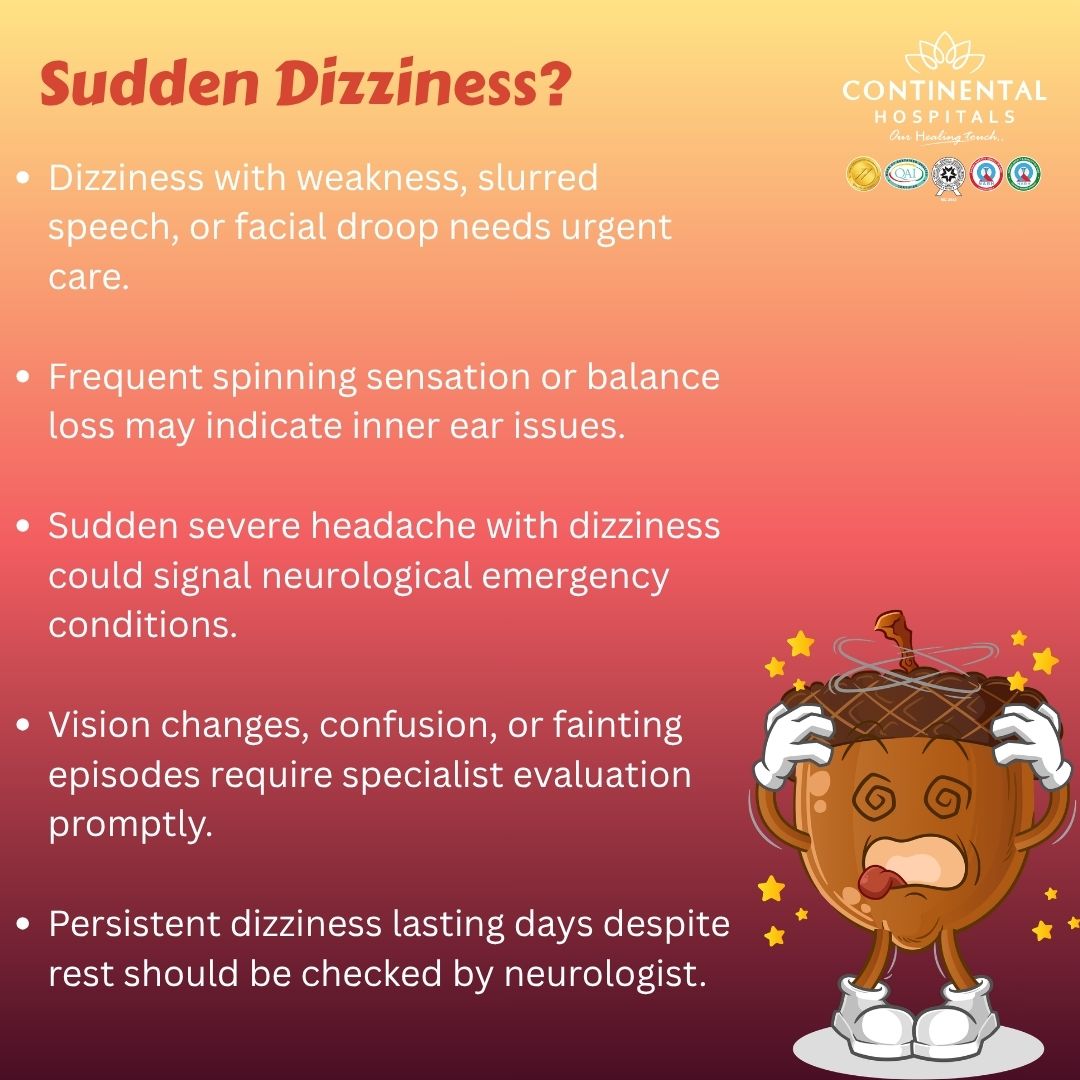
It can be difficult to decide if your symptoms warrant a trip to a specialist. However, certain "red flags" suggest that the dizziness is linked to the nervous system. You should consult a neurology specialist if you experience any of the following.
Sudden, Severe Headache: If a dizzy spell is accompanied by an excruciating headache unlike any you have had before.
Double Vision: If you see two of everything or have sudden blurred vision while feeling unsteady.
Numbness or Weakness: If you feel tingling or a lack of strength in your arms, legs, or face.
Difficulty Speaking: If your speech becomes slurred or you find it hard to find the right words.
Fainting: If you lose consciousness even for a brief moment.
Hearing Loss: If the dizziness is paired with a sudden change in your ability to hear.
A neurologist uses specialized diagnostic tools to map brain activity and nerve function, ensuring that any central nervous system issues are identified early.
How is dizziness diagnosed?
When you visit a specialist for dizziness, the diagnostic process is thorough. It begins with a detailed medical history and a physical examination. The specialist will likely check how you walk and how your eyes track moving objects.
Common tests include:
MRI or CT Scans: These imaging tests look for structural abnormalities in the brain.
Vestibular Testing: This evaluates how well the inner ear and brain are coordinating to maintain balance.
Blood Tests: These are used to rule out infections or metabolic imbalances.
Why Choose Continental Hospitals for Neurology?
If you are looking for the best hospital in Hyderabad, Continental Hospitals stands out as a leader in neurological care. We provide a comprehensive approach to diagnosing and treating complex balance disorders.
World-Class Infrastructure
Continental Hospitals is designed to meet international standards of healthcare. Our facility is equipped with the latest neuro-imaging technology, including high-definition MRI and advanced electrophysiology labs. This ensures that every patient receives a precise diagnosis.
Expert Neurology Team
Our team consists of highly skilled neurologists and surgeons who specialize in treating brain related dizziness. We focus on evidence-based medicine to provide the most effective treatment plans tailored to each patient's specific needs.
Accreditations and Standards
Continental Hospitals is proud to hold prestigious accreditations, including JCI (Joint Commission International) and NABH (National Accreditation Board for Hospitals & Healthcare Providers). These certifications are a testament to our commitment to patient safety, clinical excellence, and high-quality care. When you choose an accredited hospital, you are choosing a facility that adheres to the strictest global protocols.
Comprehensive Care
From the initial consultation to rehabilitation and follow-up, we offer a seamless patient experience. Our multidisciplinary approach ensures that if your dizziness is linked to other health issues, you have access to specialists across all departments under one roof.
Prevention and Management
While some causes of dizziness are unpredictable, you can take steps to manage the symptoms:
- Move slowly when changing positions, especially when standing up from a bed or chair.
- Stay well-hydrated throughout the day to maintain blood pressure levels.
- Avoid excessive caffeine and tobacco, which can affect circulation.
- Ensure your living space is well-lit and free of tripping hazards.
Conclusion
Dizziness is more than just a fleeting sensation? it is a signal from your body that something is out of balance. Whether it is a simple inner ear issue or a complex neurological condition, getting the right diagnosis is the only way to regain your quality of life and prevent future falls or complications.
At Continental Hospitals, we combine technology with expertise to get you back on your feet. Do not let the world spin out of control. Early intervention is the key to managing neurological health effectively.
If you suffer from persistent dizziness or have concerns about your neurological health, consult our best neurologist in Hyderabad. Our dedicated department is ready to help you find stability and peace of mind.
Related Blog Topics: