.webp)


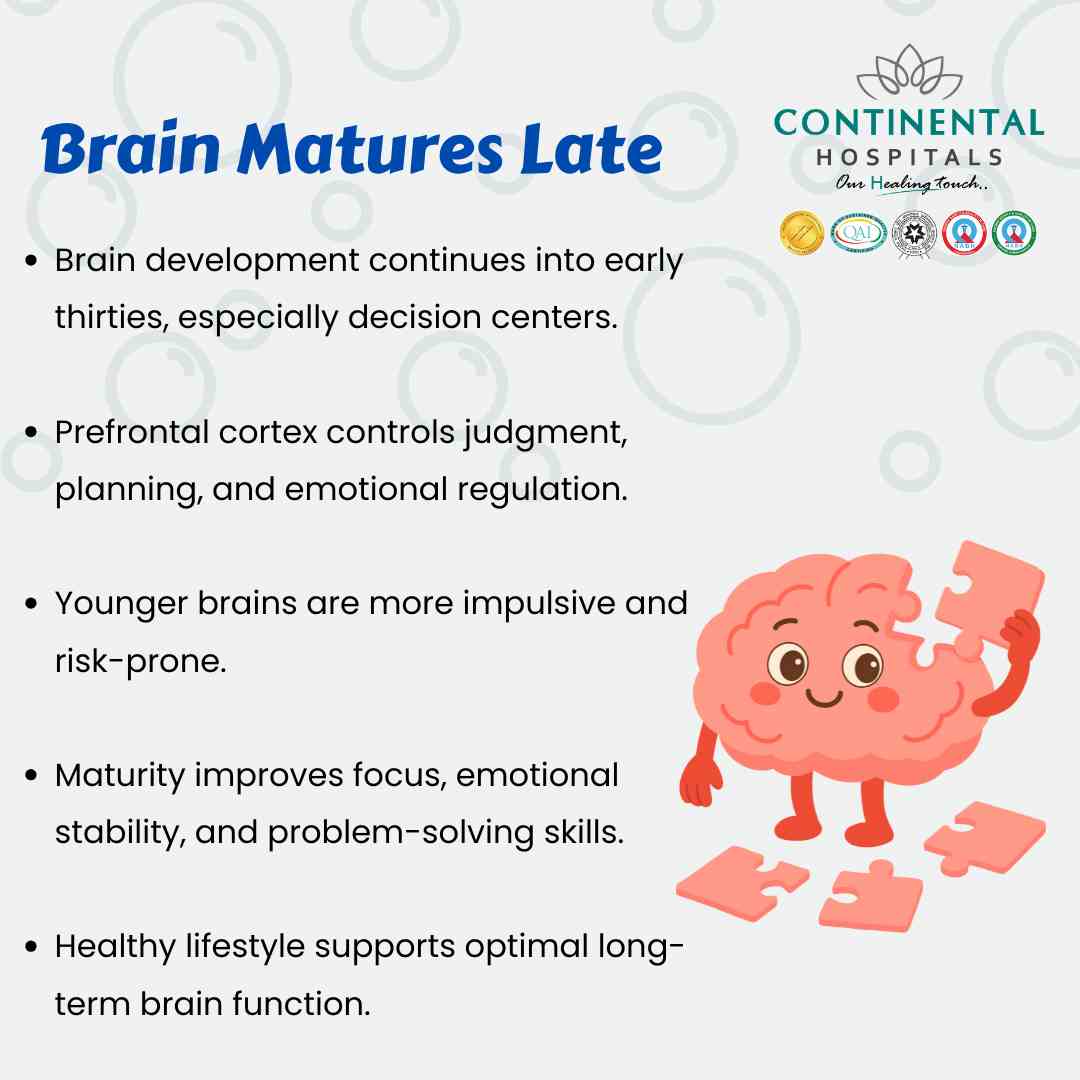
Have you ever wondered why decision-making improves with age, emotions feel more balanced, and clarity increases as we grow older? Many people ask questions like human brain fully develops at what age or why impulsive behavior reduces after the twenties. Modern neuroscience has a clear answer. The human brain continues to mature well into adulthood and typically reaches full maturity after the age of 30.
Understanding brain maturity is important for mental health awareness, career growth, relationships, parenting, and overall wellbeing. This article explains the science behind brain development, the role of the prefrontal cortex, how brain maturity influences behavior, and how adults can support long term brain health.
Human Brain Fully Develops At What Age?
Scientifically, the human brain does not fully mature during teenage years or even in the early twenties. Research shows that the brain completes its structural and functional development around 30 years of age.
This late development is mainly due to the slow and complex growth of the prefrontal cortex, the area responsible for higher thinking and emotional control.
If you're experiencing memory problems, mood changes, stress, anxiety, or difficulty making decisions, don't ignore the signs. Visit our best neuro doctor hyderabad at Continental Hospitals for expert evaluation and personalized care.
Key stages of brain development include
- Childhood focuses on learning basic motor and language skills
- Teenage years involve emotional regulation and risk-taking
- Twenties are marked by refining judgment and planning
- Early thirties represent peak brain maturity and stability
This timeline explains why adults in their thirties often show better self-control, reasoning, and emotional balance.
When does the prefrontal cortex fully develop?
The prefrontal cortex sits at the front of the brain and plays a crucial role in decision-making, focus, impulse control, problem-solving, and understanding consequences.

During adolescence and early adulthood, this area is still under construction. Neural connections are being refined, unnecessary pathways are eliminated, and important circuits become stronger. This process is known as synaptic pruning.
By the time a person reaches their early thirties, the prefrontal cortex has matured enough to function efficiently. This is why individuals often report improved clarity, confidence, and emotional intelligence after 30.
How does brain maturity affect behavior?
Brain maturity directly influences behavior patterns. When the brain is still developing, emotional responses are often driven by instinct rather than logic. This is why younger individuals may take impulsive decisions or struggle with stress management.
As the brain matures:
- Emotional reactions become more controlled
- Long-term thinking improves
- Risk-taking behavior reduces
- Stress handling becomes better
- Relationships become more stable
This connection between brain maturity and behavior highlights the importance of patience and guidance during early adulthood.
Why Brain Develops Slowly?
Many people ask why the brain develops slowly compared to other organs. The reason lies in its complexity. The human brain is responsible for thinking, emotions, memory, creativity, and social behavior. These advanced functions need time to develop, integrate, and stabilize.
Slow development allows:
- Learning through experience
- Emotional growth over time
- Adaptation to complex social environments
- Development of personal values and judgment
This extended timeline supports long term survival and emotional resilience.
What is neuroplasticity after 30?
One common myth is that learning stops after brain maturity. In reality, neuroplasticity after 30 remains active. Neuroplasticity refers to the brain’s ability to form new connections throughout life.
Even after full maturity:
- The brain can learn new skills
- Memory can improve with training
- Emotional patterns can change
- Recovery is possible after injury with rehabilitation
This means cognitive development in adults continues, especially when the brain is challenged through reading, exercise, and purposeful learning.
How does brain development affect mental health?
Brain development and mental health are closely linked. Many mental health conditions such as anxiety, depression, and mood disorders commonly appear during late adolescence and early adulthood. This period overlaps with major brain changes.
As the brain matures:
- Emotional regulation improves
- Coping mechanisms strengthen
- Stress responses stabilize
However, unresolved trauma, chronic stress, or unhealthy habits can disrupt normal brain function at any age. Early diagnosis and professional care are crucial to maintaining mental wellbeing.
How to Keep Brain Healthy as an Adult?
Supporting brain health is essential even after full maturity. Healthy habits protect brain function and slow cognitive decline.
Important ways to keep the brain healthy include
- Maintaining quality sleep
- Eating balanced nutrition rich in proteins and vitamins
- Regular physical activity
- Mental exercises like reading and puzzles
- Stress management practices
- Avoiding substance misuse
Regular health checkups also help identify neurological and mental health concerns early.
What is cognitive development in adults?
Cognitive development in adults focuses more on refinement rather than growth. Adults become better at applying knowledge, analyzing situations, and managing emotions.
This stage is ideal for:
- Leadership roles
- Career decision making
- Emotional intelligence growth
- Building meaningful relationships
Understanding your brain maturity helps you make informed life choices with confidence.
Why Choose Continental Hospitals?
When it comes to advanced brain and mental healthcare, choosing the right hospital matters. Continental Hospitals is recognized as one of the best hospital in Hyderabad, offering comprehensive neurological and mental health services.
Why Continental Hospitals stands out
- JCI accredited hospital with global standards of patient care
- NABH-accredited hospital ensuring safety and clinical excellence
- Experienced neurologists, psychiatrists, and neurospecialists
- Advanced diagnostics and brain health assessments
- Multidisciplinary approach for neurological and mental well-being
- Patient-focused care with ethical medical practices
Continental Hospitals combines technology, expertise, and compassion to deliver trusted healthcare outcomes.
Conclusion
The human brain fully develops after 30, shaping how we think, behave, and respond to life. Understanding the prefrontal cortex development timeline helps explain emotional growth, decision making patterns, and maturity. Brain maturity does not mean an end to learning. With active neuroplasticity after 30, adults can continue to grow mentally and emotionally.
If you suffer from memory issues, mood changes, stress, anxiety, or decision making difficulties, consult our Best Neurologist in Hyderabad at Continental Hospitals.
Book an appointment at Continental Hospitals Hyderabad today and take a confident step toward long term brain health and mental wellbeing.