.webp)


Many people drink milk to soothe stomach discomfort. For years, milk has been considered a quick remedy for acidity and heartburn. However, some people notice that after drinking milk, their acidity symptoms actually worsen. This raises a common question. Does milk cause acidity?
Understanding the relationship between milk and digestive health can help you make better dietary choices and manage acid reflux effectively.
What Is Acidity?
Acidity occurs when the stomach produces excess acid that flows back into the esophagus. This condition is commonly known as acid reflux. It can cause symptoms such as burning sensation in the chest, sour taste in the mouth, bloating, and discomfort after eating.
Common symptoms of acidity include:
• Burning sensation in the chest or throat
• Sour or bitter taste in the mouth
• Bloating and gas
• Nausea after meals
• Difficulty swallowing
• Frequent burping
Acidity may happen occasionally, but frequent acid reflux can indicate a digestive condition that needs medical attention.
Visit our Gastroenterology Department at Continental Hospitals, Hyderabad, for expert care and advanced treatment if you suffer from frequent acid reflux or digestive discomfort.
What Causes Acidity?
Several lifestyle and dietary habits can trigger acidity. Understanding these causes helps in preventing symptoms.
Common acidity causes include:

• Eating spicy or oily foods
• Consuming large meals
• Drinking excessive caffeine
• Stress and lack of sleep
• Smoking or alcohol consumption
• Eating late at night
• Certain medications
Some foods can relax the lower esophageal sphincter, the muscle that prevents stomach acid from moving upward. When this muscle weakens, acid reflux can occur.
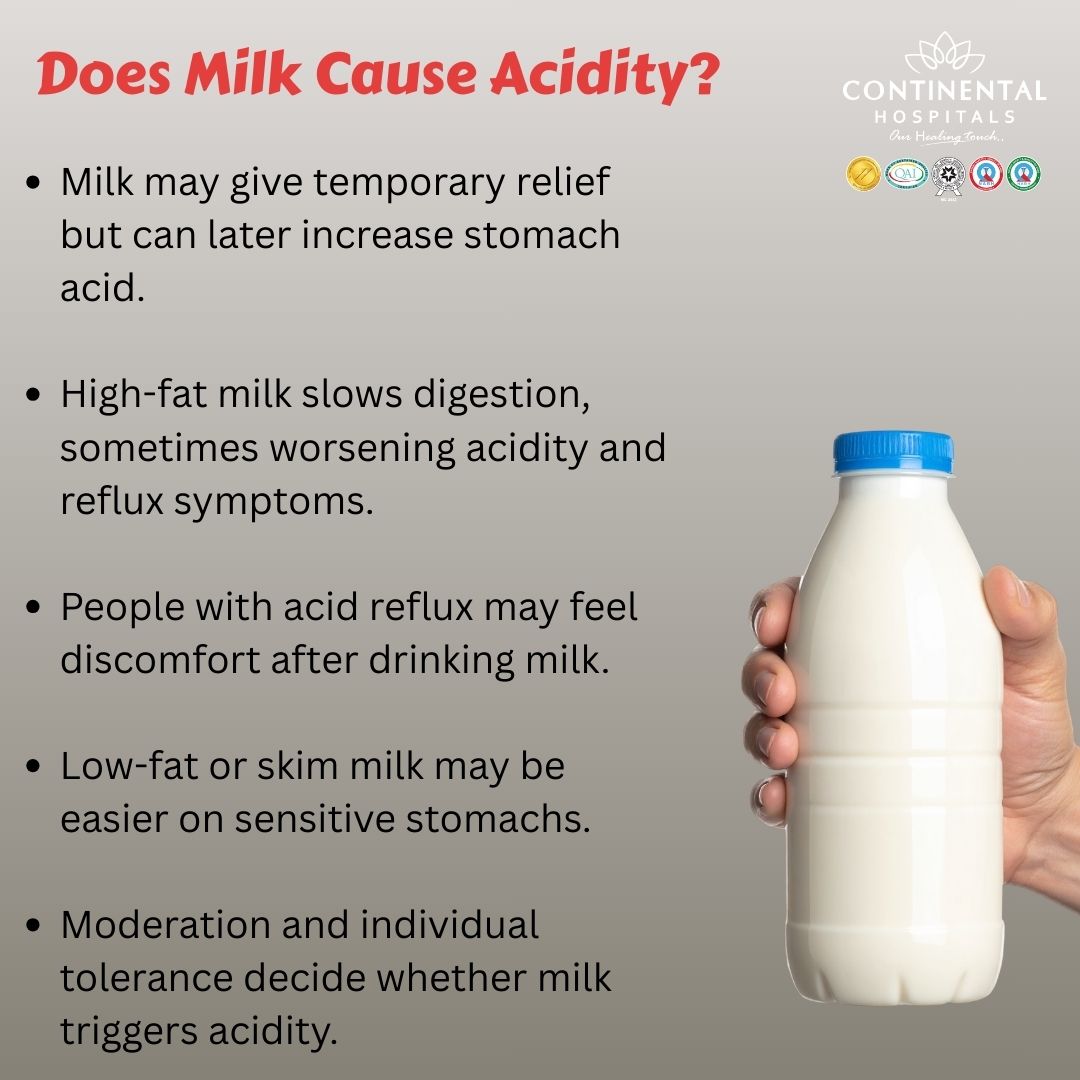
Does Milk Cause Acidity?
Milk is often believed to neutralize stomach acid. Initially, milk can provide temporary relief from acidity because it coats the stomach lining and reduces irritation. However, the effect may not last long.
In some cases, milk cause acidity due to its fat and protein content. Whole milk contains fats that can stimulate the stomach to produce more acid. As digestion continues, this increased acid production may trigger acid reflux symptoms.
So, does milk cause acidity for everyone? The answer depends on individual digestive responses.
Some people tolerate milk well and feel relief from acidity, while others may experience worsening symptoms.
Milk and Acid Reflux: Understanding the Connection
The connection between milk and acid reflux is influenced by several factors.
First, the fat content in milk plays an important role. High fat dairy products take longer to digest. This can increase pressure inside the stomach and trigger reflux.
Second, milk proteins may stimulate acid production. When the stomach releases more acid to digest proteins, it may increase the chances of reflux.
Third, people with lactose intolerance may experience bloating, gas, and digestive discomfort after drinking milk. This can worsen acidity symptoms.
Types of Milk and Their Impact on Acidity
Not all milk products affect digestion in the same way. Some types of milk may be easier on the stomach than others.
Whole Milk
Whole milk contains higher fat content. For people with acid reflux, this type of milk may increase stomach acid production and trigger discomfort.
Low Fat or Skim Milk
Low fat milk may be a better option for individuals who experience acid reflux. It contains less fat and is easier to digest.
Plant Based Milk Alternatives
Some people find relief by switching to plant based milk options such as almond milk or oat milk. These alternatives are often lower in fat and may reduce reflux symptoms.
However, individual reactions vary, so it is important to observe how your body responds.
When Milk May Help Acidity
Despite the concerns, milk may still provide short term relief for some individuals.
Milk can help in the following situations:
• When acidity is mild and occasional
• When consumed in small amounts
• When using low fat or skim milk
• When paired with balanced meals
The soothing effect of milk can temporarily calm irritation in the stomach lining. However, relying on milk as a long term solution for acid reflux is not recommended.
Signs That Milk May Be Triggering Your Acidity
If you notice the following symptoms after drinking milk, it may be contributing to your acid reflux.
Watch for these signs:
• Heartburn shortly after drinking milk
• Bloating or stomach discomfort
• Sour taste in the throat
• Increased burping or gas
• Worsening acid reflux at night
If these symptoms occur regularly, reducing milk intake or switching to low fat alternatives may help.
Tips to Prevent Acidity
Managing acid reflux involves both dietary and lifestyle changes. Simple habits can reduce acidity and improve digestive health.
Helpful tips include:
• Eat smaller meals throughout the day
• Avoid lying down immediately after eating
• Reduce spicy and oily foods
• Limit caffeine intake
• Maintain a healthy weight
• Drink enough water
• Identify and avoid trigger foods
Keeping a food diary can help you track whether milk or other foods are causing acidity symptoms.
When to See a Doctor?
Occasional acidity is common, but frequent symptoms should not be ignored. Chronic acid reflux can lead to complications such as esophageal irritation and digestive disorders.
You should consult a doctor if you experience:
• Persistent heartburn several times a week
• Difficulty swallowing
• Severe chest pain
• Unexplained weight loss
• Vomiting or nausea with reflux
Early medical evaluation can help diagnose underlying digestive conditions and provide proper treatment.
Why Choose Continental Hospitals?
Continental Hospitals is recognized as one of the best hospitals in Hyderabad, offering advanced care for digestive health and gastrointestinal conditions.
Key reasons to choose Continental Hospitals include:
• Internationally recognized accreditations including NABH and JCI
• Highly experienced gastroenterologists and digestive health specialists
• Advanced diagnostic technology for accurate evaluation
• Comprehensive treatment for acid reflux and digestive disorders
• Patient centered care with modern medical infrastructure
The hospital focuses on providing precise diagnosis and personalized treatment plans for every patient.
Conclusion
Milk has long been considered a soothing drink for stomach discomfort. However, the question does milk cause acidity does not have a simple answer. For some people, milk may temporarily relieve symptoms, while for others it may trigger acid reflux due to its fat and protein content.
Understanding how your body reacts to milk is essential. Choosing low fat options, moderating intake, and maintaining healthy eating habits can help manage acidity effectively.
If acidity symptoms persist or interfere with your daily life, professional medical evaluation is important. Early diagnosis and proper treatment can prevent complications and improve digestive health.
If you suffer from frequent acid reflux or digestive discomfort, consult our best gastroenterologist at Continental Hospitals, the best hospital in Hyderabad, for expert diagnosis and advanced care tailored to your needs.
Related Blog Topics: