.webp)


Many people experience moments when they forget a name, misplace keys, or walk into a room and forget why they went there. These experiences often raise an important question. Is forgetfulness normal, or could it be a sign of a health problem?
Understanding the difference between normal forgetfulness and concerning memory loss is essential for protecting brain health. While occasional memory lapses are common, frequent forgetfulness may sometimes indicate an underlying medical condition that needs attention.
What Is Forgetfulness?
Forgetfulness refers to difficulty remembering information, events, or tasks. It can include forgetting appointments, struggling to recall names, or misplacing everyday items.
The brain processes and stores information through a complex network of neurons. When these connections weaken or become disrupted, memory problems can occur. Mild forgetfulness can happen to anyone, but persistent memory loss may indicate changes in brain health.
Some people experience occasional forgetfulness during stressful periods, lack of sleep, or busy schedules. In many cases, these episodes are temporary and improve once the underlying cause is addressed.
Visit our Neurology Department at Continental Hospitals for expert diagnosis, advanced treatments, and personalized care to protect brain health and improve memory.
Is Forgetfulness Normal?
Yes, mild forgetfulness is a normal part of life. As people age, the brain may take slightly longer to process and recall information. This does not necessarily mean there is a serious problem.
Normal forgetfulness usually includes small memory lapses such as
• Forgetting where you placed your phone or glasses
• Missing an appointment but remembering it later
• Occasionally forgetting a familiar name
• Entering a room and forgetting the reason briefly

These experiences are generally harmless. The information usually returns after some time or with a reminder.
Normal forgetfulness does not interfere with daily life or the ability to perform routine activities.
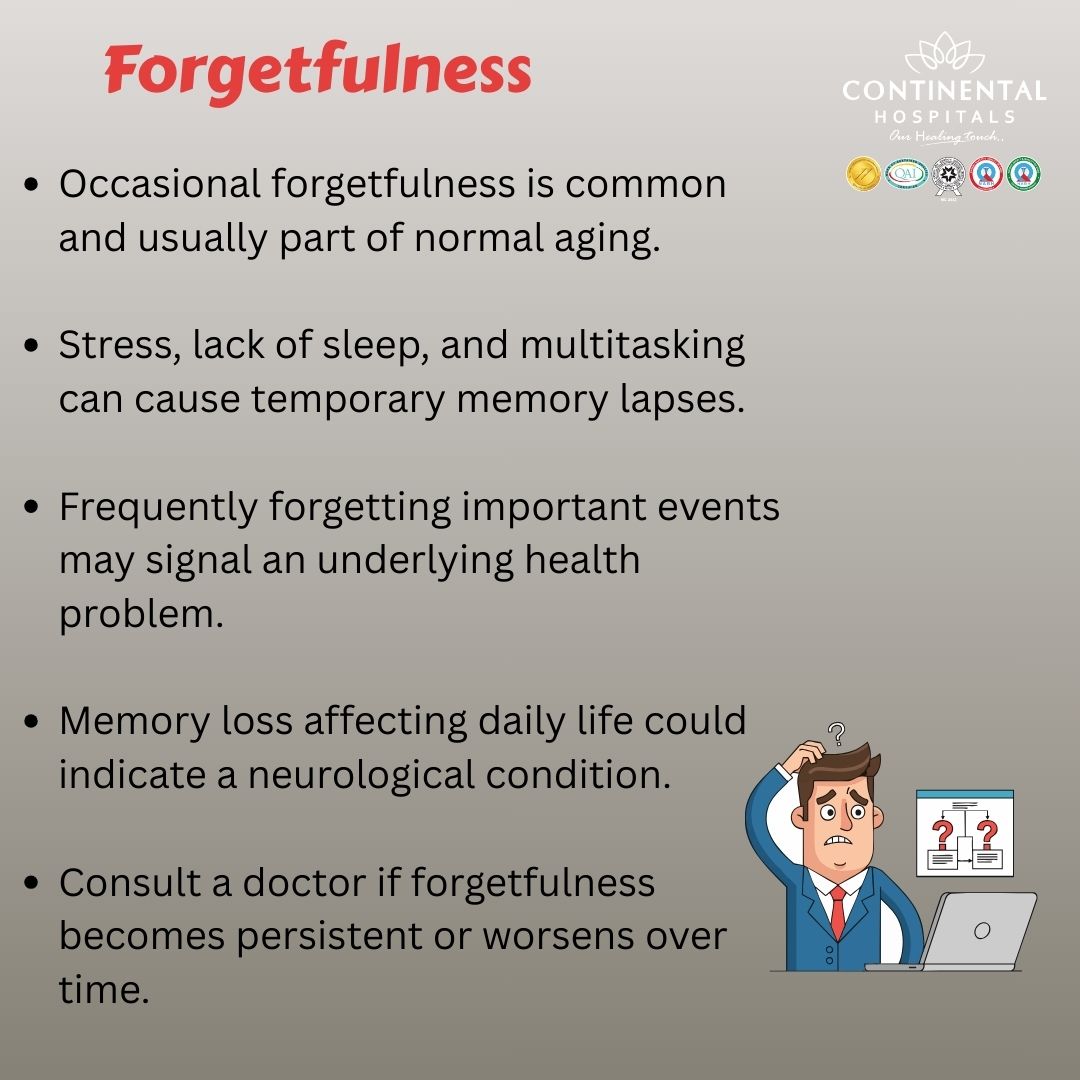
When Does Forgetfulness Become a Concern?
Frequent forgetfulness may become a concern when memory loss begins to affect daily functioning, relationships, or work performance.
Some warning signs that forgetfulness may indicate a health condition include
• Repeatedly asking the same questions
• Forgetting recently learned information often
• Difficulty following conversations or instructions
• Getting lost in familiar places
• Struggling with everyday tasks such as cooking or managing finances
• Confusion about time, dates, or locations
If these symptoms appear regularly, it may be time to consult a medical professional for a detailed evaluation of brain health.
Common Causes of Forgetfulness
Forgetfulness can have several causes. Some are temporary and easily treatable, while others may require long term medical care.
Lack of Sleep
Sleep plays an essential role in memory formation. When the brain does not get enough rest, it struggles to store and retrieve information effectively. Poor sleep quality can lead to frequent forgetfulness and reduced concentration.
Stress and Anxiety
Stress affects the brain's ability to process information. High stress levels can interfere with memory and focus, causing temporary forgetfulness.
Nutritional Deficiencies
Certain vitamins are crucial for brain health. Deficiencies in vitamin B12, vitamin D, and other nutrients can contribute to memory problems and frequent forgetfulness.
Medication Side Effects
Some medications may affect memory and concentration. People taking multiple medications should consult their doctor if they notice increasing forgetfulness.
Hormonal Changes
Hormonal fluctuations, particularly during aging, can influence memory and cognitive performance. This may result in mild forgetfulness in some individuals.
Medical Conditions
In some cases, memory loss may be linked to neurological conditions that affect the brain. These may include
• Mild cognitive impairment
• Dementia
• Alzheimer's disease
• Stroke related brain damage
Early diagnosis is important because proper medical care can help slow progression and improve quality of life.
How the Brain Affects Memory
The brain is responsible for storing and retrieving memories. Several areas of the brain work together to manage this process.
The hippocampus plays a critical role in forming new memories. The frontal lobe helps organize information and supports decision making. When these areas are affected by illness, injury, or aging, memory problems can develop.
Maintaining brain health through healthy lifestyle habits can help preserve memory and reduce the risk of frequent forgetfulness.
Ways to Improve Brain Health and Reduce Forgetfulness
Adopting healthy daily habits can strengthen memory and support long term brain health.
Maintain a Balanced Diet
A nutritious diet supports brain function. Foods rich in antioxidants, healthy fats, and vitamins help protect brain cells and improve memory.
Include foods such as
• Fresh fruits and vegetables
• Nuts and seeds
• Whole grains
• Fish rich in omega three fatty acids
Stay Physically Active
Regular exercise improves blood flow to the brain and supports cognitive function. Even moderate physical activity can help reduce forgetfulness and improve concentration.
Get Quality Sleep
Good sleep allows the brain to organize and store information effectively. Adults should aim for adequate sleep every night to support brain health.
Keep the Brain Mentally Active
Mental stimulation helps maintain strong neural connections. Activities that challenge the brain include
• Reading books
• Solving puzzles
• Learning new skills
• Playing memory based games
Manage Stress
Reducing stress levels can improve concentration and memory. Practices such as meditation, deep breathing, and relaxation techniques can help maintain mental balance.
When Should You See a Doctor?
Occasional forgetfulness is usually not a cause for concern. However, medical evaluation is important if memory problems become frequent or interfere with daily life.
You should consider consulting a doctor if you experience
• Persistent memory loss
• Increasing difficulty remembering recent events
• Confusion about familiar places or tasks
• Behavioral or personality changes along with forgetfulness
Early assessment can identify the underlying cause and help prevent further complications.
Why Choose Continental Hospitals for Brain Health Care?
Continental Hospitals is widely recognized as the best hospital in Hyderabad for advanced neurological care and comprehensive brain health services.
The hospital is accredited by leading national and international healthcare organizations, reflecting its commitment to quality, safety, and excellence in patient care. These accreditations ensure that every patient receives treatment based on the highest global healthcare standards.
Continental Hospitals combines modern medical technology with experienced specialists to provide accurate diagnosis and personalized treatment for memory related conditions.
Key strengths of Continental Hospitals include
• Experienced neurologists and brain health specialists
• Advanced diagnostic technology for neurological evaluation
• Comprehensive care for memory disorders and cognitive conditions
• Patient centered treatment approach
• Internationally recognized healthcare standards and accreditations
This commitment to excellence makes Continental Hospitals a trusted destination for individuals seeking reliable brain health care and treatment for memory related conditions.
Conclusion
Forgetfulness is a common experience that most people face at some point in life. In many cases, occasional forgetfulness is normal and may result from stress, fatigue, or busy routines.
However, frequent forgetfulness that disrupts daily life may signal an underlying medical condition that requires professional evaluation. Paying attention to early warning signs and maintaining good brain health habits can help protect memory and cognitive function.
If you notice persistent memory loss or frequent forgetfulness, it is important to seek medical advice. Early diagnosis can help identify the cause and provide effective treatment options.
If you suffer from frequent forgetfulness, memory loss, or concerns about brain health, do not ignore the symptoms.
Consult our best neurologists at Continental Hospitals, the best hospital in Hyderabad. Our specialists provide advanced diagnostic evaluation, personalized treatment plans, and comprehensive care to protect your brain health and improve memory function.
Related Blog Topics: