.webp)

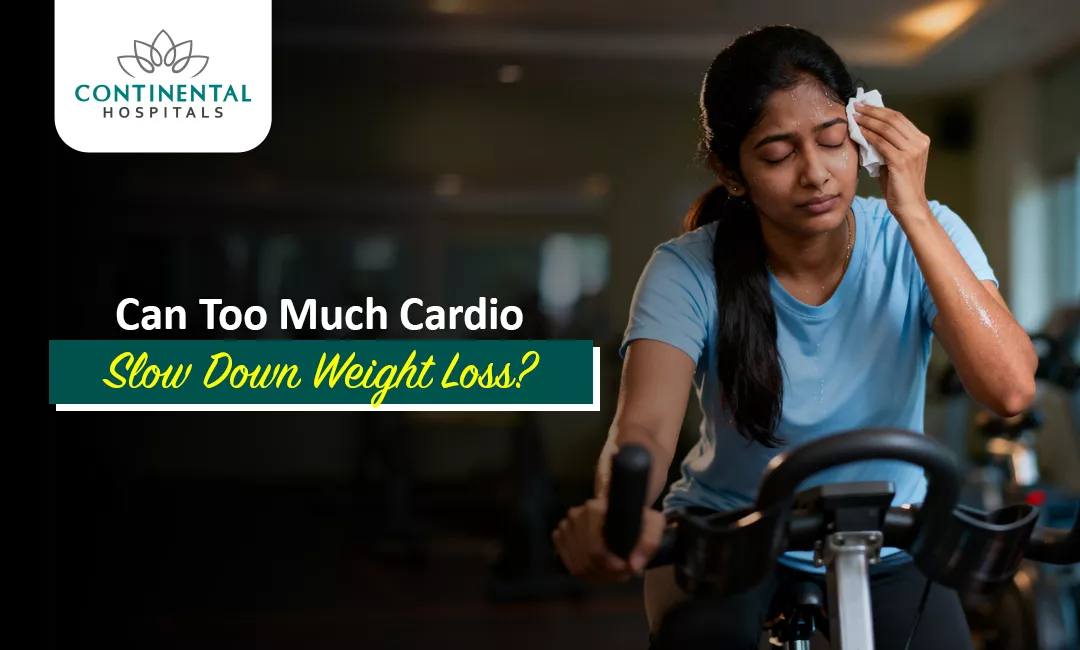
Cardiovascular exercise is often the first thing people turn to when they decide to shed extra pounds. It is accessible, improves heart health, and burns calories. However, a common question arises among fitness enthusiasts and beginners alike: can too much cardio actually slow down your progress? While moving your body is essential for health, there is a delicate balance between effective training and overtraining that can impact your metabolic rate and body composition.
Understanding the Role of Cardio in Weight Loss
To understand how excessive cardio might hinder your goals, it is important to look at how the body responds to a cardio workout. When you engage in a cardio workout, your body burns energy. Most people view this as a simple equation of calories in versus calories out. While this is fundamentally true, the body is a complex biological system that adapts to the demands placed upon it.
Regular cardio helps improve your endurance and strengthens your cardiovascular system. However, when the volume of cardio becomes excessive, the body may begin to prioritize survival and efficiency over burning fat. This adaptation is one of the primary reasons people hit plateaus even when they are spending hours on a treadmill or elliptical every day.
If you face fatigue, hormonal imbalance, or weight issues, consult our expert endocrinologists at Continental Hospitals. Visit our Endocrinology Department today.
How Excessive Cardio Effects the Body
When you perform too much cardio, several physiological changes occur that might stall your weight loss journey.
1. Muscle Loss and Metabolic Rate
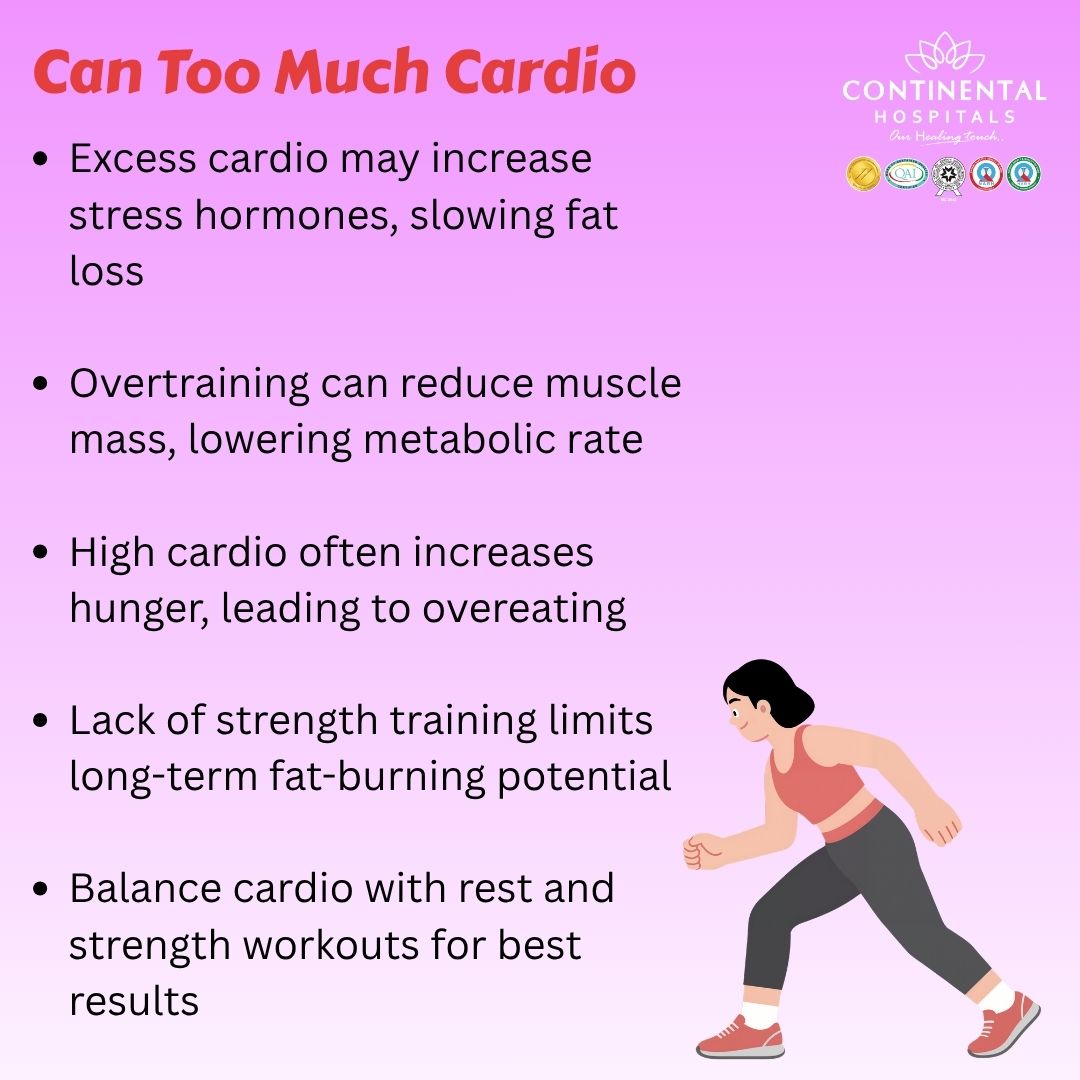
One of the most significant risks of excessive cardio is the potential loss of lean muscle mass. When you do long bouts of steady-state cardio without adequate recovery or resistance training, your body may enter a catabolic state. In this state, the body might break down muscle tissue to use as an energy source. Since muscle tissue is metabolically active and burns more calories at rest than fat tissue, losing muscle can lead to a slower metabolism.
2. Hormonal Imbalance and Cortisol
Intense and prolonged cardio sessions can increase the levels of cortisol, which is the body’s primary stress hormone. While cortisol is necessary for many functions, chronically high levels can lead to water retention and increased fat storage, particularly around the midsection. High cortisol also suppresses other hormones that are essential for fat burning and muscle repair.
3. Increased Appetite and Overeating
For many individuals, intense cardio leads to a significant spike in hunger. This is a natural defense mechanism as the body tries to replenish the energy it has lost. If you are not careful, you might end up consuming more calories than you burned during your workout, which effectively halts any weight loss progress.

The Cardio vs Weight Loss Debate
When comparing cardio vs weight loss strategies, it is clear that cardio is a tool, not the entire solution. Relying solely on cardio slowing weight loss is a common mistake. A more balanced approach involves a combination of different movement types.
Resistance Training: Building muscle increases your resting metabolic rate.
High-Intensity Interval Training (HIIT): These sessions provide the benefits of cardio in a shorter timeframe and often help preserve muscle mass.
Recovery Days: Giving your heart and muscles time to repair is vital for long-term success.
Signs You Might Be Doing Too Much Cardio
If you are concerned that your routine is counterproductive, look for these common indicators of excessive cardio effects:
- Persistent fatigue that does not go away after sleep.
- A sudden plateau in weight loss despite consistent exercise.
- Frequent injuries or joint pain.
- Irritability or a lack of motivation to exercise.
- Difficulty sleeping or staying asleep.
Best Workout to Lose Weight Fast
The best workout to lose weight fast is rarely one that focuses on a single type of exercise. Instead, a well-rounded program is the most effective. This typically includes three to four days of strength training to protect your metabolism and two to three days of moderate cardio to support heart health and calorie burning. By focusing on quality over quantity, you avoid the pitfalls of too much cardio weight loss interference.
Why Choose Continental Hospitals for Your Wellness Journey?
Achieving a healthy weight is not just about exercise; it is about medical guidance and holistic health. Continental Hospitals is recognized as the best hospital in Hyderabad for comprehensive healthcare. We provide a multidisciplinary approach to weight management, ensuring that your fitness journey is safe and backed by clinical expertise.
Accreditations and Quality Standards
Continental Hospitals maintains the highest standards of medical care. We are proud to hold prestigious accreditations that reflect our commitment to patient safety and excellence:
JCI Accreditation: The Joint Commission International accreditation is a gold standard in global healthcare, signifying that we meet rigorous international quality requirements.
NABH Accreditation: National Accreditation Board for Hospitals & Healthcare Providers ensures that our processes and patient care protocols are of the highest national caliber.
NABL Accreditation: Our laboratories are accredited for providing accurate and reliable diagnostic services, which is essential for monitoring your health during a weight loss program.
By choosing us, you gain access to advanced diagnostic tools that can measure your metabolic health, hormonal balance, and body composition. This data allows our specialists to create a personalized plan that avoids the negative effects of overtraining.
Key Takeaways for Effective Weight Management
To ensure your cardio workout remains a benefit rather than a hindrance, consider these points:
- Limit steady-state cardio to 30 or 40 minutes if you are also doing strength training.
- Prioritize protein intake to help repair muscles and keep you feeling full.
- Monitor your heart rate to stay within a healthy fat-burning zone rather than pushing to exhaustion every time.
- Listen to your body? If you feel exhausted rather than energized after a session, it might be time to scale back.
- Focus on sleep as most fat loss and muscle repair happen while you are resting.
Conclusion
Cardio is an essential component of a healthy lifestyle, but more is not always better. When you balance your cardio with strength training and proper recovery, you create a sustainable environment for fat loss. If you find that your efforts are not yielding results, or if you feel that excessive cardio is taking a toll on your health, it is time to seek professional advice. Understanding the relationship between movement, hormones, and metabolism is the key to breaking through plateaus.
At Continental Hospitals, we are dedicated to helping you reach your health goals through science-based methods and compassionate care. Our facilities are designed to support your journey from diagnosis to recovery and long-term wellness.
If you suffer from persistent fatigue, hormonal imbalances, or weight loss plateaus, consult our best endocrinologists in Hyderabad today at continental hospitals.
Related Blog Topics: