.webp)


The arrival of summer brings long days and bright sunshine, but it also introduces a unique set of challenges for our skin. High temperatures and rising humidity create an ideal environment for various microbes to thrive. When we sweat more, our skin becomes a breeding ground for bacteria and fungi, leading to a rise in summer skin infections. Understanding these common conditions and taking proactive steps can help you maintain healthy, glowing skin throughout the season.
Why Summer Increases Skin Risks
During the summer months, our bodies naturally produce more sweat and oil to stay cool. This moisture often gets trapped in skin folds or under tight clothing. When heat and moisture combine, the skin's natural barrier can weaken, making it easier for irritants and pathogens to cause skin problems in summer. From fungal overgrowth to bacterial invasions, the range of skin diseases seen during this time is quite broad.
Visit our dermatology department at Continental Hospitals, Hyderabad for expert care if you have persistent itching, spreading rashes, or painful skin inflammation.
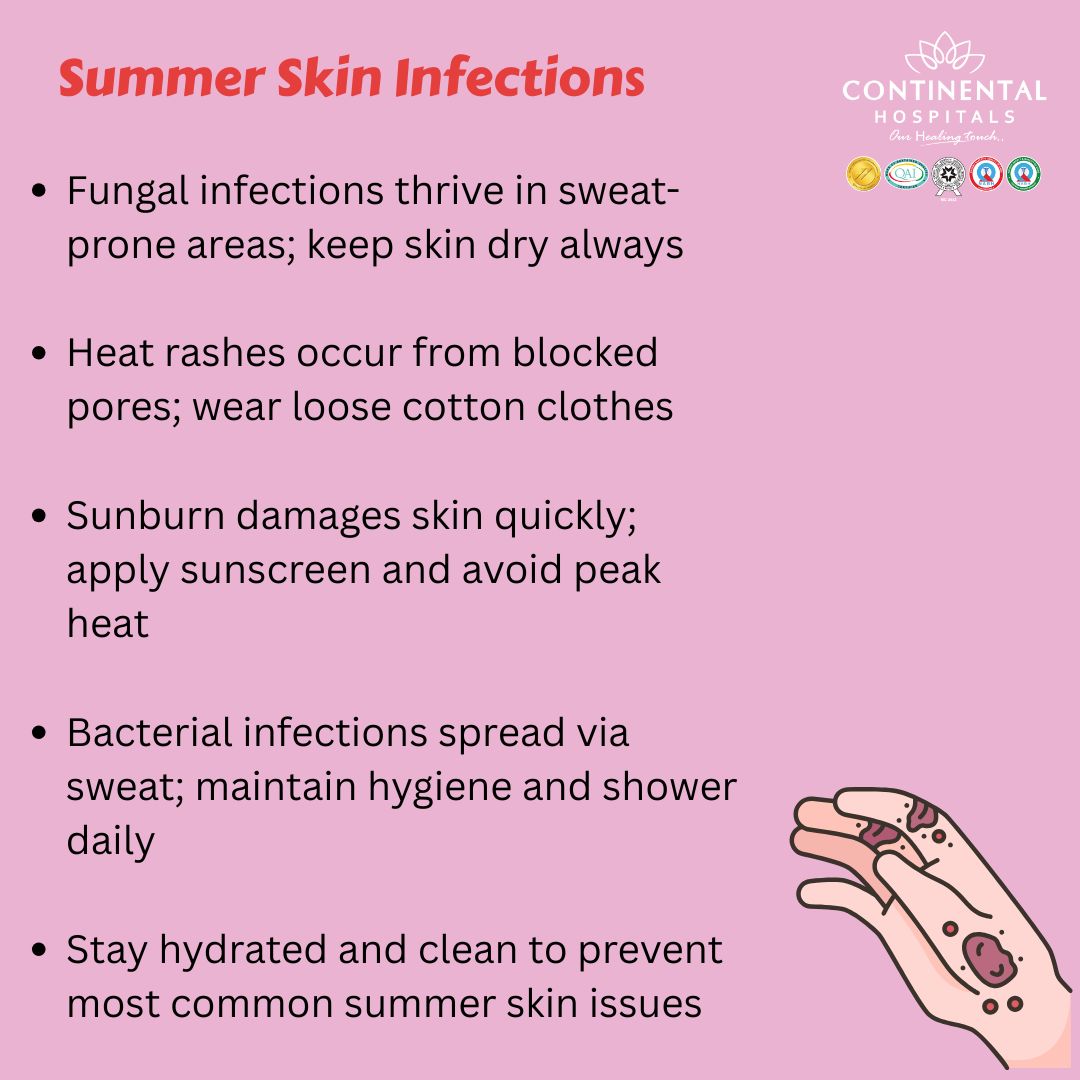
Common Summer Skin Infections to Watch For
The first step in prevention is recognition. Here are the most frequent skin infections that people encounter during the warmer months:
1. Fungal Infections (Tinea and Athlete’s Foot)
Fungi love damp, dark, and warm environments. Fungal summer skin infections often appear as red, itchy, or scaly patches. Tinea, commonly known as ringworm, can appear on the body, while athlete's foot affects the skin between the toes. These are highly contagious and can spread through shared towels or walking barefoot in public pool areas.
2. Folliculitis
When hair follicles become inflamed or infected, it results in folliculitis. In summer, this is often caused by bacteria like Staphylococcus aureus. It appears as small red bumps or white-headed pimples around hair follicles. Tight gym clothes and excessive sweating are the primary triggers for these summer skin problems.
3. Impetigo
This is a highly contagious bacterial skin infection that primarily affects children but can occur in adults too. It often starts as red sores that quickly rupture and ooze for a few days, eventually forming a yellowish-brown crust. It thrives in the heat where skin-to-skin contact is frequent.
4. Heat Rash (Miliaria)
While not always an "infection" in the traditional sense, heat rash occurs when sweat ducts become blocked. If left untreated or scratched excessively, these tiny, itchy blisters can become infected by surface bacteria, leading to more serious skin problems.

5. Yeast Infections (Candidiasis)
Candida is a type of yeast that lives on the skin. In summer, it can overgrow in areas like the armpits, groin, or under the breasts. This leads to bright red, itchy rashes that can be quite painful and persistent if the moisture in those areas isn't managed.
Effective Strategies for Summer Skin Care
To keep summer skin infections at bay, your daily routine needs to adapt to the changing environment. Prevention is always more effective than treatment when it comes to skin diseases.
Maintain High Standards of Hygiene
Shower Twice Daily: Use a mild, antibacterial soap to wash away sweat and bacteria, especially after being outdoors or exercising.
Dry Thoroughly: Fungi thrive in moisture. Ensure you dry your skin completely, focusing on areas like the toes, underarms, and groin.
Hand Hygiene: Avoid touching your face or scratching your skin with unwashed hands to prevent the transfer of bacteria.
Choose the Right Wardrobe
Breathable Fabrics: Opt for natural fibers like cotton or linen. These materials allow sweat to evaporate rather than trapping it against your skin.
Loose Clothing: Avoid tight synthetic fabrics that cause friction and trap heat, as these are major contributors to summer skin problems.
Fresh Clothes: Never re-wear sweaty clothes. Change into fresh, dry garments immediately after a workout.
Smart Skincare Habits
Use Sunscreen: Sunburn damages the skin barrier, making it more susceptible to skin infections. Use a broad-spectrum sunscreen with at least SPF 30.
Lightweight Moisturizers: Switch from heavy creams to water-based lotions to prevent clogging your pores.
Avoid Sharing Personal Items: Do not share towels, razors, or combs, as these can easily transport fungal spores and bacteria.
When to See a Specialist
Most minor skin problems in summer can be managed with over-the-counter remedies and improved hygiene. However, you should seek professional medical advice if you notice?
- The rash or infection is spreading rapidly.
- You experience significant pain, swelling, or warmth in the affected area.
- The infection is accompanied by a fever.
- Pus or yellow crusts begin to form.
- The condition does not improve after a few days of home care.
Why Choose Continental Hospitals for Skin Care?
When dealing with persistent or severe summer skin infections, receiving expert care is essential. Continental Hospitals in Hyderabad is recognized as a leader in dermatological excellence. Our department is equipped with advanced diagnostic tools to identify the exact cause of your skin distress, ensuring targeted and effective treatment.
Accreditations and Quality Standards
Continental Hospitals is proud to hold prestigious accreditations, including JCI (Joint Commission International) and NABH (National Accreditation Board for Hospitals & Healthcare Providers). These certifications are a testament to our commitment to maintaining global standards of patient safety, clinical excellence, and hygiene. When you visit us, you are stepping into an environment that prioritizes international protocols for infection control and patient care.
Comprehensive Dermatological Support
Our team of specialists understands the nuances of skin problems in the local climate. We offer?
- Advanced fungal culture and sensitivity testing.
- Expert management of chronic skin conditions and seasonal flare-ups.
- Personalized summer skin care plans tailored to your skin type.
- State-of-the-art facilities for both medical and aesthetic dermatology.
Choosing the best hospital in Hyderabad means ensuring your skin receives the highest level of protection and care. Our multidisciplinary approach ensures that if a skin condition is linked to an underlying systemic issue, you have access to a full range of medical experts under one roof.
Conclusion
Summer should be a time of enjoyment, not discomfort. By practicing diligent hygiene, choosing breathable clothing, and staying hydrated, you can significantly reduce your risk of summer skin infections. Remember that your skin is your body's first line of defense; keeping it healthy is vital for your overall well-being. If you find yourself struggling with persistent skin problems in summer, do not hesitate to reach out for professional help.
If you suffer from persistent itching, spreading rashes, or painful skin inflammation, consult our best dermatologist in Hyderabad Continental Hospitals, Hyderabad
Related Blog Topics: