.webp)


Stomach pain is a common health problem that many people experience at some point in life. It can range from mild discomfort to severe pain that affects daily activities. Often, stomach pain is linked to what we eat. Certain foods can irritate the stomach lining, increase gas production, or worsen digestive problems.
When you experience stomach pain, choosing the right foods becomes very important. Avoiding certain foods can help your digestive system recover and reduce symptoms like bloating, cramps, and a bloated stomach. Understanding which foods to avoid and why they trigger discomfort can help you manage stomach pain more effectively.
Why Food Choices Matter When You Have Stomach Pain?
The stomach plays a vital role in breaking down food and absorbing nutrients. When the digestive system becomes irritated or inflamed, certain foods can worsen symptoms.
Eating the wrong foods during stomach pain may lead to:
• Increased gas and bloating stomach
• Irritation of the stomach lining
• Acid reflux and burning sensation
• Slower digestion
• Severe cramps or discomfort
If you already have a bloated stomach or digestive upset, avoiding trigger foods can help your stomach heal faster.
Visit our Gastroenterology Department at Continental Hospitals for expert care. Get advanced diagnosis and personalized treatment for stomach pain, bloating, and digestive issues.
Common Symptoms That May Accompany Stomach Pain
Stomach pain rarely occurs alone. It often comes with other digestive symptoms.
Common symptoms include:

• Bloated stomach
• Gas and bloating stomach
• Nausea or vomiting
• Indigestion
• Loss of appetite
• Acid reflux
• Abdominal cramps
If these symptoms persist for several days, medical evaluation is important.
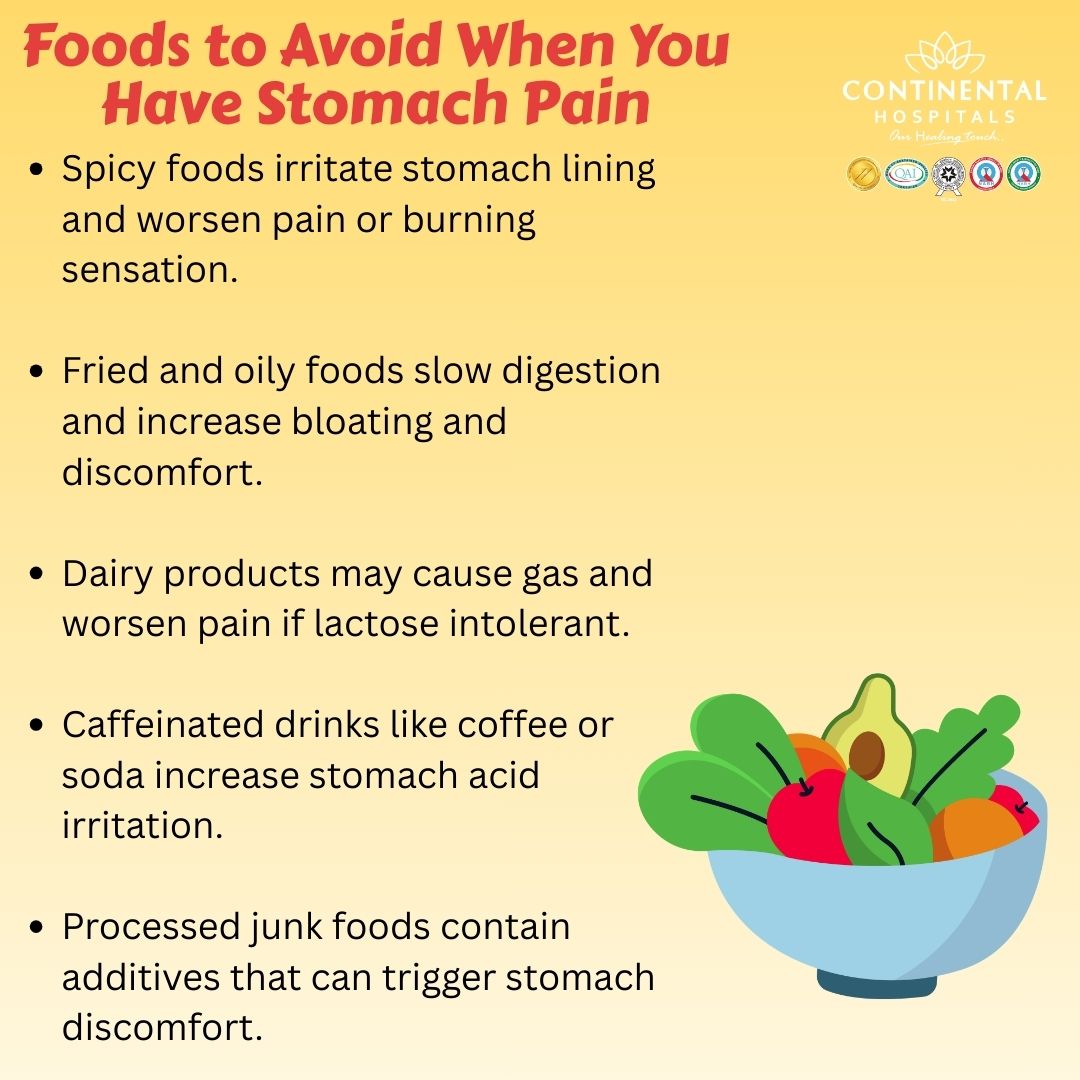
Foods to Avoid When You Have Stomach Pain
Certain foods are known to irritate the digestive system. Avoiding them can help reduce discomfort and support faster recovery.
Spicy Foods
Spicy foods contain ingredients such as chili peppers and strong spices that can irritate the stomach lining.
When the stomach is already sensitive, spicy food can worsen stomach pain and trigger burning sensations.
Spicy foods may also cause:
• Increased acidity
• Irritation in the stomach
• Worsening of gastritis symptoms
If you are experiencing stomach pain, it is best to choose mild and easy to digest foods.
Fried and Fatty Foods
Fried foods are difficult for the stomach to digest. They contain high amounts of fat, which slows down digestion and increases pressure on the digestive system.
Examples include:
• Deep fried snacks
• Fast food items
• Oily curries
• Fried chicken or fried potatoes
These foods can worsen stomach pain and contribute to a bloated stomach.
Dairy Products
Some people have difficulty digesting lactose found in milk and dairy products. This condition is called lactose intolerance.
Consuming dairy during stomach pain may cause:
• Gas and bloating stomach
• Abdominal cramps
• Diarrhea
• Increased stomach pain
If you suspect dairy triggers your symptoms, temporarily avoid milk, cheese, and cream.
Carbonated Drinks
Soft drinks and carbonated beverages contain gas bubbles that can increase pressure in the stomach.
These drinks can lead to:
• Bloated stomach
• Excess gas
• Increased stomach pain
If you are searching for how to stop bloating stomach, avoiding carbonated drinks is an important step.
Caffeinated Beverages
Coffee, strong tea, and energy drinks can stimulate acid production in the stomach. Excess acid can irritate the stomach lining and worsen stomach pain.
Caffeine may also cause:
• Acid reflux
• Burning sensation in the stomach
• Digestive discomfort
Reducing caffeine intake can help relieve stomach irritation.
Processed and Packaged Foods
Highly processed foods often contain preservatives, artificial flavors, and excess salt. These ingredients can disturb the digestive system.
Examples include:
• Packaged snacks
• Processed meats
• Instant noodles
• Frozen ready to eat meals
These foods can slow digestion and increase the chances of bloating stomach remedies being needed.
Citrus Fruits
Although citrus fruits are rich in vitamin C, they are acidic and may irritate the stomach when it is already inflamed.
Fruits such as oranges, lemons, and grapefruits can worsen stomach pain in some individuals.
If you experience acidity or burning, it is better to avoid citrus fruits until the stomach heals.
Artificial Sweeteners
Artificial sweeteners used in sugar free products may cause digestive issues in some people.
These sweeteners can lead to:
• Gas formation
• Bloating stomach
• Abdominal discomfort
Limiting artificial sweeteners can help reduce digestive irritation.
What to Eat Instead During Stomach Pain?
While avoiding trigger foods is important, choosing gentle foods that support digestion can also help reduce stomach pain.
Recommended foods include:
• Plain rice
• Bananas
• Toast
• Boiled potatoes
• Oatmeal
• Yogurt with probiotics
• Herbal teas
These foods are easier to digest and may help soothe the stomach.
Tips to Reduce Bloating and Stomach Discomfort
If you are wondering how to get rid of bloated stomach or reduce digestive discomfort, these simple habits can help.
Eat smaller meals
Large meals can overload the digestive system and worsen stomach pain.
Chew food slowly
Proper chewing helps the stomach digest food more easily.
Stay hydrated
Drinking enough water supports digestion and reduces constipation.
Avoid lying down immediately after meals
This can prevent acid reflux and stomach irritation.
Manage stress
Stress can affect digestion and contribute to stomach pain.
Following these simple habits can support bloating stomach remedies and improve digestive health.
When Should You See a Doctor for Stomach Pain?
Occasional stomach pain may improve with rest and dietary changes. However, persistent or severe symptoms require medical attention.
Consult a doctor if you experience:
• Severe or continuous stomach pain
• Frequent bloated stomach symptoms
• Persistent vomiting
• Blood in stool
• Sudden weight loss
• Fever with abdominal pain
Early diagnosis helps identify the underlying cause and prevents complications.
Why Choose Continental Hospitals for Digestive Health Care?
Continental Hospitals is recognized as one of the best hospitals in Hyderabad for advanced medical care and patient focused treatment.
The hospital is known for its comprehensive gastroenterology services and modern diagnostic facilities. Patients receive expert care from experienced specialists who focus on identifying the root cause of stomach pain and digestive disorders.
Continental Hospitals is accredited by the National Accreditation Board for Hospitals and Healthcare Providers and the Joint Commission International, reflecting its commitment to global healthcare standards, patient safety, and clinical excellence.
The hospital offers:
• Highly experienced gastroenterologists and digestive health specialists
• Advanced diagnostic technology for accurate evaluation
• Personalized treatment plans for digestive disorders
• Multidisciplinary care approach for better outcomes
• International level healthcare infrastructure
With a strong focus on patient safety, innovation, and evidence based treatment, Continental Hospitals continues to be a trusted destination for digestive health care.
Conclusion
Stomach pain can significantly affect comfort and daily life. In many cases, certain foods can worsen digestive symptoms and delay recovery. Avoiding spicy foods, fried items, carbonated drinks, caffeine, and processed foods can help reduce irritation and support healing.
At the same time, choosing gentle and easily digestible foods can help manage symptoms such as bloated stomach, gas, and abdominal discomfort.
If stomach pain becomes frequent or severe, medical evaluation is essential to identify the underlying cause and receive the right treatment.
If you suffer from persistent stomach pain, a bloated stomach, or digestive discomfort, it is important to seek expert care. Consult our best gastroenterologist specialists at Continental Hospitals, the best hospital in Hyderabad, for comprehensive diagnosis and personalized treatment to restore your digestive health.
Related Blog Topics: