.webp)


Chest pain can be alarming, and often, people are unsure whether it is a heart attack or simply gas trouble. Understanding the difference between heart pain and digestive discomfort is crucial because timely action can save lives. Many people confuse heart attack symptoms with gas pain, which can delay urgent treatment. In this article, we will guide you through the key differences between a heart attack and gas trouble and explain when to seek medical help.
What Is a Heart Attack?
A heart attack occurs when the blood flow to a part of the heart is blocked. This blockage can damage or destroy heart muscle. Heart attacks require immediate medical attention to prevent serious complications or death.
Common Heart Attack Symptoms
- Chest pain or discomfort that feels like pressure, squeezing, or fullness
- Pain radiating to the arm, neck, jaw, or back
- Shortness of breath
- Nausea or vomiting
- Sweating and lightheadedness
- Rapid or irregular heartbeat
The intensity of heart pain varies from person to person. Some may experience sudden severe pain, while others have mild discomfort that comes and goes. Ignoring even mild heart pain can be dangerous.
Prioritize your heart health! Visit our cardiology department at Continental Hospitals, Hyderabad for safe, advanced, and reliable care today.
What is gas trouble?
Gas pain or bloating occurs when excess air builds up in the stomach or intestines. While uncomfortable, gas pain is rarely life-threatening.
Common Gas Trouble Symptoms
- Sharp, stabbing, or crampy abdominal pain
- Feeling bloated or full
- Burping or passing gas frequently
- Pain relieved after passing gas or bowel movement
- Occasional nausea
Gas pain is usually localized in the upper or lower abdomen, whereas heart pain often radiates to other parts of the body.
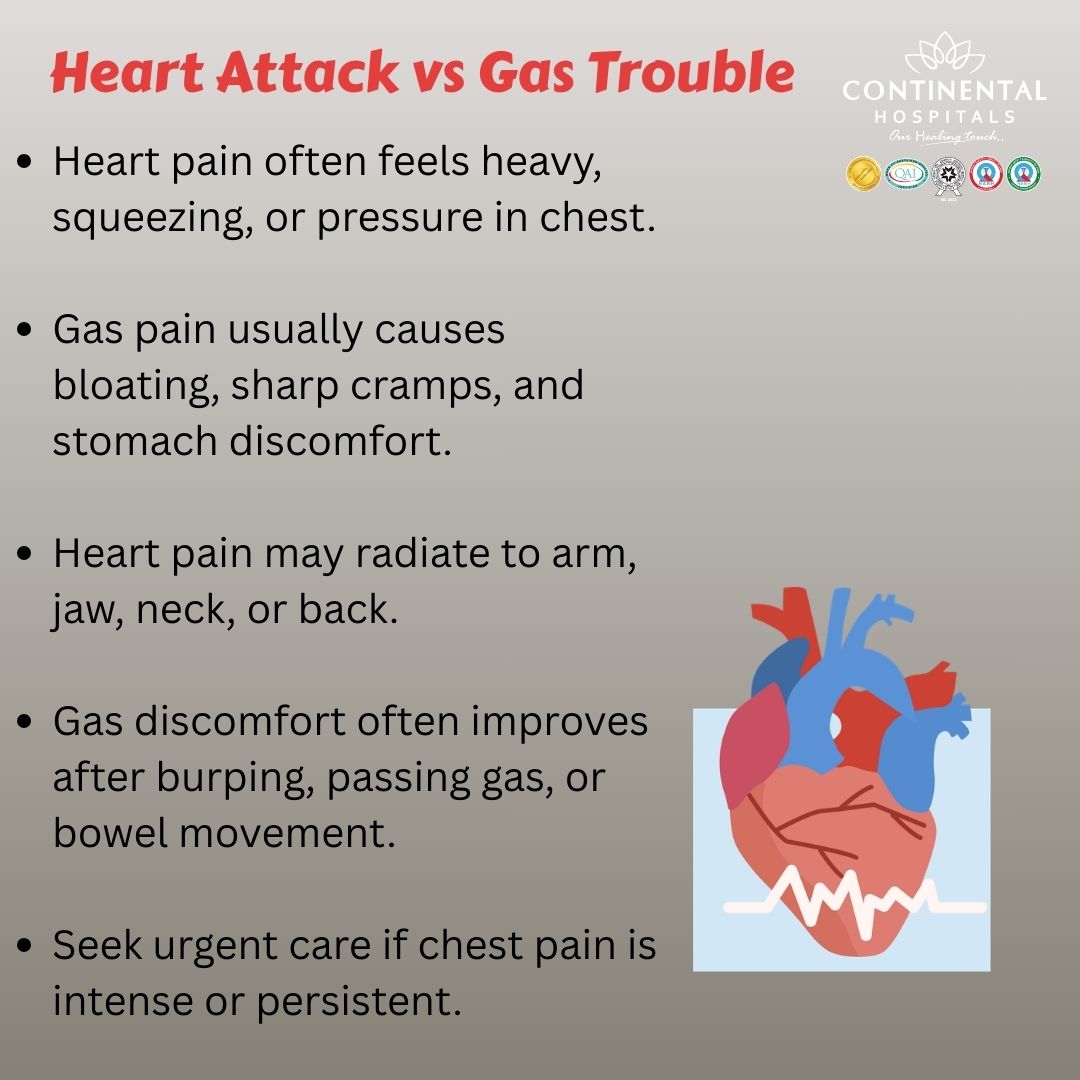

How to Tell Heart Attack vs Gas Trouble?
Differentiating between heart attack vs gas pain is challenging but possible if you focus on the symptoms and timing. Here are some key points:
Location of Pain
- Heart attack pain is typically central or left-sided in the chest and may radiate to the arm, shoulder, neck, jaw, or back.
- Gas pain is usually in the stomach or upper abdomen and may move around but rarely spreads to the arm or jaw.
Type of Pain
- Heart attack pain feels heavy, crushing, or tight.
- Gas pain is more like cramping, sharp, or bloating discomfort.
Timing
- Heart pain can last several minutes to hours and may appear at rest or during activity.
- Gas pain usually occurs after meals and may improve after passing gas or a bowel movement.
Associated Symptoms
- Heart attack may include sweating, nausea, shortness of breath, and dizziness.
- Gas pain usually comes with burping, bloating, and relief after digestion.
- Response to Movement or Medication
- Heart pain does not go away with position changes or antacids.
- Gas pain often improves after walking, stretching, or taking digestive remedies.
- Understanding these differences can help you make quick decisions about seeking medical attention.
What are the risk factors for a heart attack?
Knowing your risk factors can help prevent a heart attack. Key risk factors include:
- High blood pressure
- High cholesterol
- Diabetes
- Smoking
- Obesity
- Family history of heart disease
- Sedentary lifestyle
- Stress
People with these risk factors should be particularly cautious when experiencing chest pain.
When should you seek emergency help for chest pain?
Heart attacks can be fatal if treatment is delayed. You should call emergency services immediately if you experience:
- Sudden chest pain lasting more than a few minutes
- Pain radiating to the arm, neck, jaw, or back
- Shortness of breath or dizziness
- Nausea or vomiting with chest discomfort
- Unexplained sweating
It is always better to be safe and get checked at the hospital. Early intervention can save lives.
How Can You Reduce Your Risk of a Heart Attack?
- Eat a balanced diet rich in fruits, vegetables, and whole grains
- Exercise regularly, at least 30 minutes a day
- Maintain a healthy weight
- Avoid smoking and excessive alcohol
- Manage stress through meditation or hobbies
- Regular health check-ups to monitor blood pressure, cholesterol, and sugar levels
These lifestyle changes not only reduce the risk of heart attack but also improve overall well-being.
Why Choose Continental Hospitals?
Continental Hospitals is recognized as one of the best hospitals in Hyderabad, known for excellence in cardiac care. The hospital holds multiple national and international accreditations, ensuring world-class patient safety and quality standards.
Key Highlights
Advanced Cardiac Care: Equipped with state-of-the-art cath labs and cardiac operation theaters
Expert Cardiologists: Team of highly experienced heart specialists
Emergency Services: 24/7 emergency care for heart attack and chest pain
Patient-Centric Approach: Personalized treatment plans with continuous monitoring
Accreditations: Recognized for quality and safety standards nationally and internationally
At Continental Hospitals, patients receive timely diagnosis, advanced treatment, and compassionate care, making it a trusted choice for anyone experiencing chest discomfort or heart-related issues.
Conclusion
Distinguishing between heart attack vs gas trouble can be challenging, but knowing the key symptoms and risk factors can save lives. If you ever experience chest pain that is severe, persistent, or radiates to other parts of the body, do not ignore it. Immediate medical attention at a trusted facility like Continental Hospitals can make all the difference.
Heart attacks are medical emergencies. Consulting a specialist promptly ensures early diagnosis and effective treatment.
If you suffer from chest discomfort or suspect heart problems, consult our top cardiologists in Hyderabad at Continental Hospitals today. Prioritize your heart health and seek care from the best hospital in Hyderabad for reliable, safe, and advanced treatment.
Related Blog Topics: