.webp)


That burning sensation in your chest after a heavy meal is more than just an inconvenience. For many, it is a frequent visitor that disrupts sleep, work, and daily comfort. While most people reach for a quick antacid, chronic heartburn often signals that your digestive system is struggling. Understanding why this happens and when to seek professional help is the first step toward lasting relief and better gut health.
Understanding Heartburn and Acid Reflux
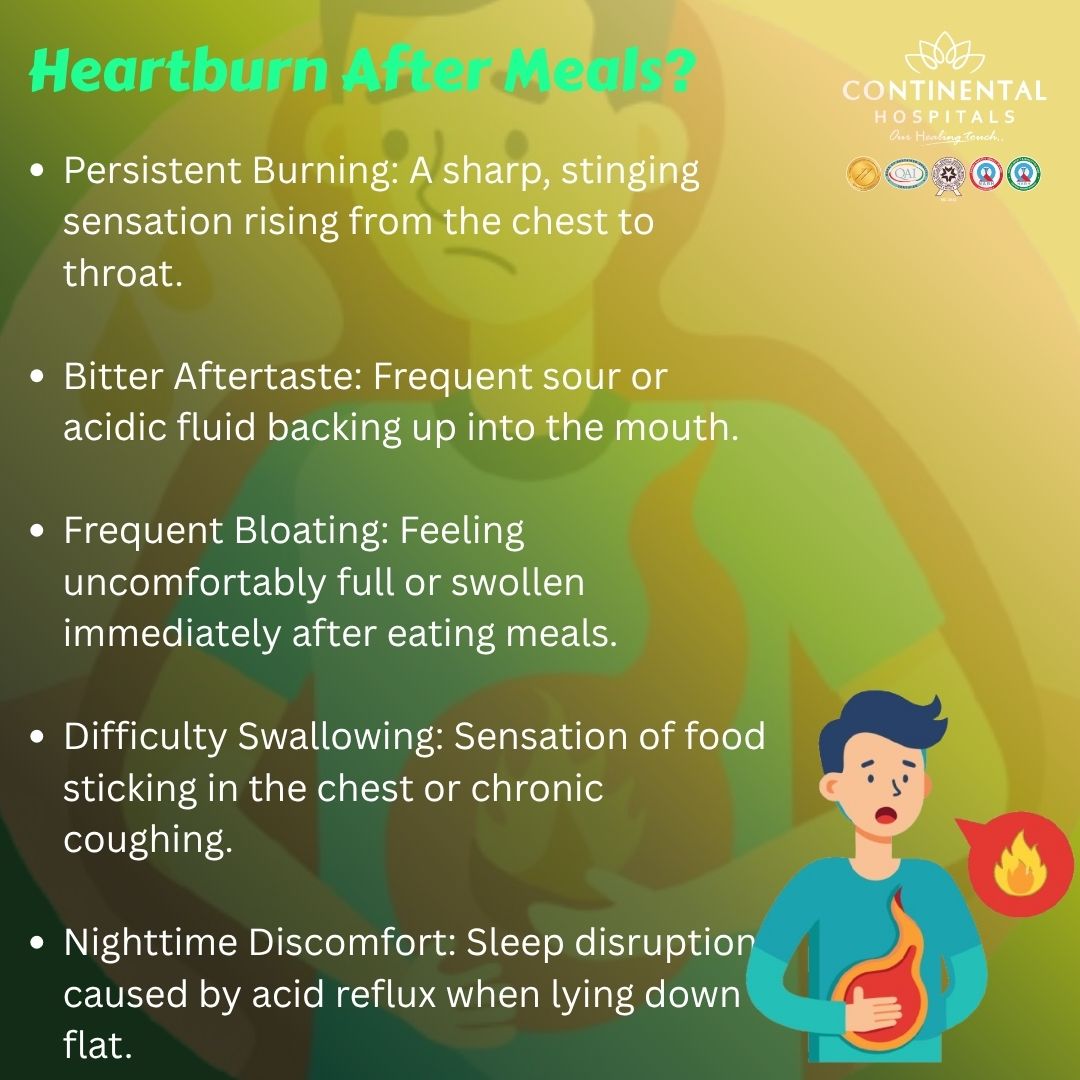
Heartburn is a painful, burning sensation in the middle of your chest, often rising behind the breastbone. It typically occurs when stomach acid flows back up into the esophagus, the tube that carries food from your mouth to your stomach. Unlike the stomach, the esophagus does not have a protective lining against harsh acids, leading to irritation and inflammation.
When this happens frequently, it is known as gastroesophageal reflux disease, or GERD. It is not just about the burn it can also manifest as a sour taste in the mouth, a chronic cough, or a feeling that food is stuck in your throat. Recognizing these acid reflux symptoms early can prevent long-term damage to your digestive tract.
Visit our Gastroenterology Department at Continental Hospitals Hyderabad for expert digestive and liver care. Consult our best specialists today.
Common Causes of Heartburn After Eating
Your lifestyle and dietary choices play a massive role in how your stomach processes food. Here are the primary reasons you might experience a stomach burning sensation after meals.
- Large Meal Portions: Overeating puts excessive pressure on the Lower Esophageal Sphincter (LES), the muscle valve that keeps acid in the stomach. When the stomach is too full, this valve can leak.
- Lying Down Too Soon: Gravity helps keep acid down. If you lie down immediately after dinner, it becomes much easier for acid to travel horizontally into your esophagus.
- High-Fat Foods: Fried and fatty foods take longer to digest. The longer food stays in your stomach, the more acid is produced, increasing the chance of reflux.
- Specific Food Triggers: Certain items are notorious for relaxing the LES or irritating the stomach lining.
Identifying Your Food Triggers for Heartburn
Everyone’s digestive system reacts differently, but common food triggers for heartburn often include what?
- Citrus Fruits: Oranges, lemons, and grapefruits are highly acidic.
- Spicy Ingredients: Chili peppers and heavy spices can irritate the esophageal lining.
- Caffeine and Alcohol: These substances relax the LES muscle, allowing acid to escape.
- Carbonated Drinks: The bubbles in soda can cause bloating and pressure in the stomach.
- Chocolate and Mint: Though delicious, these can trigger reflux in sensitive individuals.
Signs Your Stomach Needs Professional Attention
Occasional heartburn is common, but how do you know when it is time to stop self-medicating? If you notice the following signs, your stomach needs expert evaluation?
- Frequency: You experience heartburn more than twice a week.
- Difficulty Swallowing: It feels like food is getting "stuck" on the way down.
- Persistent Cough: You have a dry cough or wheezing that does not go away.
- Unexplained Weight Loss: Chronic digestive issues leading to a drop in weight.
- Ineffective Medication: Over-the-counter antacids no longer provide relief.
Ignoring these symptoms can lead to complications such as esophagitis, which is the inflammation of the esophageal tissue, or even more serious conditions that affect your long-term well-being.
Practical Steps for Immediate Relief
If you are looking to manage acid reflux after eating, consider these simple lifestyle adjustments.

- Eat Smaller, Frequent Meals: Instead of three large meals, try five smaller portions to reduce stomach pressure.
- The Three-Hour Rule: Finish your last meal at least three hours before bedtime.
- Elevate Your Head: Use a wedge pillow to keep your chest higher than your stomach while sleeping.
- Maintain a Healthy Weight: Excess weight around the abdomen can push acid upward.
- Wear Loose Clothing: Tight belts or waistbands can compress the stomach and trigger reflux.
Why Choose Continental Hospitals for Digestive Health?
When dealing with persistent gastric issues, you need a healthcare partner that combines expertise with advanced technology. Continental Hospitals stands as a leader in gastroenterology, offering comprehensive care for patients struggling with chronic acid reflux and complex digestive disorders.
World-Class Expertise in Hyderabad
As a premier healthcare destination, we provide access to some of the best specialists in the field. Our team is dedicated to diagnosing the root cause of your discomfort rather than just treating the symptoms. We use advanced diagnostic tools like high-definition endoscopy and pH monitoring to get a clear picture of your digestive health.
Unmatched Quality and Safety Standards
Continental Hospitals is committed to international benchmarks of patient care. We are proud to be a JCI (Joint Commission International) accredited facility. This global gold standard ensures that our clinical processes, safety protocols, and patient outcomes meet the highest possible levels. Additionally, our NABH (National Accreditation Board for Hospitals & Healthcare Providers) accreditation further reinforces our commitment to delivering quality healthcare to the community in Hyderabad.
Comprehensive Gastrointestinal Care
Our gastroenterology department is equipped to handle everything from routine heartburn management to complex surgical interventions. We believe in a holistic approach, incorporating dietetics, lifestyle counseling, and the latest medical therapies to ensure you return to a pain-free life.
Conclusion
Heartburn should not be a permanent part of your life. While lifestyle changes and avoiding food triggers for heartburn are excellent starting points, persistent symptoms require a deeper look. Taking proactive steps today can prevent minor irritation from turning into a major health concern. Your digestive health is the foundation of your overall vitality, and it deserves the best care possible.
If you find yourself constantly reaching for antacids or worrying about your next meal, it is time to consult a professional. At Continental Hospitals, we are here to provide the clarity and treatment you need to eat, sleep, and live comfortably again.
Do you suffer from frequent heartburn or persistent stomach discomfort? Our specialists are ready to help you find a lasting solution.
Consult our best gastroenterologist in Hyderabad at Continental Hospitals, the best hospital in Hyderabad for digestive and liver care.
Related Blog Topics: