.webp)

A hernia is a common medical condition that many people ignore in the early stages. It often begins as a small bulge in the abdomen or groin, with mild discomfort. But when the pain becomes severe, sudden, or persistent, it may signal an emergency. Understanding when hernia pain turns dangerous can help you seek medical care at the right time and prevent life threatening complications.
What Is a Hernia?
A hernia occurs when an internal organ or tissue pushes through a weak spot in the muscle. The most common types are inguinal hernia, femoral hernia, umbilical hernia, and incisional hernia. Many hernias are painless in the beginning, but they do not heal on their own. Over time, the opening can enlarge and lead to serious complications.
Early Signs of a Hernia?
Recognising the early symptoms can help you act quickly. Common early signs include:
- A soft bulge that appears when standing, coughing, or lifting
- Mild pressure or discomfort in the abdomen or groin
- Pain after long hours of working, walking, or lifting
- A feeling of heaviness or dragging sensation
- Bulge disappearing while lying down
If these symptoms are present, a medical evaluation is important. Early diagnosis helps prevent complications.
When Hernia Pain Becomes an Emergency?
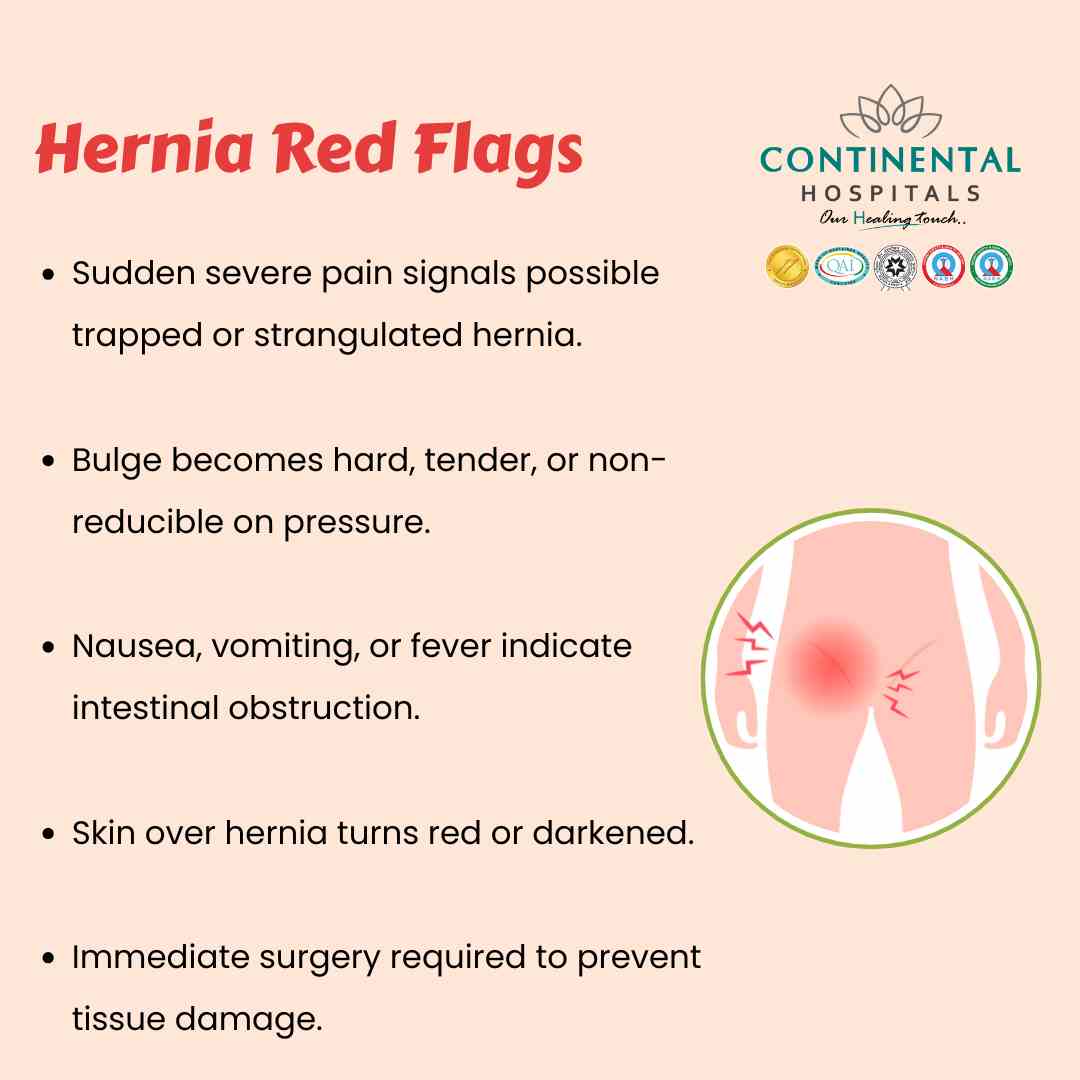
Hernia pain becomes an emergency when the blood supply to the trapped organ is blocked. This condition is called a strangulated hernia. Without urgent treatment, the tissue can die and cause severe infection.
Seek emergency medical care if you notice:
- Sudden sharp pain in the hernia area
- Intense pain that does not improve with rest
- Nausea or vomiting
- Redness or dark colour over the bulge
- Fever
- Inability to push the bulge back
- Bloating and severe abdominal discomfort
- The bulge becomes hard or tender
These symptoms indicate that the hernia is stuck and requires urgent surgery to prevent serious complications.
Why Hernias Become Dangerous?
Hernias turn dangerous when the tissues get trapped in the muscle opening. This leads to:

- Obstruction of the intestine
- Reduced blood flow to the trapped portion
- Death of tissue
- Severe infection inside the abdomen
- Risk of sepsis
- Immediate need for emergency surgery
Delaying treatment during these warning signs can be life threatening. Early detection and timely surgery offer the best outcome.
Treatment Options for Hernias
Hernias do not disappear on their own. Treatment depends on the severity, type of hernia, and symptoms.
Non Emergency Hernias
If the hernia is small and painless:
- Regular monitoring
- Lifestyle changes that reduce pressure on the abdomen
- Avoid lifting heavy objects
- Core strengthening exercises recommended by a doctor
These steps only control symptoms but do not cure the hernia.
Surgical Treatment
Surgery is the permanent solution for hernias. Modern procedures are safe, effective, and provide long term relief.
Common surgical options include:
- Laparoscopic hernia repair
- Open hernia repair
- Mesh repair for strengthening the weak muscle area
- Robotic assisted hernia surgery
Laparoscopic and robotic procedures are preferred because they offer smaller incisions, faster recovery, less pain, and quicker return to normal routine.
Emergency Surgery
Emergency surgery is required when the hernia becomes trapped or strangulated. Doctors immediately repair the damaged tissue and restore blood supply to prevent complications.
Who Is at Higher Risk of Hernia Complications
Hernia emergencies can affect anyone, but some individuals are at higher risk. These include:
- People who lift heavy weights regularly
- Individuals with chronic cough
- Smokers
- People with constipation
- Individuals with obesity
- People who have had previous abdominal surgery
- Pregnant women
- Older adults with weakened muscles
If you fall into any of these categories and notice a bulge or pain, consult a doctor at the earliest.
How to Prevent Hernia Emergencies
Prevention focuses on strengthening the abdominal area and reducing unnecessary pressure.
Useful tips include:
- Maintain a healthy body weight
- Eat fibre rich foods to avoid constipation
- Quit smoking to improve muscle strength
- Use proper lifting techniques
- Avoid sudden heavy lifting
- Strengthen core muscles under expert guidance
- Treat chronic cough early
- Stay active with regular exercise
These simple steps lower the risk of developing a hernia as well as complications.
Why Choose Continental Hospitals for Hernia Treatment?
Continental Hospitals in Hyderabad is known for its advanced medical care, patient centric approach, and high treatment success rates. It is recognised as one of the best hospitals in Hyderabad for hernia surgery and emergency care.
Key reasons to choose Continental Hospitals:
- Team of experienced general surgeons and laparoscopic specialists
- Advanced diagnostic facilities for accurate evaluation
- Expertise in minimally invasive, laparoscopic, and robotic hernia repair
- Dedicated emergency department for quick response to hernia complications
- Personalised treatment plans based on age, type of hernia, and medical history
- State of the art operation theatres and safety systems
- Multidisciplinary support from gastroenterology, anesthesia, and critical care teams
- Proven track record of successful outcomes and faster recovery
- Comfortable inpatient care and round the clock monitoring
Continental Hospitals Accreditations
Continental Hospitals maintains the highest standards of medical quality and safety. The hospital holds prestigious national and international accreditations that reflect its commitment to patient safety, infection control, medical excellence, and ethical clinical practices. These accreditations ensure consistent quality of care and adherence to global healthcare guidelines. Patients can trust that every surgery and treatment is performed using approved protocols, modern equipment, and trained specialists.
These strengths make Continental Hospitals a preferred choice for hernia surgery and emergency hernia care in Hyderabad.
When to See a Doctor
Do not wait for the hernia to become painful or complicated. Seek medical advice if you notice:
- A bulge in the abdomen or groin
- Pain during lifting or bending
- Discomfort that worsens by the end of the day
- Difficulty pushing the bulge back
- Any sudden change in the colour or size of the bulge
Early diagnosis helps avoid emergencies.
Conclusion
Hernia pain should never be ignored, especially when it becomes severe or sudden. A strangulated or obstructed hernia is a medical emergency that requires immediate attention. With timely diagnosis and expert care, you can prevent complications and recover fully.
If you or a loved one is suffering from hernia-related pain or complications, consult our top Surgical Gastroenterologist at Continental Hospitals, one of the best hospitals in Hyderabad. Early expert care can prevent serious complications and help you return to normal life safely and confidently.