.webp)

Managing your health begins with understanding what goes on inside your arteries. High cholesterol is often called a silent condition because it doesn't always show outward symptoms, yet it significantly impacts your cardiovascular health. By making informed dietary choices and understanding the mechanics of how your body processes fats, you can take control of your heart health and lead a more vibrant life.
Understanding the Basics of Cholesterol
What is cholesterol? It is a waxy, fat-like substance found in all the cells of your body. Your liver produces all the cholesterol you need to make hormones, Vitamin D, and substances that help you digest foods. However, cholesterol is also found in foods from animal sources, such as egg yolks, meat, and cheese.
When people talk about cholesterol control, they are usually referring to two types:
HDL (High-Density Lipoprotein): This is often called good cholesterol. It acts as a scavenger, carrying LDL cholesterol away from the arteries and back to the liver, where it is broken down and passed from the body.
LDL (Low-Density Lipoprotein): This is known as bad cholesterol. If your body has too much LDL, it can build up on the walls of your blood vessels. This buildup is called plaque, which can narrow the arteries and restrict blood flow.
Maintaining a healthy balance between these two is the key to preventing heart disease.
Consult our expert cardiologists at Continental Hospitals, Hyderabad, for a personalized heart health plan. Visit our cardiology department today.
How to Reduce Cholesterol Through Your Diet
If you are looking for how to reduce cholesterol, the most effective tool at your disposal is your plate. Transitioning to a heart-healthy diet doesn't mean sacrificing flavor; it means choosing ingredients that actively work to clear your bloodstream.
Incorporate Cholesterol Lowering Foods

Certain foods act like natural medicine for your heart. Including these in your daily meals can significantly lower your LDL levels.
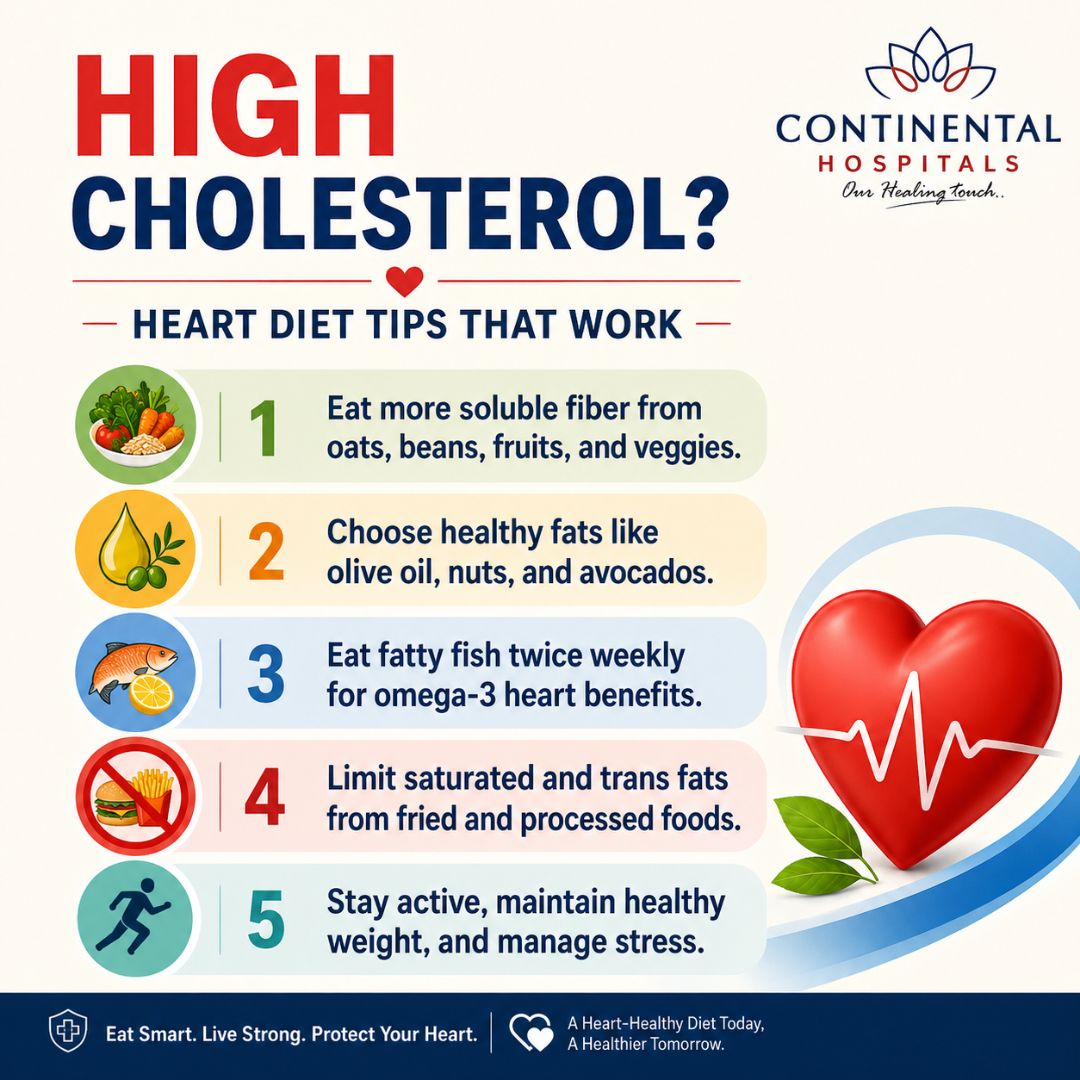
- Soluble Fiber: Found in oats, barley, beans, and lentils. Soluble fiber reduces the absorption of cholesterol into your bloodstream.
- Healthy Fats: Replace butter and lard with olive oil or avocado oil. These contain monounsaturated fats that help lower bad cholesterol while maintaining good cholesterol levels.
- Fatty Fish: Salmon, mackerel, and sardines are rich in Omega-3 fatty acids. While they don't directly lower LDL, they reduce triglycerides and help prevent blood clots.
- Nuts and Seeds: Almonds and walnuts are excellent sources of plant sterols and polyunsaturated fats.
- Fruits and Vegetables: Apples, grapes, and citrus fruits are high in pectin, a type of soluble fiber that lowers LDL.
Foods to Avoid or Limit
To achieve effective cholesterol control, it is equally important to know what to keep out of your shopping cart.
- Trans Fats: Often listed as partially hydrogenated vegetable oils on labels, these are found in many fried foods and commercial baked goods. They raise LDL and lower HDL.
- Saturated Fats: Found in red meats and full-fat dairy products. You don't need to eliminate them entirely, but reducing your intake can lower your cholesterol levels.
- Processed Sugars: High sugar intake can cause the liver to produce more LDL and less HDL.
Practical Daily Tips for a Healthy Heart
Managing high cholesterol is a marathon, not a sprint. Consistency is what yields results. Here are actionable steps you can take starting today?
- Read Nutrition Labels: Always check for trans fats and hidden sugars.
- Cook at Home: When you prepare your own meals, you have total control over the oils and salts used.
- Portion Control: Even healthy fats contain calories. Use small portions of nuts and oils.
- Steam or Bake: Instead of frying your food, try steaming, grilling, or baking to preserve nutrients without adding unnecessary fats.
Why Choose Continental Hospitals for Your Heart Health?
When it comes to managing complex conditions like high cholesterol, you need a partner that offers more than just a prescription. Continental Hospitals is recognized as the best hospital in Hyderabad for cardiac care and preventive medicine.
World-Class Accreditations
Continental Hospitals stands as a beacon of healthcare excellence. Our commitment to quality is backed by prestigious accreditations?
JCI Accreditation: We adhere to the Joint Commission International standards, ensuring that our patient safety and quality of care meet the highest global benchmarks.
NABH Accreditation: Our facility is recognized by the National Accreditation Board for Hospitals & Healthcare Providers, reflecting our dedication to organized and ethical medical practices.
Comprehensive Cardiac Care
Our facility is equipped with state-of-the-art diagnostic tools that allow us to assess your heart health with extreme precision. From advanced lipid profile testing to comprehensive stress tests, we provide a 360-degree view of your cardiovascular status.
The multidisciplinary team at Continental Hospitals works together to create personalized wellness plans. This includes expert consultations with cardiologists, specialized nutritionists, and fitness counselors who understand the unique health landscape of Hyderabad.
The Importance of Regular Screenings
Because high cholesterol does not have obvious symptoms, regular blood tests are essential. Early detection allows for lifestyle interventions that can prevent the need for long-term medication. If you have a family history of heart disease, or if your lifestyle involves high stress and processed foods, getting a check-up is a vital step in your health journey.
Conclusion
Taking charge of your heart health through diet and lifestyle is one of the most rewarding decisions you can make. By focusing on cholesterol lowering foods and staying active, you can significantly reduce your risk of cardiovascular complications. Remember, you don't have to navigate this path alone. Choosing a healthcare provider with the right accreditations and expertise ensures that you have the support needed to achieve your health goals.
If you suffer from persistent high cholesterol or have concerns about your heart health, it is time to consult a specialist who can provide a tailored roadmap for your recovery. For expert guidance and a personalized heart-health assessment, consult our best cardiologist in Hyderabad at Continental Hospitals.
Related Blog Topics: