.webp)

.webp)
The scorching sun over Hyderabad brings more than just rising temperatures. It brings the silent risk of fluid loss. When the heat reaches extreme levels, your body works overtime to cool itself down, primarily through sweat. If you do not replace those lost fluids, you face the risk of dehydration in summer. Maintaining your health during these peak months requires a proactive strategy to keep your fluid levels stable. At Continental Hospitals, we believe that understanding the mechanics of hydration is the first step toward a safe and healthy summer.
Understanding Dehydration in Summer
Dehydration occurs when your body uses or loses more fluid than it takes in. Without enough water, your body cannot carry out its normal functions. In the context of extreme heat, this often happens rapidly. The air in Hyderabad during the summer months is frequently dry and hot, which accelerates the evaporation of moisture from your skin.
Common signs of dehydration in summer include:
- Extreme thirst and a dry or sticky mouth.
- Dark-colored urine or a significant decrease in urination frequency.
- Dizziness, lightheadedness, or a feeling of confusion.
- Fatigue and unexplained muscle cramps.
- Sunken eyes or skin that does not "snap back" when pinched.
If you recognize these symptoms, it is vital to act immediately. Ignoring these signs can lead to heat exhaustion or even heatstroke, which are medical emergencies.
Feeling fatigued or heat-stressed? Don’t ignore it. Visit our Internal Medicine Department at Continental Hospitals for expert care today.
Essential Dehydration Prevention Tips
Prevention is always more effective than treatment. To navigate the high temperatures safely, follow these summer hydration tips and integrate them into your daily routine.
Prioritize Water Intake
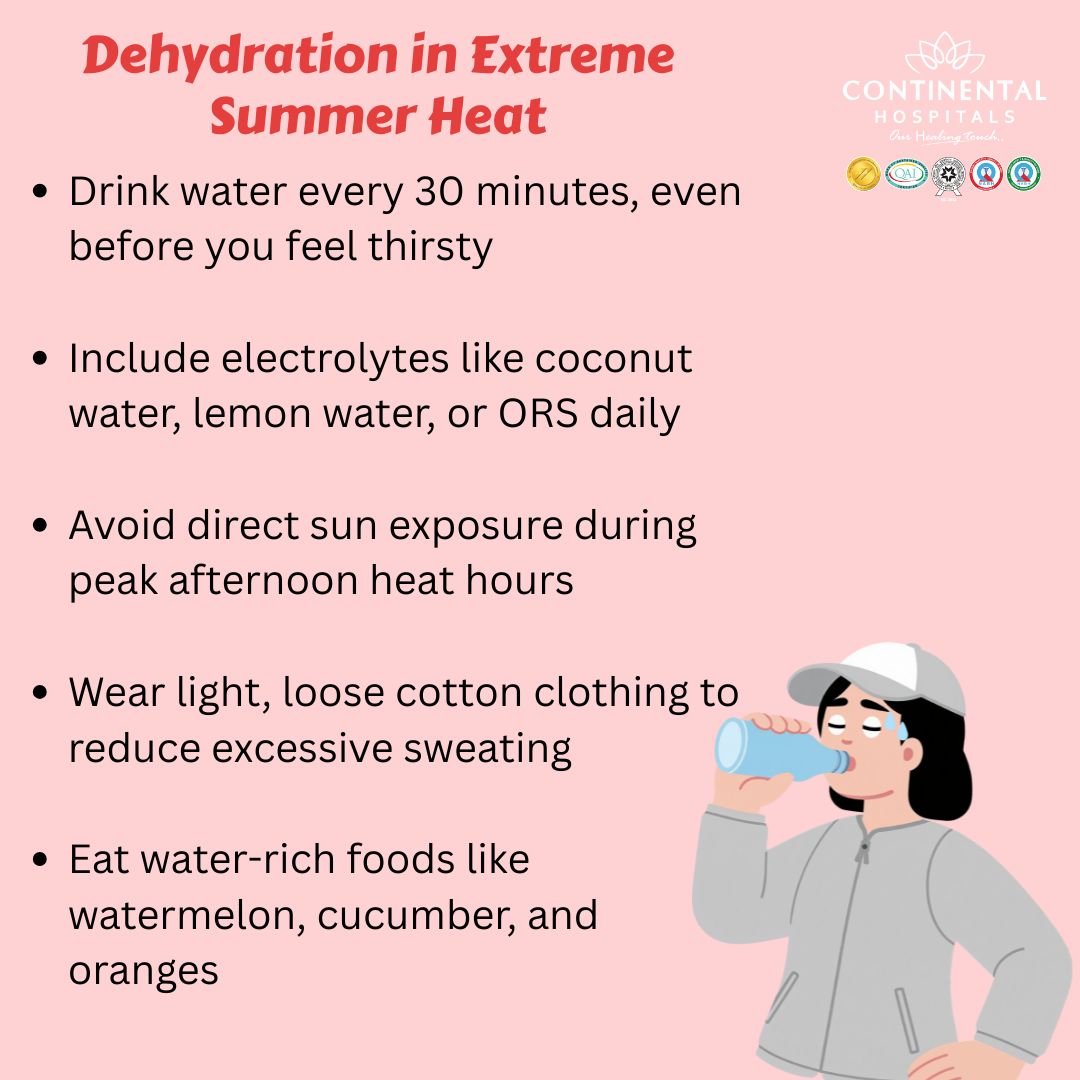
The most fundamental rule for how to stay hydrated is to drink water before you feel thirsty. Thirst is actually a late sign of dehydration. Aim to drink small amounts of water consistently throughout the day rather than large amounts all at once. Carrying a reusable water bottle serves as a constant visual reminder to sip frequently.
Choose Hydrating Foods
Hydration does not only come from a glass. Many fruits and vegetables have high water content and provide essential electrolytes. Incorporate the following into your diet:
- Watermelon and muskmelon.
- Cucumbers and tomatoes.
- Oranges and grapes.
- Leafy greens like spinach and lettuce.
Dress for the Heat
Your clothing choices impact how much you sweat. Wear lightweight, loose-fitting, and light-colored clothing. Natural fabrics like cotton allow your skin to breathe and help sweat evaporate more efficiently, cooling your body down without excessive fluid loss.

Timing Your Outdoor Activities
Extreme heat usually peaks between 11 AM and 4 PM. If possible, schedule your outdoor errands, exercise, or walks for the early morning or late evening when the sun is less intense. If you must be outside during peak hours, seek shade whenever possible and take frequent breaks.
Advanced Strategies for Extreme Heat Dehydration
When temperatures soar to record highs, standard hydration may not be enough. Extreme heat dehydration requires a more strategic approach to fluid and electrolyte balance.
Understanding Electrolytes
When you sweat, you lose more than just water. You lose minerals like sodium, potassium, and magnesium. These electrolytes are crucial for nerve and muscle function. While plain water is excellent, if you are sweating profusely, consider an ORS (Oral Rehydration Solution) or natural coconut water to replenish these lost minerals.
Avoid Dehydrating Beverages
Some drinks can actually make dehydration worse. Caffeine and alcohol are diuretics, meaning they encourage the body to lose fluids through urination. Sugary sodas can also hinder the absorption of water. During a heatwave, it is best to limit these beverages and stick to water, buttermilk, or infused herbal teas.
Monitor Vulnerable Groups
Children and the elderly are at a much higher risk of dehydration in summer. Children often forget to drink water while playing, and the elderly may have a diminished sense of thirst. If you are a caregiver, ensure that they are drinking fluids regularly, even if they do not ask for them.
Why Choose Continental Hospitals for Summer Wellness?
When it comes to managing heat-related illnesses and ensuring overall well-being, the choice of healthcare provider matters. Continental Hospitals stands as a beacon of medical excellence in Hyderabad, specifically designed to handle the complexities of seasonal health challenges.
World-Class Accreditations
Continental Hospitals is proud to be a leader in quality healthcare. We hold the prestigious JCI (Joint Commission International) accreditation, which is the gold standard in global healthcare. This ensures that our patient safety protocols and clinical outcomes meet rigorous international benchmarks. Additionally, our NABH (National Accreditation Board for Hospitals & Healthcare Providers) accreditation reinforces our commitment to providing top-tier medical services to the local community.
Expertise and Infrastructure
Our facility is equipped with state-of-the-art emergency departments capable of treating severe heatstroke and acute dehydration. With a multidisciplinary team of specialists, we ensure that every patient receives a personalized treatment plan. From advanced diagnostic labs to specialized critical care units, our infrastructure is designed to provide rapid intervention when every second counts.
How to Stay Hydrated in Hot Weather: A Checklist
To simplify your daily routine, use this quick checklist to ensure you are meeting your hydration goals:
- Drink a glass of water immediately after waking up.
- Carry a water bottle to every meeting or outing.
- Set a phone reminder to drink water every hour.
- Replace one caffeinated drink with a glass of lemon water or coconut water.
- Monitor the color of your urine; it should be pale yellow, like lemonade.
- Keep a spray bottle of cool water to mist your face and neck when outside.
While mild dehydration can often be managed at home, severe cases require professional intervention. If you or a loved one experiences a high body temperature, a rapid pulse, or loss of consciousness, seek medical help immediately. Persistent vomiting that prevents fluid intake is also a clear sign that intravenous fluids may be necessary.
At Continental Hospitals, our clinical experts are available around the clock to assist with heat-related complications. We emphasize the importance of early detection and prompt treatment to prevent long-term damage to the kidneys or heart.
Conclusion
The intense heat of a Hyderabad summer is a force to be reckoned with, but it is manageable with the right habits. By focusing on dehydration prevention tips, staying mindful of your body’s signals, and choosing the right environments, you can enjoy the season without compromising your health. Remember that hydration is a continuous process, not a one-time task. Stay cool, stay informed, and prioritize your fluid intake every single day.
If you suffer from persistent fatigue, recurring muscle cramps, or signs of heat exhaustion during the summer months, do not ignore these symptoms. Professional guidance can help you regain your balance and prevent more serious complications. Contact Continental Hospitals today to consult with our best internal medicine specialists in Hyderabad.
Related Blog Topics: