.webp)

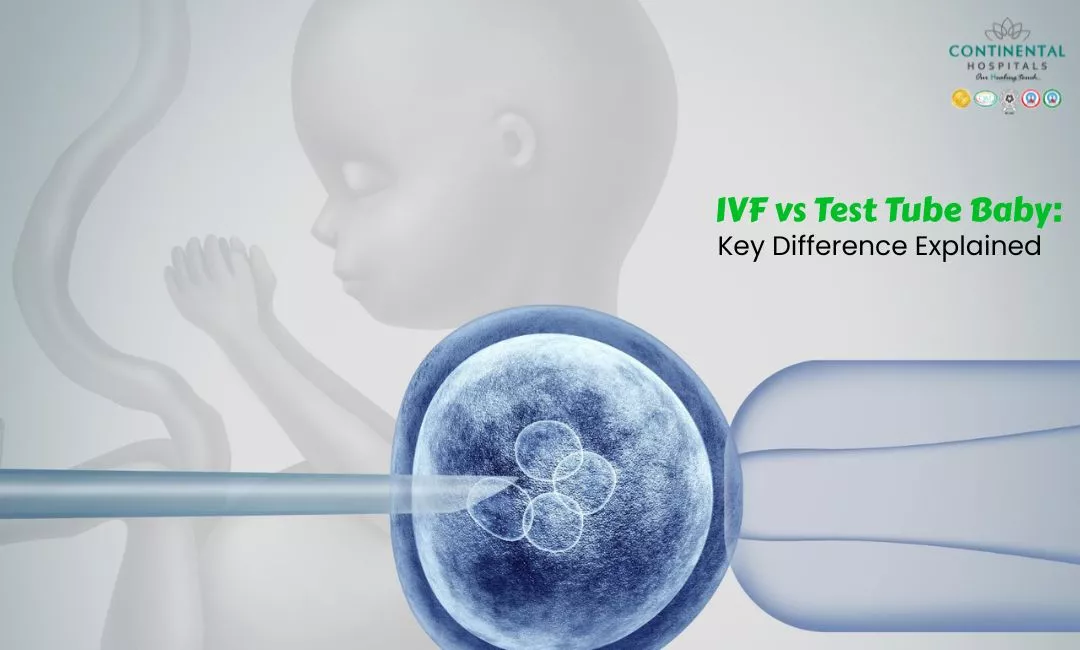
Infertility affects millions of couples worldwide, and advances in reproductive medicine have made parenthood possible even when natural conception is challenging. Among the most widely discussed options are IVF and test tube baby treatments. While many people use these terms interchangeably, understanding the difference between IVF and test tube baby is important for making informed fertility decisions. This article explains IVF vs test tube baby, the treatment process, success rates, and why expert guidance is essential for achieving the best outcomes.
Facing fertility issues, hormonal imbalance, or ovulation problems? visit our Reproductive Medicine Speciality at Continental Hospitals, Hyderabad for expert IVF treatment and care.
What is IVF Treatment?
IVF, or In Vitro Fertilization, is a medically assisted fertility procedure where eggs and sperm are combined outside the body in a controlled laboratory environment. IVF meaning in fertility revolves around helping couples who face difficulty conceiving naturally due to factors such as:
- Ovulation disorders
- Low sperm count or poor sperm quality
- Blocked fallopian tubes
- Unexplained infertility
- Advanced maternal age
The IVF treatment process explained includes careful monitoring of ovulation, egg retrieval, fertilization in the lab, and embryo transfer into the uterus. IVF fertility treatment is widely recognized for its effectiveness and flexibility, allowing couples to explore options even when previous fertility treatments have failed.
What is a Test Tube Baby?
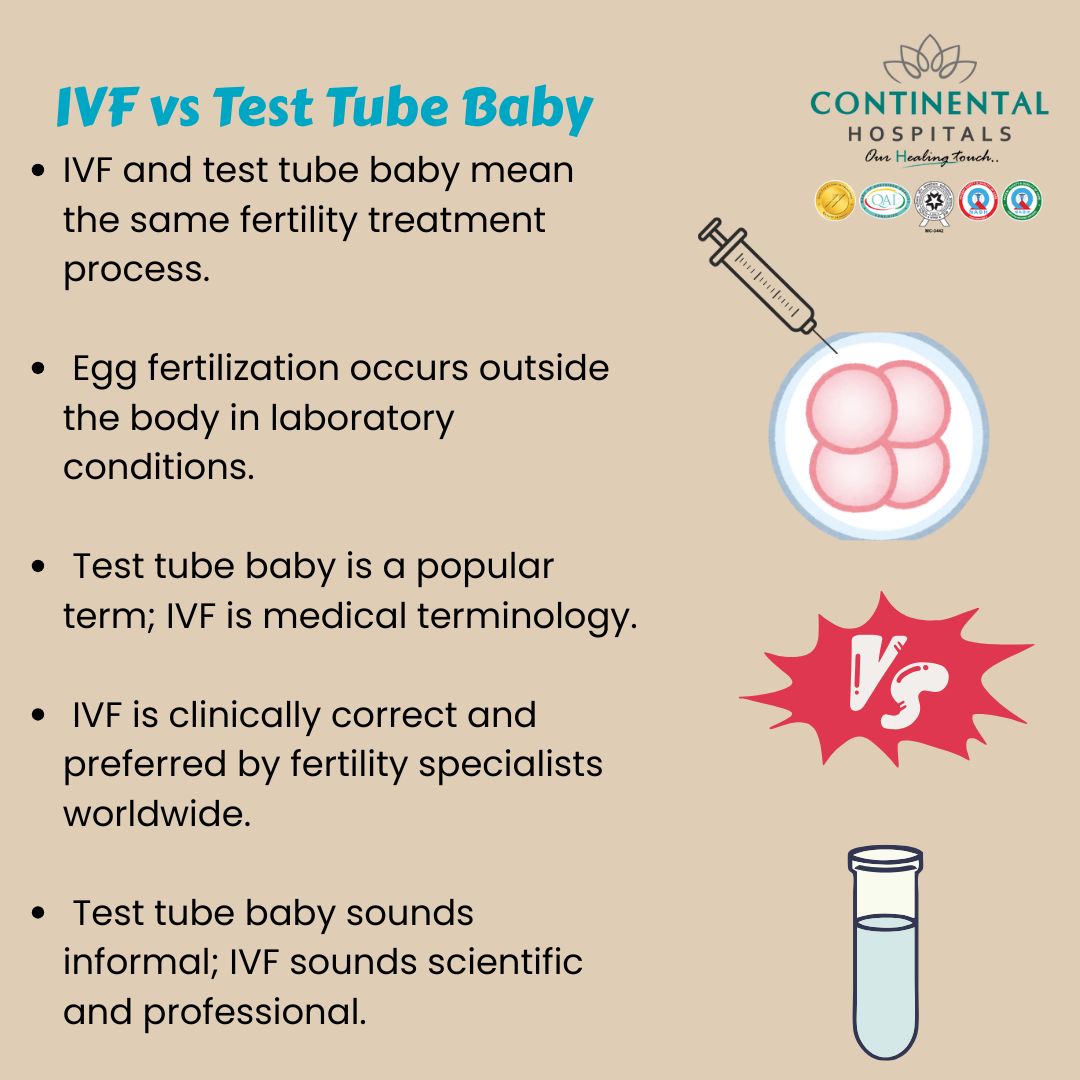
The term test tube baby refers to a baby conceived through IVF. Essentially, a test tube baby is the outcome of the IVF procedure, where fertilization occurs outside the body in a laboratory setting. The test tube baby procedure follows these steps:
- Ovulation stimulation and monitoring
- Egg retrieval
- Fertilization of eggs with sperm in a laboratory
- Embryo culture and selection
- Embryo transfer to the uterus
- Pregnancy confirmation and follow-up
The test tube baby meaning is sometimes misunderstood. It does not involve actual test tubes but emphasizes that fertilization occurs outside the body under expert supervision.
IVF vs Test Tube Baby: Key Difference
Many people ask, is IVF same as test tube baby? While closely related, there is a subtle difference:
- IVF is the treatment procedure used to facilitate conception outside the body.
- Test tube baby is the result of IVF treatment, meaning a baby conceived through this method.
The IVF vs test tube baby difference lies in perspective: IVF is the process, and a test tube baby is the outcome. Understanding this distinction helps patients communicate effectively with fertility specialists and understand the treatment journey.

IVF Procedure Step by Step
The IVF procedure step by step ensures clarity for patients considering fertility treatment. The steps include:
Ovarian Stimulation – Hormonal medications stimulate egg production.
Egg Retrieval – Eggs are collected from the ovaries under anesthesia.
Sperm Collection – Sperm is collected from the male partner or donor.
Fertilization in Lab – Eggs and sperm are combined under controlled conditions.
Embryo Culture – Fertilized eggs develop into embryos over a few days.
Embryo Transfer – One or more healthy embryos are transferred to the uterus.
Pregnancy Test and Follow-Up – Monitoring ensures successful implantation and pregnancy progression.
This process is the same for test tube baby procedures, as both involve IVF technology.
IVF Treatment for Infertility: Who Should Consider It?
IVF fertility treatment is recommended for couples experiencing:
- Blocked or damaged fallopian tubes
- Low sperm count or motility issues
- Ovulation disorders
- Unexplained infertility after repeated attempts
- Previous failed fertility treatments
Couples seeking IVF treatment in India have access to advanced laboratories, skilled specialists, and comprehensive care to optimize success rates.
Test Tube Baby Success Rate
Test tube baby success rate depends on multiple factors, including age, health conditions, fertility history, and the expertise of the IVF centre. Couples can improve outcomes by choosing:
- Experienced IVF doctors and embryologists
- Advanced IVF lab facilities
- Personalized treatment plans
Understanding success rates and consulting an experienced reproductive medicine specialist can guide couples in setting realistic expectations for IVF and test tube baby procedures.
Why Lab Technology is Crucial
Advanced IVF technology ensures high precision in fertilization and embryo culture. Key aspects include:
- State-of-the-art incubators for optimal embryo growth
- Microscopy and monitoring systems for embryo assessment
- Quality control measures to maintain laboratory standards
- Safety protocols and accreditations ensuring best practices
Modern laboratory technology directly impacts the IVF vs test tube baby difference by improving fertilization and implantation success, ensuring healthy outcomes.
Choosing the Right IVF Centre
Selecting the best IVF centre in Hyderabad is essential for success. Consider the following factors:
- Experienced IVF doctors in Hyderabad with proven track records
- Accredited IVF lab facilities maintaining global standards
- Personalized fertility care including counseling and support
- Comprehensive IVF treatment options and consultation services
- Transparent communication and ethical practices
Continental Hospitals, recognized as one of the top IVF hospitals in Hyderabad, combines all these factors to deliver reliable, patient-focused care. The hospital holds reputed accreditations reflecting its commitment to safety, quality, and ethical standards.
Why Choose Continental Hospitals for IVF Treatment?
Continental Hospitals is recognized as one of the best hospitals in Hyderabad for advanced fertility care among the best IVF centres in Hyderabad, offering:
- Experienced reproductive medicine specialists and IVF doctors
- Advanced IVF lab facilities and technology
- Personalized treatment plans tailored to individual fertility needs
- Comprehensive support, including counseling and patient care services
- Accredited hospital infrastructure ensuring safety and quality
Choosing Continental Hospitals ensures that couples receive expert IVF fertility treatment with a high level of professionalism, care, and success.
Conclusion
IVF vs test tube baby is often misunderstood, but the distinction is simple: IVF is the treatment procedure, and a test tube baby is the successful outcome of this procedure. Couples facing infertility can achieve parenthood through careful planning, expert guidance, and advanced fertility technology.
If you suffer from fertility issues, hormonal imbalance, ovulation disorders, or male infertility, consult our best Reproductive Medicine Specialist at Continental Hospitals, Hyderabad. Expert guidance, advanced IVF treatment, and compassionate care will help you take the right steps toward achieving your dream of parenthood.