.webp)


Abdominal pain is one of the most common reasons people visit a doctor. Sometimes it feels mild and goes away on its own. Sometimes it becomes sharp, persistent, and worrying. When the discomfort is located in the lower right side, it needs special attention because this area contains important organs. Understanding lower abdominal pain can help you act quickly and seek the right care.
What Is Lower Right Abdominal Pain?
Lower abdominal pain refers to discomfort felt in the lower portion of the abdomen. When the pain is specifically on the right side, it may involve organs such as the appendix, part of the large intestine, urinary tract, and in women, the right ovary and fallopian tube.
Abdominal pain can feel dull, sharp, cramping, or burning. Some people describe it as stomach pain, while others feel pressure or heaviness. The type of sensation often gives important clues during abdominal pain assessment.
If you have persistent abdominal, stomach, or lower abdominal pain, visit our Gastroenterology Department at Continental Hospitals for expert diagnosis and advanced care.
Why Does Abdominal Pain Occur?
There are many abdominal pain causes. Some are simple and temporary. Others may require urgent medical attention.
Common lower abdominal pain causes include:
• Appendicitis
• Urinary tract infection
• Kidney stones
• Constipation
• Gastroenteritis
• Hernia
• Ovarian cysts
• Ectopic pregnancy
• Inflammatory bowel disease
Each of these conditions presents differently, which is why professional abdominal pain assessment is important.

Appendicitis: A Serious Concern
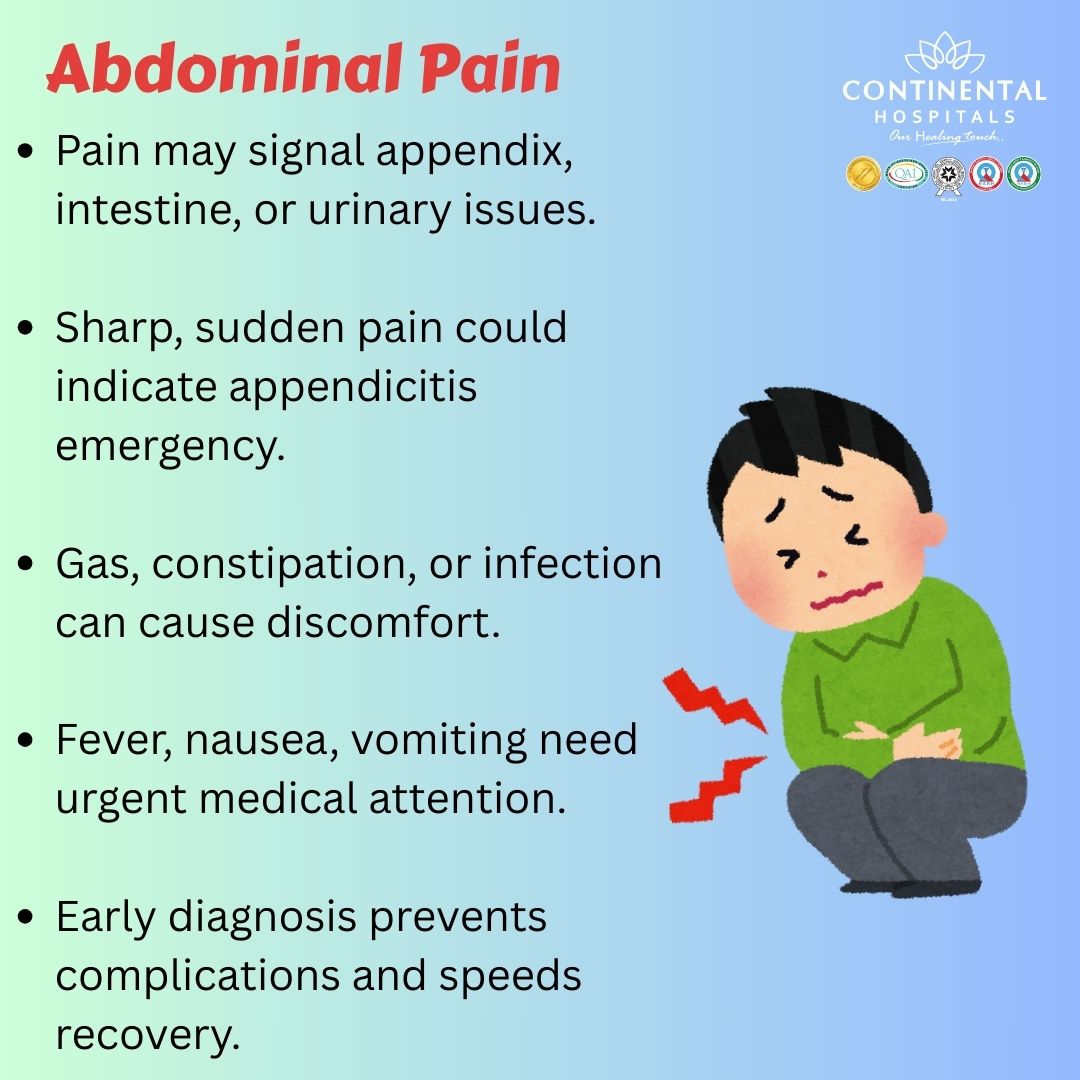
One of the most common causes of lower right abdominal pain is appendicitis. The appendix is a small pouch attached to the large intestine. When it becomes inflamed, abdominal pain usually starts near the belly button and shifts to the lower right side.
Symptoms may include:
• Sharp pain that worsens with movement
• Fever
• Nausea or vomiting
• Loss of appetite
• Swelling of the abdomen
If untreated, the appendix can rupture. Immediate medical attention is essential.
Digestive Causes of Abdominal Pain
Not all abdominal pain is dangerous. Sometimes, digestive issues are responsible.
Constipation can cause lower abdominal pain and bloating. Gas accumulation can create cramping stomach pain. Gastroenteritis, commonly known as a stomach infection, may lead to diarrhea, vomiting, and abdominal pain.
Irritable bowel syndrome and inflammatory bowel disease are chronic conditions that also cause recurring abdominal pain. These require long term management by a gastroenterologist.
Urinary and Kidney Problems
Lower right abdominal pain can also come from the urinary system. A urinary tract infection may cause burning during urination, frequent urges, and abdominal pain.
Kidney stones can cause intense stomach pain that radiates to the back or groin. The pain may come in waves and can be extremely uncomfortable.
Early abdominal pain assessment helps prevent complications from these conditions.
Gynecological Causes in Women
In women, lower abdominal pain causes often involve reproductive organs.
Possible reasons include:
• Ovarian cysts
• Pelvic inflammatory disease
• Endometriosis
• Ectopic pregnancy
These conditions may also cause irregular periods, unusual discharge, or severe cramping. Prompt evaluation by a gynecologist is essential if abdominal pain is severe or accompanied by other symptoms.
Warning Signs You Should Not Ignore
While mild abdominal pain may improve with rest, certain signs require urgent medical care:
• Severe or worsening abdominal pain
• High fever
• Persistent vomiting
• Blood in stool or urine
• Fainting or dizziness
• Pain during pregnancy
If you experience these symptoms, do not delay seeking treatment.
How Doctors Diagnose Lower Abdominal Pain
Accurate abdominal pain assessment involves several steps.
Medical history: Doctors ask about the location, duration, and type of abdominal pain.
Physical examination: Gentle pressing on different areas helps identify tenderness or swelling.
Diagnostic tests may include:
• Blood tests
• Urine tests
• Ultrasound
• CT scan
• MRI
• Endoscopy
These tests help determine the exact abdominal pain causes and guide treatment.
Treatment Options for Abdominal Pain
Abdominal pain relief depends on the underlying condition.
For mild digestive issues:
• Hydration
• Light diet
• Rest
• Over the counter medications as prescribed
For infections:
• Antibiotics
For kidney stones:
• Pain management
• Increased fluids
• Specialized procedures if required
For appendicitis:
• Surgical removal of the appendix
For gynecological conditions:
• Hormonal therapy
• Medication
• Minimally invasive surgery
The key to effective abdominal pain relief is early diagnosis.
When Is Surgery Needed?
Surgery is recommended in conditions such as:
• Appendicitis
• Complicated hernia
• Severe ovarian cysts
• Intestinal obstruction
At Continental Hospitals, advanced laparoscopic techniques allow smaller incisions, faster recovery, and reduced hospital stay.
Why Choose Continental Hospitals?
Continental Hospitals is widely recognized as the best hospital in Hyderabad for comprehensive care.
Here is why patients trust us for abdominal pain treatment:
• NABH and JCI accredited hospital ensuring global standards of safety and quality
• Highly experienced gastroenterologists, general surgeons, urologists, and gynecologists
• Advanced diagnostic imaging technology for precise abdominal pain assessment
• 24 hour emergency services
• Multidisciplinary approach for complex cases
• Patient centered care with clear communication
Our accreditations reflect our commitment to international healthcare standards. Every diagnosis and treatment plan follows evidence based protocols to ensure safety and effectiveness.
How to Prevent Certain Causes of Abdominal Pain?
While not all abdominal pain can be prevented, you can reduce risks by:
• Eating a balanced, fiber rich diet
• Drinking adequate water
• Maintaining regular bowel habits
• Practicing safe hygiene
• Managing stress
• Attending routine health checkups
If you have chronic stomach pain or recurring lower abdominal pain, do not ignore it. Early consultation prevents complications.
Frequently Asked Questions
What does lower right abdominal pain mean?
It can indicate appendicitis, digestive issues, urinary infections, or gynecological conditions. Proper evaluation is necessary.
Can abdominal pain go away on its own?
Mild abdominal pain caused by gas or indigestion may resolve. Severe or persistent pain needs medical attention.
How is abdominal pain diagnosed?
Through medical history, physical examination, and imaging tests such as ultrasound or CT scan.
When should I worry about stomach pain?
If pain is severe, sudden, accompanied by fever, vomiting, or bleeding, seek immediate care.
Conclusion
Abdominal pain should never be ignored, especially when it occurs in the lower right side. While some causes are minor, others such as appendicitis or kidney stones require urgent treatment. Understanding abdominal pain causes, recognizing warning signs, and seeking timely abdominal pain assessment can protect your health.
If you are suffering from persistent abdominal pain, stomach pain, or lower abdominal pain, consult the expert team at Continental Hospitals. Consult our best gastroenterology to provide comprehensive evaluation and advanced treatment options.
Related Blog Topics: