.webp)

Prediabetes is a silent condition that affects millions of people and often goes unnoticed until it progresses into type 2 diabetes. Understanding what is prediabetes, identifying prediabetes warning signs, and taking timely action can help you stay healthy and avoid long term complications. This guide explains everything you need to know in simple, clear language to help you take control of your health.
What is Prediabetes?
Prediabetes is a condition where your blood sugar levels are higher than normal but not high enough to be diagnosed as diabetes. It acts as an early warning stage. If not managed, it can lead to type 2 diabetes, heart disease, and other serious health problems.
Many people with prediabetes feel completely fine, which makes it even more important to stay aware and get regular health checkups.
Visit our diabetology department at Continental Hospitals, Hyderabad for expert care. Early diagnosis and personalized treatment can help prevent diabetes. Book now.
Why Prediabetes Matters?
Prediabetes is not just a temporary condition. It signals that your body is struggling to manage blood sugar levels. Ignoring it can increase the risk of:
- Type 2 diabetes
- Heart disease
- Stroke
- Nerve damage
- Kidney problems
The good news is that prediabetes can often be reversed with the right lifestyle changes.
Prediabetes Warning Signs
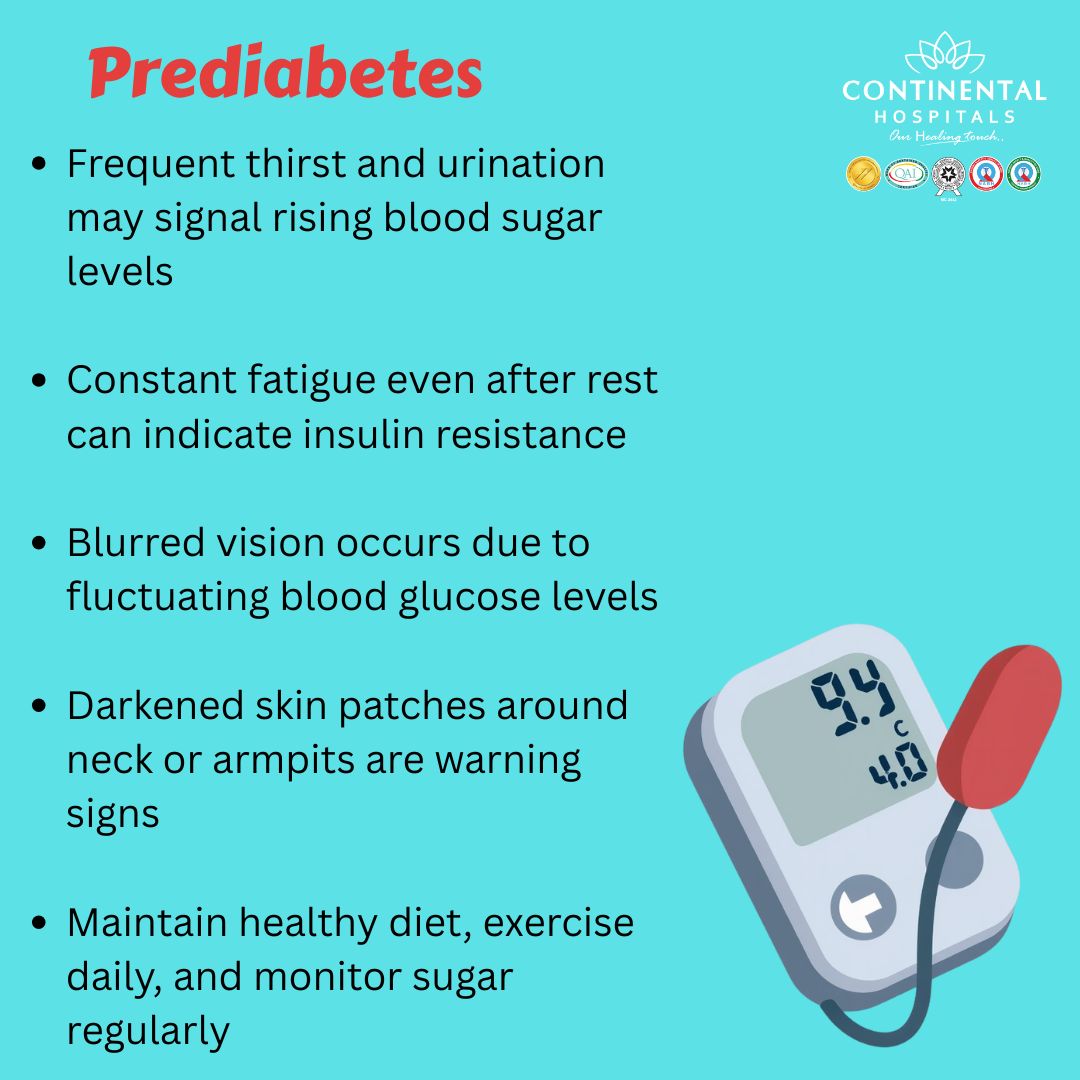
Most people do not notice clear symptoms of prediabetes, but there are subtle changes your body may show. Recognizing these prediabetes signs early can make a big difference.
Common Prediabetes Symptoms
- Increased thirst and dry mouth
- Frequent urination
- Feeling tired without reason
- Blurred vision
- Slow healing of wounds
- Increased hunger even after eating
Physical Signs to Watch

- Darkened skin patches around the neck, armpits, or elbows
- Slight weight gain, especially around the abdomen
- Tingling sensation in hands or feet
These symptoms of prediabetes are often mild and easy to ignore. That is why regular screening is essential.
Who is at Risk of Prediabetes?
Certain factors increase your risk of developing prediabetes. Understanding these can help you act early.
Risk Factors
- Family history of diabetes
- Being overweight or obese
- Sedentary lifestyle
- Unhealthy eating habits
- High blood pressure
- High cholesterol levels
- History of gestational diabetes
If you have one or more of these risk factors, it is important to monitor your health closely.
How is Prediabetes Diagnosed?
Doctors use simple blood tests to diagnose prediabetes. These tests measure how your body handles sugar.
Common Tests Include
- Fasting blood sugar test
- HbA1c test
- Oral glucose tolerance test
Regular testing helps detect prediabetes early and prevents complications.
How to Reverse Prediabetes?
One of the most important facts about prediabetes is that it can often be reversed. With consistent effort, you can bring your blood sugar levels back to normal.
Lifestyle Changes That Work
1. Eat a Balanced Diet
Focus on whole foods such as fruits, vegetables, whole grains, and lean proteins. Avoid processed foods and reduce sugar intake.
2. Stay Physically Active
Aim for at least thirty minutes of exercise most days of the week. Walking, cycling, and yoga are excellent options.
3. Maintain a Healthy Weight
Losing even a small amount of weight can significantly improve blood sugar levels.
4. Manage Stress
Stress can affect your blood sugar. Practice relaxation techniques like meditation or deep breathing.
5. Get Quality Sleep
Poor sleep can increase insulin resistance. Aim for consistent and restful sleep.
Prediabetes Treatment Options
Prediabetes treatment focuses mainly on lifestyle changes. However, in some cases, doctors may recommend medications to control blood sugar levels.
- Treatment Approaches
- Personalized diet plans
- Exercise programs
- Weight management strategies
- Monitoring blood sugar regularly
- Medications if required
Early intervention is the key to preventing the progression of prediabetes.
Prevention Tips for Prediabetes
Preventing prediabetes is possible with simple daily habits. These small steps can have a big impact on your health.
Easy Prevention Tips
- Choose healthy snacks over sugary foods
- Drink plenty of water
- Avoid sugary beverages
- Stay active throughout the day
- Schedule regular health checkups
- Limit alcohol consumption
- Quit smoking
Consistency is more important than perfection when it comes to prevention.
When Should You See a Doctor?
You should consult a doctor if you notice any prediabetes symptoms or if you have risk factors. Early diagnosis helps in better management.
Warning Signs That Need Medical Attention
- Persistent fatigue
- Frequent urination
- Unexplained weight changes
- Blurred vision
- Slow healing wounds
Do not ignore these signs. Timely care can prevent serious health issues.
Why Choose Continental Hospitals?
Choosing the right healthcare provider plays a crucial role in managing prediabetes effectively. Continental Hospitals is known for delivering advanced and patient-focused care.
Key Highlights
- Accredited by national and international healthcare organizations, ensuring high standards of quality and safety
- Experienced team of endocrinologists, diabetologists, and nutrition experts
- Advanced diagnostic facilities for accurate and early detection
- Comprehensive care plans tailored to individual needs
- Focus on preventive healthcare and lifestyle management
- Patient centric approach with modern infrastructure
As one of the best hospitals in Hyderabad, Continental Hospitals is committed to helping patients manage and reverse prediabetes with expert guidance.
Conclusion
Prediabetes is an early warning that your body needs attention. Understanding prediabetes symptoms, recognizing prediabetes warning signs, and taking preventive steps can protect you from serious health conditions. With the right lifestyle changes and medical support, it is possible to reverse prediabetes and live a healthy life.
If you are experiencing prediabetes symptoms or have risk factors, do not delay seeking expert care. Consult our best diabetologist in Hyderabad at Continental Hospitals for a complete evaluation and personalized prediabetes treatment plan. Early action can make all the difference in protecting your health.
Related Blog Topics: