
post-title

Treatment Options for Lymphoma: Chemotherapy, Immunotherapy, and Beyond

Written by - Editorial Team
Medically Reviewed by - Dr S K Gupta

Lymphoma is a type of cancer that begins in the cells of the lymphatic system, which is part of the body’s immune system. It can occur in lymph nodes or other parts of the body, including the spleen or bone marrow. There are several types of lymphoma, with two main categories: Hodgkin lymphoma and non-Hodgkin lymphoma. The good news is that with modern treatments, many people diagnosed with lymphoma can manage their condition effectively. Let’s explore the different treatment options available.

What are the treatment options for lymphoma?

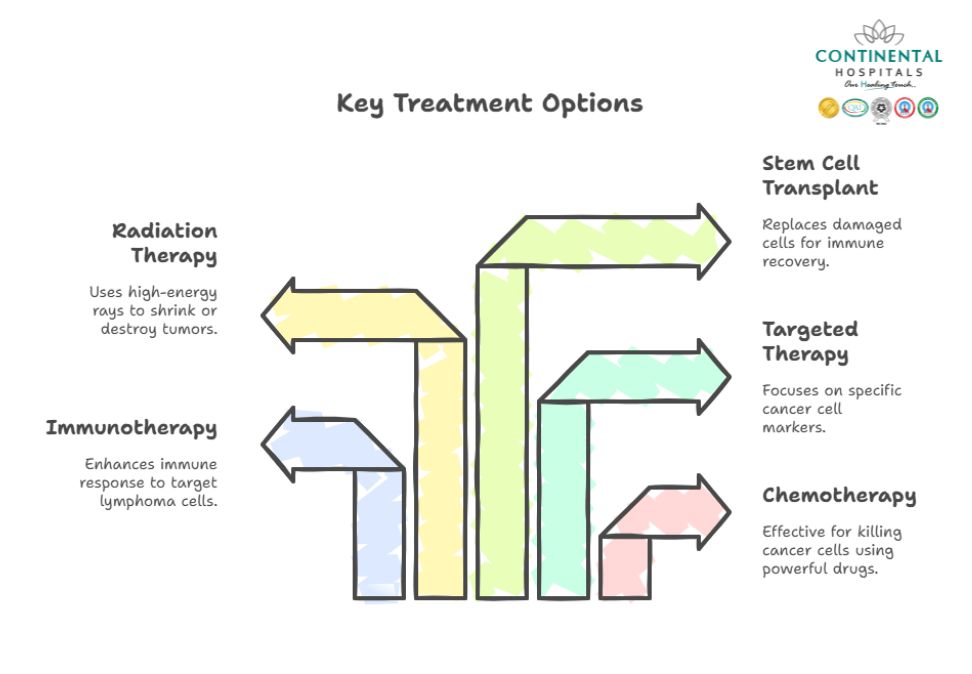
Lymphoma treatment depends on several factors, such as the type and stage of lymphoma, as well as the patient’s overall health. The goal of treatment is to destroy the cancerous cells while keeping the healthy ones intact. Let's break down the most common treatment options for lymphoma: chemotherapy, immunotherapy, and other newer treatments.
1. Chemotherapy: The Classic Approach

Chemotherapy is one of the most common treatments for lymphoma and has been used for decades. It involves the use of powerful drugs to kill cancer cells or stop them from growing. Chemotherapy drugs are typically delivered through an intravenous (IV) drip or taken orally, depending on the specific drugs prescribed.

Imagine chemotherapy as a team of tiny warriors fighting off the cancer cells. These drugs travel through your bloodstream and target the fast-growing cancer cells. However, since chemotherapy affects all fast-growing cells, it may also damage healthy cells, which can lead to side effects like hair loss, nausea, and fatigue. But don't worry, these side effects are usually temporary and will subside once treatment is finished.

Visit our Best Cancer Specialist in Hyderabad at Continental Hospitals for expert evaluation, accurate diagnosis, and advanced lymphoma treatment tailored to your needs.

2. Immunotherapy: Harnessing the Body’s Defense

Immunotherapy is an innovative treatment that works by boosting your immune system to fight cancer. Unlike chemotherapy, which directly attacks cancer cells, immunotherapy helps the body’s natural defenses recognize and destroy lymphoma cells.

There are several types of immunotherapy used to treat lymphoma:

Monoclonal Antibodies: These are laboratory-made molecules that can target specific proteins on cancer cells. By attaching to these proteins, they help the immune system destroy the cancer cells.

Second Opinion

Checkpoint Inhibitors: These drugs work by blocking proteins that prevent immune cells from attacking cancer cells. They allow the immune system to recognize and destroy lymphoma cells more effectively.

Think of immunotherapy as giving your immune system a boost, helping it fight cancer more efficiently. The advantage of immunotherapy is that it generally has fewer side effects than chemotherapy, and it often works when other treatments don’t.

3. Radiation Therapy: Targeted Treatment

Radiation therapy is another option, especially for patients with localized lymphoma (where cancer is limited to a single area). This treatment uses high-energy rays to target cancer cells and shrink tumors. It’s like using a laser beam to focus on the problem area, killing cancer cells without affecting too much of the surrounding healthy tissue.

While radiation therapy can be very effective for certain types of lymphoma, it’s typically used in combination with other treatments like chemotherapy. It may also be used if lymphoma relapses after initial treatment.

4. Stem Cell Transplant: A Fresh Start for Your Immune System

In cases where lymphoma relapses or doesn’t respond to other treatments, doctors may suggest a stem cell transplant. This procedure involves replacing the patient’s diseased bone marrow (where blood cells are made) with healthy stem cells. Stem cells can come from the patient (autologous transplant) or from a donor (allogeneic transplant).

Stem cell transplants give the patient a fresh start by rebuilding the immune system. The idea is that the new, healthy stem cells can help the body fight lymphoma more effectively. This treatment is often reserved for people with aggressive lymphoma or those whose lymphoma has returned after treatment.

5. Targeted Therapy: Precision Medicine

Targeted therapy is a newer approach that uses drugs to target specific molecules involved in cancer cell growth. Unlike chemotherapy, which attacks all rapidly dividing cells, targeted therapy focuses only on the cancer cells, minimizing damage to healthy cells.

Need an Appointment?

Targeted therapies can be used alone or in combination with chemotherapy or immunotherapy. One example is a drug called ibrutinib, which targets a protein called Bruton's tyrosine kinase (BTK). This protein plays a crucial role in lymphoma cell survival, and by blocking it, the drug can slow or stop lymphoma growth.

6. Clinical Trials: Exploring New Frontiers

While many patients benefit from traditional treatments, some people with lymphoma may consider participating in clinical trials. These trials test new treatments, drugs, or combinations of therapies that haven’t yet been approved by regulatory agencies.

Participating in a clinical trial could give you access to cutting-edge treatments that may not be available elsewhere. Many clinical trials are designed to find safer and more effective treatments for lymphoma, offering hope for future patients.

What Are the Side Effects of Lymphoma Treatments?

Lymphoma treatments, while effective, can come with some side effects. These side effects vary depending on the type of treatment. Some common side effects of chemotherapy include:

  • Hair loss
  • Nausea and vomiting
  • Fatigue
  • Increased risk of infection

Immunotherapy may cause flu-like symptoms, skin reactions, or even more serious side effects like organ inflammation. Stem cell transplants can lead to infection or complications with the new immune system.

Your healthcare team will work closely with you to manage and minimize these side effects, ensuring you feel as comfortable as possible during treatment.

Conclusion

Lymphoma is a serious illness, but with advancements in treatment, many people can live full, healthy lives after their diagnosis. Whether you’re receiving chemotherapy, immunotherapy, radiation therapy, or other specialized treatments, the goal is always to provide the best possible care tailored to your needs. By working closely with your medical team, you can navigate lymphoma treatment with confidence and hope.

Get expert lymphoma care at Continental Hospitals. Consult the best oncologist in Hyderabad for early diagnosis and treatment.

Related Blog Topics:

  1. Understanding Lymphoma: Types, Symptoms, and Risk Factors

Frequently Asked Questions

Treatment for lymphoma depends on the type of lymphoma, its stage, the patient's age, overall health, and specific genetic features of the cancer. The most common treatment options include chemotherapy, immunotherapy, targeted therapy, radiation therapy, stem cell transplantation, and CAR T cell therapy. Some patients with slow growing lymphoma may only need active surveillance until treatment becomes necessary. Doctors often combine two or more treatments to improve outcomes. Personalized treatment plans are developed after careful evaluation using imaging, biopsies, and laboratory tests. Advances in cancer care have significantly improved survival rates and quality of life for many lymphoma patients. Early diagnosis and timely treatment remain essential for achieving the best possible results.
Chemotherapy uses powerful medicines to destroy rapidly dividing lymphoma cells throughout the body. It is one of the most widely used treatments for both Hodgkin lymphoma and non Hodgkin lymphoma. Chemotherapy may be given as a single drug or as a combination of medications over several treatment cycles. The medicines are usually administered intravenously, although some are available in tablet form. While chemotherapy also affects some healthy cells, these cells typically recover after treatment. Side effects such as fatigue, nausea, hair loss, and lowered immunity can often be managed with supportive care. Regular monitoring helps doctors adjust treatment if needed. Many patients achieve complete remission with chemotherapy, especially when the disease is diagnosed early.
Immunotherapy strengthens the body's own immune system to recognize and attack lymphoma cells more effectively. It includes treatments such as monoclonal antibodies, immune checkpoint inhibitors, and CAR T cell therapy. These therapies target specific proteins found on cancer cells while minimizing damage to normal tissues. Immunotherapy is commonly used alone or in combination with chemotherapy, depending on the lymphoma subtype. It has shown excellent results in many patients with relapsed or difficult to treat lymphoma. Some patients experience fewer side effects compared with traditional chemotherapy. Doctors determine whether immunotherapy is appropriate based on the patient's diagnosis and overall condition. Ongoing research continues to expand the role of immunotherapy in lymphoma treatment.
Targeted therapy is recommended when lymphoma cells contain specific molecular or genetic changes that can be attacked with precision medicines. Unlike chemotherapy, targeted drugs focus on particular proteins or signaling pathways that help cancer cells survive and grow. This approach may improve treatment effectiveness while reducing damage to healthy cells. Targeted therapy is often used for certain types of non Hodgkin lymphoma and may be combined with chemotherapy or immunotherapy. It is also valuable for patients whose lymphoma has returned after previous treatment. Before starting therapy, doctors may perform specialized tests to identify suitable targets. Treatment response is monitored regularly through scans and blood tests. Targeted therapy has become an important part of personalized lymphoma care.
Yes, some lymphoma patients may be treated without chemotherapy depending on the type and stage of the disease. Certain slow growing lymphomas can be managed with active surveillance until symptoms develop. Others may respond well to immunotherapy, targeted therapy, radiation therapy, or a combination of these treatments. Some patients with localized lymphoma may achieve excellent outcomes with radiation therapy alone. The decision depends on factors such as tumor biology, disease spread, age, and overall health. Every treatment plan is personalized after thorough evaluation by a multidisciplinary cancer team. Patients should discuss the benefits and risks of each treatment option with their oncologist. Regular follow up remains important regardless of the chosen treatment approach.
CAR T cell therapy is an advanced form of immunotherapy that uses a patient's own immune cells to fight lymphoma. T cells are collected from the patient, genetically modified in a laboratory to recognize cancer cells, and then infused back into the body. These engineered cells actively seek and destroy lymphoma cells. CAR T cell therapy is usually recommended for certain patients whose lymphoma has returned or has not responded to standard treatments. It has produced remarkable results in many difficult cases. Because it is a specialized treatment, patients require careful monitoring for possible side effects. Not every patient is eligible, so doctors perform detailed evaluations before recommending this therapy. It represents a major advancement in modern lymphoma care.
Side effects vary depending on the treatment method, medication, and individual patient. Chemotherapy may cause fatigue, nausea, vomiting, hair loss, mouth sores, and increased risk of infections due to reduced blood cell counts. Immunotherapy may trigger immune related reactions affecting different organs, while targeted therapies can cause skin changes, diarrhea, or high blood pressure in some patients. Radiation therapy may lead to temporary skin irritation and tiredness. Most side effects can be effectively managed with medications, nutritional support, and regular medical supervision. Doctors closely monitor patients throughout treatment to detect complications early. Many side effects improve after therapy is completed. Patients should report any new symptoms promptly for timely care.
The success of lymphoma treatment depends on several important factors, including the specific type of lymphoma, the stage of disease, the patient's age, overall health, and response to treatment. Early diagnosis often leads to better outcomes because treatment can begin before the disease becomes more advanced. Certain genetic and molecular characteristics of the lymphoma also influence treatment selection and prognosis. Following the recommended treatment schedule and attending regular follow up appointments are essential for achieving the best results. Modern therapies have significantly improved survival rates for many lymphoma patients. Supportive care, healthy nutrition, physical activity, and emotional support also contribute to recovery. Close collaboration between patients and their oncology team helps optimize long term treatment success.
Disclaimer: The information provided in this blog is intended for general knowledge and informational purposes only, and does not constitute medical advice. Always consult with a qualified healthcare professional for any medical concerns or before making any decisions about your health.

Get in Touch With Us

Whether you are from India or abroad, we are here to help you with your medical queries. Please fill out the form below and our team will connect with you shortly.

  • ✔ Quick response from our medical experts
  • ✔ Secure data handling & privacy
  • ✔ Easy upload for reports & documents
0 / 100
Checkboxes Section


banner_image

Chat with our medical experts on WhatsApp for quick assistance and hassle-free appointment booking

Recent Posts
Language Based Image
0 / 100