• Share this:
post-title

Why Do You Sweat a Lot Even Without Exercise?

Written by - Editorial Team
Medically Reviewed by - Dr Yousef Ali

Sweating is a completely natural process that helps your body regulate its temperature. When you run, work out, or step into the hot sun, your brain signals your sweat glands to release moisture. As that moisture evaporates from your skin, it cools you down. However, when you start dripping with sweat while sitting in an air-conditioned room or during a quiet evening on the couch, it can feel confusing and uncomfortable.

If you find yourself constantly dealing with damp clothes or sweaty hands even when you are resting, you are not alone. This experience is more common than most people realize. While occasional sweating is harmless, sweating without exercise often points to internal triggers that warrant closer attention. Understanding why your body behaves this way is the first step toward finding relief.

What Is Excessive Sweating Without Any Physical Activity?

When your body produces significantly more sweat than is necessary to cool itself down, it is known as excessive sweating. In the medical world, this condition is often referred to as hyperhidrosis. It can present itself in two distinct ways.

The first type is focal hyperhidrosis, which typically causes targeted sweating on specific parts of the body like your palms, the soles of your feet, or underarms. The second type is generalized hyperhidrosis, where you experience heavy sweating all over your body. This often happens because the nervous system sends overactive signals to your sweat glands, even when there is no heat or physical exertion to trigger them.

If excessive sweating is affecting your daily life, don't ignore the symptoms. Visit our General Physician Department for a thorough evaluation and personalized treatment plan.

Is It Your Diet or Lifestyle That Causes Sweating?

Did you know that what you eat and drink can directly influence how much you sweat? Certain foods and beverages act as stimulants that mimic the effects of a workout on your body.

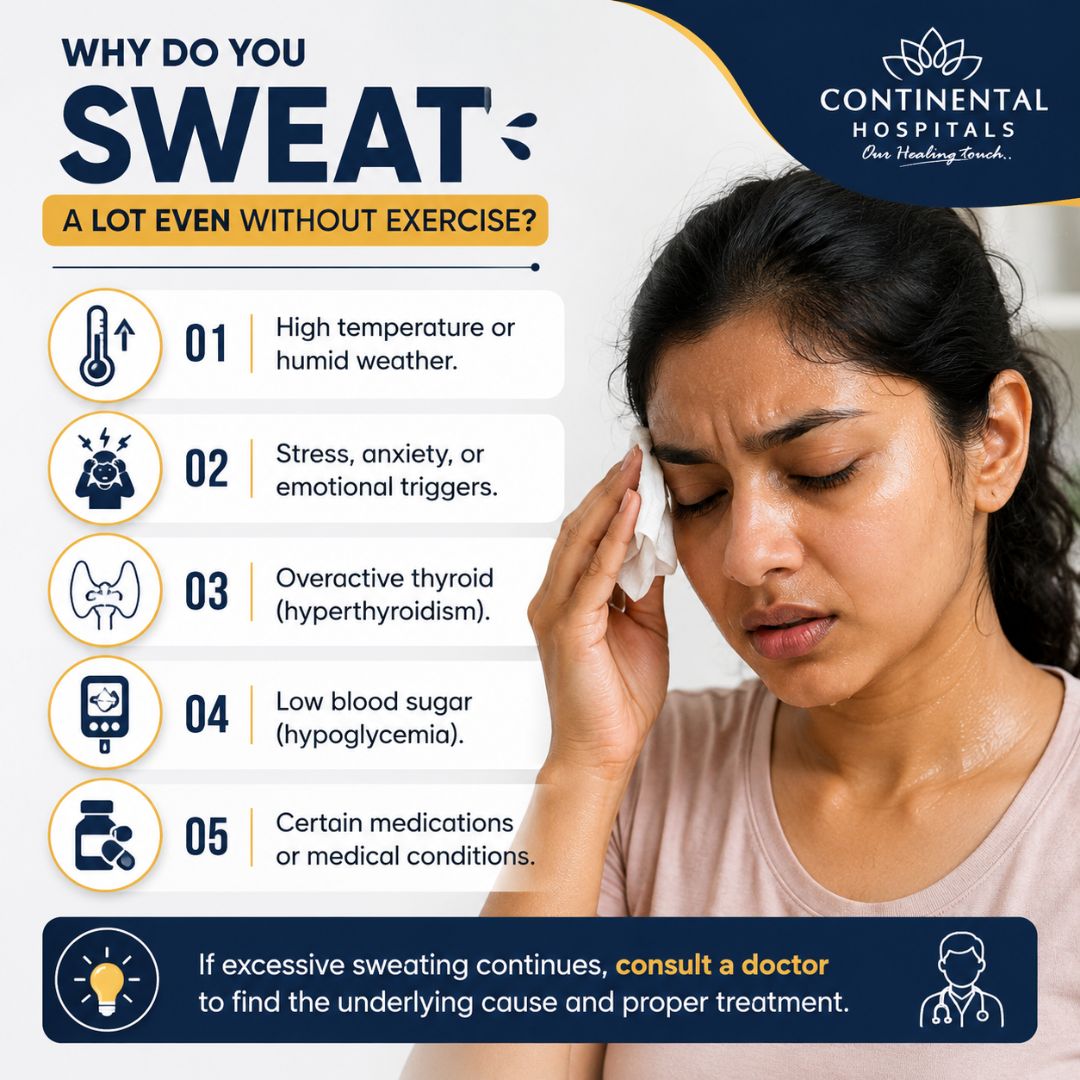
  • Spicy Foods: Dishes loaded with chili peppers contain a chemical compound called capsaicin. This compound tricks your brain into thinking your body temperature is rising, which immediately activates your sweat glands.
  • Caffeine: Your morning cup of coffee or energy drink stimulates your central nervous system. This stimulation kicks your sweat production into high gear.
  • Stress and Anxiety: When you feel nervous or overwhelmed, your body releases stress hormones like adrenaline. This reaction instantly triggers your sweat glands, particularly on your palms and forehead.
Could Hormonal Imbalances Be the Secret Trigger?

Hormones act as internal chemical messengers, and when their levels fluctuate, your body's internal thermostat can malfunction.

  • Thyroid Issues: An overactive thyroid gland speeds up your metabolism. This constant state of high metabolic activity generates internal heat, causing you to sweat frequently.
  • Menopause: Many women experience sudden hot flashes and night sweats due to dropping estrogen levels. The brain mistakenly senses that the body is overheating and tries to cool it down through heavy sweating.
  • Blood Sugar Drops: When blood glucose levels fall too low, the body treats it as an emergency, releasing adrenaline that causes sudden sweating and shakiness.

When Do Medical Conditions and Medications Play a Role?

Sometimes, sweating without exercise is a secondary symptom of an underlying health issue or a side effect of a specific medication.

  • Chronic Infections: Certain ongoing low-grade infections can cause your body to run a mild fever, leading to sweating as your immune system fights back.
  • Prescription Drugs: A variety of everyday medications, including certain antidepressants, blood pressure drugs, and diabetes treatments, list increased sweating as a known side effect.
  • Neurological Conditions: Because the nervous system controls your sweat glands, any disruption in nerve signaling can cause unexpected bouts of sweating.

How Does Sweating Impact Your Daily Quality of Life?

Dealing with excessive sweating is not just a physical inconvenience; it can take an emotional and social toll as well.

Second Opinion

  • Social Discomfort: Constantly worrying about visible sweat patches or damp clothing can make social interactions stressful.
  • Skin Irritation: Prolonged moisture on the skin can break down the skin barrier, leading to chafing, redness, and a higher risk of localized skin infections.
  • Daily Challenges: Having sweaty hands can make simple, everyday tasks difficult, such as typing on a laptop, holding a pen, or using a touchscreen smartphone.

Why Choose Continental Hospitals for Your Health Concerns?

When searching for the best hospital in Hyderabad to address persistent health concerns, Continental Hospitals stands out as a premier healthcare institution. We combine world-class medical expertise with compassionate care to ensure every patient receives an accurate diagnosis and an effective, personalized treatment plan.

Our hospital is widely recognized for its state-of-the-art infrastructure and advanced diagnostic facilities, allowing our specialists to uncover the exact root causes of complex symptoms like excessive sweating. We prioritize patient safety and clinical excellence above all else, ensuring you receive international standards of medical care right here in Hyderabad.

What Accreditations Reflect Our Commitment to Medical Excellence?

Continental Hospitals is built on a foundation of high-quality healthcare standards, which is proven by our prominent national and international accreditations.

  • NABH Accreditation: Our National Accreditation Board for Hospitals and Healthcare Providers accreditation ensures that we adhere to the highest standards of patient safety and quality care in India.
  • NABL Accreditation: Our laboratories hold National Accreditation Board for Testing and Calibration Laboratories certification, guaranteeing that all your diagnostic tests and blood work are highly accurate and reliable.
  • JCI Standards: We align our clinical protocols with Joint Commission International guidelines to maintain a globally recognized benchmark for patient care and treatment outcomes.

Conclusion

Sweating without exercise is a clear signal from your body that something requires your attention, whether it is a simple dietary habit, a hormonal shift, or an underlying medical condition. You do not have to live with the discomfort and embarrassment of persistent dampness. Consulting a qualified physician can help you pinpoint the exact cause and open the door to highly effective treatments that restore your comfort and confidence.

If you suffer from unexplained excessive sweating and want to regain control over your daily comfort, schedule a comprehensive evaluation with our expert team today. Contact Continental Hospitals to book an appointment with our best general physician in Hyderabad.

Related Blog Topics:

  1. What Causes Night Sweats?
  2. Say Goodbye to Sweat: How miraDry Stops Underarm Sweat

Need an Appointment?

Frequently Asked Questions

Sweating without exercise can occur for several reasons. Your body naturally produces sweat to regulate temperature, but excessive sweating at rest may indicate an underlying condition. Hot weather, stress, anxiety, spicy foods, caffeine, and certain medications can trigger sweating even when you are inactive. Medical conditions such as hyperthyroidism, diabetes, infections, hormonal changes, obesity, and hyperhidrosis can also cause excessive sweating. Some people have overactive sweat glands that produce more sweat than necessary. Night sweats may be linked to hormonal fluctuations, infections, or other health concerns. If sweating becomes excessive, interferes with daily life, or is accompanied by symptoms such as weight loss, fever, palpitations, or fatigue, it is important to consult a doctor for evaluation and proper diagnosis.
Hyperhidrosis is a medical condition characterized by excessive sweating beyond what the body needs for temperature regulation. It can affect the palms, soles, underarms, face, or the entire body. Primary hyperhidrosis usually begins during childhood or adolescence and is not caused by another illness. Secondary hyperhidrosis occurs due to an underlying medical condition or medication. People with hyperhidrosis may sweat heavily even in cool environments or while resting. The condition can affect social interactions, work performance, and emotional well being. Treatment options may include prescription antiperspirants, medications, lifestyle changes, botulinum toxin injections, or advanced procedures. A healthcare provider can determine the cause and recommend the most appropriate treatment plan.
Yes, stress and anxiety are common triggers of excessive sweating. When you feel nervous, anxious, or emotionally stressed, your body's fight or flight response becomes activated. This stimulates the sweat glands, particularly those located in the palms, soles, face, and underarms. Emotional sweating can occur even when the surrounding temperature is comfortable. Frequent episodes of stress related sweating may impact confidence and daily activities. In some individuals, chronic anxiety can worsen sweating symptoms over time. Managing stress through relaxation techniques, exercise, mindfulness, adequate sleep, and professional support can help reduce episodes. If excessive sweating persists despite stress management efforts, medical evaluation may be needed to rule out other causes.
Hormonal fluctuations are a common cause of increased sweating. Changes in hormone levels can affect the body's temperature regulation system and trigger sweat production. Women may experience excessive sweating during pregnancy, menopause, or around their menstrual cycles. Men and women with thyroid disorders may also notice increased sweating due to hormone imbalances. Conditions affecting the endocrine system can alter metabolism and body temperature, leading to frequent sweating episodes. Hot flashes and night sweats are particularly common during menopause. Identifying and treating the underlying hormonal issue can significantly reduce symptoms. If sweating is sudden, severe, or accompanied by other symptoms, a medical assessment is recommended.
Excessive sweating should be evaluated if it begins suddenly, worsens over time, or occurs without an obvious trigger. Sweating accompanied by chest pain, shortness of breath, dizziness, fever, unexplained weight loss, rapid heartbeat, or fatigue may indicate an underlying medical condition. Night sweats that regularly disrupt sleep should also be investigated. If sweating interferes with work, social interactions, or quality of life, professional medical advice is recommended. Early diagnosis can help identify conditions such as thyroid disorders, diabetes, infections, or hyperhidrosis. A doctor may recommend blood tests, hormone assessments, or other investigations to determine the cause. Timely treatment can improve comfort and overall health.
Yes, certain foods and beverages can stimulate sweat production. Spicy foods containing chili peppers often increase body temperature and activate sweat glands. Caffeine found in coffee, tea, and energy drinks can stimulate the nervous system and contribute to sweating. Alcohol may dilate blood vessels and increase perspiration in some individuals. Hot beverages can also temporarily raise body temperature and trigger sweating. Some people experience gustatory sweating, where sweating occurs while eating specific foods. Keeping a food diary may help identify personal triggers. Reducing or avoiding known triggers can lessen symptoms. If excessive sweating continues despite dietary changes, a medical evaluation may be necessary.
Yes, thyroid disorders, particularly hyperthyroidism, are a well known cause of excessive sweating. Hyperthyroidism occurs when the thyroid gland produces too much thyroid hormone, increasing metabolism and heat production. People with this condition may experience sweating, rapid heartbeat, nervousness, weight loss, tremors, and heat intolerance. Because the body generates more heat, sweat glands become more active to help cool the body. Proper diagnosis typically involves blood tests to measure thyroid hormone levels. Treatment of the underlying thyroid disorder often improves sweating symptoms. If excessive sweating is accompanied by other signs of thyroid dysfunction, medical consultation is strongly recommended.
Treatment for excessive sweating depends on its underlying cause. Lifestyle modifications such as wearing breathable clothing, staying hydrated, avoiding triggers, and managing stress can help. Medical treatments may include prescription strength antiperspirants, oral medications, iontophoresis, botulinum toxin injections, or other specialized therapies. If an underlying condition such as hyperthyroidism, diabetes, or infection is responsible, treating that condition is essential. In severe cases of hyperhidrosis, minimally invasive procedures or surgery may be considered. A healthcare provider will evaluate symptoms, medical history, and potential triggers before recommending treatment. Early intervention can improve comfort, confidence, and overall quality of life.
Disclaimer: The information provided in this blog is intended for general knowledge and informational purposes only, and does not constitute medical advice. Always consult with a qualified healthcare professional for any medical concerns or before making any decisions about your health.

Get in Touch With Us

Whether you are from India or abroad, we are here to help you with your medical queries. Please fill out the form below and our team will connect with you shortly.

  • ✔ Quick response from our medical experts
  • ✔ Secure data handling & privacy
  • ✔ Easy upload for reports & documents
0 / 100
Checkboxes Section


Chat with our medical experts on WhatsApp for quick assistance and hassle-free appointment booking

Recent Posts
Language Based Image
0 / 100