.webp)

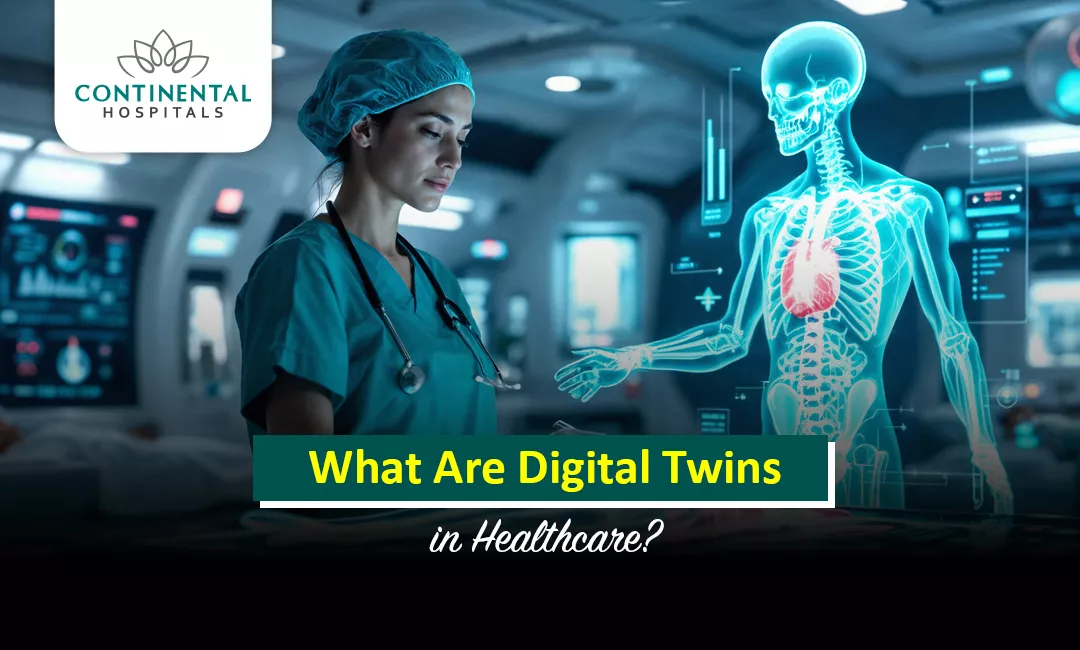
Healthcare is rapidly changing, thanks to advanced technologies. Among those technologies, one that is changing the face of modern-day medicine is digital twins. With the potential to facilitate personalized treatment planning and disease prediction, digital twins in healthcare are leading doctors to make better and faster clinical decisions.
Digital twin technology is emerging as a key part of digital healthcare innovation as it facilitates the creation of a virtual model of a patient, organ, medical device, or healthcare system based on real-time data. The resulting digital models allow doctors to better understand health conditions and foster enhanced treatment outcomes.
What Are Digital Twins?
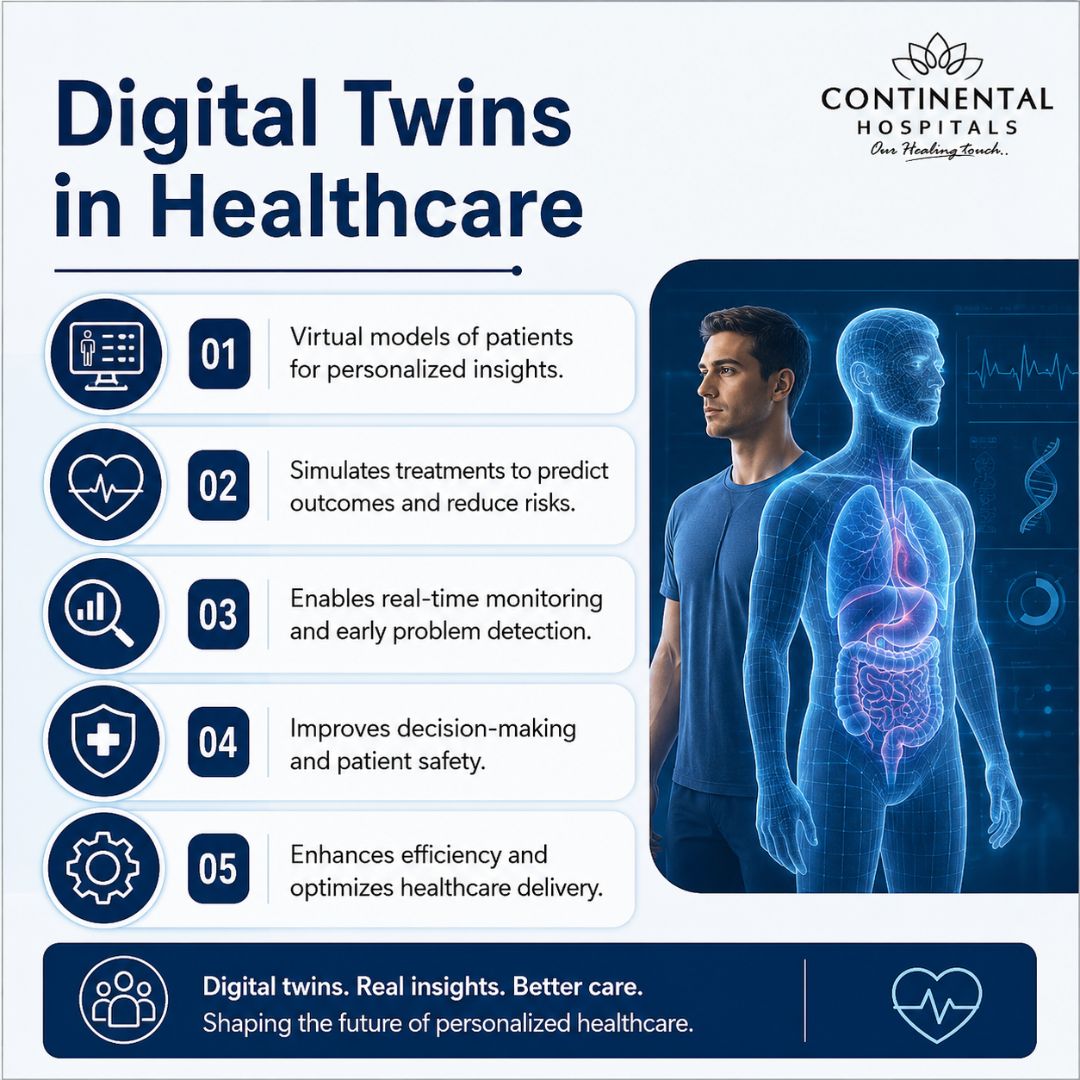
Digital twins are virtual copies of physical items or systems, spanning the entire spectrum of real-world objects. In healthcare, digital twins can be used to represent a person's body, or specific organs, or diseases using data from scans, laboratory tests, wearable devices, electronic medical records, and genetic information.
Health digital twins can be perpetually updated as real-time patient data is available, allowing doctors to track changes to the body, predict disease progression and to virtually test treatment options before applying them in reality.
For instance, digital twins of a person's heart can help cardiologists to gain an understanding of how the heart reacts to medications or surgeries. Likewise, a digital twin of a cancer patient might allow oncologists to personalize treatments based on the condition of the patient.
How Digital Twin Tech Works
Digital twin tech is built on top of multiple cutting-edge technologies, including:
• Artificial intelligence
• Machine learning
• Big data analytics
• Internet of Medical Things
• Cloud computing
• Wearable health devices
All of these technologies work together to scan and process patient information, leading the system to create a virtual patient that replicates the patient's real condition.
Doctors can simulate, predict, monitor, and personalize using healthcare digital twins to:

• Simulate treatment outcomes
• Predict disease risks
• Monitor patient recovery
• Improve surgical planning
• Personalize drugs
• Reduce complications
The convergence of AI in healthcare and digital twin technology is redefining the future of medicine.
Importance of Digital Twins in Healthcare
All patients are unique, and what works for one patient may not work for the other.
Digital twins are making a big deal in healthcare because they are driving the transformation into precision medicine. Medical digital twins help doctors in providing better individual medical care.
A few of the top advantages are as follows:
Improved Personalized Care
Doctors can plan treatment with a more personalized approach depending on an individual's health condition. Digital twins also help predict how the human body will respond to certain treatments or medications before actually implementing them.
Early Detection of Diseases
Digital twins continuously scan for potential warning signs that indicate diseases are about to occur, potentially leading to early detection, better treatment, and slowing down the diseases' impacts and complications.
Enhanced Surgical Planning
Doctors can simulate and perfect more complex procedures on a virtual patient model rather than an actual patient. Virtual surgeries reduce the chances of complications during and after surgery.
Real-time Monitoring of Recovery
Doctors can track a real patient's recovery in real-time using digital twins, making prompt interventions possible if necessary.
Decreased Medical Errors
Digital twin technology drives data-based decision-making, which helps doctors reduce the chances of prescribing wrong treatments and medications.
Digital Twins in Healthcare
Healthcare digital twins are already used in various medical fields.
Cardiology
In cardiology, healthcare digital twins are used to study heart diseases, anticipate complications, and improve treatment planning through virtual heart modeling. Digital twins are used by doctors as a means to assess blood circulation and heart rhythms and predict the results of specific surgical procedures.
Oncology
In oncology, healthcare digital twins are used to understand how tumors grow, as well as to test personalized therapies, enhancing the precision of cancer treatment.
Orthopedics
Digital twin technology is used to support surgical procedures and rehabilitation offers in orthopedics. In particular, doctors can use virtual models to study movement patterns and monitor the progress of patients' recovery.
Neurology
In neurology, healthcare twins are used to study brain activity and neurological disorders, which may improve stroke, epilepsy, and neurodegenerative diseases treatments.
Intensive Care Units
Digital twins facilitate the monitoring of critically ill patients in intensive care units. This technology offers real-time tracking, enabling doctors to promptly manage medical emergencies.
The Role of AI in Healthcare Digital Twins
AI in healthcare is key to SMARTER, ACCURATE, and efficient digital twins. Artificial intelligence can analyze huge amounts of data from patients within seconds and can spot patterns that humans cannot see.
AI in healthcare and its applications in digital twins:
• Predict disease trajectory
• Offer treatment options
• Spot health risks
• Provide better patient monitoring
• Assist clinical decision-making
Healthcare artificial intelligence and digital twin technology will enable doctors to provide safer and more effective treatments.
Future of Digital Healthcare Innovation
Digital healthcare innovation is evolving, and digital twins will be significant players in future medical technology. Opportunities include:
Virtual Hospitals
Digital twins can help hospitals manage patient flow, usage of medical equipment, and emergency management.
Personalized Drug Tests
Doctors can test drugs on healthcare digital twins before prescribing them to patients.
Smart Preventive Healthcare
Digital healthcare twins could predict future health issues and enable patients to take preventative steps early.
Remote Patient Care
Virtual patient technology can enable remote patient monitoring and telemedicine services, especially among patients with chronic illnesses or the elderly.
Digital healthcare innovation continues to progress, and healthcare digital twins could become commonplace in medical treatment worldwide.
Digital Twin Technology Challenges
In spite of all the advantages, digital twins still have challenges.
Data Security
Patient data must remain confidential. Hospitals should have strict data protection practices in place.
High Data Need
Digital twins require large amounts of accurate data.
Technical Complexity
Creating and maintaining digital healthcare twins requires advanced technology and skilled techniques.
Integration with Existing Systems
Hospitals need interoperable digital systems and advanced digital integration to use digital twin technology.
Even with technological and other challenges, healthcare institutions are investing more and more in digital healthcare innovation worldwide because of its huge potential for growers.
Why Continental Hospitals?
Continental Hospitals lies among the best hospitals in Hyderabad for high-quality patient care, medical expertise, and innovation-led healthcare services.
Highlights of Continental Hospitals include the following:
- Internationally-accredited healthcare services
- High-tech diagnostic & treatment solutions
- Clinically-experienced multi-specialty doctors
- State-of-the-art operation theatres, ICUs
- Patient-oriented comprehensive care
- Focus on digital healthcare innovation
- Advanced infrastructure for precision medicine & AI-initiated healthcare
Continental Hospitals is a globally accredited healthcare quality organization, ensuring patient safety, clinical excellence, and top-quality healthcare services.
Continental Hospitals continues to keep up with the modern technologies in healthcare for better diagnosis, treatment planning, and patient management.
Conclusion
The digital twins in healthcare, wherein a virtual patient model is deployed for the doctors to ensure a more personalized, predictive, and accurate treatment, have been a game-changer in contemporary medicine. From surgical procedures to disease tracking, digital twins have taken patient safety and clinical outcomes to a new level in many specialties.