post-title

What foods trigger heartburn symptoms?

Written by - Editorial Team
Medically Reviewed by - Dr Abhisekh Mohanty

Heartburn is a common digestive complaint that causes a burning sensation in the chest or throat. It usually occurs when stomach acid flows back into the food pipe. This condition is often linked to food choices and eating habits. Understanding which foods trigger heartburn can help you prevent discomfort and protect your digestive health.

What Is Heartburn and Why Does It Happen?

Heartburn occurs when the lower esophageal sphincter becomes weak or relaxed. This valve normally prevents stomach acid from moving upward. Certain foods can relax this valve or increase acid production, leading to symptoms like burning pain, sour taste, bloating, or nausea.

Occasional heartburn is common. Frequent symptoms may indicate acid reflux or gastroesophageal reflux disease.

If you suffer from frequent heartburn, visit our Best Cardiology Doctors in Hyderabad at Continental Hospitals for expert care and lasting digestive relief.

What foods commonly cause heartburn?

Different people react differently to foods. However, some items are known to trigger heartburn symptoms more often.

Spicy Foods

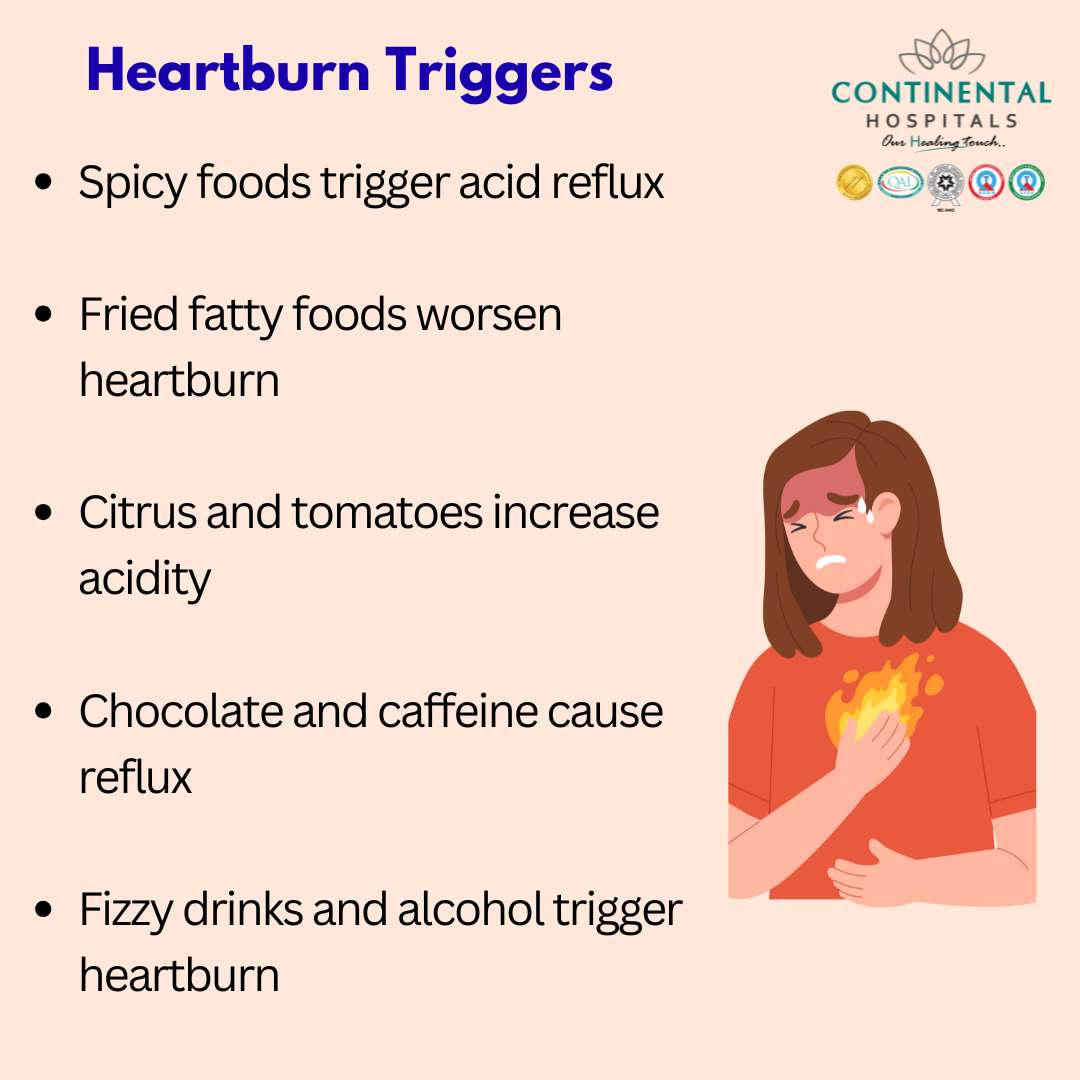
Spicy foods irritate the stomach lining and increase acid production. Chillies, hot sauces, and spicy curries are common triggers.

Fried and Fatty Foods

Deep fried foods slow digestion and relax the lower esophageal sphincter. This makes acid reflux more likely. Examples include fried snacks, fast food, and oily gravies.

Second Opinion

Citrus Fruits

Oranges, lemons, and grapefruits are acidic and can worsen heartburn symptoms, especially when eaten on an empty stomach.

Tomatoes and Tomato Based Foods

Tomatoes are naturally acidic. Tomato sauces, ketchup, and soups can trigger acid reflux in many people.

Chocolate

Chocolate contains compounds that relax the esophageal valve. It also has caffeine, which can increase acid secretion.

Coffee and Caffeinated Drinks

Need an Appointment?

Coffee stimulates acid production. Even decaffeinated coffee can trigger symptoms in sensitive individuals.

Carbonated Beverages

Sodas and fizzy drinks increase pressure in the stomach, making acid reflux more likely.

Alcohol

Alcohol irritates the stomach lining and relaxes the esophageal valve. Regular consumption increases the risk of chronic heartburn.
What foods cause acid reflux and GERD?

Some foods are more likely to trigger long term acid reflux or GERD symptoms.

  • High fat dairy products
  • Processed foods
  • Packaged snacks
  • Sugary desserts
  • Mint and peppermint products
  • Onions and garlic, especially raw

Avoiding or limiting these foods can help reduce acid indigestion and burning sensations.

Does Milk Cause Acid Reflux?

Milk may provide temporary relief by coating the stomach lining. However, full fat milk can increase acid production later. Low fat or skim milk is usually a better option for people with heartburn.

Can Banana Cause Acidity?

Bananas are generally safe and low in acid. For most people, bananas help soothe the stomach. However, very ripe bananas may trigger acidity in some individuals due to higher sugar content.

Heartburn Trigger Foods List

Here is a simple list of common acidity trigger foods:

  • Spicy foods
  • Fried foods
  • Citrus fruits
  • Tomatoes
  • Chocolate
  • Coffee
  • Carbonated drinks
  • Alcohol
  • High fat dairy
  • Processed snacks

Keeping a food diary can help identify which foods affect you personally.

What eating habits make heartburn worse?

Food choices matter, but eating habits also play a role.

  • Eating large meals
  • Eating late at night
  • Lying down immediately after meals
  • Eating too fast
  • Skipping meals and overeating later

Small, frequent meals and mindful eating can significantly reduce symptoms.

What foods help reduce heartburn symptoms?

Choosing the right foods can support digestion and reduce acid reflux.

  • Oatmeal
  • Bananas
  • Apples
  • Papaya
  • Green vegetables
  • Lean proteins
  • Whole grains
  • Low fat yogurt

These foods are gentle on the stomach and help maintain acid balance.

When Should You See a Doctor?

If heartburn occurs frequently, lasts for weeks, or interferes with daily life, medical evaluation is important. Warning signs include difficulty swallowing, unexplained weight loss, chest pain, or persistent nausea.

Early diagnosis helps prevent complications such as esophageal inflammation or ulcers.

Why Choose Continental Hospitals?

Continental Hospitals in Hyderabad is the best hospital in hyderabad for advanced digestive care and patient focused treatment. The hospital is accredited for high quality standards and follows strict safety protocols. With experienced Gastroenterologists, advanced diagnostic facilities, and a multidisciplinary approach, patients receive accurate diagnosis and effective treatment for acid reflux, GERD, and other digestive disorders. Personalized care plans ensure long term relief and improved quality of life.

Conclusion

Heartburn is often linked to everyday food choices. Spicy, fried, acidic, and processed foods are common triggers. Understanding what foods cause heartburn and acid reflux helps you make informed decisions and reduce discomfort. Simple dietary changes and healthy eating habits can make a big difference.

If you suffer from frequent heartburn, acid reflux, or GERD symptoms, consult our top cardiologists in Hyderabad at Continental Hospitals. Early diagnosis, expert treatment, and compassionate care can help you achieve lasting digestive comfort and better overall health.

Related Blogs:

  1. Heartburn After Meals? Signs Your Stomach Needs Attention
  2. Gerd diet foods that helps with acid reflux heartburn

Frequently Asked Questions

Several foods are known to trigger heartburn because they relax the lower esophageal sphincter (LES) or increase stomach acid production. Common triggers include spicy foods, fried foods, fatty meals, citrus fruits, tomatoes, onions, garlic, chocolate, peppermint, and caffeinated beverages. Carbonated drinks and alcohol can also worsen acid reflux symptoms. However, food triggers vary from person to person, so keeping a food diary can help identify individual causes. Eating smaller meals and avoiding lying down immediately after eating may also reduce symptoms. Choosing grilled, baked, or steamed foods instead of fried options can help protect your digestive health.
Spicy foods are a common trigger for heartburn, but they do not affect everyone the same way. Ingredients such as chili peppers and hot spices can irritate the esophagus and worsen acid reflux in sensitive individuals. Some people can tolerate spicy meals without discomfort, while others may experience burning sensations soon after eating. If you notice recurring symptoms after consuming spicy foods, it is best to limit or avoid them. Mild herbs and seasonings can be used as healthier alternatives. Monitoring your body's response is the best way to determine your personal tolerance.
Yes, both chocolate and coffee can contribute to heartburn in many people. Chocolate contains compounds that may relax the lower esophageal sphincter, allowing stomach acid to flow back into the esophagus. Coffee, whether regular or decaffeinated, may increase stomach acid production and trigger reflux symptoms in sensitive individuals. The effect varies depending on the person and the amount consumed. Reducing portion sizes or switching to less acidic beverages may help. If symptoms persist, discussing dietary changes with a gastroenterologist is recommended.
Fatty and fried foods are among the most common dietary triggers for heartburn and acid reflux. These foods slow stomach emptying and can relax the lower esophageal sphincter, making it easier for acid to move upward into the esophagus. Examples include deep-fried snacks, burgers, pizzas, creamy sauces, and high-fat desserts. Replacing fried foods with baked, grilled, or steamed options can reduce reflux symptoms. Eating moderate portions instead of large heavy meals also helps improve digestion and reduce discomfort.
Highly acidic fruits such as oranges, lemons, limes, grapefruits, and pineapples can trigger heartburn in some people. Their natural acidity may irritate the esophagus and worsen acid reflux symptoms. However, not everyone reacts the same way. Many individuals can safely enjoy non-acidic fruits like bananas, melons, apples, and pears without discomfort. Paying attention to your body's response is important when choosing fruits. Including a variety of low-acid fruits can provide essential nutrients while minimizing the risk of heartburn.
Yes, eating large meals can significantly increase the likelihood of heartburn. A full stomach creates extra pressure, making it easier for stomach acid to flow back into the esophagus. Large meals also slow digestion, which may prolong symptoms. Eating smaller, more frequent meals throughout the day can reduce pressure on the stomach. Avoid lying down for at least two to three hours after eating. Maintaining a healthy weight and practicing portion control are also effective strategies for preventing heartburn.
People with frequent heartburn often benefit from eating foods that are gentle on the stomach. Oatmeal, brown rice, whole grains, bananas, melons, leafy vegetables, broccoli, carrots, lean chicken, turkey, fish, and low-fat yogurt are generally well tolerated. Drinking water instead of sugary or carbonated beverages may also help. Preparing meals by grilling, baking, or steaming instead of frying can reduce symptoms. Every individual is different, so identifying foods that work well for you is essential for long-term symptom control.
Occasional heartburn is common, but frequent or severe symptoms should not be ignored. If heartburn occurs more than twice a week, does not improve with lifestyle changes, or requires regular medication, it may indicate gastroesophageal reflux disease (GERD). Seek medical attention immediately if you experience difficulty swallowing, unexplained weight loss, vomiting blood, black stools, persistent chest pain, or ongoing nausea. Early evaluation can help identify the underlying cause and prevent complications such as esophagitis or Barrett's esophagus. A gastroenterologist can recommend appropriate tests and treatment options.
Disclaimer: The information provided in this blog is intended for general knowledge and informational purposes only, and does not constitute medical advice. Always consult with a qualified healthcare professional for any medical concerns or before making any decisions about your health.

Get in Touch With Us

Whether you are from India or abroad, we are here to help you with your medical queries. Please fill out the form below and our team will connect with you shortly.

  • ✔ Quick response from our medical experts
  • ✔ Secure data handling & privacy
  • ✔ Easy upload for reports & documents
banner_image

Chat with our medical experts on WhatsApp for quick assistance and hassle-free appointment booking

Recent Posts