

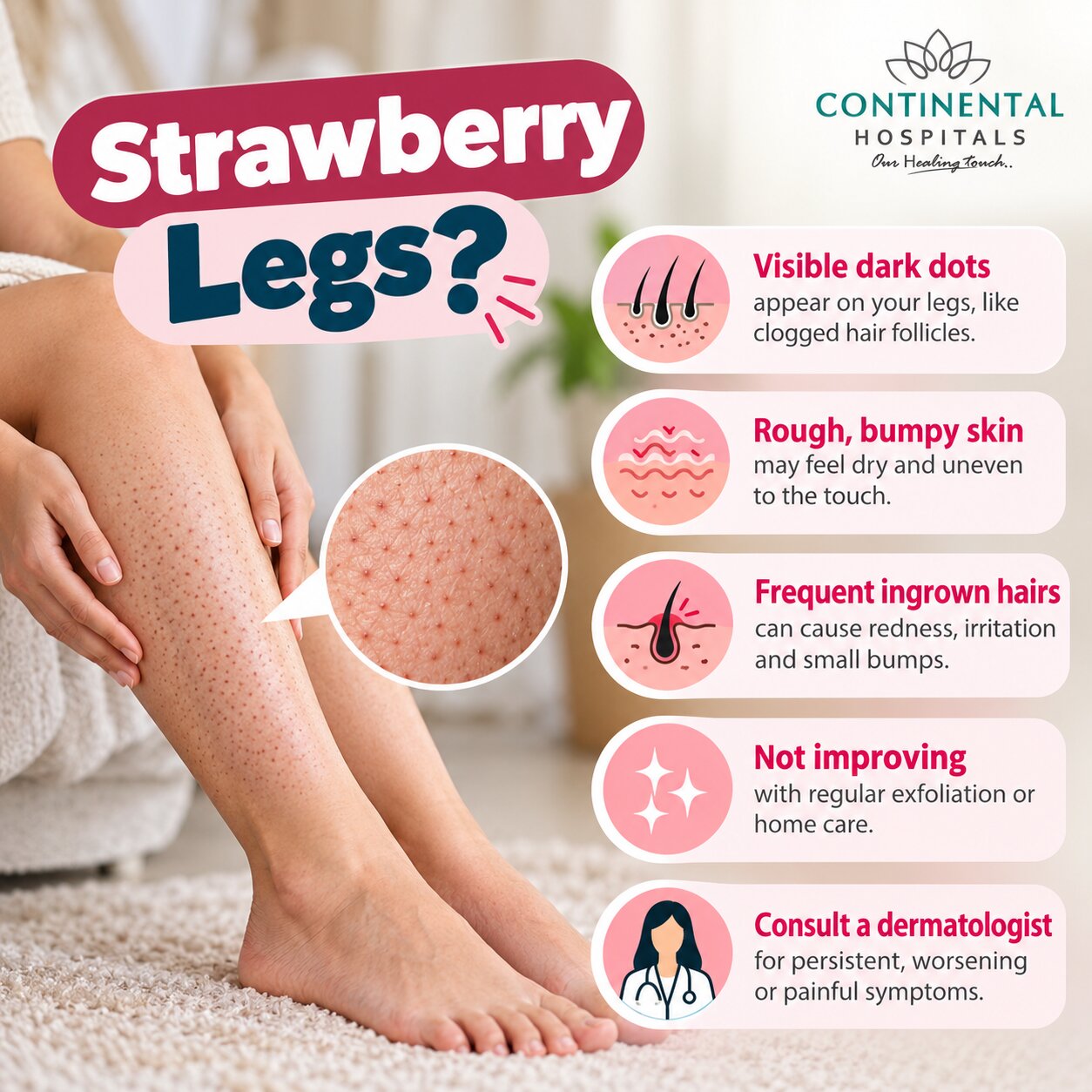
Strawberry legs is a common skin concern in which small dark spots appear on the legs, making the skin look similar to the surface of a strawberry. These spots often develop around hair follicles and may become more noticeable after shaving. Strawberry legs are usually harmless, but they can affect the appearance and smoothness of the skin.
What causes strawberry legs, and when should you seek professional help? Several factors, including clogged pores, ingrown hairs, dry skin, and inflammation of hair follicles, can contribute to this condition. Understanding the strawberry legs causes and choosing the right skincare routine can help improve your skin. However, if the dark spots persist, become painful, or develop signs of infection, consulting a dermatologist is important.
What Are the Common Symptoms of Strawberry Legs?
How can you identify strawberry legs? The condition usually appears as small, dark dots across the skin, particularly on the thighs and lower legs. The appearance may vary depending on your skin type and the underlying cause.
Common strawberry legs symptoms include:
- Small dark spots: Tiny black or brown dots appear around hair follicles.
- Visible pores: Hair follicles may look more noticeable than usual.
- Rough skin texture: The skin may feel uneven or bumpy.
- Ingrown hairs: Hair may grow back into the skin, causing small bumps.
- Redness or irritation: Some people experience irritation after shaving or hair removal.
- Dryness: Dry skin may make the spots and rough texture more noticeable.
Strawberry legs do not always cause discomfort. However, itching, pain, swelling, or pus may indicate another skin problem that needs medical attention.
Visit the Dermatology Department at Continental Hospitals, Hyderabad, for expert skin care and effective treatment options.
What Causes Strawberry Legs?
Why do dark spots appear on the legs? Strawberry legs can develop for several reasons, and more than one factor may contribute to their appearance.
The common strawberry legs causes include:
- Clogged pores: Oil, dead skin cells, and other debris can block hair follicles, making them appear dark.
- Shaving irritation: Using a dull razor or shaving without sufficient lubrication may irritate the skin.
- Ingrown hairs: Hair that grows back into the skin can cause bumps and dark marks.
- Folliculitis: Inflammation or infection of hair follicles may cause red bumps and spots.
- Dry skin: Lack of moisture can make the skin look rough and uneven.
- Keratosis pilaris: This common skin condition causes small, rough bumps around hair follicles.
Identifying the underlying cause helps determine the most suitable strawberry legs treatment.

How Can You Get Rid of Strawberry Legs at Home?
Can strawberry legs improve with simple skincare? Yes, mild cases may improve with gentle skin care and appropriate hair removal techniques. However, results depend on the cause and your skin type.
Here are some useful strawberry legs remedies:
- Exfoliate gently: Use a suitable exfoliating product to help remove dead skin cells. Avoid harsh scrubbing, which can worsen irritation.
- Moisturize daily: Apply a fragrance-free moisturizer to keep the skin soft and hydrated.
- Use a clean, sharp razor: Replace dull blades regularly to reduce irritation.
- Shave carefully: Wet the skin with warm water and use shaving gel or cream. Shave gently in the direction of hair growth.
- Avoid picking at spots: Picking can damage the skin and increase the risk of infection and dark marks.
- Protect your skin from the sun: Apply sunscreen to exposed legs to help prevent dark spots from becoming more noticeable.
Avoid using harsh home remedies or strong skincare products without guidance, especially if your skin is sensitive.
When Should You Consult a Dermatologist for Strawberry Legs?
When is professional treatment necessary? If strawberry legs do not improve with regular skincare, or if the skin becomes uncomfortable, a dermatologist can help identify the cause and recommend suitable treatment.
Consult a dermatologist if you notice:
- Persistent dark spots despite proper skincare.
- Painful, swollen, or increasingly red bumps.
- Pus or other signs of infection.
- Severe itching or skin irritation.
- Repeated ingrown hairs after shaving.
- Dark marks that continue to spread or worsen.
A dermatologist may examine your skin and recommend treatments based on the underlying condition. These may include moisturizers, chemical exfoliants, topical medicines, or treatment for folliculitis when appropriate. In selected cases, laser hair removal may help reduce recurring ingrown hairs and irritation associated with hair removal.
Why Choose Continental Hospitals for Dermatology Care?
Why is specialist care important for persistent strawberry legs? Similar-looking dark spots can develop from different skin conditions, so the right diagnosis helps prevent unsuitable treatments and further irritation.
Continental Hospitals, Hyderabad, provides comprehensive dermatology care supported by experienced specialists, modern diagnostic facilities, and multidisciplinary medical expertise. The hospital holds national and international healthcare accreditations, including National Accreditation Board for Hospitals and Healthcare Providers (NABH) and Joint Commission International (JCI), reflecting its commitment to established healthcare quality and patient safety standards.
Patients can receive an appropriate skin assessment and an individualized treatment plan based on their skin type, symptoms, and underlying condition. The aim is to improve skin health while reducing irritation and the risk of further skin changes.
Conclusion
Strawberry legs are a common skin concern that may result from clogged pores, shaving irritation, ingrown hairs, or other skin conditions. Gentle exfoliation, regular moisturizing, and proper shaving techniques may help improve mild cases. However, persistent dark spots or signs of inflammation should not be ignored.
If you suffer from persistent strawberry legs, recurring ingrown hairs, painful bumps, or unexplained dark spots on your legs, consult our best dermatologist in Hyderabad at Continental Hospitals, Hyderabad, for professional evaluation and personalized treatment. Early assessment can help identify the cause and guide you towards healthier, smoother skin.