.webp)


As people get older, changes tend to happen to the body. A common but often neglected health problem is sarcopenia, a progressive loss of muscle that accompanies aging. Many older people experience decreased strength and slower movements, making simple movements and daily tasks more difficult. Yet they may not be aware that these changes may be due to age-related muscle loss.
Sarcopenia is not a normal sign of aging. In fact, it is a serious medical condition that can have a negative effect on your mobility, your independence, your balance, and your overall health. Muscle strength is a major factor in staying healthy, preventing falls and accommodating healthy aging. Without intervention, sarcopenia could lead to an increased risk of fractures, longer lengths of hospital stay, and even long-term disability.
But the bright side with sarcopenia is that, in many cases, it can be managed or slowed down with a timely diagnosis, appropriate nutrition, exercise and medical treatment. Understanding the symptoms, causes, and treatment options can mean the difference between an older adult who remains active, independent, and healthier for longer.
Sarcopenia: What Is It?
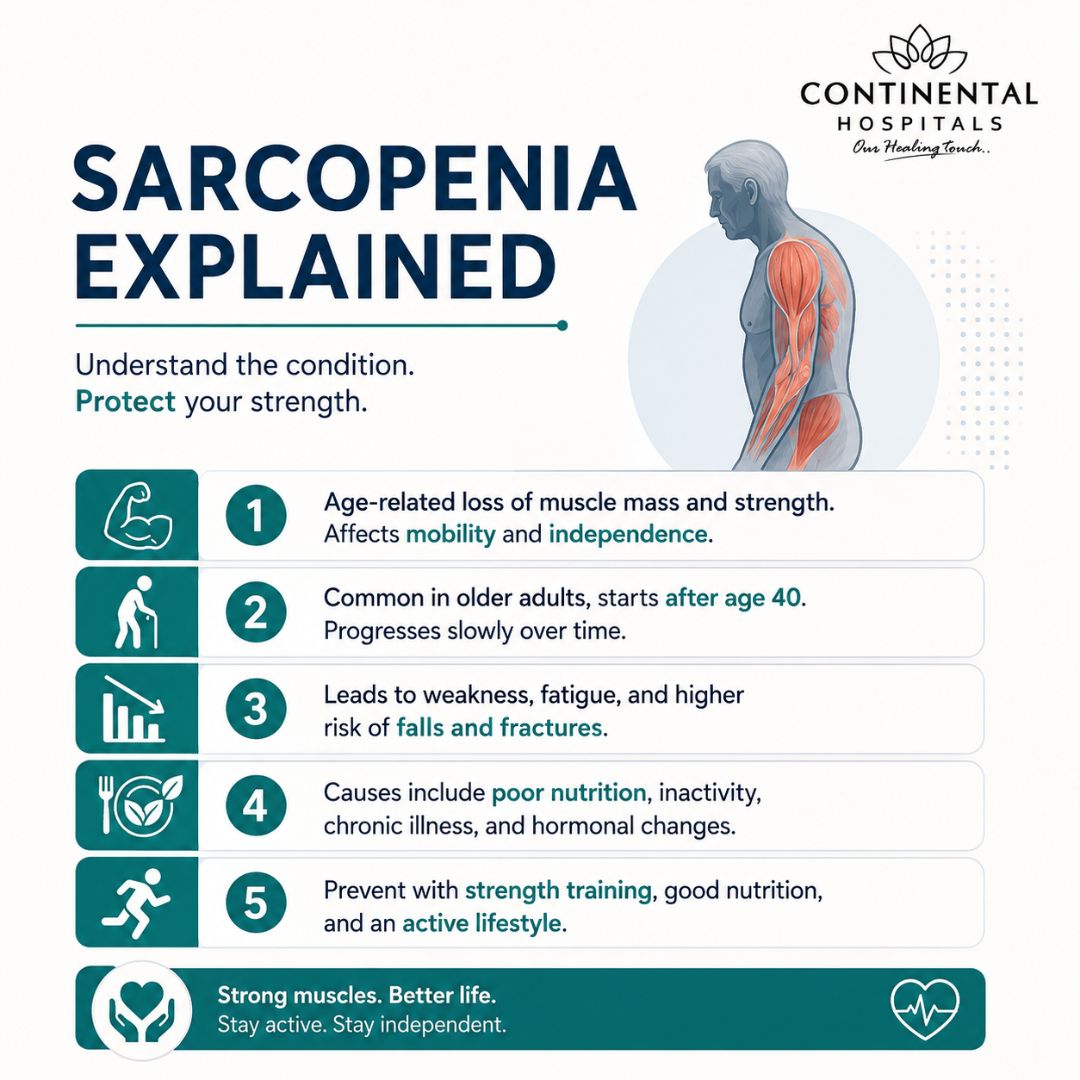
Sarcopenia is the progressive loss of muscle mass, strength, and function that typically happens with age. Whereas some degree of muscle loss with aging is normal, sarcopenia is characterized by a marked loss of muscle that leads to changes in physical performance and daily functioning.
This condition develops gradually after the age of 50 and can become exaggerated if not treated. Sarcopenia can affect walking, rising from a chair, lifting objects, ascending stairs, and maintaining balance.
For expert diagnosis and advanced treatment of sarcopenia, visit the Best Orthopedic Hospital in Hyderabad. Our experienced orthopedic specialists provide comprehensive care to help improve muscle strength, mobility, and overall quality of life.
What Are the Common Sarcopenia Symptoms?
Sarcopenia symptoms vary from person to person. For many patients, symptoms develop gradually and may be superficially attributed to natural aging.
Common sarcopenia symptoms include:
- Muscle weakness in older adults
- Smaller and weaker muscles
- Difficulty walking or climbing stairs
- Slow movement and poor balance
- Increased risk of falls and injury
- Leg and back fatigue; low energy level
- Difficulty carrying heavy objects in daily life
- Decreased physical fitness
If it is not properly treated, sarcopenia can lead to difficulties with independence and quality of life.

What Causes Age-Related Muscle Loss?
Age-related muscle loss can be caused by several different factors. A natural part of the aging process, it takes a further toll on muscle maintenance. Lifestyle choices and medical conditions can further worsen the condition.
What Are the Causes of Age-Related Muscle Loss?
Hormone levels fall, protein synthesis slows, and muscles are less able to repair themselves as people age. These natural processes contribute to the loss of muscle mass that often accompanies aging.
Show your face or your skull?
The lack of exercise is one of the strongest causes of sarcopenia. Muscles need consistent exercise and resistance training to stay strong.
How can poor nutrition cause sarcopenia?
Nutrition is important for maintaining good muscle health. Not eating enough protein, vitamin deficiencies, and poor overall nutrition can all speed up muscle loss and sarcopenia.
Which Medical Conditions Increase the Risk?
Some chronic health conditions are associated with an increased risk of sarcopenia, including:
- Diabetes
- Heart disease
- Obesity
- Arthritis
- Chronic kidney disease
- Neurological problems
Who Is More Prone to Having Sarcopenia?
Some people are more likely to get the condition than others.
Risk factors for sarcopenia are:
- Being over 60 years old
- Leading a sedentary lifestyle
- An unhealthy diet
- Smoking and binge drinking
- Long-term illness
- Hormonal imbalance
- Hospitalization/bed rest
Early detection and understanding can prevent a drastic loss of functional ability in older adults.
How Is Sarcopenia Diagnosed?
To diagnose sarcopenia, your doctor may use a physical exam, muscle strength testing, and imaging tests.
Diagnostic tests include the following:
- Grip strength test
- Walking speed test
- Measuring muscle mass
- Body composition test
- Physical performance test
Early detection can improve the prognosis because sarcopenia can be treated early to help preserve your independence.
What Are the Best Treatments for Sarcopenia?
Sarcopenia treatment aims to increase muscle strength, mobility, and quality of life.
How Does Exercise Help Treat Sarcopenia?
Physical activity, and particularly resistance and strength training exercises, is often regarded as one of the most successful forms of sarcopenia treatment.
Typical exercises include the following:
- Weight training
- Walking
- Stretching
- Balance training
- Low-impact aerobic exercise
Can Nutrition Help Sarcopenia?
A plentiful protein intake is critical for muscle repair. Doctors may suggest:
- Lean proteins
- Eggs, dairy products
- Nuts, seeds
- Vitamin D supplements
- Foods that are high in calcium
How to Prevent Sarcopenia in Older Adults?
The best way to prevent muscle loss with aging is to maintain healthy lifestyle routines.
Tips to help prevent sarcopenia:
- Be physically active every day
- Eat a balanced and high-protein diet
- Maintain adequate weight
- Avoid smoking/tobacco use and excessive alcohol use
- Routine health check evaluations
- Manage chronic medical conditions with frequent follow-ups
Even modest lifestyle changes can go a long way in preserving muscle strength and mobility.
When to See a Doctor for Sarcopenia?
See a doctor right away if you experience:
- Persistent muscle weakness
- Difficulty walking or standing
- Frequent falls
- Loss of muscle mass
- Trouble performing daily activities
- Ongoing fatigue or reduced mobility
Timely medical attention can help prevent complications and improve long-term health outcomes.
Why Choose Continental Hospitals for Sarcopenia Treatment?
Continental Hospitals is dedicated to providing the best care to patients suffering from sarcopenia and muscle weakness in elderly people.
Why is Continental Hospitals the best choice to treat sarcopenia?
- Experienced expert specialists in geriatric and rehabilitation care
- Equipment for diagnosis and treatment
- A multidisciplinary approach to take care of the patient
- Individual treatment plan
- JCI accreditation
- NABH accreditation
- Cutting-edge infrastructure and modern facilities
- 24/7 Emergency & Critical care facilities
- Meticulous and compassionate patient care
Our team works to improve strength, mobility, independence, and overall quality of life of each patient.
conclusion
Sarcopenia is common and serious. While the loss of muscle with aging may be inevitable, early diagnosis and adequate care can make a significant difference. Regular exercise, a good diet, and timely medical care can help maintain your muscle strength and avoid complications.
With appropriate treatment and lifestyle modifications, sarcopenia patients can continue to lead an active, healthy, and independent life.
For any queries related to sarcopenia, consult our best orthopedic doctor in Hyderabad at Continental Hospitals. For the best diagnostics, treatment, and comprehensive care, visit Continental Hospitals.